• About UGM
  • Academic Portal
  • IT Center
  • Library
  • Research
  • Webmail
  • Informasi Publik
  • English
    • Indonesia
Universitas Gadjah Mada Faculty of Cultural Sciences
Universitas Gadjah Mada
  • Home
  • Profile
    • History
    • Vision and Mission
    • Organizational structure
    • Administration
    • Staff
    • Faculty Members
  • Academic
    • Academic Calendar
    • Undergraduate Programs
      • Bachelor of Cultural Antrophology
      • Bachelor in Archaeolagy
      • Bachelor in History
      • Bachelor in Tourism
      • Bochetor in Korean Language and Culture
      • Bachelor in Indonesian Language and Culture
      • Bachelor in English
      • Bachelor in Arabic
      • Bachelor in Japanese Language and Culture
      • Bachelor in Javanese Language, Literature and Culture
      • Bachelor in French language and literature
    • Graduate Programs
      • Master in Antrophology
      • Master in ArchaeoIogy
      • Master in History
      • Master in Linguistics
      • Master in Literature
      • Master In American Studies
      • Master in Middle Eastern Cultural Studies
    • Post-Graduate Programs / S3
      • Doctor in Antropology
      • Doctor in American Studies
      • Doctor in Humanities
    • Student Service
  • KPPM
    • Research Information
    • Scientific / Academic Publications
    • Community Service
    • International Cooperation
    • Domestic Cooperation
  • Student Organizations
    • Student Executive Council
    • Semi-Autonomous Organizations
      • KAPALASASTRA
      • Christian Student Alliance
      • LINCAK
      • Saskine
      • Catholic Student Family
      • Dian Budaya
      • Sastra Kanuragan (sasgan)
      • Family of Muslim Cultural Sciences Students (KMIB)
      • Bejo Mulyo
    • Autonomous Organizations
      • Family of Anthropology Students (KEMANT)
      • English Department Student Association
      • Tourism Students Association (HIMAPA)
      • Family of Indonesian Literature Students (KMSI)
      • West Asian Literature Student Association (IMABA)
      • Association of Korean-Language Students (HIMAHARA)
      • Family of Regional Indonesian Literatures Students (KAMASUTRA)
      • The Family Body of History Students (BKMS)
      • The French Literature Students Association (HMSP)
      • Family of Anthropology Students
      • Japanese Student Association (HIMAJE)
  • Admission
    • Student Evaluation
  • Home
  • FIB UGM
  • FIB UGM
  • page. 11
Arsip:

FIB UGM

The Song “Ondel-Ondel” and “Rumah Kita” Enlivens FIB UGM’s 80th Anniversary Senate Meeting

HEADLINESNews Release Monday, 30 March 2026

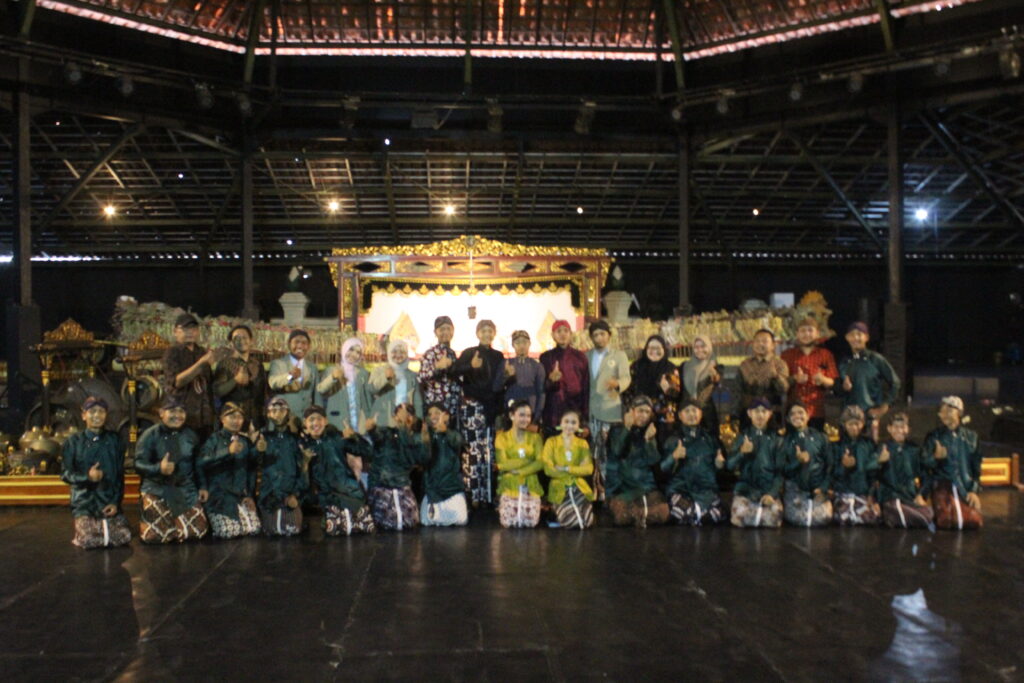
Yogyakarta, March 3, 2025 – A choir composed of students, lecturers, and administrative staff enlivened the Open Senate Meeting celebrating the 80th Anniversary of the Faculty of Cultural Sciences Universitas Gadjah Mada by performing two popular Indonesian songs, “Ondel-Ondel” and “Rumah Kita.” The performance created an atmosphere of togetherness while celebrating cultural diversity through specially prepared musical arrangements.

The performance was arranged and conducted by Muhammad Rasyid Ridho, who also served as the trainer and conductor. The choir was supported by several accompanying musicians, including Riski Puluhulawa on piano, Emilia Widya Pranasari on viola, Sekar Arrum Sri Kinanthi on violin, and Fairuz Aufa Anza on kendang.

The first song performed was “Ondel-Ondel,” popularized by Benyamin Sueb in 1971. The song is widely recognized as a lively representation of Betawi culture that developed amid the dynamic life of Jakarta. Through its simple yet energetic lyrics, the song portrays ondel-ondel as a cultural icon in the form of giant puppets that were once believed to symbolize protection for the community.

Over time, ondel-ondel has become not only part of tradition but also a symbol of identity and cultural pride for the Betawi people. The song also reminds audiences of the importance of appreciating cultural heritage and preserving local wisdom amid ongoing societal change.

The choir then performed “Rumah Kita,” a song popularized by Achmad Albar together with the legendary band God Bless. Widely known since the late 1980s, the song conveys a heartfelt message about the meaning of home as a space for togetherness.

In the context of the FIB UGM anniversary celebration, the song was interpreted as a symbol of unity among members of the academic community. The campus environment, particularly at Universitas Gadjah Mada, is seen as a shared home where people from diverse backgrounds come together to learn, create, and build their future.

This choir performance, involving members from different groups within the faculty, added vibrancy to the series of events commemorating the 80th anniversary of the Faculty of Cultural Sciences. Through music and performing arts, messages about the importance of unity, respect for diversity, and the preservation of local culture were warmly conveyed to the audience. These values form an essential foundation for fostering an inclusive and sustainable academic community.

[Public Relations of FIB UGM, Candra Solihin]

New Look for a Faculty Landmark: FIB UGM Revitalizes Iconic Signpost

News Release Wednesday, 25 March 2026

The Faculty of Cultural Sciences at Universitas Gadjah Mada (FIB UGM) recently completed the revitalization of its iconic signpost. This renewal provides the beloved campus landmark with a fresher and more aesthetic appearance, benefiting both the academic community and the general public passing by.

The facility’s restoration process involved a series of sequential stages. The improvement efforts began by dismantling the signpost structure from its site. Following this, a comprehensive repainting of all components was carried out to restore the vibrancy of the colors and the legibility of the text. The revitalization phase concluded by reinstalling the signpost in its original position.

Maintaining the physical facilities of the campus is a crucial step in preserving the functionality of public spaces. Regular infrastructure maintenance plays a vital role in extending the lifespan of a facility while minimizing the need for new materials. FIB UGM’s initiative in caring for this faculty icon reflects a clear commitment to maintaining existing facilities, aiming to create a comfortable, well-organized, and sustainable educational environment for future generations.

[Public Relations of FIB UGM, Candra Solihin]

Scientific Article Writing Workshop Encourages High-Quality Academic Publications

News Release Sunday, 15 March 2026

Efforts to strengthen the academic capacity of students and researchers in producing high-quality scientific publications continue to be promoted on campus. The Master’s Program in Literature at the Faculty of Cultural Sciences, Universitas Gadjah Mada organized a “Scientific Article Writing Workshop: Strategies for Publishing in Reputable Journals” on Monday, February 23, 2026, in Room 709 Soegondo, Faculty of Cultural Sciences UGM.

The event, which took place from 12:30 to 15:00 WIB, featured a scholar in cultural and gender studies, Wening Udasmoro, as the main speaker. The workshop aimed to enhance the ability of young academics to write scientific articles capable of competing in reputable international journals.

In her presentation, Wening emphasized that academic publishing is not merely about techniques or quick strategies to get articles accepted by journals. According to her, writing in reputable journals is an important process for testing the intellectual quality of an academic before a broader scholarly community.

She stressed that academic publication should be viewed as a process of learning and intellectual development rather than simply fulfilling administrative academic requirements. Through publication, scholars’ ideas can be read and critically examined by researchers from various universities and countries, thereby enriching academic discourse.

During the session, participants were introduced to the importance of problematization in research. Wening explained that strong research generally begins with social or cultural phenomena that attract attention and generate scholarly questions.

She illustrated how contemporary phenomena—such as the display of luxurious lifestyles on social media—can become entry points for research relevant to current social dynamics. Researchers are encouraged not merely to find objects that have not yet been analyzed but to develop new perspectives that make their research academically significant.

In addition to formulating research problems, participants were also equipped with an understanding of the importance of a strong literature review. The workshop highlighted that scientific research must be built upon a dialogue with theories and previous studies.

Several theoretical frameworks can be used to analyze social phenomena, including the concept of conspicuous consumption, the symbolic value of goods (sign value), and modern consumer culture. These theoretical frameworks help researchers interpret social phenomena in a more critical and systematic way.

Through this training, it is hoped that postgraduate students will be able to produce scientific articles that not only meet academic standards but also contribute to the advancement of knowledge and provide solutions to various social issues.

The workshop was enthusiastically welcomed by the Master’s students in Literature who attended. The discussion was highly interactive, particularly when participants explored strategies for identifying research topics with novelty and academic relevance.

Through initiatives such as this, the Faculty of Cultural Sciences UGM seeks to strengthen a critical, reflective, and productive academic culture in producing high-quality scientific publications at both national and international levels.

Author: Khotibul Umam

FIB UGM Honors Outstanding Alumni at the 80th Anniversary

News Release Thursday, 12 March 2026

Yogyakarta, March 3, 2026 – The Faculty of Cultural Sciences at Universitas Gadjah Mada (UGM) awarded two outstanding alumni during the peak of its 80th anniversary celebration in the Poerbatjaraka Auditorium. The awards were presented to Setya Amrih Prasaja, S.S., M.Pd., and Dra. Rini Suryati as a token of appreciation for their dedication to the advancement of science and education, as well as their tangible contributions to the broader community.

The first outstanding alumni award was given to Prasaja, a graduate of the Javanese Language, Literature, and Culture Study Program. Prasaja is widely recognized as the driving force behind the digitization of the Javanese script. His efforts to integrate this traditional script into the international standard (Unicode) have now produced results, allowing the Javanese script to be widely used across various digital devices, such as mobile phones and computers.

In addition to his role as the founder of the Segajabung community, Prasaja currently serves as the Head of the Language and Literature Section at the Department of Culture of the Special Region of Yogyakarta. His contributions are considered crucial in maintaining the relevance of local culture during an era of massive digital transformation.

The second award went to Suryati, who is also an alumna of the Javanese Language, Literature, and Culture Study Program. Suryati is a senior journalist for the Jakarta bureau of the Kedaulatan Rakyat daily newspaper, having built her career since 1992. Her reporting focuses on strategic issues in politics, social affairs, and education.

Throughout her career, Suryati has recorded various journalistic achievements, including an assignment at the 2023 Hajj Media Center and conducting an exclusive interview with President Joko Widodo. Beyond journalism, she is also an active author whose books received national recognition from the Ministry of Higher Education, Science, and Technology and the Ministry of Religious Affairs in 2025.

The initiative by the UGM Faculty of Cultural Sciences to appreciate its alumni demonstrates the educational institution’s commitment to continuously supporting the development of high-quality human resources. Efforts to preserve language through technology and strengthen literacy through journalistic work represent a long-term investment. This serves as a vital foundation for preserving cultural heritage and continually educating the nation for a more inclusive future.

[Public Relations of FIB UGM, Candra Solihin]

Prof. Suhandano Highlights Language Study Challenges in the Digital Age at UGM Faculty of Arts’ 80th Anniversary

News Release Thursday, 12 March 2026

Yogyakarta, March 3, 2026 – The Head of the Department of Languages and Literature at the Faculty of Cultural Sciences, Universitas Gadjah Mada (FIB UGM), Professor Suhandano, highlighted the developments and challenges of language studies in the digital era. This scientific speech was delivered during the Open Senate Meeting commemorating the 80th Anniversary of the UGM Faculty of Cultural Sciences. In his address, he emphasized that linguistic studies possess a vast scope and significant potential to contribute to understanding various societal issues.

Professor Suhandano explained that contemporary language studies do not only focus on the internal structure of language but also on its relationship with various aspects of life. In micro-linguistics, research covers fields such as phonology, morphology, syntax, and semantics. Meanwhile, macro-linguistics examines language in connection with other disciplines, such as discourse analysis, sociolinguistics, neurolinguistics, anthropological linguistics, computational linguistics, and forensic linguistics.

According to Professor Suhandano, language as an object of study is dynamic and constantly evolves alongside societal changes. Consequently, perspectives in language study continue to expand as new issues emerge within social life.

He also touched upon the evolution of linguistic thought dating back to Ancient Greece. The philosopher Plato, for instance, questioned the relationship between words and the objects they name. From these thoughts, two distinct views emerged: one that perceives the relationship between words and objects as logical, and another that views it as arbitrary—formed through the consensus of the speech community.

Meanwhile, Aristotle viewed language as a tool for thought. He identified three main components in a proposition: onoma, rema, and logos, which in modern linguistic studies are equivalent to nouns, verbs, and sentences.

Professor Suhandano emphasized that language functions not only as a system of signs but also as a means to understand the world. “Language reflects how its speakers perceive the world and how they think about their surroundings,” he stated during the scientific speech.

This perspective opens opportunities for linguistic studies to contribute to various research themes relevant to societal needs. He cited that food security—a theme that might initially seem far removed from language studies—can actually be analyzed through a linguistic lens to understand how society perceives and discusses food.

To develop such studies, Professor Suhandano believes that cross-disciplinary collaboration is a vital step. “Linguistics needs to work hand-in-hand with other sciences to address these themes,” he noted.

On that occasion, he also highlighted the position of FIB UGM, which has long been recognized as a primary reference for the development of language studies in Indonesia. Numerous academic works produced by the faculty have become benchmarks in linguistic research, including M. Ramlan’s work on Indonesian morphology and syntax.

Interest in language studies at the faculty continues to grow. Students from various regions in Indonesia, and even from abroad, come to study linguistics with a diverse range of research topics.

As the faculty enters its 80th year, the construction of new buildings at FIB UGM is expected to support increasingly developing academic activities. With more adequate facilities, it is hoped that education, research, and community service activities can be carried out more optimally.

Amidst the rapid changes of the digital era, Professor Suhandano believes that language studies still hold great potential for growth. Through research and cross-disciplinary collaboration, linguistic studies are expected to provide meaningful contributions to understanding societal dynamics and encourage the development of knowledge that benefits collective life.

[Public Relations of FIB UGM, Candra Solihin]

1…910111213…105

Video UGM

[shtmlslider name='shslider_options']
Universitas Gadjah Mada

Faculty of Cultural Sciences
Universitas Gadjah Mada
Jl. Nusantara 1, Bulaksumur Yogyakarta 55281, Indonesia
   fib@ugm.ac.id
   +62 (274) 513096
   +62 (274) 550451

Work Units

  • Office of Journal & Publishing
  • INCULS
  • Information Technology and Database
  • Language Learning Center
  • Library Unit
  • Public Relations
  • Research

Facilities

  • Computer Laboratory
  • Gamelan
  • Guest House
  • Language Library
  • Library
  • Phonetics Library
  • Self Access Unit
  • Student Internet Centre

Importan Links

  • Journal of Humaniora
  • Subscriber Journal
  • Alumni Portal
  • Career
  • Departmens News
  • UGM Streaming

Contacts

  • Academic
  • Administration
  • Dean’s Office
  • Departments / Study Programs
  • Public Relations

© 2024 Faculty of Cultural Sciences Universitas Gadjah Mada

KEBIJAKAN PRIVASI/PRIVACY POLICY

[EN] We use cookies to help our viewer get the best experience on our website. -- [ID] Kami menggunakan cookie untuk membantu pengunjung kami mendapatkan pengalaman terbaik di situs web kami.I Agree / Saya Setuju