
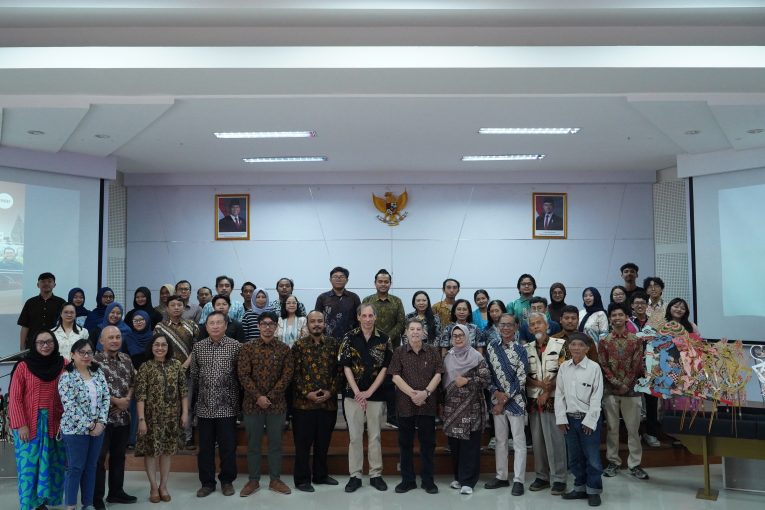
In commemoration of the 80th Anniversary of the Faculty of Cultural Sciences (FIB), Universitas Gadjah Mada (UGM), the Undergraduate Program in Javanese Language, Literature, and Culture, Faculty of Cultural Sciences UGM, organized an International Workshop entitled Rereading Wayang: Remembering the Past, Looking Toward the Future on Thursday (9/7/2026). The event invited academics, students, and the general public to revisit the art of wayang, not only as a cultural heritage of the past but also as a tradition that continues to develop and remains relevant in responding to present and future challenges.
To comprehensively explore the theme, the workshop featured three speakers with expertise in their respective fields: Prof. Matthew Isaac Cohen, Ph.D., Alan H. Feinstein, Ph.D., and Dr. G.R. Lono Lastoro Simatupang, M.A. The discussion was moderated by Zakariya Pamuji Aminullah, S.S., M.A.
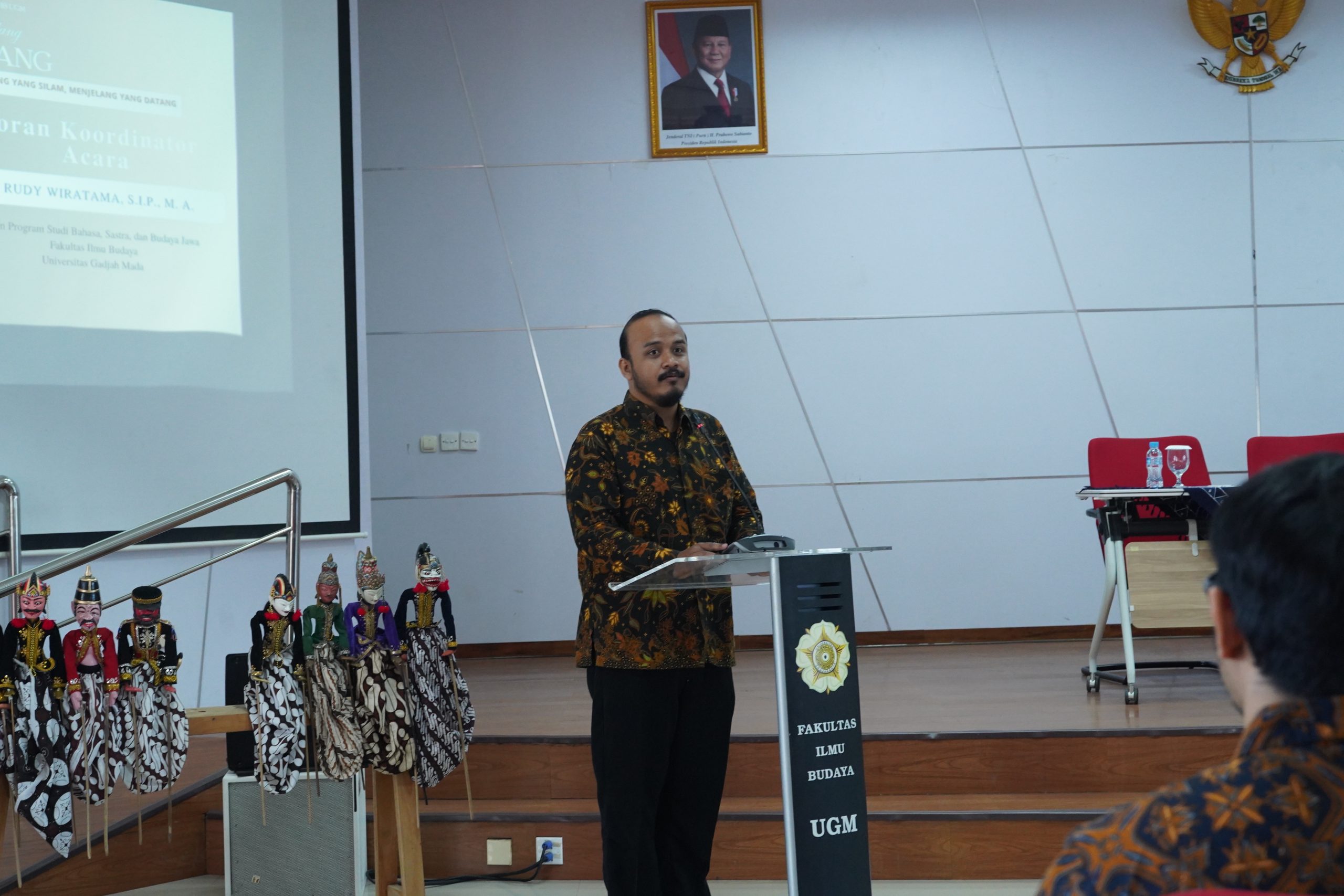
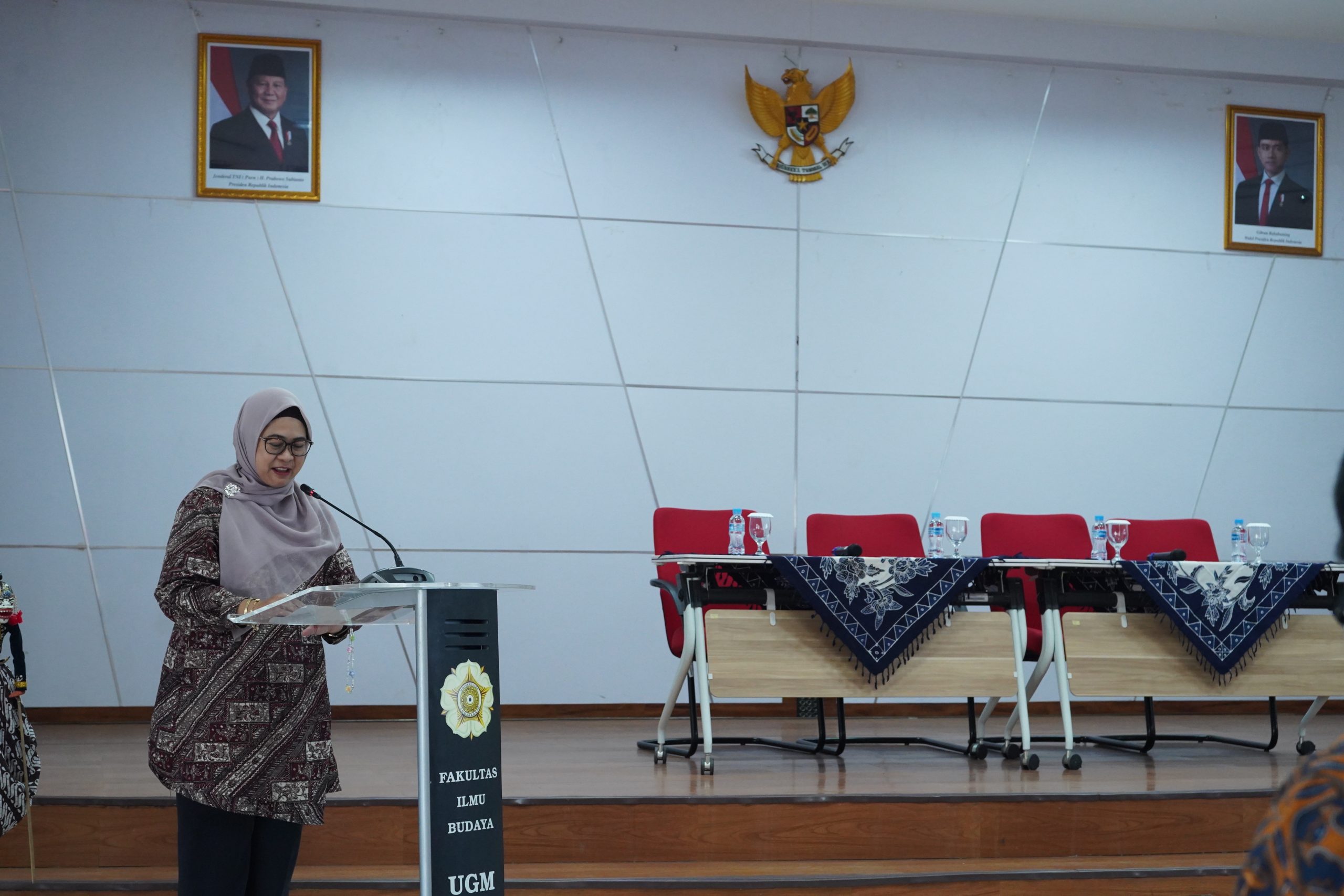
The event commenced at 09.00 WIB with opening remarks by Dr. Rudy Wiratama, S.I.P., M.A., Chair of the Organizing Committee, followed by remarks from Dr. Mimi Savitri, M.A., Vice Dean for Research, Community Service, Cooperation, and Alumni of the Faculty of Cultural Sciences UGM. Following the opening session, the international workshop officially began.
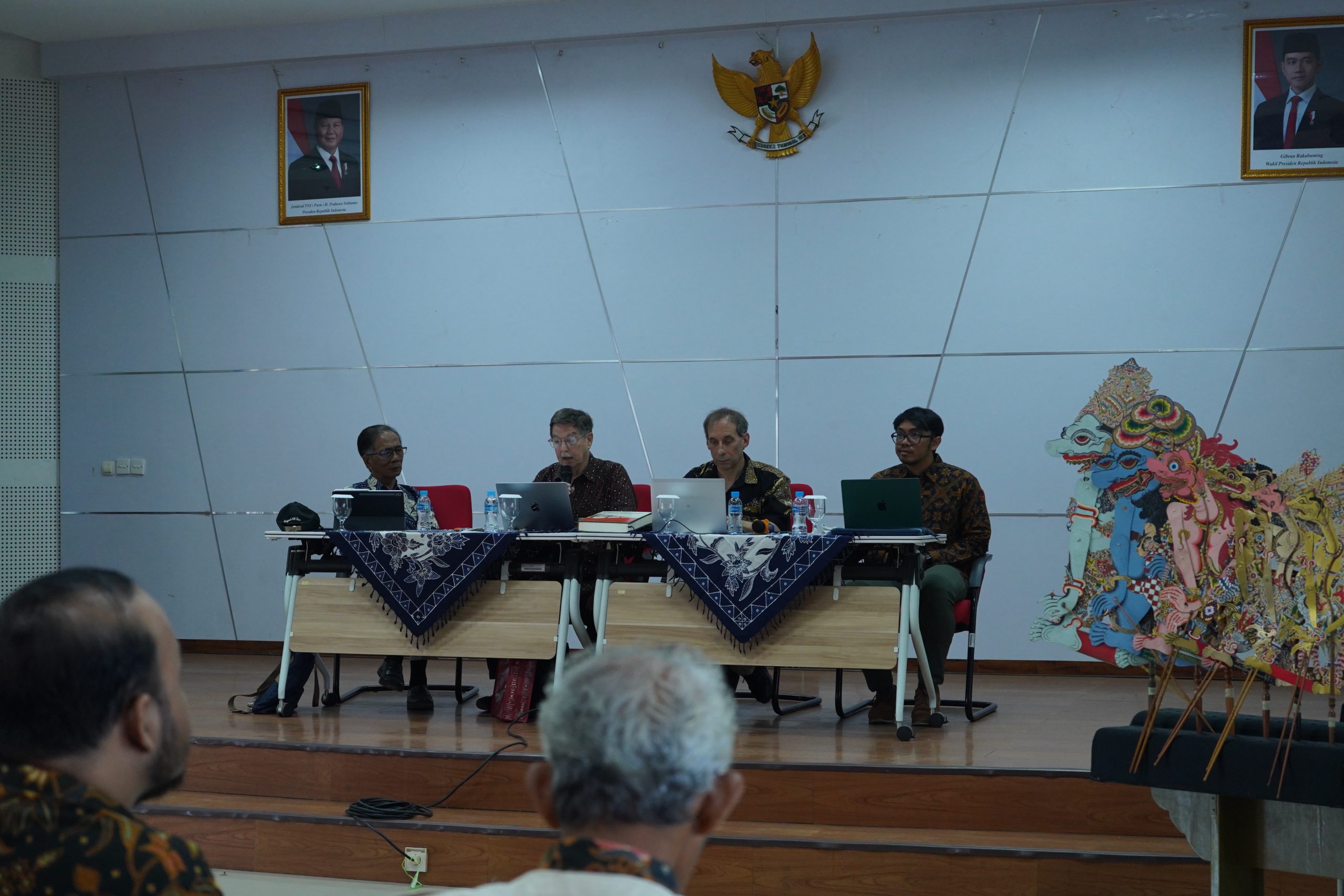
As the first speaker, Prof. Matthew Isaac Cohen, Ph.D., discussed the life of wayang art in the virtual sphere, particularly its development, which became increasingly visible during the pandemic. According to him, the presence of wayang art in the digital world had actually begun long before the pandemic through live-streamed wayang kulit performances. “The life of wayang art in the virtual world had actually begun before the pandemic era, with the emergence of live-streamed wayang kulit performances,” he explained. He further elaborated that the existence of wayang in the virtual sphere has continued to transform through various forms of innovation, ranging from the establishment of communities such as Posko Dalang Nusantara, the publication of the book #Dalang Goes to Twitter, the emergence of Wayang Jemblung during the pandemic, to the development of wayang in the form of artificial intelligence (AI)-based animation.
The second speaker, Alan H. Feinstein, Ph.D., presented the topic of the historiography and documentation of Javanese wayang stories. He explained that efforts to document wayang stories have been carried out since the colonial period, both through documentation projects of lakon carangan and through the collection of various ancient manuscript sources. According to him, wayang can be studied from various scholarly perspectives; therefore, documenting facts, data, documents, and various other forms of evidence is essential. This is necessary because wayang performances are ephemeral and leave no trace once the puppeteer concludes the performance.
In the final session, Dr. G.R. Lono Lastoro Simatupang, M.A., discussed the existence of women in wayang performing arts from the perspectives of female puppeteers, wayang characters, women’s representation, and the stories performed. He explained that women’s participation in the world of wayang has shown positive development, although it still requires further strengthening. “I recommend increasing the number of female puppeteers, enhancing women’s skills in wayang performing arts, and creating lakon carangan that are in accordance with contemporary developments,” he stated.
Through this workshop, Javanese wayang was understood not only as a performing art but also as a reflection of continuously evolving social and cultural dynamics. The presentations demonstrated that the existence of wayang has always been intertwined with the context of its era while continuing to transform without losing the cultural values that form its foundation. In line with the theme Rereading Wayang: Remembering the Past, Looking Toward the Future, the workshop demonstrated that the preservation of wayang is carried out not only through the transmission of tradition but also through documentation, critical reinterpretation, and various innovations that maintain its relevance amid contemporary developments.
Author: Prodi Bahasa, Sastra dan Budaya Jawa
