• About UGM
  • Academic Portal
  • IT Center
  • Library
  • Research
  • Webmail
  • Informasi Publik
  • English
    • Indonesia
Universitas Gadjah Mada Faculty of Cultural Sciences
Universitas Gadjah Mada
  • Home
  • Profile
    • History
    • Vision and Mission
    • Organizational structure
    • Administration
    • Staff
    • Faculty Members
  • Academic
    • Academic Calendar
    • Undergraduate Programs
      • Bachelor of Cultural Antrophology
      • Bachelor in Archaeolagy
      • Bachelor in History
      • Bachelor in Tourism
      • Bochetor in Korean Language and Culture
      • Bachelor in Indonesian Language and Culture
      • Bachelor in English
      • Bachelor in Arabic
      • Bachelor in Japanese Language and Culture
      • Bachelor in Javanese Language, Literature and Culture
      • Bachelor in French language and literature
    • Graduate Programs
      • Master in Antrophology
      • Master in ArchaeoIogy
      • Master in History
      • Master in Linguistics
      • Master in Literature
      • Master In American Studies
      • Master in Middle Eastern Cultural Studies
    • Post-Graduate Programs / S3
      • Doctor in Antropology
      • Doctor in American Studies
      • Doctor in Humanities
    • Student Service
  • KPPM
    • Research Information
    • Scientific / Academic Publications
    • Community Service
    • International Cooperation
    • Domestic Cooperation
  • Student Organizations
    • Student Executive Council
    • Semi-Autonomous Organizations
      • KAPALASASTRA
      • Christian Student Alliance
      • LINCAK
      • Saskine
      • Catholic Student Family
      • Dian Budaya
      • Sastra Kanuragan (sasgan)
      • Family of Muslim Cultural Sciences Students (KMIB)
      • Bejo Mulyo
    • Autonomous Organizations
      • Family of Anthropology Students (KEMANT)
      • English Department Student Association
      • Tourism Students Association (HIMAPA)
      • Family of Indonesian Literature Students (KMSI)
      • West Asian Literature Student Association (IMABA)
      • Association of Korean-Language Students (HIMAHARA)
      • Family of Regional Indonesian Literatures Students (KAMASUTRA)
      • The Family Body of History Students (BKMS)
      • The French Literature Students Association (HMSP)
      • Family of Anthropology Students
      • Japanese Student Association (HIMAJE)
  • Admission
    • Student Evaluation
  • Home
  • Arabic Literature UGM
Arsip:

Arabic Literature UGM

UGM Arabic Literature Student Explores Mandarin and Taiwanese Culture through Summer Course

News Release Tuesday, 15 September 2026

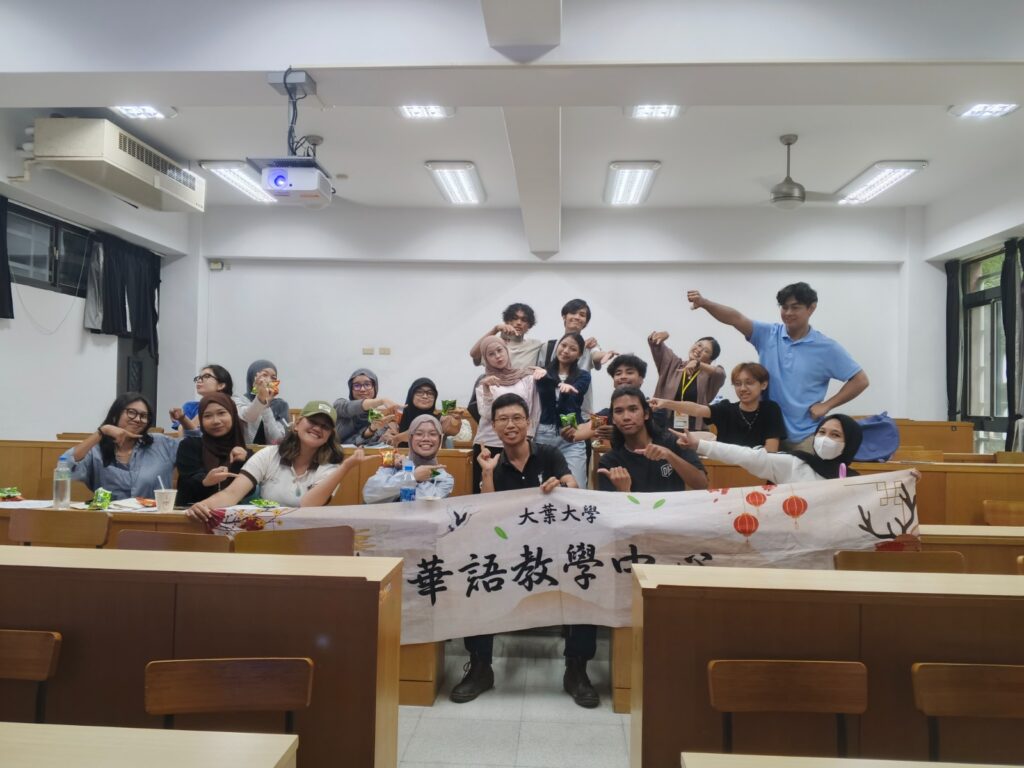
YOGYAKARTA – Learning a foreign language does not always have to begin with textbooks and classrooms. This was the experience of Shang Narendra, a 2022 student of Arabic Literature at Universitas Gadjah Mada (UGM), who became the university’s sole representative in the 2026 Mandarin Summer Camp Short Term Study Program in Taiwan. The program, subsidized by Taiwan’s Ministry of Education, was held at Da Yeh University (大葉大學) in Changhua, Taiwan, from July 22 to August 4, 2026.

Organized through the Official Taiwan Education Center Indonesia in collaboration with universities in Taiwan, the program brought together international students to learn Mandarin while gaining firsthand exposure to Taiwanese culture. For Shang Narendra, who is often called Adam, the opportunity stemmed from his desire to learn a foreign language directly in an environment where it is spoken. As an Arabic Literature student, he is accustomed to viewing language not only through its structure and vocabulary but also through the culture, society, and context in which it is used.

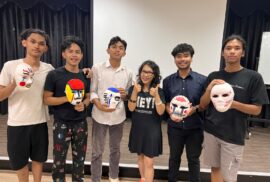
During the program, participants attended Mandarin classes in the morning and took part in various cultural activities in the afternoon. Upon arriving at Da Yeh University, participants first took the Test of Chinese as a Foreign Language (TOCFL) to assess their Mandarin proficiency and determine their class placement. Classroom learning was complemented by hands-on activities, including cooking, handicrafts, aromatherapy, fabric painting, traditional Chinese calligraphy, and making a Taiwanese-style mosquito repellent spray.

The cross-cultural experience also extended into everyday life in the dormitory. Participants from different universities and countries lived together, creating opportunities to communicate in various languages, particularly English and Mandarin. Adam occasionally used Google Translate when language barriers interrupted conversations. He also interacted directly with local residents while purchasing daily necessities. Through these experiences, he learned that the courage to communicate and the ability to adapt can be just as important as mastering grammar.

One of Adam’s most memorable experiences was the final project, which involved a role-play performed with a group of six students from different backgrounds. Within a relatively short period, Adam and his group members had to use Mandarin to discuss ideas, divide tasks, and prepare their performance. The program also took participants to Sun Moon Lake in Nantou, giving them an opportunity to explore another side of Taiwan beyond the university campus.

For Adam, learning Mandarin in Taiwan also broadened his perspective as an Arabic Literature student. He came to see more clearly that language learning cannot be separated from the culture and society of its speakers. The experience also strengthened his listening and speaking skills, contextual understanding, and ability to adapt to a new environment. Learning another language gave him a new perspective on understanding Arabic more broadly, beyond the theories he studies in the classroom.

The summer course also provided Adam with an opportunity to step outside his comfort zone. He found that students of Arabic Literature can explore other languages and cultures without leaving behind the field they are studying. By becoming familiar with more languages and societies, students can gain new perspectives on Arabic while preparing themselves to communicate and engage in increasingly multicultural environments.


Author : Indana Zulfa Maulida

Arabic Literature Students Prepare for Internships and Career Paths Ahead of Their Fifth Semester

News Release Tuesday, 1 September 2026

YOGYAKARTA – As they enter their fifth semester, students of the Arabic Literature Study Program at Universitas Gadjah Mada (UGM), Class of 2024, are beginning to prepare for their academic and career paths. This was among the topics discussed during a meeting with the Head of the Study Program and Academic Advisor, Dr. Zulfa Purnamawati, which covered study planning, final projects, and internship opportunities.

The meeting began with a discussion on students’ academic progress and the plans they have started to develop. Some students have already expressed an interest in literature, linguistics, and translation, while others are still considering their options for their final projects. Dr. Zulfa also provided guidance on academic planning, including key considerations related to the implementation of the 2021 and 2026 curricula.

Beyond coursework, students were encouraged to view their fifth semester as an ideal time to gain experience outside the classroom, particularly through internships. Sultan, who previously completed an internship at the Directorate of Protocol of the Ministry of Foreign Affairs of the Republic of Indonesia, shared his experience during the internship. He discussed the process of securing the position and the various responsibilities he undertook, including supporting state events and diplomatic visits. Drawing from his experience, Sultan emphasized the importance of early preparation, from completing the necessary documents to developing communication and coordination skills.

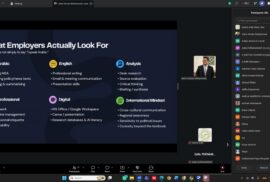
The discussion then expanded to broader career opportunities with Garin Arivian, a 2020 alumnus of the Arabic Literature Study Program. He encouraged students to recognize that Arabic language skills can lead to diverse career paths rather than being limited to a single field. Diplomacy, international organizations, research and think tanks, media, and the private sector are among the areas that Arabic Literature graduates can explore. Students were therefore encouraged to begin identifying the fields they would like to pursue and developing the skills needed to support their career goals. Garin also emphasized the importance of maintaining a well-organized CV, building a professional LinkedIn profile, developing a writing portfolio, and strengthening English proficiency to access opportunities at the international level.

The discussion also extended beyond opportunities in Indonesia, with students exploring internship and short-term program opportunities abroad. Some expressed interest in gaining experience at embassies and international research institutions. Garin also offered to assist students seeking such opportunities, particularly those related to research institutions and think tanks. Throughout the process, students were encouraged to consult with the Study Program and their Academic Advisor to ensure that the opportunities they pursue align with their academic needs and can be appropriately recognized as part of their academic development.

The meeting provided an opportunity for students of the Arabic Literature Study Program, Class of 2024, to connect their academic studies with internship experiences and future career plans. The fifth semester is therefore not merely a stage for completing academic credits, but also a valuable period for exploring opportunities, gaining practical experience, and beginning to define the professional paths they wish to pursue after graduation.

Author : Indana Zulfa Maulida

UGM Arabic Literature Graduate Proves Career Opportunities on the Global Stage

News Release Thursday, 25 June 2026

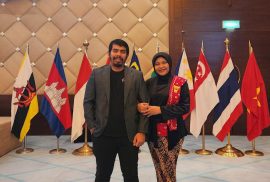
For most humanities students, the question “What will you do after graduation?” often weighs heavily on their minds throughout their college years. The outdated assumption that Arabic literature graduates will end up only as translators or educators is still commonly heard. However, Desthy Umayah has clearly shattered that old paradigm. This 2011 graduate of the Arabic Literature program at the Faculty of Cultural Sciences (FIB) at UGM has successfully demonstrated that a career path for literature graduates can reach the highest echelons of international diplomacy by becoming a diplomat at the Indonesian Embassy in Kuwait City for the 2023–2026 assignment period.

Desthy’s interest in the Arabic language actually began back in school. However, she never imagined that her decision to pursue a degree in Arabic Literature at UGM would lead her to the global stage. UGM not only offers a high-quality curriculum but also provides an academic ecosystem that is attuned to the times.

As the Arab Spring (a wave of revolutions across the Arab world) was unfolding, the Arabic Literature program at UGM actively responded by organizing academic discussions featuring alumni who were working at the Ministry of Foreign Affairs. This moment marked a turning point for Desthy. It was in those small classrooms that she realized the knowledge she was acquiring was vital to analyzing global geopolitical issues.

For Desthy, university is a mental laboratory. While on campus, she actively developed herself through the Arabic Language Student Association (IMABA), the Marching Band, and the Rampoe UGM arts community. It was through these non-academic activities that the soft skills crucial to a diplomat—such as negotiation, public speaking, leadership, and teamwork—developed organically. Recognizing the importance of these non-academic skills, Desthy urged students not to become “butterfly students” (class-home-class-home). According to her, the professional world isn’t just looking for those who excel on paper, but for individuals who are ready to grow and are resilient in the field through organizational experience.

The combination of classroom theory and practical experience in campus organizations proved to be Desthy’s strongest asset when she entered the global arena. One of the academic skills she gained at UGM that became her main tool in the field was her proficiency in the official language required for bureaucratic matters.

“Although the Arabic used in everyday conversation is Ammiya (colloquial Arabic), which varies by country, the Fusha (standard Arabic) taught by our professors during our studies at UGM has actually become a crucial foundation that is extremely useful in a professional diplomatic career,” he explained.


Desthy’s journey conveys a valuable message that will always be relevant to generations of FIB UGM students year after year: success on the global stage does not come overnight, but is the result of making the most of the campus ecosystem. A degree in the field of culture has proven to provide a competitive edge that other academic disciplines lack.

“For me, studying Arabic Literature isn’t just about learning the language; it’s also a foundation that makes us more attuned to culture, helps us understand other people’s perspectives, and ultimately helps me grow as a diplomat,” said Desthy.

In closing, she offered words of encouragement worth pondering for every student currently in college who is uncertain about their future.

“If you love languages, are interested in international issues, and enjoy encountering new perspectives, don’t hesitate. The world of diplomacy can be a really exciting career path to pursue,” she concluded.

Photo: Dhesti Umayah
Author: Zaidan Abdurrahman
Editor: Candra Solihin

AI, Geopolitics, and Feminist Literature Highlight Arabic Literature UGM Students’ Thesis Proposal Seminar

News Release Thursday, 11 June 2026

Yogyakarta, June, 8 2025 – Students of the Arabic Literature Study Program at Universitas Gadjah Mada (UGM), Class of 2023, successfully conducted their Thesis Proposal Seminar from 8 to 10 June 2026. The three-day academic event marked an important milestone as students presented their research proposals before proceeding to the next stage of their undergraduate thesis projects.

This year’s seminar showcased a wide range of research topics, reflecting the growing diversity of contemporary Arabic language and literature studies. Beyond traditional scholarly approaches, students explored issues related to artificial intelligence, digital media, social dynamics, and global geopolitical developments, demonstrating the relevance of Arabic studies in addressing contemporary challenges.

A significant number of research projects focused on translation studies, examining translation strategies and translation quality in novels, poetry, films, classical Islamic texts, and social media content. Notably, several students investigated the use of Artificial Intelligence (AI) in translation, including studies on the translation quality produced by ChatGPT. These topics illustrate how technological advancements are increasingly becoming an integral part of academic inquiry within the Arabic Literature Program at UGM.

In the field of literary studies, students analyzed various humanitarian and social issues represented in modern Arabic literary works. Topics such as war trauma, power relations, feminism, diaspora identity, family conflicts, and the struggles of the Palestinian people emerged as prominent themes. These studies highlight literature not only as an artistic expression but also as a reflection of complex social realities and human experiences.

Meanwhile, linguistic research offered equally compelling perspectives. Students examined topics including code-switching, code-mixing, pragmatics, discourse analysis, media framing, and the use of Arabic in digital spaces. These studies demonstrate how language continues to evolve and interact with various aspects of contemporary society.

Throughout the seminar, students presented their research backgrounds, research questions, and proposed methodologies. Supervisors and examiners provided constructive academic feedback to help refine and strengthen the proposed studies. The active discussions created a valuable learning environment that encouraged critical thinking, analytical skills, and academic argumentation.

The Thesis Proposal Seminar serves as an important academic milestone for the Class of 2023 as they prepare for the next phase of their research journey. Through the diverse range of topics presented, Arabic Literature UGM students continue to contribute to the development of Arabic language, literature, translation, and media studies while engaging with issues of global significance.

Author: Indana Zulfa Maulida

Strengthening Academic Collaboration: PBA UNJ Conducts Study Visit to Arabic Literature UGM

News Release Thursday, 4 June 2026

Yogyakarta, May 18, 2026 – The Arabic Language Education Program of Universitas Negeri Jakarta (UNJ) and the Arabic Literature Program of Universitas Gadjah Mada (UGM) held a study visit at the Faculty of Cultural Sciences, UGM. The activity served as a platform for students from both universities to exchange experiences, broaden their perspectives, and strengthen academic relationships. The event began with the recitation of verses from the Holy Qur’an, followed by the singing of the Indonesian national anthem, the UGM Hymn, and the Universitas Negeri Jakarta March. A warm atmosphere was created through welcoming remarks delivered by student representatives and program leaders from both institutions.

During the main session, students from UNJ presented an overview of their study program, student activities, and various initiatives that have been implemented within their organization. The presentation was enthusiastically received by UGM students, who then shared insights into the academic environment and organizational activities within the Arabic Literature Program at UGM. This session provided an engaging forum for participants to gain a deeper understanding of each institution’s organizational culture and campus life. The event became even more interactive through a question-and-answer session conducted in a relaxed yet productive atmosphere. Various topics were discussed, ranging from the implementation of student programs to strategies for increasing student participation in both academic and non-academic activities. The exchange of ideas and experiences allowed participants to learn from one another and gain new perspectives on student organization management.

More than just an academic visit, this study visit served as an opportunity to strengthen friendships and foster closer ties between the Arabic Language Education Program of UNJ and the Arabic Literature Program of UGM. It is hoped that this activity will become the starting point for broader and more sustainable collaboration in the future, particularly in the areas of academics, student organizations, and student development.

Author: Indana Zulfa Maulida

123…5

Video UGM

[shtmlslider name='shslider_options']
Universitas Gadjah Mada

Faculty of Cultural Sciences
Universitas Gadjah Mada
Jl. Nusantara 1, Bulaksumur Yogyakarta 55281, Indonesia
   fib@ugm.ac.id
   +62 (274) 513096
   +62 (274) 550451

Work Units

  • Office of Journal & Publishing
  • INCULS
  • Information Technology and Database
  • Language Learning Center
  • Library Unit
  • Public Relations
  • Research

Facilities

  • Computer Laboratory
  • Gamelan
  • Guest House
  • Language Library
  • Library
  • Phonetics Library
  • Self Access Unit
  • Student Internet Centre

Importan Links

  • Journal of Humaniora
  • Subscriber Journal
  • Alumni Portal
  • Career
  • Departmens News
  • UGM Streaming

Contacts

  • Academic
  • Administration
  • Dean’s Office
  • Departments / Study Programs
  • Public Relations

© 2024 Faculty of Cultural Sciences Universitas Gadjah Mada

KEBIJAKAN PRIVASI/PRIVACY POLICY

[EN] We use cookies to help our viewer get the best experience on our website. -- [ID] Kami menggunakan cookie untuk membantu pengunjung kami mendapatkan pengalaman terbaik di situs web kami.I Agree / Saya Setuju