• About UGM
  • Academic Portal
  • IT Center
  • Library
  • Research
  • Webmail
  • Informasi Publik
  • English
    • Indonesia
Universitas Gadjah Mada Faculty of Cultural Sciences
Universitas Gadjah Mada
  • Home
  • Profile
    • History
    • Vision and Mission
    • Organizational structure
    • Administration
    • Staff
    • Faculty Members
  • Academic
    • Academic Calendar
    • Undergraduate Programs
      • Bachelor of Cultural Antrophology
      • Bachelor in Archaeolagy
      • Bachelor in History
      • Bachelor in Tourism
      • Bochetor in Korean Language and Culture
      • Bachelor in Indonesian Language and Culture
      • Bachelor in English
      • Bachelor in Arabic
      • Bachelor in Japanese Language and Culture
      • Bachelor in Javanese Language, Literature and Culture
      • Bachelor in French language and literature
    • Graduate Programs
      • Master in Antrophology
      • Master in ArchaeoIogy
      • Master in History
      • Master in Linguistics
      • Master in Literature
      • Master In American Studies
      • Master in Middle Eastern Cultural Studies
    • Post-Graduate Programs / S3
      • Doctor in Antropology
      • Doctor in American Studies
      • Doctor in Humanities
    • Student Service
  • KPPM
    • Research Information
    • Scientific / Academic Publications
    • Community Service
    • International Cooperation
    • Domestic Cooperation
  • Student Organizations
    • Student Executive Council
    • Semi-Autonomous Organizations
      • KAPALASASTRA
      • Christian Student Alliance
      • LINCAK
      • Saskine
      • Catholic Student Family
      • Dian Budaya
      • Sastra Kanuragan (sasgan)
      • Family of Muslim Cultural Sciences Students (KMIB)
      • Bejo Mulyo
    • Autonomous Organizations
      • Family of Anthropology Students (KEMANT)
      • English Department Student Association
      • Tourism Students Association (HIMAPA)
      • Family of Indonesian Literature Students (KMSI)
      • West Asian Literature Student Association (IMABA)
      • Association of Korean-Language Students (HIMAHARA)
      • Family of Regional Indonesian Literatures Students (KAMASUTRA)
      • The Family Body of History Students (BKMS)
      • The French Literature Students Association (HMSP)
      • Family of Anthropology Students
      • Japanese Student Association (HIMAJE)
  • Admission
    • Student Evaluation
  • Home
  • News Release
  • UGM Arabic Literature Graduate Proves Career Opportunities on the Global Stage

UGM Arabic Literature Graduate Proves Career Opportunities on the Global Stage

  • News Release
  • 25 June 2026, 13.35
  • Oleh: Humas FIB
  • 0

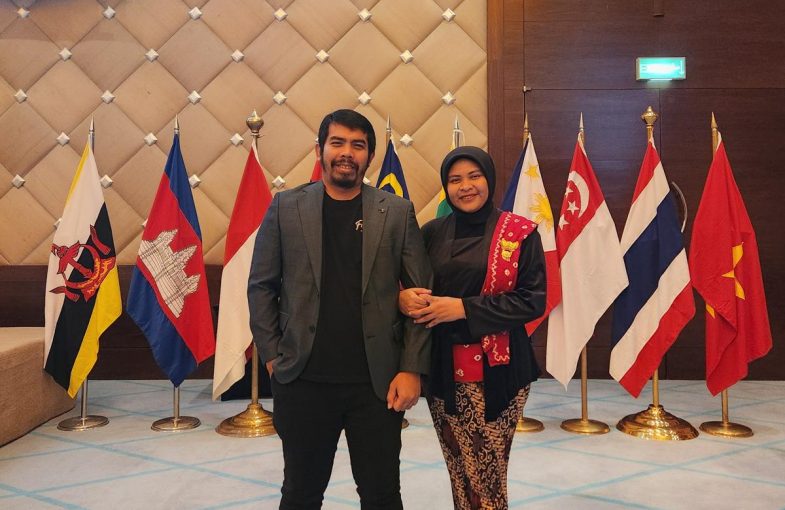
For most humanities students, the question “What will you do after graduation?” often weighs heavily on their minds throughout their college years. The outdated assumption that Arabic literature graduates will end up only as translators or educators is still commonly heard. However, Desthy Umayah has clearly shattered that old paradigm. This 2011 graduate of the Arabic Literature program at the Faculty of Cultural Sciences (FIB) at UGM has successfully demonstrated that a career path for literature graduates can reach the highest echelons of international diplomacy by becoming a diplomat at the Indonesian Embassy in Kuwait City for the 2023–2026 assignment period.

Desthy’s interest in the Arabic language actually began back in school. However, she never imagined that her decision to pursue a degree in Arabic Literature at UGM would lead her to the global stage. UGM not only offers a high-quality curriculum but also provides an academic ecosystem that is attuned to the times.

As the Arab Spring (a wave of revolutions across the Arab world) was unfolding, the Arabic Literature program at UGM actively responded by organizing academic discussions featuring alumni who were working at the Ministry of Foreign Affairs. This moment marked a turning point for Desthy. It was in those small classrooms that she realized the knowledge she was acquiring was vital to analyzing global geopolitical issues.

For Desthy, university is a mental laboratory. While on campus, she actively developed herself through the Arabic Language Student Association (IMABA), the Marching Band, and the Rampoe UGM arts community. It was through these non-academic activities that the soft skills crucial to a diplomat—such as negotiation, public speaking, leadership, and teamwork—developed organically. Recognizing the importance of these non-academic skills, Desthy urged students not to become “butterfly students” (class-home-class-home). According to her, the professional world isn’t just looking for those who excel on paper, but for individuals who are ready to grow and are resilient in the field through organizational experience.

The combination of classroom theory and practical experience in campus organizations proved to be Desthy’s strongest asset when she entered the global arena. One of the academic skills she gained at UGM that became her main tool in the field was her proficiency in the official language required for bureaucratic matters.

“Although the Arabic used in everyday conversation is Ammiya (colloquial Arabic), which varies by country, the Fusha (standard Arabic) taught by our professors during our studies at UGM has actually become a crucial foundation that is extremely useful in a professional diplomatic career,” he explained.
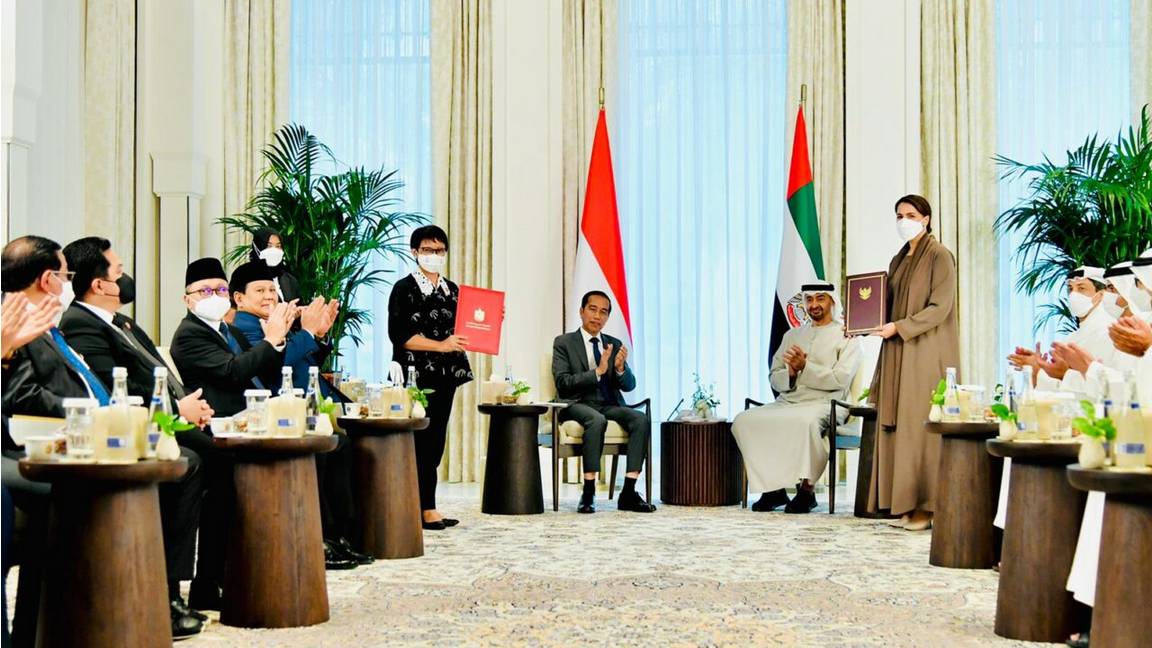

Desthy’s journey conveys a valuable message that will always be relevant to generations of FIB UGM students year after year: success on the global stage does not come overnight, but is the result of making the most of the campus ecosystem. A degree in the field of culture has proven to provide a competitive edge that other academic disciplines lack.

“For me, studying Arabic Literature isn’t just about learning the language; it’s also a foundation that makes us more attuned to culture, helps us understand other people’s perspectives, and ultimately helps me grow as a diplomat,” said Desthy.

In closing, she offered words of encouragement worth pondering for every student currently in college who is uncertain about their future.

“If you love languages, are interested in international issues, and enjoy encountering new perspectives, don’t hesitate. The world of diplomacy can be a really exciting career path to pursue,” she concluded.

Photo: Dhesti Umayah
Author: Zaidan Abdurrahman
Editor: Candra Solihin

Tags: Arabic Literature UGM FIB UGM SDGs 16: Perdamaian Keadilan dan Kelembagaan Yang Tangguh SDGs 4 Pendidikan Berkualitas SDGs 5: Kesetaraan Gender SDGs 8: Pekerjaan Layak dan Pertumbuhan Ekonomi UGM Yogyakarta

Video UGM

[shtmlslider name='shslider_options']
Universitas Gadjah Mada

Faculty of Cultural Sciences
Universitas Gadjah Mada
Jl. Nusantara 1, Bulaksumur Yogyakarta 55281, Indonesia
   fib@ugm.ac.id
   +62 (274) 513096
   +62 (274) 550451

Work Units

  • Office of Journal & Publishing
  • INCULS
  • Information Technology and Database
  • Language Learning Center
  • Library Unit
  • Public Relations
  • Research

Facilities

  • Computer Laboratory
  • Gamelan
  • Guest House
  • Language Library
  • Library
  • Phonetics Library
  • Self Access Unit
  • Student Internet Centre

Importan Links

  • Journal of Humaniora
  • Subscriber Journal
  • Alumni Portal
  • Career
  • Departmens News
  • UGM Streaming

Contacts

  • Academic
  • Administration
  • Dean’s Office
  • Departments / Study Programs
  • Public Relations

© 2024 Faculty of Cultural Sciences Universitas Gadjah Mada

KEBIJAKAN PRIVASI/PRIVACY POLICY

[EN] We use cookies to help our viewer get the best experience on our website. -- [ID] Kami menggunakan cookie untuk membantu pengunjung kami mendapatkan pengalaman terbaik di situs web kami.I Agree / Saya Setuju