• About UGM
  • Academic Portal
  • IT Center
  • Library
  • Research
  • Webmail
  • Informasi Publik
  • English
    • Indonesia
Universitas Gadjah Mada Faculty of Cultural Sciences
Universitas Gadjah Mada
  • Home
  • Profile
    • History
    • Vision and Mission
    • Organizational structure
    • Administration
    • Staff
    • Faculty Members
  • Academic
    • Academic Calendar
    • Undergraduate Programs
      • Bachelor of Cultural Antrophology
      • Bachelor in Archaeolagy
      • Bachelor in History
      • Bachelor in Tourism
      • Bochetor in Korean Language and Culture
      • Bachelor in Indonesian Language and Culture
      • Bachelor in English
      • Bachelor in Arabic
      • Bachelor in Japanese Language and Culture
      • Bachelor in Javanese Language, Literature and Culture
      • Bachelor in French language and literature
    • Graduate Programs
      • Master in Antrophology
      • Master in ArchaeoIogy
      • Master in History
      • Master in Linguistics
      • Master in Literature
      • Master In American Studies
      • Master in Middle Eastern Cultural Studies
    • Post-Graduate Programs / S3
      • Doctor in Antropology
      • Doctor in American Studies
      • Doctor in Humanities
    • Student Service
  • KPPM
    • Research Information
    • Scientific / Academic Publications
    • Community Service
    • International Cooperation
    • Domestic Cooperation
  • Student Organizations
    • Student Executive Council
    • Semi-Autonomous Organizations
      • KAPALASASTRA
      • Christian Student Alliance
      • LINCAK
      • Saskine
      • Catholic Student Family
      • Dian Budaya
      • Sastra Kanuragan (sasgan)
      • Family of Muslim Cultural Sciences Students (KMIB)
      • Bejo Mulyo
    • Autonomous Organizations
      • Family of Anthropology Students (KEMANT)
      • English Department Student Association
      • Tourism Students Association (HIMAPA)
      • Family of Indonesian Literature Students (KMSI)
      • West Asian Literature Student Association (IMABA)
      • Association of Korean-Language Students (HIMAHARA)
      • Family of Regional Indonesian Literatures Students (KAMASUTRA)
      • The Family Body of History Students (BKMS)
      • The French Literature Students Association (HMSP)
      • Family of Anthropology Students
      • Japanese Student Association (HIMAJE)
  • Admission
    • Student Evaluation
  • Home
  • HEADLINES
  • page. 54
Arsip:

HEADLINES

Japanese Language and Culture Study Program Holds Lecture with Lecturer from Universitas Padjadjaran

HEADLINESSDGs 17: Partnerships for the GoalsSDGs 4: Quality EducationSDGs 8: Decent work and economic growth Friday, 4 October 2024

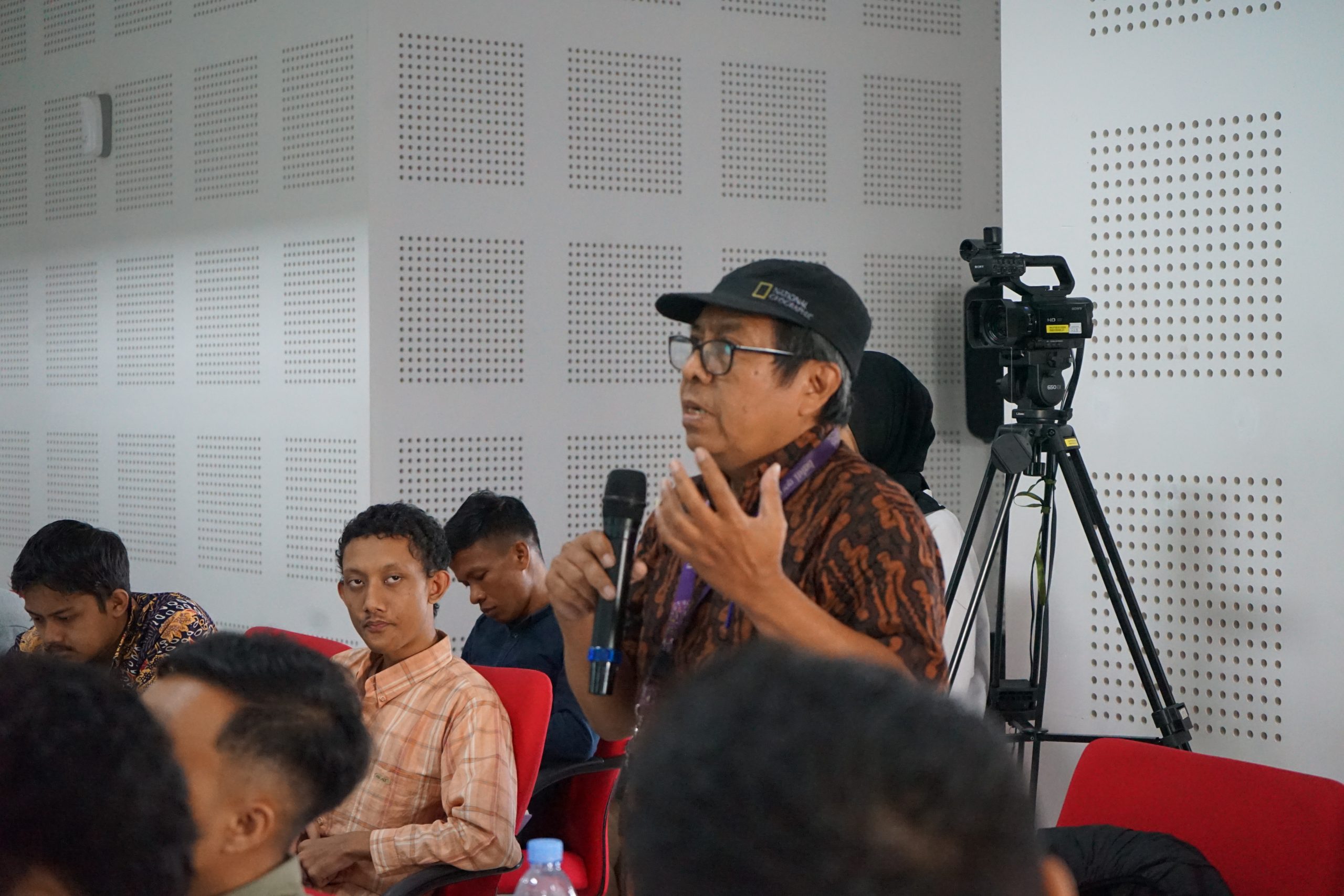
On Thursday, September 25, 2024, the Japanese Language and Culture study program welcomed guest lecturers from Padjadjaran University. The arrival of the lecturer from Padjadjaran University was related to the implementation of a joint lecture on the topic of Onomatopoeia.

The lecturers from Padjadjaran University, consisting of lecturers from the Sundanese Literature and Japanese Literature study programs, shared their research progress on the topic of Strengthening Understanding of Japanese Onomatopoeia through Website-Based Utilization of Local Wisdom (Sundanese) to students and lecturers of the Japanese Language and Culture study program.

In the project, lecturers from Sundanese Literature and Japanese Literature of Padjadjaran University are trying to develop a dictionary of Japanese onomatopoeia that can be found in Sundanese. The dictionary is still made in Indonesian-Japanese with of course an explanation of the meaning of the onomatopoeia. The existence of the Sundanese equivalent is to facilitate the understanding of the meaning of onomatopoeia for Japanese language learners, in this case Sundanese Japanese language learners. Then, the lecturer from Padjadjaran University also explained their plan to include pictures or visualizations of onomatopoeia in the dictionary to make it easier to understand the meaning of onomatopoeia. This project was carried out with the hope of facilitating the understanding of Japanese onomatopoeia through its equivalent in the local language. The lecturer from Japanese Language and Culture agreed to this because they often encounter cases where students find it easier to find equivalents and understand the meaning of onomatopoeia in the local language than in Indonesian.

At the end of the lecture session, the lecturer of Japanese Language and Culture gave a suggestion to attract Japanese Literature study programs in various universities spread throughout the region in order to increase the variety of equivalents in the local language of each region. In addition, there was an input to create a website so that the public can also participate in the development of the dictionary because it does not rule out the emergence of new onomatopoeias. This activity was then closed with a group photo session.

Author: Valentina Pramahita Iswari

Editor: Yulia Agustiani

Visit of SMAN 2 Kuta Selatan to Faculty of Cultural Sciences UGM: Toward a Bright Future

HEADLINESNews ReleaseSDGs 10: Reduced InequalitiesSDGs 11: Sustainable cities and communitiesSDGs 12: Responsible consumption and productionSDGs 17: Partnerships for the GoalsSDGs 4: Quality EducationSDGs 8: Decent work and economic growth Thursday, 3 October 2024

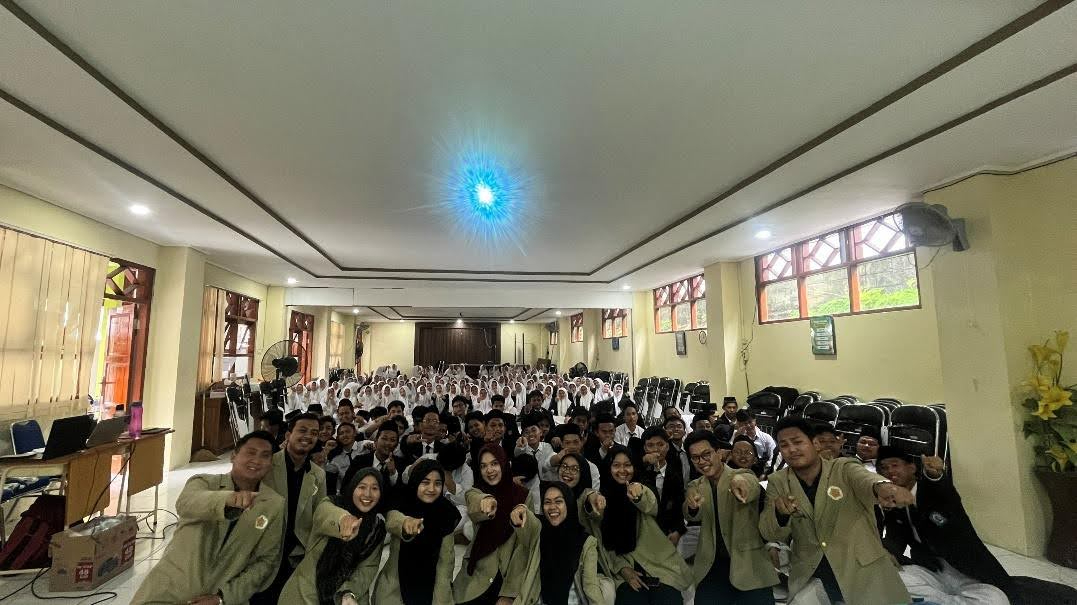
On 2nd of October 2024, at Soegondo Building Auditorium, Faculty of Cultural Sciences (FIB) Universitas Gadjah Mada (UGM) was honored to receive a visit from students of SMAN 2 Kuta Selatan. This activity aims to provide insight into the excellence of FIB UGM and explain the career prospects for graduates.

In the event, representatives of undergraduate and postgraduate students of FIB UGM shared their experiences and reasons why they chose this faculty. Aisyah Riska, a graduate student majoring in Linguistics, revealed that her initial interest came from the many renowned linguistic experts who teach at the Faculty. “This faculty has experienced and well-known lecturers in their fields, which is certainly an added value for us as students,” said Aisyah.

Meanwhile, Sandya Kirani, an undergraduate student from Anthropology department, added that the Faculty is ranked first in Indonesia and around 50th in the world. “I feel proud to be able to study at this highly reputable faculty. This is an important consideration for me in choosing a major,” she explained.

The event also discussed job prospects for graduates of FIB UGM. Many alumni have successfully pursued careers as ambassadors, translators, lecturers, and CEOs in the tourism sector. This shows that education at FIB UGM is not only qualified, but also relevant to the needs of the current world of work.

In the context of international cooperation, FIB UGM also establishes partnerships with various institutions abroad. This cooperation includes student exchange programs, joint research, and international seminars, which certainly enrich students’ learning experience. Hopefully, this visit can provide inspiration and motivation for them in determining their next educational steps.

Kamastawa Teaching and Sharing is Back: Sharing Laughter, Knowledge, and Sustenance at PYI Orphanage

HEADLINESNews ReleaseSDGs 10: Reduced InequalitiesSDGs 11: Sustainable cities and communitiesSDGs 17: Partnerships for the GoalsSDGs 4: Quality EducationStudent's Activity Wednesday, 2 October 2024

As a form of community service, the Javanese Language, Literature, and Culture Student Association (Kamastawa) held another “Kamastawa Teaching and Sharing” event on Sunday, October 22, 2024. This event is the result of collaboration between the social and community division (sosmas) and the scientific division, with the aim of having a positive impact on society, especially for children at the Wirobrajan branch of the PYI Yatim and Zakat Orphanage, Yogyakarta.

There were 16 children from grade 1 elementary to 1 junior high school involved in the event. The event opened at 09.00 AM WIB with an opening session and introductions. During the event, students and children had the opportunity to play together, creating a cheerful atmosphere with jokes and laughter. This togetherness became an important foundation in building intimacy between students and participants.

Opening session and introductions

After the introductory session and games, the event continued with teaching and learning activities. Participants were divided into three groups according to educational level: group 1 for grades 1-2 elementary school, group 2 for grades 3-4 elementary school, and group 3 for grades 5 elementary school to 1 junior high school. Each group received materials tailored to their age and level of understanding, ranging from daily Javanese conversation, Javanese script writing, Javanese assignment consultation, and so on. Various teaching methods were used by the students to make learning fun and easy for the children to understand.

Teaching-learning session

After the learning session was over, it was time for ice breaking, where the participants were invited to sing together the song aja ndomblong aja and follow the guessing game with prizes. This session succeeded in sparking the children to be active in an exciting way.


The children’s enthusiasm could be felt from the beginning to the end of the activity, especially during the distribution of small gifts as an appreciation for the participants’ activeness. In addition, Kamastawa also provided Pepak Basa Jawa books and reading books as a form of support for the participants future educational development. It is hoped that participants can easily access knowledge and enrich their insights, including those related to knowledge and preservation of Javanese culture.

The gifts given may be considered simple. However, prayers, hopes, and sincere intentions to share will live on and become the foundation in the implementation of the ‘Kamastawa teach and share’ program now and in the future.

Author : Haryo Untoro

Fellowship Training 2024: 빛나는 꿈

HEADLINESNews ReleaseSDGSSDGs 11: Sustainable cities and communitiesSDGs 4: Quality EducationStudent's Activity Wednesday, 2 October 2024

Saturday and Sunday, September 14 and 15, 2024 – UGM Korean Language Student Association held a Fellowship Training event with the theme “빚나는 꿈” which means “Shining dreams”. The Fellowship Training event was held for two days in Lecture Room 707 Soegondo, Faculty of Cultural Sciences UGM and in Greenland Margono Courtyard. This event was attended by students of Korean Language and Culture Class of 2023 and Class of 2024.

On the first day, the series of Fellowship Training 2024 events were enlivened by Batch 22 students as guest speakers of the Talkshow session. Through this session, the seniors provided information about student exchange opportunities to South Korea and tips and tricks in taking the TOPIK exam. The new students were also able to learn more about the Korean Language and Culture study program at UGM. After the Talkshow session, the Fellowship Training 2024 event was also enlivened by various performances of new students of Batch 2024 which were very entertaining.

The Fellowship Training 2024 event continued on September 15, 2024. The second day of the event was enlivened by gymnastics together, Random Play Dance, and various exciting games such as glass tower, Hangeul writing, Hangeul relay, Telepathy game, Inmul quiz, Tuho Quiz, Tongue twister, and ended with Mystery box.

Fellowship Training 2024 is one of HIMAHARA’s work programs that aims to strengthen the sense of togetherness and introduce the Korean Language and Culture study program to new students of the Class of 2024. In addition, this activity can also be a means to get information about opportunities that can be utilized in the future, as well as creating a good community in supporting lectures.

For more information, please access HIMAHARA’s Instagram account @himaharaugm.

Author: HIMAHARA/Candy Valerie
Editor: Sena Valin

Collaboration between KBTT and Arabic Literature UGM: National Seminar entitled “The Palestinian Conflict: From Nakba to Tufan Al-Aqsa”

HEADLINESNews ReleaseSDGs 17: Partnerships for the GoalsSDGs 4: Quality Education Wednesday, 2 October 2024

On Wednesday, September 11, 2024, the Master’s Program in Middle Eastern Cultural Studies in collaboration with the Bachelor’s Program in Arabic Literature at Universitas Gadjah Mada held a National Seminar on the theme of Palestine: From Nakba to Tufan Al-Aqsa at the Faculty of Cultural Sciences UGM. The event invited experts in Arabic literature and culture, namely Prof. Dr. Sangidu, M.Hum. and Prof. Dr. Fadlil Munawwar Manshur, M.S., from Gadjah Mada University and Dr. Uki Sukiman, M.Ag. from UIN Sunan Kalijaga Yogyakarta. The three speakers discussed the history of the Palestinian-Israeli conflict from 1948 and the struggle of the Palestinian people to gain state sovereignty.

In the first session, Prof. Dr. Sangidu, M.Hum. raised the hot issue of the Palestinian people who on Wednesday, May 15, 2024 yesterday, commemorated 76 years of Nakba (the day of catastrophe or the day of disaster) which as is known that May 15, 1948 was the day of the outbreak of the first Arab-Israeli war. The first Arab-Israeli war in 1948 lasted for approximately 10 months until it ended in March 1949, with Arab defeat. The Gaza War or Operation Tufan Al-Aqsa, which erupted on October 7, 2023, deserves to be called the second Nakba because this operation was the largest Palestinian resistance attack against Israel launched by the resistance faction in Gaza, Hamas, against the Israeli side in Palestine. This operation revealed a large number of depravity and rottenness of the Zionist government and its Western allies, as well as the breakdown of the justice system and global ethical and moral standards.

The second session of the seminar was continued by Prof. Dr. Fadlil Munawwar Manshur, M.S. who focused on the discussion related to the struggle of Palestinian Arab writers in literary works, both poetry and novels. Prof. Fadlil said that the Nakba tragedy had given birth to literary works in the form of Arabic poetry and short stories containing the resistance of the Palestinian people against Israel. The poems and short stories use the iltizam language style, which is a language style that contains the resistance of the Palestinian people against the Israeli occupation. The advantage of this iltizam language style lies in the ability of poets and short stories in describing the cultural conflict between Arab-Palestinian culture and Jewish-Israeli culture.

One of the Palestinian Arab writers who continues to produce literary works of resistance is Mahmoed Darwish. Entering the third discussion, Dr. Uki Sukiman revealed the role of the United States and Israel in Mahmoed Darwisy’s prose. He explained that the Palestinians must be freed from the political commodities of the United States. So far, the United States has used the Palestinian issue as a “line” to defend its interests in the region. According to Dr. Uki, stronger pressure is needed from the international community to Israel on the basis of respect for the universal principles of relations between countries that are anti-oppression, anti-colonialism and against all forms of colonialism. This pressure is expected to condemn and urge Israel to withdraw from Palestinian land.


1…5253545556…94

Video UGM

[shtmlslider name='shslider_options']
Universitas Gadjah Mada

Faculty of Cultural Sciences
Universitas Gadjah Mada
Jl. Nusantara 1, Bulaksumur Yogyakarta 55281, Indonesia
   fib@ugm.ac.id
   +62 (274) 513096
   +62 (274) 550451

Work Units

  • Office of Journal & Publishing
  • INCULS
  • Information Technology and Database
  • Language Learning Center
  • Library Unit
  • Public Relations
  • Research

Facilities

  • Computer Laboratory
  • Gamelan
  • Guest House
  • Language Library
  • Library
  • Phonetics Library
  • Self Access Unit
  • Student Internet Centre

Importan Links

  • Journal of Humaniora
  • Subscriber Journal
  • Alumni Portal
  • Career
  • Departmens News
  • UGM Streaming

Contacts

  • Academic
  • Administration
  • Dean’s Office
  • Departments / Study Programs
  • Public Relations

© 2024 Faculty of Cultural Sciences Universitas Gadjah Mada

KEBIJAKAN PRIVASI/PRIVACY POLICY

[EN] We use cookies to help our viewer get the best experience on our website. -- [ID] Kami menggunakan cookie untuk membantu pengunjung kami mendapatkan pengalaman terbaik di situs web kami.I Agree / Saya Setuju