• About UGM
  • Academic Portal
  • IT Center
  • Library
  • Research
  • Webmail
  • Informasi Publik
  • English
    • Indonesia
Universitas Gadjah Mada Faculty of Cultural Sciences
Universitas Gadjah Mada
  • Home
  • Profile
    • History
    • Vision and Mission
    • Organizational structure
    • Administration
    • Staff
    • Faculty Members
  • Academic
    • Academic Calendar
    • Undergraduate Programs
      • Bachelor of Cultural Antrophology
      • Bachelor in Archaeolagy
      • Bachelor in History
      • Bachelor in Tourism
      • Bochetor in Korean Language and Culture
      • Bachelor in Indonesian Language and Culture
      • Bachelor in English
      • Bachelor in Arabic
      • Bachelor in Japanese Language and Culture
      • Bachelor in Javanese Language, Literature and Culture
      • Bachelor in French language and literature
    • Graduate Programs
      • Master in Antrophology
      • Master in ArchaeoIogy
      • Master in History
      • Master in Linguistics
      • Master in Literature
      • Master In American Studies
      • Master in Middle Eastern Cultural Studies
    • Post-Graduate Programs / S3
      • Doctor in Antropology
      • Doctor in American Studies
      • Doctor in Humanities
    • Student Service
  • KPPM
    • Research Information
    • Scientific / Academic Publications
    • Community Service
    • International Cooperation
    • Domestic Cooperation
  • Student Organizations
    • Student Executive Council
    • Semi-Autonomous Organizations
      • KAPALASASTRA
      • Christian Student Alliance
      • LINCAK
      • Saskine
      • Catholic Student Family
      • Dian Budaya
      • Sastra Kanuragan (sasgan)
      • Family of Muslim Cultural Sciences Students (KMIB)
      • Bejo Mulyo
    • Autonomous Organizations
      • Family of Anthropology Students (KEMANT)
      • English Department Student Association
      • Tourism Students Association (HIMAPA)
      • Family of Indonesian Literature Students (KMSI)
      • West Asian Literature Student Association (IMABA)
      • Association of Korean-Language Students (HIMAHARA)
      • Family of Regional Indonesian Literatures Students (KAMASUTRA)
      • The Family Body of History Students (BKMS)
      • The French Literature Students Association (HMSP)
      • Family of Anthropology Students
      • Japanese Student Association (HIMAJE)
  • Admission
    • Student Evaluation
  • Home
  • Post by
  • (Page 92)
Post by :

Humas FIB

Bringing Javanese Language to Life through Short Film Works

News ReleaseSDGs 17: Partnerships for the GoalsSDGs 4: Quality Education Monday, 30 June 2025

Javanese as one of the cultural riches of the Nusantara has regained its living space through the creativity of the younger generation. The Javanese Language, Literature, and Culture Study Program, Faculty of Cultural Sciences, Universitas Gadjah Mada (FIB UGM), held an unusual final semester exam. In the Creative Spoken Javanese course, students were challenged to create a short film in Javanese, as a form of preserving and reactivating regional languages ​​amidst the current of modernization.

Three groups of students successfully produced three short films titled Cumawis, Ana Apa Dhik Cinta?, and Pitutur Kinasih. Each film contains a story full of meaning and depicts the dynamics of contemporary Javanese society with the mother tongue as its main medium.

The film Cumawis presents a narrative about the struggles of a simple family in facing a financial crisis, leading them to deeper problems. The film Cumawis can be accessed by the public through the link https://www.youtube.com/watch?v=j6CqL_lC2bg. Meanwhile, Ana Apa Dhik Cinta? raises the inner conflict of a student named Cinta who is faced with a choice between loyalty to friendship, demands of the organization, and the turmoil of personal feelings. Anggit Galuh, as Galuh’s character in this film, explained that the film Ana Apa Dhik Cinta? was inspired by the film Ada Apa Dengan Cinta (AADC) by adjusting the concept of the setting, cast, and plot of the story without leaving its essence. The film Ana Apa Dhik Cinta? can be accessed by the public through the link https://www.youtube.com/watch?v=DiZ3BgXgmfY. As for Pitutur Kinasih, it presents a reflective journey of the character Alfon who tries to rise and rebuild his life after experiencing a misfortune. The film Pitutur Kinasih can be accessed by the public through the link https://www.youtube.com/watch?v=tT4Byr1uH4k. 

This creative approach provides space for students to not only hone their oral language skills, but also to understand the cultural context and local values ​​contained in learning Javanese. Mr. Bima S. Raharja, S.S., M.A., the lecturer of the Creative Spoken Javanese course, emphasized that language is not only learned, but also brought to life, optimized, and appreciated through a creative process. 

This activity reflects the spirit of supporting the Sustainable Development Goals (SDG’s), especially point 4th on Quality Education and point 17th on Partnerships for the Goals. In this context, collaboration between educational institutions and students creates real contributions to the preservation of regional languages.

Language is the identity and soul of a nation. Therefore, maintaining the existence of the Javanese language also means maintaining the sustainability of Javanese culture itself. Through film media, the younger generation is invited to make Javanese a living, relevant, and ever-evolving language. Such efforts need to receive attention and support from various parties so that Javanese remains an active part of the lives of Indonesian society.

[Javanese, Language and Literature, Maysa Putri Fatihah]

Signing of Collaboration Agreement between HOMSEA, FKKMK, and FIB UGM to Host the 10th International Conference on the History of Medicine in Southeast Asia

SDGs 10: Reduced InequalitiesSDGs 17: Partnerships for the GoalsSDGs 3: Good health and well-beingSDGs 4: Quality Education Tuesday, 24 June 2025

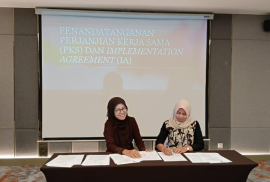
Yogyakarta, June 24, 2025 – The Faculty of Medicine, Public Health, and Nursing (FKKMK) and the Faculty of Cultural Sciences (FIB) at Universitas Gadjah Mada (UGM) officially signed a collaboration agreement with HOMSEA (History of Medicine in Southeast Asia) to co-host The 10th International Conference on the History of Medicine in Southeast Asia. The symbolic signing ceremony was held at Soegondo Hall, FIB UGM, with the Deans of FKKMK and FIB in attendance.

In his welcoming remarks, Prof. Dr. Setiadi, S.Sos., M.Si., Dean of FIB UGM, expressed her appreciation for the opportunity to host such a significant international gathering and emphasized the importance of interdisciplinary dialogue in understanding the historical roots of health systems. Representing FIB UGM, Dr. Mimi Savitri, M.A. served as the Person-in-Charge (PIC) of the event, actively coordinating the collaboration with HOMSEA and FKKMK UGM.

Held under the theme “The History of Medicine in Colonial, Post–Colonial, and Global Worlds,” the four-day conference takes place from June 23 to 27, 2025. The event began with a Pre-Conference Workshop on June 23, followed by the main conference sessions from June 24 to 26, and concludes with an optional Historical Hospital Tour on June 27.

This year’s conference addresses several vital subthemes

  • Health, Medicine, and Decolonization,
  • Community Health vs Medical Specialization,
  • Connections and Differences within Southeast Asia,
  • The Anthropocene from a Southeast Asian Perspective,
  • Medicine, Ethics, Politics, and the Sustainable Development Goals,
  • and Climate Change and Environmental Degradation.

Founded in 2005 by Prof. Laurence Monnais (University of Montreal) and Dr. Rethy Chhem (former Executive Director of the Cambodia Development Resource Institute), HOMSEA has served as a platform for scholars and practitioners to share insights and research on the history of health and medicine in the region.

To foster inclusivity, HOMSEA continues to provide travel bursaries and waived conference fees for participants from countries such as Indonesia, Cambodia, Laos, and Vietnam. These bursaries are made possible through support from institutions including the Canada Research Chair in Healthcare Pluralism, the Royal Netherlands Institute of Southeast Asian and Caribbean Studies (KITLV), and the Sydney Southeast Asia Centre.

This collaborative effort is expected to strengthen the development of research on the history of medicine in Southeast Asia and contribute meaningfully to the pursuit of equitable and sustainable global health systems.

[Public Relation of FIB UGM, Candra Solihin]

A Legacy of Knowledge and Culture: Honoring the Retirement of Dr. G.R. Lono Lastoro Simatupang, M.A., Cultural Anthropology Lecturer

News ReleaseSDGs 4: Quality Education Tuesday, 24 June 2025

Yogyakarta, June 19, 2025 – The Department of Cultural Anthropology at Universitas Gadjah Mada held a heartfelt retirement ceremony for Dr. G.R. Lono Lastoro Simatupang, M.A., a distinguished academic whose career has profoundly shaped the landscape of education and cultural studies in Indonesia. The event served as a moment of appreciation and reflection on a journey marked by dedication, critical thinking, and cultural advocacy.

One of the highlights of the event was the presentation of a commemorative book consisting of thirty essays contributed by Dr. Lono’s colleagues and students. These writings represent a tapestry of reflections, thoughts, and shared experiences, serving as both an intellectual tribute and an emotional homage to his enduring influence.

The ceremony also featured artistic performances from students and faculty members, adding a vibrant and celebratory tone to the evening. The first performance—a dangdut remix song performed by students—paid tribute to Dr. Lono’s pioneering work in elevating dangdut as a serious subject of academic inquiry. For him, dangdut was not merely entertainment but a habitus—a cultural form that embodies the joys and struggles of everyday life.

“Dangdut is all about broken huts, sharing one plate of food, poverty… but it’s danced to, not cried over,” he remarked during the talk show segment.

In the same session, Dr. Lono shared insights into his early days as a lecturer and his involvement in a national NGO in Semarang in 1986. There, he led a community empowerment program through urban microfinance, a grassroots initiative that enhanced the economic resilience of urban communities. His work directly aligned with Sustainable Development Goal (SDG) 11: Sustainable Cities and Communities.

The final and closing act of the event was a dramatic performance of Reog Ponorogo, collaboratively staged by students and lecturers. The performance revisited Dr. Lono’s in-depth research on this traditional art form within the framework of performance anthropology. This act was not just symbolic, but a living embodiment of the cultural practices he explored, taught, and preserved throughout his academic career.

Beyond the performances, Dr. Lono’s commitment to bringing popular culture—such as dangdut and reog—into academic spaces illustrates his advocacy for contextual and critical education. His approach embodies the spirit of SDG 4: Quality Education, promoting inclusive, relevant, and culturally responsive learning systems.

Alumni from the class of 1995 also attended the event, presenting a symbolic gift through their representative, Ani Himawati. This gesture reflected the deep emotional connection shared between Dr. Lono and generations of students he mentored and inspired.

Dr. Lono’s retirement does not mark the end of his contributions but rather a continuation of his intellectual legacy. His work lives on not only in academic texts but also in music, folklore, and the everyday stories he transformed into meaningful knowledge. His legacy will continue to inspire critical awareness and cultural sensitivity for years to come.

[Public Relation of FIB, Alma Syahwalani]

Fulfilling Final Exam Requirements, Fourth- and Sixth-Semester Undergraduate Archaeology Students Hold Exhibition

News ReleaseSDGs 4: Quality Education Tuesday, 24 June 2025

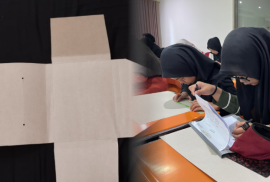
Yogyakarta, June 17, 2025 – Fourth- and sixth-semester undergraduate students of the Archaeology Program held an exhibition across various corners of the Faculty of Cultural Sciences. This exhibition was organized as part of their final semester assignment (UAS), with each group presenting a different theme. One of the highlighted themes was “The Lifestyle of UGM Students Through the Ages,” which described the daily lives of UGM students and how they have changed over time.

The everyday life of students has shaped a unique lifestyle, influenced by technological advancements. From food choices to how meals are stored and carried, such as lunchboxes, to the evolution of fashion trends among students and the shift in study habits from handwriting to typing—all of these reflect the dynamics of student life.

Another group presented the theme “Reading Pop Culture: Its Influence on UGM Students’ Lifestyle and Identity.” Pop culture has become an inseparable part of students’ daily lives. Through digital media, music, film, fashion, and fandom practices, pop culture has created unique communities. Within the campus dynamic, this culture continues to shape students’ identities through the encounter between local values and global currents.

The exhibition attracted many visitors. It provided students the opportunity to showcase their research and creativity while raising awareness about the importance of education in understanding cultural dynamics.

In this exhibition, each group displayed unique objects and explained each item. This practical approach not only made the exhibition more enjoyable but also emphasized the importance of experiential learning in education, aligning with the Sustainable Development Goals (SDGs) related to quality education.

The students expressed that the exhibition was a valuable experience that enhanced their understanding of archaeology and cultural studies. They highlighted the importance of collaboration and teamwork in preparing the exhibition, which helped them develop essential skills for their future careers.

Their hard work and creativity underscored the importance of such exhibitions in fostering critical thinking and cultural awareness among students. They encouraged more initiatives like this to promote a deeper understanding of the relationship between education and cultural identity.

Overall, the exhibition was a resounding success, showcasing the creativity and dedication of UGM archaeology students while contributing to a broader discourse on education and cultural identity.

[Public Relations of FIB, Alma Syahwalani]

Congratulations to the Selected Interns for RWS Internship Program – Batch 2025

SDGs 17: Partnerships for the GoalsSDGs 4: Quality Education Tuesday, 24 June 2025

The English Studies Program, Faculty of Cultural Sciences, Universitas Gadjah Mada, is pleased to announce the names of students who have been officially selected to join the prestigious RWS Internship Program – Batch 2025.

After a rigorous selection process and thorough evaluation of academic performance, motivation, and readiness for professional development, the following students have been accepted:

  1. Adeline Diva Hanjani
  2. ⁠Nurainina Berliani Natanda
  3. ⁠Bathari Sekar Dewangga

We are especially delighted to highlight that this marks the second consecutive time that students from the English Studies Program, Faculty of Cultural Sciences, Universitas Gadjah Mada, have successfully secured all available internship slots at RWS, an impressive achievement that reflects their academic excellence, professionalism, and global readiness.

These outstanding students will represent the English Studies Program in their internship with RWS, a leading global provider of language services and technology solutions. During their internship, they will gain invaluable experience in the field of language, translation, and content management in a professional international setting.

We extend our warmest congratulations to the selected interns and wish them a fruitful and inspiring journey. This achievement reflects their hard work, commitment, and potential to grow as globally competent graduates.

1…9091929394…265

Video UGM

[shtmlslider name='shslider_options']
Universitas Gadjah Mada

Faculty of Cultural Sciences
Universitas Gadjah Mada
Jl. Nusantara 1, Bulaksumur Yogyakarta 55281, Indonesia
   fib@ugm.ac.id
   +62 (274) 513096
   +62 (274) 550451

Work Units

  • Office of Journal & Publishing
  • INCULS
  • Information Technology and Database
  • Language Learning Center
  • Library Unit
  • Public Relations
  • Research

Facilities

  • Computer Laboratory
  • Gamelan
  • Guest House
  • Language Library
  • Library
  • Phonetics Library
  • Self Access Unit
  • Student Internet Centre

Importan Links

  • Journal of Humaniora
  • Subscriber Journal
  • Alumni Portal
  • Career
  • Departmens News
  • UGM Streaming

Contacts

  • Academic
  • Administration
  • Dean’s Office
  • Departments / Study Programs
  • Public Relations

© 2024 Faculty of Cultural Sciences Universitas Gadjah Mada

KEBIJAKAN PRIVASI/PRIVACY POLICY

[EN] We use cookies to help our viewer get the best experience on our website. -- [ID] Kami menggunakan cookie untuk membantu pengunjung kami mendapatkan pengalaman terbaik di situs web kami.I Agree / Saya Setuju