• About UGM
  • Academic Portal
  • IT Center
  • Library
  • Research
  • Webmail
  • Informasi Publik
  • English
    • Indonesia
Universitas Gadjah Mada Faculty of Cultural Sciences
Universitas Gadjah Mada
  • Home
  • Profile
    • History
    • Vision and Mission
    • Organizational structure
    • Administration
    • Staff
    • Faculty Members
  • Academic
    • Academic Calendar
    • Undergraduate Programs
      • Bachelor of Cultural Antrophology
      • Bachelor in Archaeolagy
      • Bachelor in History
      • Bachelor in Tourism
      • Bochetor in Korean Language and Culture
      • Bachelor in Indonesian Language and Culture
      • Bachelor in English
      • Bachelor in Arabic
      • Bachelor in Japanese Language and Culture
      • Bachelor in Javanese Language, Literature and Culture
      • Bachelor in French language and literature
    • Graduate Programs
      • Master in Antrophology
      • Master in ArchaeoIogy
      • Master in History
      • Master in Linguistics
      • Master in Literature
      • Master In American Studies
      • Master in Middle Eastern Cultural Studies
    • Post-Graduate Programs / S3
      • Doctor in Antropology
      • Doctor in American Studies
      • Doctor in Humanities
    • Student Service
  • KPPM
    • Research Information
    • Scientific / Academic Publications
    • Community Service
    • International Cooperation
    • Domestic Cooperation
  • Student Organizations
    • Student Executive Council
    • Semi-Autonomous Organizations
      • KAPALASASTRA
      • Christian Student Alliance
      • LINCAK
      • Saskine
      • Catholic Student Family
      • Dian Budaya
      • Sastra Kanuragan (sasgan)
      • Family of Muslim Cultural Sciences Students (KMIB)
      • Bejo Mulyo
    • Autonomous Organizations
      • Family of Anthropology Students (KEMANT)
      • English Department Student Association
      • Tourism Students Association (HIMAPA)
      • Family of Indonesian Literature Students (KMSI)
      • West Asian Literature Student Association (IMABA)
      • Association of Korean-Language Students (HIMAHARA)
      • Family of Regional Indonesian Literatures Students (KAMASUTRA)
      • The Family Body of History Students (BKMS)
      • The French Literature Students Association (HMSP)
      • Family of Anthropology Students
      • Japanese Student Association (HIMAJE)
  • Admission
    • Student Evaluation
  • Home
  • Post by
  • page. 39
Post by :

Humas FIB

From Waste to Art: Arabic Study Program Student Initiate Eggshell Calligraphy Workshop with Local Youth during KKN-PPM UGM

News ReleaseSDGs 11: Sustainable cities and communitiesSDGs 12: Responsible consumption and productionSDGs 17: Partnerships for the Goals Monday, 28 July 2025

Bandung, July 20, 2025 — Students from Universitas Gadjah Mada (UGM) participating in the KKN-PPM Sekocihampelas program conducted a creative community empowerment initiative titled “Reusing Eggshell Waste as Calligraphy Decorations.” The workshop, held at Bening Saguling Foundation in Cihampelas, West Bandung Regency, engaged local Karang Taruna youth in transforming everyday waste into meaningful works of art.

The activity began with a presentation on the potential of eggshells as recyclable art materials, followed by a hands-on session where participants crafted calligraphy pieces using the discarded shells. This initiative served not only as a creative outlet but also as an environmental awareness campaign, encouraging responsible household waste management through artistic reuse.

This program was spearheaded by the KKN-PPM UGM student team and reflects the core values of the Arabic Study Program, which envisions language and art as powerful tools for community engagement. During the practical session, participants created a variety of calligraphy designs, including names, Islamic expressions, and animal motifs like birds. The energy and enthusiasm from the youth showcased their strong interest in art and sustainable practices.

Nur Kumalatuz Zahroh, the student unit coordinator and lead organizer, expressed hope that this initiative would serve as a catalyst for sustainable waste management habits in the community.

“We hope that this activity not only teaches participants to create art but also raises awareness about environmental conservation. What was once discarded waste, like eggshells, now has artistic and economic value,” she explained.

The program actively supports the United Nations Sustainable Development Goals (SDGs), particularly SDGs 12: Responsible Consumption and Production, by creatively repurposing organic waste into useful and aesthetic products. Furthermore, it aligns with SDGs 17: Partnerships for the Goals, as the activity was conducted in collaboration with local stakeholders—Karang Taruna youth and the Bening Saguling Foundation—underscoring the importance of community-based partnerships in promoting sustainability.

More than just an art workshop, this initiative became a collaborative platform for education, environmental awareness, and community empowerment. Through this participatory and cross-sector approach, UGM’s KKN-PPM students successfully delivered a program that combined creativity, sustainability, and local engagement.


Author: Nur Kumalatuz Zahroh

Korean Language and Culture Students Accepted into UGM’s Fast Track Bachelor’s–Master’s Program

News ReleaseSDGs 4: Pendidikan Berkualitas Thursday, 24 July 2025

Yogyakarta, June 2025 — Two students from the Korean Language and Culture Study Program, Faculty of Cultural Sciences, Universitas Gadjah Mada, have successfully been accepted into the Fast Track Bachelor’s–Master’s (S1–S2) Program at UGM. They are Fadisya Zata Amany and Raissa Aneswari, both from the 2022 batch.

The Fast Track program offers an opportunity for undergraduate students to continue to the master’s level and complete both degrees in a shorter period of time. Below are the reflections and messages shared by the selected students:

Fadisya Zata Amany
“Alhamdulillah, saya sangat bersyukur bisa diterima dalam program fast track S1–S2 di Universitas Gadjah Mada. Kesempatan ini menjadi awal baru lagi untuk terus belajar, memperluas wawasan, dan memperdalam keilmuan di bidang yang saya tekuni. Proses seleksi yang cukup menantang membuat saya banyak belajar tentang ketekunan, konsistensi, dan pentingnya persiapan yang matang. Saya berterima kasih kepada dosen-dosen, teman-teman dan khususnya kepada orang tua saya yang selalu memberikan dukungan serta semangat selama proses ini. Buat teman-teman yang lagi berjuang, jangan takut ambil kesempatan ya!”

Raissa Aneswari
“Jujur, awalnya nggak nyangka bisa lolos Fast Track. Waktu daftar, sempat ragu juga, jadi ya semangatnya nothing to lose aja. Tapi Alhamdulillah, bersyukur banget bisa dapet kesempatan ikut seleksi dan akhirnya lolos. Terima kasih buat dosen-dosen dan pihak prodi yang udah mendukung proses seleksi dan pengembangan kami. Juga makasih banyak buat teman-teman atas dukungan dan doanya. Semoga ke depannya makin banyak mahasiswa yang termotivasi buat terus belajar dan berani ambil tantangan baru.”

This achievement highlights the strong academic spirit and dedication of Korean Language and Culture students at UGM in pursuing continuous education toward postgraduate study.

Penulis: Nisa Khairuna Sabilla

UGM Returns Artifacts and Ancestor Remains to the Warloka Community, Labuan Bajo

SDGs 11: Sustainable cities and communitiesSDGs 16: Peace justice and strong institutionsSDGs 17: Partnerships for the Goals Thursday, 24 July 2025

Universitas Gadjah Mada (UGM), through its Department of Archaeology and the Tourism Study Program, Faculty of Cultural Sciences (FIB), returned cultural heritage items to the Warloka community in Labuan Bajo, East Nusa Tenggara (14/7). This significant event involved the handover of approximately 40 kilograms of artifacts that had been excavated 15 years ago and stored at UGM for research purposes. The artifacts are categorized into 15 types, including jewelry, tools, ceramics, pottery, coins, and the remains of three ancestral individuals.

This initiative is part of a repatriation process that emphasizes the ethical responsibility within the academic world. Beyond the physical return of items, this repatriation reflects a critical reflection on the role of researchers and the necessity of sharing research benefits equitably. The act of returning these artifacts is a significant step towards acknowledging cultural diversity and the rights of local communities.

Dr. Tular Sudarmadi, the head of the repatriation team, highlighted that cultural heritage should not be managed through exploitative approaches rooted in colonial practices. He emphasized the need for academics to build equitable relationships with the communities that are part of their research subjects. Dr. Sudarmadi expressed a moral imperative to return these artifacts to the Warloka community, reinforcing the importance of civil society partnerships in preserving cultural heritage.

In addition, Dr. Rucitarahma Ristiawan from FIB noted that the return of these artifacts is a crucial part of the struggle for epistemic justice. He stated that this action is not merely symbolic but reflects a transformation in academic practices towards a more ethical direction. He stressed the importance of recognizing the value of local knowledge systems and providing space for communities to narrate their own histories.

The repatriation process also involved UGM’s postgraduate archaeology student, Oto Alcianto, and received support from art crime and criminology researcher Dr. Emiline Smith from the University of Glasgow. Dr. Smith views this repatriation as a symbol of a significant shift that encourages academics to be more aware of their ethical responsibilities. She also emphasized the need for government support in helping institutions manage the respectful storage and return of cultural heritage.

The remains of the ancestors are planned to be reburied according to the customs and beliefs of the Warloka community. Meanwhile, other cultural artifacts will be temporarily stored at the local Tourism Office until a dedicated exhibition space in Warloka is completed. The local government and community plan to use this momentum to enhance tourist education regarding local history and the importance of collaborative research in preserving cultural heritage.

The Warloka community has expressed its commitment to safeguarding and protecting the archaeological findings in the area. This event not only marks a significant milestone in the repatriation of cultural heritage but also serves as a reminder of the importance of cultural diversity and community engagement in the preservation of history.

As UGM continues to develop institutional guidelines for the management of archaeological excavation artifacts, this initiative stands as a pioneering effort in Indonesia. It highlights the need for ethical practices in academia and the importance of civil society partnerships in fostering a more inclusive approach to cultural heritage management.

Source: ugm.ac.id
Photos: Dok. Research Team

Ihsania Salma Awarded Beasiswa Unggulan 2024 — Here Are Her Tips and Tricks!

SDGSSDGs 10: Reduced InequalitiesSDGs 4: Pendidikan BerkualitasSDGs 5: Gender equality Wednesday, 23 July 2025

Yogyakarta, 23 Juli 2025 – A proud achievement has once again been made by a student of the Arabic Study Program, Faculty of Cultural Sciences, Universitas Gadjah Mada (UGM). Ihsania Salma, a 2023 cohort student known for her active and inspiring spirit, has successfully earned the 2024 Beasiswa Unggulan from the Ministry of Education, Culture, Research, and Technology (Kemendikbudristek). This prestigious scholarship is awarded to outstanding youth committed to making real contributions to society.

In an exclusive interview with the IKMASA Media Team, Ihsania—affectionately called Sania—shared her journey as a passionate student, literacy activist, and campus leader. She has taken on numerous roles with dedication, including as Mentor Coordinator for La-Tansa, Co-Facilitator for PPSMB PIONIR, and Chairperson of the 2024 Festival Anak Gadjah Mada Menginspirasi. She is also actively involved in teaching communities and women’s advocacy through Srikandi UGM.

“Becoming an awardee isn’t just about academic scores, but about who we are and what we stand for,” said Sania.

She emphasized that consistency, strong intent, and the courage to step outside one’s comfort zone were the keys to securing the scholarship. Through writing, podcasting, and meaningful daily contributions, Sania shows that every step—no matter how small—can carry great impact.

Through this achievement, Sania hopes to continue creating a meaningful impact and serve as an inspiration to her fellow Arabic Literature students. She encourages peers to start from small things, stay consistent, and dare to dream big.


“We don’t have to be perfect to be useful. Just start with small, sincere steps,” Sania concluded enthusiastically.

For students inspired by Sania’s story, a golden opportunity is now available. The registration for Beasiswa Unggulan 2025 is officially open until July 27, 2025. This program offers financial support to high-achieving students who are committed to using their knowledge and talents in service of society. Don’t miss it out! Prepare your documents and apply through the official portal at beasiswaunggulan.kemdikbud.go.id 

[ Arabic Literature, Muhammad Ardiansyah]

Decolonizing Photography Archives: Reviving Colonial Images for Science and Society

News Release Friday, 18 July 2025

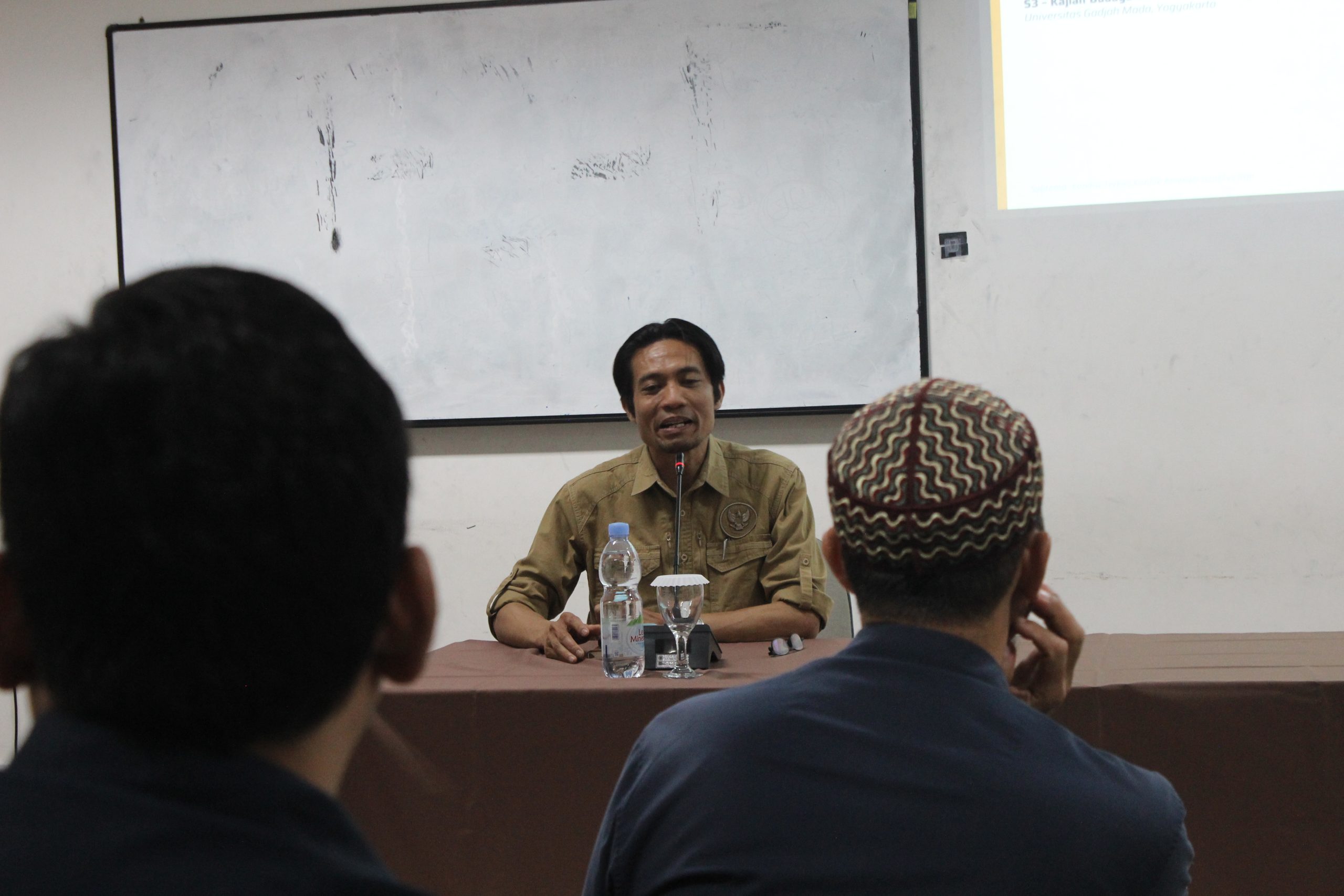
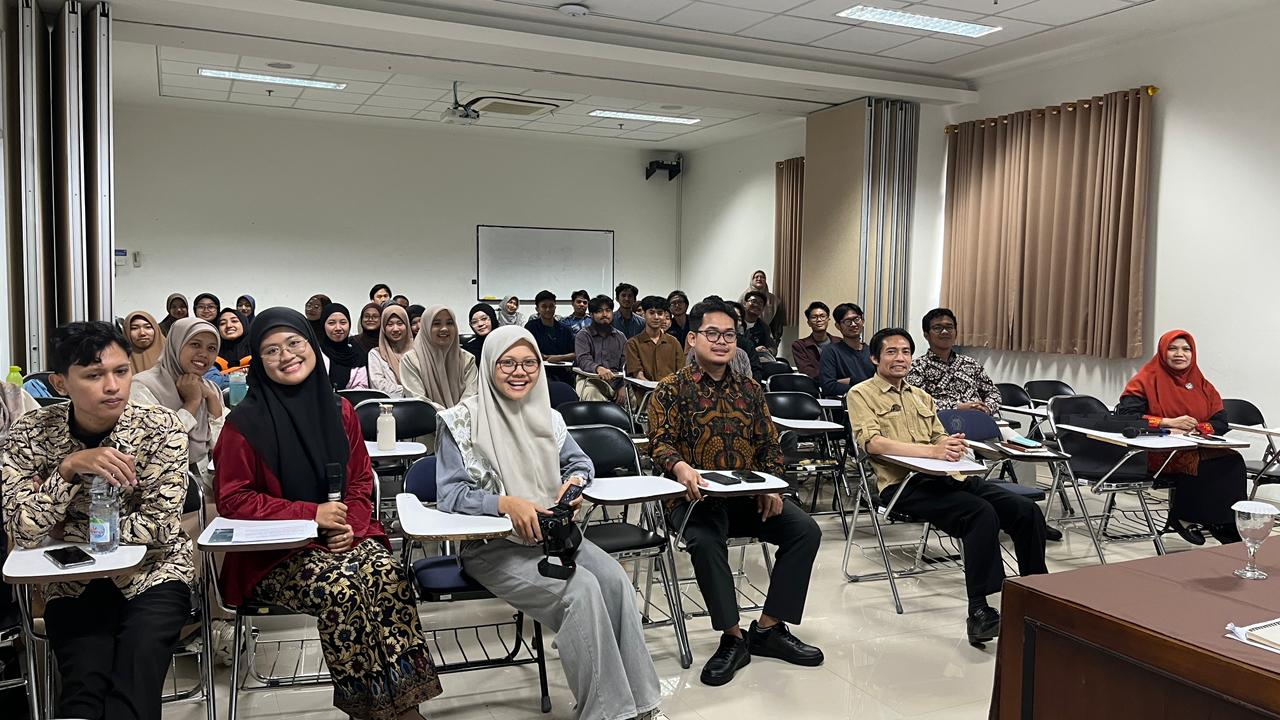
Yogyakarta, 10/7/2025 – The Department of History at the Faculty of Cultural Sciences, Universitas Gadjah Mada (UGM), recently held a public lecture aimed at igniting intellectual enthusiasm and fostering critical interdisciplinary discussions. The event, titled “Decolonizing Photography Archives: Research Issues in the Colonial Era and Its Visual Documentation,” took place in Room 709 of the Soegondo Building and featured Dr. Martin Slama, a senior researcher from the Austrian Academy of Sciences, as the keynote speaker.

In his presentation, Dr. Slama unveiled the findings from the 1928-1929 expeditions conducted by Austrian and German scientists to the Dutch East Indies. This limnological expedition not only produced around 3,000 photographs highlighting the ecology of rivers and lakes but also meticulously documented the lives of local communities, capturing everything from traditional ceremonies and religious activities to daily routines. Notably, many of the images were taken using stereo photography technology, which provided a three-dimensional effect.

However, despite their significant scientific value, these photographic archives have remained exclusively stored in Vienna, Austria. The limited access to these images has been a central critique raised during the discussion: how can these photographs be recontextualized for the communities from which they were taken? How can they be transformed from mere colonial heritage into a window for social, cultural, and historical reflection?

Dr. Slama emphasized that mere digitization is not enough. He argued that a decolonization approach is necessary in presenting these digital archives, allowing local communities in Indonesia to access, understand, and reinterpret the images in today’s context. “These colonial photographs must be given new life, not just as visual objects, but as part of a narrative that involves the communities that were once their subjects,” he stated.

The discussion was dynamic and filled with enthusiasm. Faculty members, students, and academics from various fields actively engaged in questioning and dialogue, demonstrating the importance of the intersection between history, visuality, and archival ethics in post-colonial studies.

Through this public lecture, the Department of History at UGM not only opened an academic space for learning about the past but also challenged participants to think critically about the present and how colonial legacies can be reconstructed for a more just and inclusive future. The event highlighted the role of education in addressing historical injustices and fostering a deeper understanding of cultural heritage.

As the conversation unfolded, it became clear that the decolonization of photographic archives is not merely an academic exercise but a vital step towards reconciliation and empowerment for the communities depicted in these images. By engaging with these archives, participants were encouraged to reflect on their own identities and histories, fostering a sense of ownership over their cultural narratives.

In conclusion, the public lecture served as a reminder of the power of education in shaping societal perspectives and the importance of reexamining historical narratives. The collaboration between scholars and local communities is essential in ensuring that the legacies of the past are not forgotten but are instead transformed into tools for education and social justice.

1…3738394041…216

Video UGM

[shtmlslider name='shslider_options']
Universitas Gadjah Mada

Faculty of Cultural Sciences
Universitas Gadjah Mada
Jl. Nusantara 1, Bulaksumur Yogyakarta 55281, Indonesia
   fib@ugm.ac.id
   +62 (274) 513096
   +62 (274) 550451

Work Units

  • Office of Journal & Publishing
  • INCULS
  • Information Technology and Database
  • Language Learning Center
  • Library Unit
  • Public Relations
  • Research

Facilities

  • Computer Laboratory
  • Gamelan
  • Guest House
  • Language Library
  • Library
  • Phonetics Library
  • Self Access Unit
  • Student Internet Centre

Importan Links

  • Journal of Humaniora
  • Subscriber Journal
  • Alumni Portal
  • Career
  • Departmens News
  • UGM Streaming

Contacts

  • Academic
  • Administration
  • Dean’s Office
  • Departments / Study Programs
  • Public Relations

© 2024 Faculty of Cultural Sciences Universitas Gadjah Mada

KEBIJAKAN PRIVASI/PRIVACY POLICY

[EN] We use cookies to help our viewer get the best experience on our website. -- [ID] Kami menggunakan cookie untuk membantu pengunjung kami mendapatkan pengalaman terbaik di situs web kami.I Agree / Saya Setuju