• About UGM
  • Academic Portal
  • IT Center
  • Library
  • Research
  • Webmail
  • Informasi Publik
  • English
    • Indonesia
Universitas Gadjah Mada Faculty of Cultural Sciences
Universitas Gadjah Mada
  • Home
  • Profile
    • History
    • Vision and Mission
    • Organizational structure
    • Administration
    • Staff
    • Faculty Members
  • Academic
    • Academic Calendar
    • Undergraduate Programs
      • Bachelor of Cultural Antrophology
      • Bachelor in Archaeolagy
      • Bachelor in History
      • Bachelor in Tourism
      • Bochetor in Korean Language and Culture
      • Bachelor in Indonesian Language and Culture
      • Bachelor in English
      • Bachelor in Arabic
      • Bachelor in Japanese Language and Culture
      • Bachelor in Javanese Language, Literature and Culture
      • Bachelor in French language and literature
    • Graduate Programs
      • Master in Antrophology
      • Master in ArchaeoIogy
      • Master in History
      • Master in Linguistics
      • Master in Literature
      • Master In American Studies
      • Master in Middle Eastern Cultural Studies
    • Post-Graduate Programs / S3
      • Doctor in Antropology
      • Doctor in American Studies
      • Doctor in Humanities
    • Student Service
  • KPPM
    • Research Information
    • Scientific / Academic Publications
    • Community Service
    • International Cooperation
    • Domestic Cooperation
  • Student Organizations
    • Student Executive Council
    • Semi-Autonomous Organizations
      • KAPALASASTRA
      • Christian Student Alliance
      • LINCAK
      • Saskine
      • Catholic Student Family
      • Dian Budaya
      • Sastra Kanuragan (sasgan)
      • Family of Muslim Cultural Sciences Students (KMIB)
      • Bejo Mulyo
    • Autonomous Organizations
      • Family of Anthropology Students (KEMANT)
      • English Department Student Association
      • Tourism Students Association (HIMAPA)
      • Family of Indonesian Literature Students (KMSI)
      • West Asian Literature Student Association (IMABA)
      • Association of Korean-Language Students (HIMAHARA)
      • Family of Regional Indonesian Literatures Students (KAMASUTRA)
      • The Family Body of History Students (BKMS)
      • The French Literature Students Association (HMSP)
      • Family of Anthropology Students
      • Japanese Student Association (HIMAJE)
  • Admission
    • Student Evaluation
  • Home
  • Post by
  • page. 13
Post by :

Humas FIB

Korean Days 2025: Two Decades of Indonesia–Korea Cultural Harmony at UGM

HEADLINESNews ReleaseStudent's Activity Tuesday, 18 November 2025

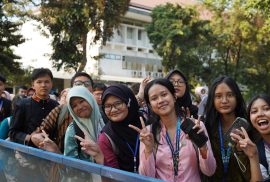
Yogyakarta, 15 November 2025 — Universitas Gadjah Mada once again became a vibrant center of Korean cultural celebration through the Festival Oullim Korea Yogyakarta: 20th Korean Day, held at the UGM Gelanggang Inovasi dan Kreativitas (GIK). This two-decade celebration was made possible through collaboration between the Korean Language and Culture Study Program of the Faculty of Cultural Sciences (FIB UGM) and the Korean Cultural Center Indonesia (KCCI). The festival was officially opened by UGM Rector, Prof. dr. Ova Emilia, M.Med.Ed., Sp.OG(K)., Ph.D., alongside KCCI Director Kim Yong Woon and distinguished guests from government institutions, academia, and cultural communities. Their presence underscored the significance of the festival as a thriving cultural interaction platform within the university environment.

The festival opened with the spirit of Oullim, meaning harmony, showcased through collaborative performances blending Indonesian and Korean traditional arts. A captivating fusion of Indonesian mask dance and Javanese gamelan with Korean fan dance and bukchum (traditional drum dance) delighted audiences. This performance was the result of an intensive week-long collaboration between students of SMKN 1 Kasihan and a visiting Korean art instructor. Students of the Korean Language and Culture Program at FIB UGM supported the process as cultural interpreters and assistants, ensuring smooth communication and rehearsals that culminated in a widely praised performance.

Beyond the stage performances, the festival featured a wide array of programs highlighting the richness of Korean culture. Shows by Salmunori UGM, music and dance showcases, dongari exhibitions, noraebang, and random play dance sessions all contributed to the lively atmosphere. One of the most striking highlights was the Hanbok Fashion Show featuring works by Leesle, a renowned South Korean designer known for dressing prominent Korean celebrities. On this occasion, Leesle presented a special hanbok collection crafted using Indonesian batik fabric, creating designs that symbolized harmonious cultural fusion. The interplay of colors, patterns, and silhouettes embodied the true meaning of Oullim as a representation of unity expressed through artistic beauty.

The festival’s dynamic atmosphere was further enriched by Korean culinary booths serving complimentary dishes to visitors, from tteokbokki to a variety of popular street foods. Additionally, the Korea Tourism Organization (KTO) participated by providing information on South Korean tourism, interactive activities, and destination promotions. Various Korean cultural institutions and communities also contributed, enhancing the festival with educational programs, entertainment, and inclusive cultural engagement. Their involvement reinforced Yogyakarta’s position as one of Indonesia’s key centers for Korean cultural exchange.

In her remarks, the UGM Rector emphasized that the twenty-year continuity of Korean Day reflects the strong cultural relations between Yogyakarta and South Korea, as well as the university’s role in promoting international collaboration. The festival serves as a cultural meeting ground that enriches students’ perspectives and expands UGM’s global network through mutually beneficial partnerships. With its overarching theme of Oullim, the festival fosters an environment that embraces diversity and encourages deep appreciation of cross-cultural heritage.

Through the 2025 Festival Oullim Korea Yogyakarta, UGM hopes to further strengthen collaboration in cultural exchange, education, and academic partnerships between Indonesia and South Korea. The event aligns with key principles of the Sustainable Development Goals (SDGs), particularly SDG 4 on Quality Education through intercultural learning opportunities; SDG 11 on Sustainable Cities and Communities through cultural preservation; and SDG 17 on Partnerships for the Goals through cooperative engagement among universities, government bodies, and international cultural organizations. In this way, the festival stands not only as a celebration of art but also as a meaningful contribution to building harmonious and sustainable global relations.

[Public Relations of FIB UGM, Candra Solihin]

Arab World Youth Summit: A Biennale Forum for Young Generation

News Release Tuesday, 18 November 2025

Yogyakarta, 8 November 2025 — The Student Association of Arabic Study Program (IKMASA), Faculty of Cultural Sciences, Universitas Gadjah Mada (UGM), held the Arab World Youth Summit with the theme “Determining Direction: Grand Narratives and Indonesia’s Strategic Steps in the Arab World” on Saturday (8/11) at the Poerbatjaraka Auditorium, FIB UGM. This biennial summit featured a series of programs including a campus tour, Sahara panel discussion, focus group discussion (FGD), group presentation, personal speech sessions, and an awarding ceremony.

The event welcomed invited guests and 45 youth delegates consisting of students from Indonesia and several other countries, including Pakistan, Tanzania, Palestine, and Kenya.

Before the official opening, delegates joined a campus tour guided by eight co-facilitators representing each firqah: Syria, Palestine, Libya, Morocco, Iraq, Qatar, Tunisia, and Egypt. The route began at the Faculty of Cultural Sciences and continued through several UGM faculties, including the Faculty of Economics and Business, Faculty of Social and Political Sciences, Faculty of Forestry, and finally the Main Building (GSP) and Balairung UGM. This activity served not only as an introduction to UGM’s academic environment but also as an opportunity to strengthen communication and build collaborative enthusiasm among participants. 

After returning to FIB, delegates enjoyed a coffee break before moving into the main agenda. The event officially opened with remarks from the emcee, followed by the Sahara panel discussion featuring two keynote speakers: Mohammed Adil Salim Algoul, S.T., M.T., M.Ag., Imam and Khatib of Al-Ikhlas Mosque, Nuseirat, Gaza; and Prof. Dr. Siti Muti’ah Setiawati, M.A., Professor of Middle Eastern Geopolitics, Faculty of Social and Political Sciences UGM. This session was moderated by Azky Zidane Qoimul Haq, Project Director of Madara UGM, the session explored the dynamics of the Palestine–Israel conflict and Indonesia’s diplomatic role.

Prof. Siti Muti’ah highlighted Indonesia’s early commitment to human rights, having signed the UN Declaration of Human Rights on 10 December 1948. She emphasized that the rights of the Palestinian people have been violated, while Israel continues to breach international law, human rights conventions, and humanitarian principles.

Meanwhile, Mohammed Adil offered a critical geopolitical reflection:

“It is wrong to say America controls Israel. Even political leaders—including the U.S. President—have stated that Israel controls America because of the Zionist lobby. The term Zionist is bigger than Israel.”

He also noted Zionism’s skill in crafting terminology to shape social narratives, drawing parallels with historical divide-and-rule strategies in Indonesia, such as the santri–priyayi–abangan classification. He argued that Palestine must counter these narratives by producing alternative terminology.

The summit continued with a 45-minute Focus Group Discussion (FGD) involving all delegates. This session became a space for dialogue, collaborative thinking, and drafting strategic narratives concerning Indonesia’s role in the Arab world. Delegates then presented their group outcomes, followed by personal speeches designed to enhance public speaking skills.

As the event neared its conclusion, the committee announced the winners of IMPACT (Interdisciplinary Madara Essay Presentation Competition), a national essay competition with student and university categories. The awards included: Best Group Presentation: Syria Firqah and The Most Outstanding Delegate at the Arab World Youth Summit 2025: As’ad Najmuddin, Universitas Islam Indonesia (UII)

The Arab World Youth Summit reflects Madara UGM’s vision as more than just a media platform or discussion forum—rather, it embodies the spirit of dialogue, critical thinking, and cross-border collaboration. The initiative aligns strongly with SDG 4: Quality Education, SDG 16: Peace, Justice, and Strong Institutions, and SDG 17: Partnerships for the Goals.

The future belongs to those who open spaces for dialogue—not those who build barriers. Today, Indonesia’s youth stand at the threshold of shaping diplomatic direction, constructing grand narratives, and formulating strategic pathways for engagement with the Arab world.

[Arabic Literature, Hashifa Zara Ahfiyani ]

FIB Encourages a Sustainable Campus Culture Through Waste Management Training

HEADLINESNews Release Tuesday, 18 November 2025

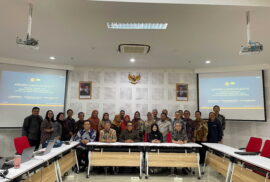
Yogyakarta, 14 November 2025 — The Faculty of Cultural Sciences at Universitas Gadjah Mada (FIB UGM) reaffirmed its commitment to developing an environmentally responsible campus by organizing a Workshop on Waste Management and Recycling at the Multimedia Room, RM Margono Building. The program forms part of the UGM Sustainability Campus Action FIB 2025 initiative and serves as a concrete effort to support the Sustainable Development Goals (SDGs), particularly SDG 11 (Sustainable Cities and Communities), SDG 12 (Responsible Consumption and Production), and SDG 13 (Climate Action).

In her opening remarks, the Vice Dean for Research, Community Service, Cooperation, and Alumni of FIB UGM, Dr. Mimi Savitri, M.A., Ph.D., emphasized the essential role of the academic community in maintaining environmental sustainability. She noted that an eco-conscious culture can only be achieved through shared awareness and collective participation across all campus components. The workshop thus served as both a discussion forum and a practical training platform to build new perspectives and habits in waste management, especially for administrative staff, cleaning personnel, the landscaping team, and representatives of LEM FIB UGM, all of whom participated enthusiastically.

The main session featured Prof. Ir. Wiratni, S.T., M.T., Ph.D., IPM., an environmental engineering expert who presented the fundamental concepts of waste management based on the 3R principles—Reduce, Reuse, Recycle. During her presentation, Prof. Wiratni elaborated on the importance of separating organic and inorganic waste, simple recycling techniques applicable in office settings, and case studies of waste management implementation in other campuses. She also highlighted the challenges UGM continues to face in reducing waste production and outlined practical strategies that each work unit can adopt to contribute to long-term solutions.

The event continued with an interactive discussion session between the audience and the speaker. Student participants conveyed their evaluations and aspirations regarding improved facilities to foster a cleaner faculty environment and strengthen discipline in waste sorting. Meanwhile, representatives from the cleaning team shared various ongoing efforts in handling inorganic waste such as leaves and food remnants. “Food waste has thankfully been managed by turning it into animal feed. As for fallen leaves, some are discarded, shredded, and processed into compost,” explained one of the FIB cleaning staff members. The dialogue remained lively as participants exchanged insights on waste management practices currently implemented across UGM, particularly within FIB.

The workshop produced several positive outcomes, including improved staff understanding of waste categories and management methods, as well as stronger collective awareness of the urgency of waste reduction on campus. Several work units also expressed their commitment to implementing continuous waste sorting practices. As a follow-up, FIB UGM plans to provide additional waste-sorting facilities around the faculty and conduct regular monitoring led by the FIB Sustainability Team. These steps align with the faculty’s long-term efforts to support UGM’s green campus goals in accordance with the SDGs.

Through this initiative, FIB UGM hopes that all staff and students can become agents of change in creating a cleaner, healthier, and more resource-efficient academic environment. The workshop reinforces FIB UGM’s dedication to advancing a culture of sustainability and strengthening its contribution to global sustainable development goals, positioning the campus as a real-world model of environmentally friendly practices for the broader community.

[Public Relations of FIB UGM, Candra Solihin]

Students of Listening and Speaking III Join a Q&A Session on Debate with a National Champion

News Release Monday, 17 November 2025

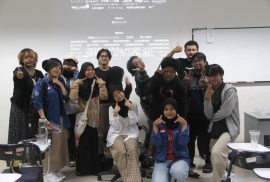
Yogyakarta, October, 15, 2025 – Students of Class A in the Listening and Speaking III course participated in an activity titled “Debate Competition: Q&A with the Champion” as part of efforts to broaden their learning experience. The session provided students with an opportunity to gain deeper insights into Korean-language debating and the dynamics of competition preparation from an experienced speaker.

The course instructor, Alfiana Amrin Rosyadi, S.S., M.A, invited Sindy Novi Nurjanah, the First-Place Winner of the 2021 Korean Debate Competition and an alumna of the 2018 cohort, who is currently pursuing a master’s degree in Teaching Korean as a Foreign Language at Kyunghee University. The online session enabled students to directly interact with Sindy despite geographical distance, opening space for discussion on Korean debating techniques and strategies for preparing for such competitions.

Sindy shared her impressions of engaging with the students of the Korean Department at UGM. She expressed that although the session was conducted online, the students’ enthusiasm was evident through their active questions and attentive participation. She hoped that the experiences and perspectives she shared would support the students in their learning process and as they encounter new opportunities in the future.

She also encouraged students not to hesitate in taking on challenges, including participating in competitions or exploring new opportunities that can expand their horizons. According to her, having the courage to dream and maintaining confidence in one’s abilities are essential first steps. “As long as we believe in ourselves and keep trying, there will always be a way to achieve our goals,” she said.

Through this activity, students are expected not only to understand debating techniques but also to feel more motivated to develop their skills, broaden their perspectives, and cultivate sustainable learning habits. Activities like this serve as a reminder that opportunities for growth often emerge from simple encounters that provide new inspiration and motivation.

[Antrophology, Eunike Serafia N.S]

Comparative Study of Javanese Literature at UNNES and Javanese Language, Literature, and Culture at UGM: Strengthening Friendship and Collaboration for Sustainable Javanese Culture

HEADLINESNews Release Thursday, 13 November 2025

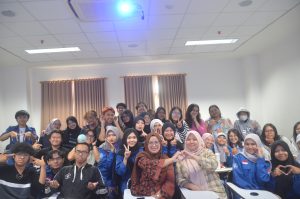
Yogyakarta, November 12, 2025 — The Javanese Literature Study Program, Semarang State University (UNNES), conducted a comparative study with the Javanese Language, Literature, and Culture Study Program, Gadjah Mada University (UGM). The event, held in the Multimedia Room on the 2nd floor of Margono Building, Faculty of Cultural Sciences (FIB) UGM, served as a platform for networking and knowledge exchange among students from both universities.

Forty UNNES Javanese Literature students from the class of 2023 attended the event and were welcomed by nine UGM Javanese Language, Literature, and Culture students from the class of 2022, including Alfonsus Dipa Wicaksana, Anggit Galuh Ajar Amanah, Fauzan Adi Fadlurahman, Haryo Untoro, Muhammad Siswoyo, Novia Hikmatul Mubarokah, Pesdhi Sekar Hayumay, Saktia Hidayah, and Yasmin Nabiha Sahda.

The event was opened by Yasmin Nabiha Sahda, who introduced the agenda. Next, Novia Hikmatul Mubarokah presented the profile of the UGM Javanese Language, Literature, and Culture Study Program, including the curriculum, student activities, and various academic and non-academic programs that have been organized. A similar presentation was then delivered by a representative of UNNES students who introduced the structure and activities of the Javanese Literature Study Program.

The next session was filled with a “Study Interest Discussion” activity, featuring three UGM student representatives: Fauzan Adi Fadlurahman (Philology), Muhammad Siswoyo (Linguistics), and Saktia Hidayah (Literature). They gave an introduction to their respective fields of study, followed by an interactive discussion. UNNES students enthusiastically asked various questions about learning methods, tips for completing assignments, and the direction of studies in these fields. A warm and friendly atmosphere was created through dialogue, jokes, and the sharing of experiences among participants.

Towards the end of the event, remarks were delivered by the Head of the Javanese Language, Literature, and Culture Study Program at UGM, Dr. Daru Winarti, M.Hum., and a representative from the Javanese Literature Study Program at UNNES, Dr. Prembayun Miji Lestari, M.Hum. Both emphasized the importance of collaboration between students and educational institutions in strengthening the development of knowledge and preservation of Javanese culture.

The event concluded with a joint documentation session as a symbol of unity and commitment to continue cooperation.

Through this comparative study, it is hoped that the relationship between the two study programs will become closer and more productive. In addition to broadening the academic horizons of students, this activity is also a concrete step in the joint effort to preserve and develop Javanese cultural heritage in higher education.

Author: Haryo Untoro

1…1112131415…216

Video UGM

[shtmlslider name='shslider_options']
Universitas Gadjah Mada

Faculty of Cultural Sciences
Universitas Gadjah Mada
Jl. Nusantara 1, Bulaksumur Yogyakarta 55281, Indonesia
   fib@ugm.ac.id
   +62 (274) 513096
   +62 (274) 550451

Work Units

  • Office of Journal & Publishing
  • INCULS
  • Information Technology and Database
  • Language Learning Center
  • Library Unit
  • Public Relations
  • Research

Facilities

  • Computer Laboratory
  • Gamelan
  • Guest House
  • Language Library
  • Library
  • Phonetics Library
  • Self Access Unit
  • Student Internet Centre

Importan Links

  • Journal of Humaniora
  • Subscriber Journal
  • Alumni Portal
  • Career
  • Departmens News
  • UGM Streaming

Contacts

  • Academic
  • Administration
  • Dean’s Office
  • Departments / Study Programs
  • Public Relations

© 2024 Faculty of Cultural Sciences Universitas Gadjah Mada

KEBIJAKAN PRIVASI/PRIVACY POLICY

[EN] We use cookies to help our viewer get the best experience on our website. -- [ID] Kami menggunakan cookie untuk membantu pengunjung kami mendapatkan pengalaman terbaik di situs web kami.I Agree / Saya Setuju