• About UGM
  • Academic Portal
  • IT Center
  • Library
  • Research
  • Webmail
  • Informasi Publik
  • English
    • Indonesia
Universitas Gadjah Mada Faculty of Cultural Sciences
Universitas Gadjah Mada
  • Home
  • Profile
    • History
    • Vision and Mission
    • Organizational structure
    • Administration
    • Staff
    • Faculty Members
  • Academic
    • Academic Calendar
    • Undergraduate Programs
      • Bachelor of Cultural Antrophology
      • Bachelor in Archaeolagy
      • Bachelor in History
      • Bachelor in Tourism
      • Bochetor in Korean Language and Culture
      • Bachelor in Indonesian Language and Culture
      • Bachelor in English
      • Bachelor in Arabic
      • Bachelor in Japanese Language and Culture
      • Bachelor in Javanese Language, Literature and Culture
      • Bachelor in French language and literature
    • Graduate Programs
      • Master in Antrophology
      • Master in ArchaeoIogy
      • Master in History
      • Master in Linguistics
      • Master in Literature
      • Master In American Studies
      • Master in Middle Eastern Cultural Studies
    • Post-Graduate Programs / S3
      • Doctor in Antropology
      • Doctor in American Studies
      • Doctor in Humanities
    • Student Service
  • KPPM
    • Research Information
    • Scientific / Academic Publications
    • Community Service
    • International Cooperation
    • Domestic Cooperation
  • Student Organizations
    • Student Executive Council
    • Semi-Autonomous Organizations
      • KAPALASASTRA
      • Christian Student Alliance
      • LINCAK
      • Saskine
      • Catholic Student Family
      • Dian Budaya
      • Sastra Kanuragan (sasgan)
      • Family of Muslim Cultural Sciences Students (KMIB)
      • Bejo Mulyo
    • Autonomous Organizations
      • Family of Anthropology Students (KEMANT)
      • English Department Student Association
      • Tourism Students Association (HIMAPA)
      • Family of Indonesian Literature Students (KMSI)
      • West Asian Literature Student Association (IMABA)
      • Association of Korean-Language Students (HIMAHARA)
      • Family of Regional Indonesian Literatures Students (KAMASUTRA)
      • The Family Body of History Students (BKMS)
      • The French Literature Students Association (HMSP)
      • Family of Anthropology Students
      • Japanese Student Association (HIMAJE)
  • Admission
    • Student Evaluation
  • Home
  • Post by
  • page. 12
Post by :

Humas FIB

Guest Lecture on Anthropology: The Role of Visual Media in Facing Mining Contests

News Release Thursday, 20 November 2025

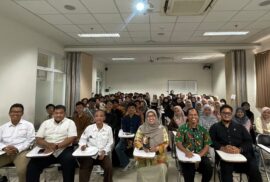
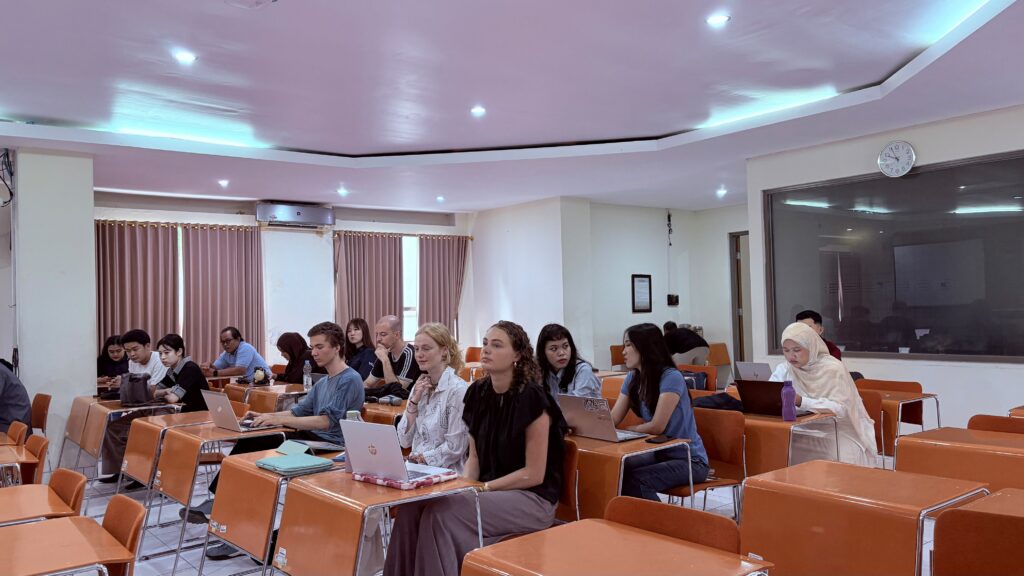
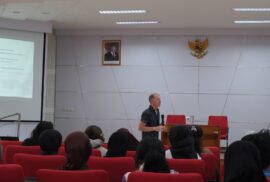
Yogyakarta, November 14th, 2025 –  The Ethnography of Maluku and Nusa Tenggara class held by the Department of Anthropology featured a guest lecturer. Danishwara Nathaniel (Mas Dan) is a PhD candidate from the Geneva Graduate Institute, currently doing research on Ternate, Northern Maluku. During the first session of the class, Mas Dan presented part of his research, titled Visual Activism and Maritime Identity in Indonesia’s Extraction Frontier. In this research, Mas Dan highlights the importance of visual media for the activist movement that is going on in Maluku, which historically has always been an important frontier for natural resources. During the colonial era, the resources being fought over were mainly spices; nowadays, minerals and mines are the resources being extracted from Northern Maluku. Mas Dan explained that Ternate is a sacrifice zone: a specific area that is being ‘sacrificed’ to better the lives of people in other parts of the world. In this context, Maluku’s nature is being destroyed by nickel mines, used for lithium batteries to power electrical vehicles.

Mas Dan further explains the importance of visual and digital media to help put the situation in Northern Maluku on a spotlight. In the past, maps were the visual media being used by colonial forces to plan the conquest of Ternate. This topdown, unspecified view makes the location seem static and controllable, void of any living elements that have their own agencies. Now, visual media helps the people of Ternate to voice their resentment towards the extraction project that they are facing. News and articles are being published all throughout the internet by international journalists and NGOs, spreading awareness about the impacts of green energy development. Mas Dan also mentions that visual and digital media can also be used to dampen the work that the activists have put in. This is mainly done by the government or stakeholders in the mining industry, through the launching of counter-narratives and censorship of the news.

In the second session of the class, Mas Dan brought in his friend as well as his interlocutor (through Zoom Meetings) to share more about the Ternate situation to the class. Adlun Fiqri is an activist from Halmahera who has been vocal in the struggle against the mining industry going on in his hometown. Mas Adlun is also a bachelor of anthropology from Universitas Airlangga, and even did an exchange semester here in UGM. Mas Adlun shared his experience of documenting and actively fighting the mining industry, even being captured a couple of times. He also explains the difference that the mines have brought to local communities: people are becoming more wary and less friendly, after facing countless encounters with the generally aggressive agents from the mines. The main point that is being projected through this class by Mas Dan and Mas Adlun is that Northern Maluku is currently a victim of the growing green energy movement. Visual and digital media can serve as loudspeakers to the world that Northern Maluku is not okay, and spread the word about the impacts of industries on local communities.

Author: Amadeus Abhirama Paramanindita

Universitas Gadjah Mada and UIN Sunan Ampel Surabaya Strengthen Academic Collaboration in Arabic Studies Research and Publication

News Release Wednesday, 19 November 2025

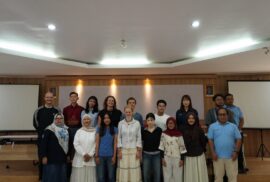
Yogyakarta, October 30, 2025 — The Arabic Study Program of the Faculty of Cultural Sciences, Universitas Gadjah Mada (UGM), welcomed an academic delegation from the Arabic Language and Literature Study Program (BSA), Universitas Islam Negeri (UIN) Sunan Ampel Surabaya, for a collaborative meeting on institutional partnership development and faculty cooperation in research and publication.

The meeting brought together heads of study programs and lecturers from both study programs. Representatives from UGM included Prof. Dr. Sangidu, M.Hum., Dr. Zulfa Purnamawati, S.S., M.Hum., Dr. Arief Ma’nawi, S.S., M.Hum., and several other lecturers. Meanwhile, UIN Sunan Ampel was represented by Dr. Abdulloh Ubet, M.Ag. (Head of BSA), Sodikin, M.Pd.I (Secretary of the Study Program), Dr. Mirwan Akhmad Taufiq, M.A. (Head of Department), along with other faculty members and teaching staff.

The meeting opened by Dr. Imam Wicaksono, Lc., M.A., followed by welcoming speech from Prof. Sangidu and from the UIN Sunan Ampel delegation. During the meeting, Dr. Zulfa Purnamawati emphasized the importance of interdisciplinary collaboration in community service and research. She noted that community engagement initiatives at the Faculty of Cultural Sciences now require involvement across various fields to produce two outcomes: one from UGM and one from its collaborating partners.

In addition to discussing research and publication cooperation, the two study programs reviewed strategies for teaching Arabic at the university level. Dr. Zulfa highlighted several innovations at UGM’s Arabic Study Program, such as matriculation classes for beginners, peer-assisted tutorials, and entrepreneurship courses taught by alumni.

From UIN Sunan Ampel, Dr. Abdulloh Ubet explained that most BSA lecturers have backgrounds in Arabic Language Education (PBA), which shapes their research focus toward education. He also shared that UINSA continues to strengthen students’ language proficiency through intensive Arabic and English training sessions starting as early as 6 a.m. Since 2025, the BSA Program has implemented a new curriculum designed to meet industry needs, including an Edupreneur course to equip students with entrepreneurial competencies.

The meeting concluded with documentation and an exchange of souvenirs between the two study programs, symbolizing their commitment to sustained academic cooperation.

This collaborative forum not only expanded academic networking between universities but also aligned with key Sustainable Development Goals (SDGs)—notably SDG 4 (Quality Education) through strengthened academic quality and partnership-based learning; SDG 8 (Decent Work and Economic Growth) by enhancing students’ entrepreneurial skills; and SDG 17 (Partnerships for the Goals) through the development of strategic institutional cooperation across higher education institutions in Indonesia.


Author: Muhammad Ardiansyah

Educative Talkshow SEDASA: Youth Voices for Village Advancement

HEADLINESNews ReleaseStudent's Activity Wednesday, 19 November 2025

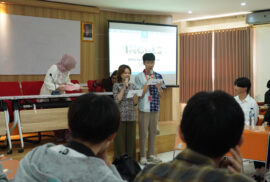
Yogyakarta, September 27, 2025 — A spirit of collaboration and youth empowerment filled the Poerbatjaraka Auditorium at the Faculty of Cultural Sciences, Universitas Gadjah Mada, as the Arabic Study Program Student Association (IKMASA) partnered with the Department of Village Community Development, BEM KM UGM, to hold the inspirational talkshow SEDASA: Suara Pemuda untuk Kemajuan Desa (Youth Voices for Village Advancement). The event, part of the Gemilang Desa 2025 program, took place on Saturday afternoon (27/9) from 13.00 to 15.30 WIB, drawing enthusiastic participation from attendees.

The talkshow featured three distinguished speakers: Joko Susilo, Founder of Gunungkidul Menginspirasi and Head of Training and Consultancy at the Nalar Institute; Prof. Irfan Dwidya Prijambada, M.Eng., Ph.D., Professor at the Faculty of Agriculture UGM; and KPH H. Yudanegara, Ph.D., Head of the Office of Village Community Empowerment, Population, and Civil Registration of the Yogyakarta Special Region, who delivered the keynote address. The discussion was moderated by Antonia Elena Listya Araminta, the 2025 Environmental Ambassador of Yogyakarta, who led the session warmly and interactively.

As the key initiator, IKMASA played a central role in conceptualizing the event, designing its program flow, and fostering institutional collaboration to strengthen youth engagement in village development. The forum served as an important platform for students to engage directly with experts and practitioners on contemporary rural issues, including local potential development, technological innovation, and sustainable community empowerment.

The event attracted a diverse audience, including UGM students, high school participants from Yogyakarta, and delegates from various universities such as UPN and UNDIP, enriching the collaborative atmosphere and strengthening inter-institutional involvement in advancing rural communities.

Following the talkshow, the committee announced the winners of competitions held under the Gemilang Desa 2025 series and presented awards to the participants. The program was officially closed by Faris Zakiy Ramadhan, a 2023 Arabic Study Program student and General Coordinator of Gemilang Desa, who underscored the vital role of students in driving ideas and initiatives for village development.

Through the collaboration between IKMASA and BEM KM UGM, the SEDASA Educational Talkshow not only served as an inspiring space for young people to deepen their understanding of rural issues but also demonstrated a concrete contribution to the Sustainable Development Goals (SDGs), particularly SDG 4 (Quality Education), SDG 8 (Decent Work and Economic Growth), and SDG 17 (Partnership for the Goals).

With strong collaborative energy, SEDASA 2025 reaffirms that UGM students (through the active involvement of IKMASA) are capable of becoming agents of change who contribute meaningfully to the advancement of Indonesian villages and communities.


Author: Lisa Atika

Congratulations! Lembaran Antropologi Journal Receives Best Journal Governance Award

HEADLINESSDGS Tuesday, 18 November 2025

Yogyakarta, 15 October 2025 — After receiving its accreditation rating from SINTA earlier this year, Lembaran Antropologi, a journal managed by the Department of Anthropology at UGM, has once again achieved a new milestone. It was awarded the title of Winner of the Award for Governance of Nationally Accredited and Scopus-Indexed Scientific Journals, Period I of 2025 by the Directorate of Research. The announcement was delivered through Decree No. 12517/UN1.P2/Dit-Lit/PJ.00.02/2025, in which Lembaran Antropologi ranked 9th out of 12 journals that successfully passed the selection.

Lembaran Antropologi aims to promote academic discourse and anthropological analysis in the study of human relations, culture, and society across the Global North and South. The journal publishes two issues each year: Issue 1 (January–June) and Issue 2 (July–December). In its second issue, the journal releases a special edition, a thematic issue often developed in collaboration with experienced researchers in relevant fields. Submissions are open and free of charge. We warmly welcome contributors to share their best work!

Penulis: Penulis: Novilatul Ananda Ramadhani

UGM English Literature Leads National Ranking and Secures Global Position in QS 2025

HEADLINESNews Release Tuesday, 18 November 2025

The English Literature Study Program at Universitas Gadjah Mada has reaffirmed its academic excellence through its achievement in the QS World University Rankings by Subject 2025, placing in the 151–200 band globally and securing the top position in Indonesia. Within the same subject cluster, Universitas Indonesia and Universitas Pendidikan Indonesia also appeared in the global rankings.

This recognition reflects the program’s continued commitment to strengthening its academic and international standing, aligning with UGM’s mission to provide inclusive, high-quality education in support of SDG 4: Quality Education.

From the beginning of their academic journey, students follow a carefully designed series of developmental programs. After completing PPSMB, all new students participate in POPSI, an orientation initiative that offers international exposure through classes taught by lecturers currently studying abroad and sessions with global figures such as ambassadors. The program also emphasizes national identity and campus ethics, ensuring that students balance global awareness with strong civic values.

Cross-cultural learning is further encouraged through joint classes attended by students from Japan and Taiwan, enabling UGM students to build international networks and broaden their intercultural competence—an effort that resonates with SDG 17: Partnerships for the Goals.

The program also maintains a close partnership with the National University of Singapore (NUS). Through this collaboration, students can take part in short academic programs in Singapore and host NUS participants in return. These exchanges not only enrich academic experience but also serve as a platform for introducing Indonesian culture to the global academic community.

Beyond academics, the English Literature program supports student creativity through English Days, an annual theatre production. Students are responsible not only for performing but also for managing the entire event, from concept development to fundraising. This hands-on experience strengthens organizational, creative, and leadership skills, contributing to SDG 8: Decent Work and Economic Growth.

Digital literacy and media management are also nurtured. Through courses in writing and journalism, students gain the skills needed to manage the program’s website and social media channels. The program further contributes to academic assessment by developing AcEPT, UGM’s official Academic English Proficiency Test used for university admissions.

In terms of research and publication, the program’s academic journal has been open to English literature departments across Indonesia since 2024 and has recently earned a Sinta 3 accreditation, reflecting its growing scholarly impact.

The strong alumni network and contributions from retired faculty also play an important role in supporting the program’s development. Their insights and guidance help students pursue continued academic and professional achievements, reinforcing a collaborative academic environment in line with SDG 17.

Through consistent initiatives, active support from academic staff, and a culture of continuous improvement, the program sends a significant number of students to participate in the Indonesia International Student Mobility Awards (IISMA) each year. Their global experiences later inspire and benefit future cohorts.

By staying focused on its long-term vision, the English Literature Study Program at UGM demonstrates that sustained progress, collective commitment, and integration of sustainable development values naturally lead to international recognition.

Photo: freepik.com


[Public Relations of FIB UGM, Candra Solihin]

1…1011121314…216

Video UGM

[shtmlslider name='shslider_options']
Universitas Gadjah Mada

Faculty of Cultural Sciences
Universitas Gadjah Mada
Jl. Nusantara 1, Bulaksumur Yogyakarta 55281, Indonesia
   fib@ugm.ac.id
   +62 (274) 513096
   +62 (274) 550451

Work Units

  • Office of Journal & Publishing
  • INCULS
  • Information Technology and Database
  • Language Learning Center
  • Library Unit
  • Public Relations
  • Research

Facilities

  • Computer Laboratory
  • Gamelan
  • Guest House
  • Language Library
  • Library
  • Phonetics Library
  • Self Access Unit
  • Student Internet Centre

Importan Links

  • Journal of Humaniora
  • Subscriber Journal
  • Alumni Portal
  • Career
  • Departmens News
  • UGM Streaming

Contacts

  • Academic
  • Administration
  • Dean’s Office
  • Departments / Study Programs
  • Public Relations

© 2024 Faculty of Cultural Sciences Universitas Gadjah Mada

KEBIJAKAN PRIVASI/PRIVACY POLICY

[EN] We use cookies to help our viewer get the best experience on our website. -- [ID] Kami menggunakan cookie untuk membantu pengunjung kami mendapatkan pengalaman terbaik di situs web kami.I Agree / Saya Setuju