
The Indonesian Language and Literature Study Program at the Faculty of Cultural Sciences, Universitas Gadjah Mada (FIB UGM), in collaboration with the Art Conservation Study Program at the Indonesian Institute of the Arts (ISI) Yogyakarta, the Yogyakarta Philosophical Axis Area Management Agency (BPKSF), and Technische Universität (TU) Wien, Austria, organized a workshop titled “From Tugu to Panggung Krapyak: Storytelling about Yogyakarta’s Philosophical Axis for Children” on September 1–2, 2026. Held in Room 709, Soegondo Building, FIB UGM, this event aimed to introduce the cultural heritage values of Yogyakarta’s Philosophical Axis to children through creative and interactive storytelling.
The workshop featured speakers from all four collaborating institutions: Dr. Novi Siti Kussuji Indrastuti, M.Hum., Head of the Indonesian Language and Literature Study Program at FIB UGM; Dr. Prima Dona Hapsari, M.Hum., Head of the Art Conservation Study Program at ISI Yogyakarta; Nano Warsono, M.Sn., from ISI Yogyakarta; Drs. Aryanto Hendro Suprantoro, Head of the Yogyakarta Philosophical Axis Area Management Agency; and Dipl.-Ing. Dr. Ulrike Herbig from TU Wien, Austria. This collaboration brought together perspectives in literature, art, cultural heritage management, and academic studies to develop culturally appropriate ways of conveying cultural values tailored to children.
Yogyakarta’s Philosophical Axis consists not only of historical buildings and areas but also embodies philosophical values and cultural knowledge that are vital to pass down to future generations. Through storytelling, these values are transformed into narratives closely aligned with children’s experiences. Characters, fairy tales, wayang (puppetry), songs, and games can be utilized as media to help children recognize and understand the meaning of Yogyakarta’s Philosophical Axis in an engaging way.
During this workshop, children’s literature students from the Indonesian Language and Literature Study Program at FIB UGM were involved in story development and storytelling practices. Meanwhile, students from the Art Conservation Study Program at ISI Yogyakarta contributed by developing properties and interactive visual media to support the storytelling. This activity served as a practical space for students to develop creative approaches in introducing cultural heritage to children.
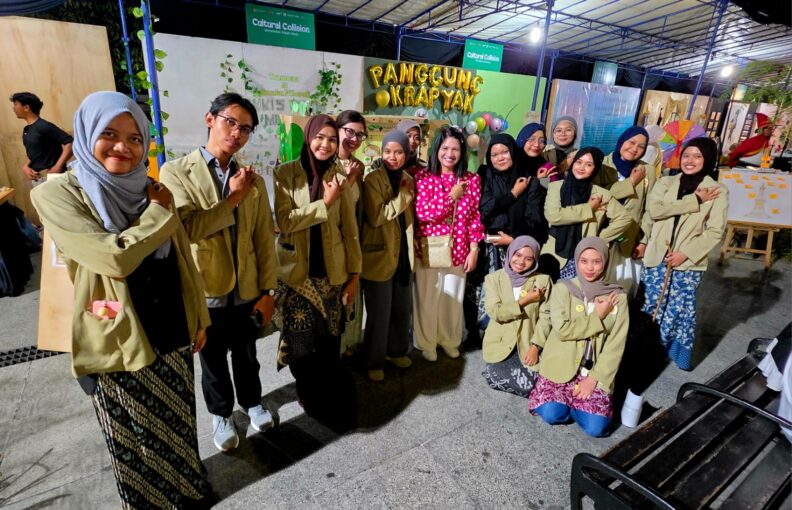
The series of activities continued with an exhibition during the JWHF agenda on September 29, 2026, in front of the Yogyakarta City DPRD Building. Students from the Indonesian Language and Literature Study Program at FIB UGM actively assisted and manned the exhibition booth, introducing Yogyakarta’s Philosophical Axis through live oral storytelling to visitors. This direct oral presentation served as an effective way to bring the philosophical and historical values of the Philosophical Axis closer to the public in an interesting and easily digestible manner. Student involvement in this initiative also supports cultural heritage preservation efforts through youth participation.
This collaboration aligns with the Sustainable Development Goals (SDGs), specifically SDG 4 on Quality Education through the development of creative and inclusive cultural learning, and SDG 17 on Partnerships for the Goals through cooperation between universities and cultural heritage management institutions.
Author: Indonesian Language and Culture
