
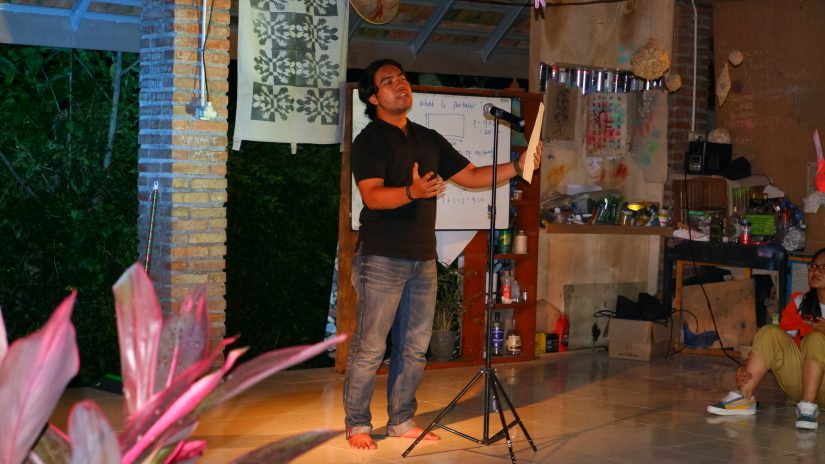
Yogyakarta, May 16, 2026 – At Pondok A. Salam Kalimasada in Pakem, Sleman, Yogyakarta, a new chapter of Matragama became more than merely an organizational agenda. It transformed into a gathering space for people who believe that literature still needs to be nurtured collectively. Since 6:00 PM WIB, people arrived one by one, bringing voices, stories, laughter, and memories. They sat on woven mats in the cold night air, while the dim light in the corner of the lodge made every conversation feel more intimate. The event was attended by the extended Matragama family from various generations, doctoral students of Humanities Studies, and invited guests from Middle Eastern Cultural Studies, American Studies, Linguistics, History, Anthropology, and various circles within the Faculty of Cultural Sciences at UGM.
Since its establishment in 2022 under the leadership of Billy, Matragama has continued moving forward through a relay of generations. Leadership was then continued by Awan in the second generation, and now enters a new phase with Brian steering the third generation. That evening marked a sign that the relay had not stopped. Amid the cold air of Pakem and the warmth of conversations beginning to grow, Matragama seemed to be rediscovering its flame.
The head of Matragama, Giandra Febrian Haidar, opened the event in a calm yet confident tone. In his remarks, he expressed hope that literature would not remain confined to classrooms alone, but would also grow in gathering spaces, through long nights, and among people who still wish to listen to one another.
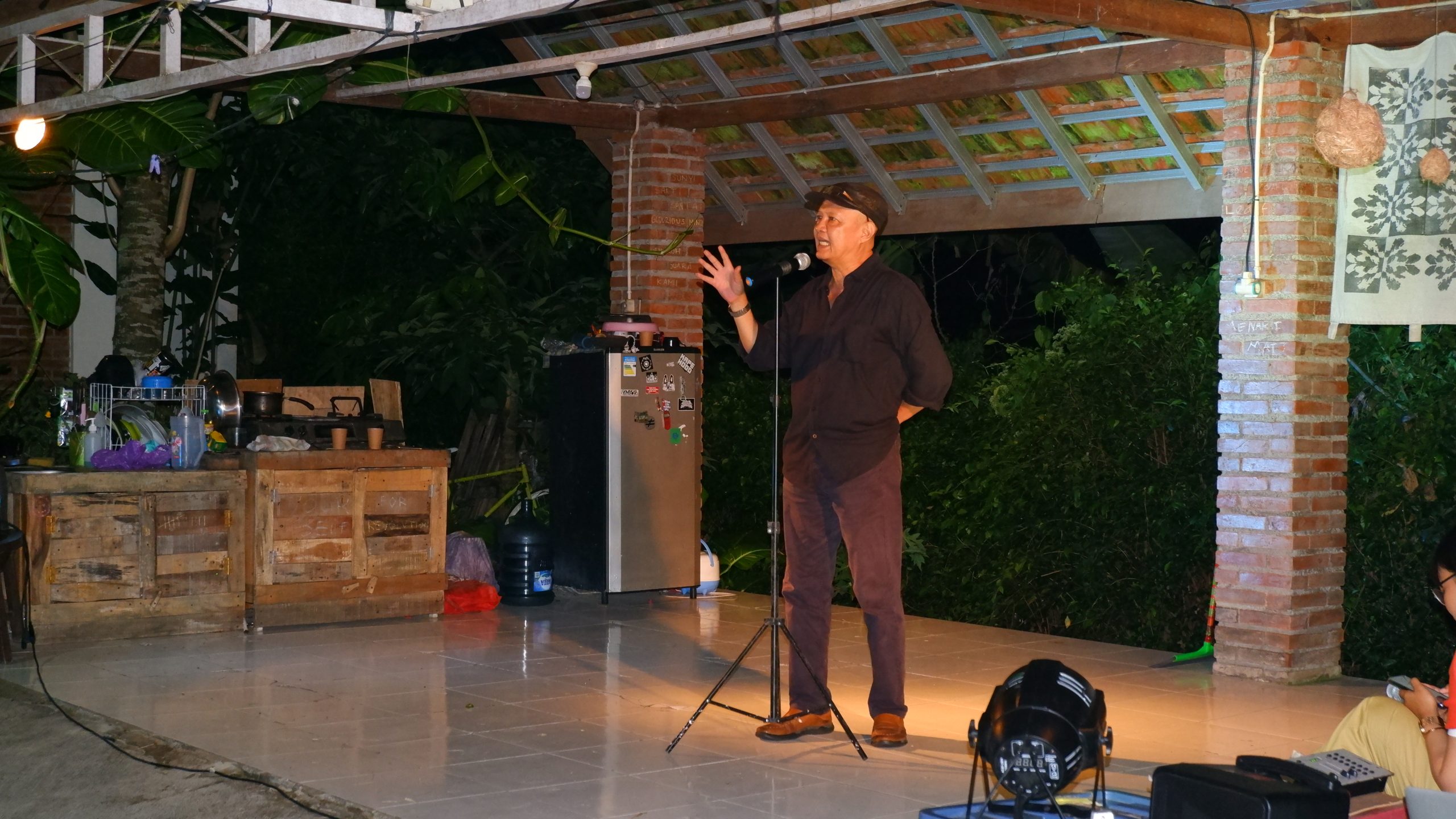
The Head of UGM’s Master’s Program in Literature, Aprinus Salam, was also present and delivered warm remarks. Before the students and invited guests, he emphasized the importance of organizing and building communities as part of intellectual and cultural processes. According to him, literature cannot live in isolation. It grows through encounters, conversations, and collective work. Aprinus also stated that Pondok A. Salam Kalimasada could serve as a venue for literary and artistic activities—an open house for anyone wishing to keep the pulse of culture alive.
After the opening session, warmly guided by Pute as the host, poem after poem began to be recited. Short stories were brought to life through voices. Under the theme Little Candles at the Foot of Merapi, moments of silence felt deeply meaningful, as though everyone was gathering something from within themselves. The readers appeared one after another: M. Iqbal Saputra, Romzul Falah, Awabeen Samsuding, Ella Manikam, Nuzul Ilmiawan, Islahudin Muhammad, Khatibul Umam, and several invited guests. They did not merely read poetry, but also shared anxieties and inner experiences with the audience.
At times, the sound of crickets slipped between the poetry readings. Some listeners bowed their heads in silence as the poems were recited. Then a light drizzle fell gently, as though helping preserve the calm and warmth of the night. As the rain grew heavier, some participants slowly moved to the terrace and inside the lodge while continuing to listen attentively. Words continued floating through the night air, mingling with the cold winds from the slopes of Mount Merapi and the aroma of coffee and boiled soybeans wafting from the lodge.
In between sessions, M. Iqbal Saputra, a committee member from the technical division, shared his reflections on the importance of literary appreciation nights such as this. According to him, events like the launch of Matragama are something that should exist amidst the turbulence of changing times. He said that poetry, storytelling, and even simple discussions are efforts to become whole human beings again—to see life from various perspectives and then determine one’s path, whether through writing, action, or perhaps simply through a smile.
One of the evening’s most captivating moments came through a dramatic reading by Luthfi, a doctoral student in Humanities at UGM. The dramatic performance transformed the text from mere writing into a moving body, a pulsating voice, and emotions vividly alive before the audience’s eyes. The invited guests were swept into the intimate yet energetic atmosphere.
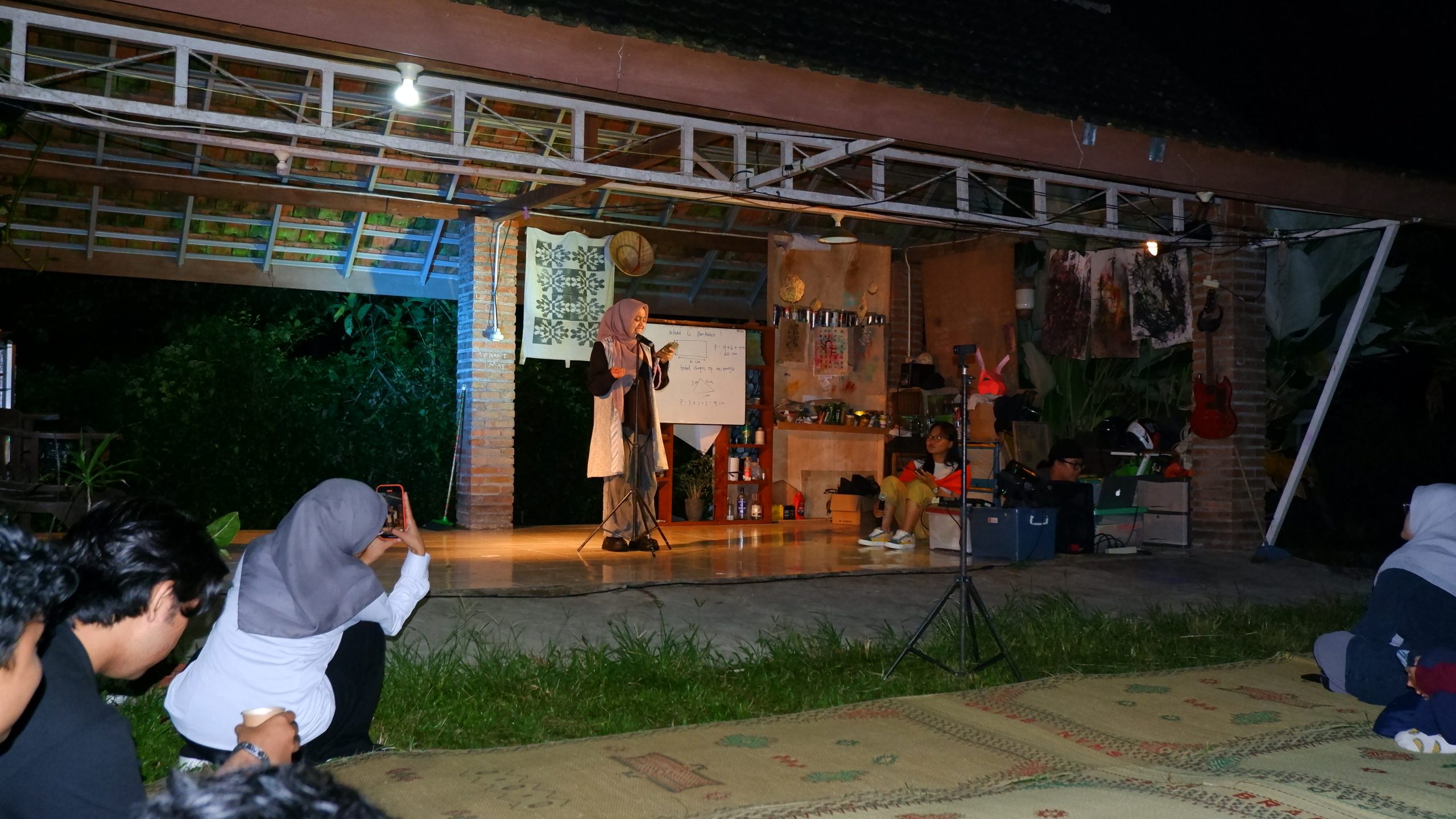
In the middle of the appreciation night, Rini Febriani Hauri read her short story titled The Three Deaths of Dayang Temulun in a calm and rhythmic voice. The climax of the event came when Rini’s short story was discussed collectively. The discussion was moderated by Giandra, featuring Ricky Yudhistira Nasution, a doctoral student in Humanities at UGM, as the speaker. The short story, which won Second Place in the 2025 International HB Jassin Award, was explored through the lens of magical realism—a landscape where bodies, earth, trees, mist, and memories coexist without rigid boundaries between the real and the supernatural. The discussion unfolded warmly. It examined how literature operates within collective memory, myth, the body, and human history. Participants listened enthusiastically; some remained silent in contemplation, while others immersed themselves in endless interpretive possibilities.
The night grew later, yet no one truly wished to leave. After the entire series of events concluded, the atmosphere became more relaxed. Some people sang together, while others chatted freely, joked, and shared long laughter. Some sat in circles discussing books and literature, while others simply enjoyed the night while exchanging unfinished life stories beyond the formal forum. It was there that Matragama truly felt alive—not in banners, event schedules, or ceremonial formalities, but in encounters and conversations that continued glowing deep into the night.
Several invited guests from various departments and communities within UGM’s Faculty of Cultural Sciences also shared reflections and hopes for Matragama. Representatives from Middle Eastern Cultural Studies, American Studies, Linguistics, History, and Anthropology expressed hopes that inter-organizational bonds would continue warmly. They also wished for Matragama to have a long life and remain consistent as a shared space for nurturing literature, art, and culture.
At the foot of Merapi that night, literature appeared like little candles—not grand, but enough to keep the warmth of encounters and conversations alive. The drizzle still fell softly as people slowly began leaving Pondok Kalimasada one by one.
Author: Rini Febriani Hauri
