• About UGM
  • Academic Portal
  • IT Center
  • Library
  • Research
  • Webmail
  • Informasi Publik
  • English
    • Indonesia
Universitas Gadjah Mada Faculty of Cultural Sciences
Universitas Gadjah Mada
  • Home
  • Profile
    • History
    • Vision and Mission
    • Organizational structure
    • Administration
    • Staff
    • Faculty Members
  • Academic
    • Academic Calendar
    • Undergraduate Programs
      • Bachelor of Cultural Antrophology
      • Bachelor in Archaeolagy
      • Bachelor in History
      • Bachelor in Tourism
      • Bochetor in Korean Language and Culture
      • Bachelor in Indonesian Language and Culture
      • Bachelor in English
      • Bachelor in Arabic
      • Bachelor in Japanese Language and Culture
      • Bachelor in Javanese Language, Literature and Culture
      • Bachelor in French language and literature
    • Graduate Programs
      • Master in Antrophology
      • Master in ArchaeoIogy
      • Master in History
      • Master in Linguistics
      • Master in Literature
      • Master In American Studies
      • Master in Middle Eastern Cultural Studies
    • Post-Graduate Programs / S3
      • Doctor in Antropology
      • Doctor in American Studies
      • Doctor in Humanities
    • Student Service
  • KPPM
    • Research Information
    • Scientific / Academic Publications
    • Community Service
    • International Cooperation
    • Domestic Cooperation
  • Student Organizations
    • Student Executive Council
    • Semi-Autonomous Organizations
      • KAPALASASTRA
      • Christian Student Alliance
      • LINCAK
      • Saskine
      • Catholic Student Family
      • Dian Budaya
      • Sastra Kanuragan (sasgan)
      • Family of Muslim Cultural Sciences Students (KMIB)
      • Bejo Mulyo
    • Autonomous Organizations
      • Family of Anthropology Students (KEMANT)
      • English Department Student Association
      • Tourism Students Association (HIMAPA)
      • Family of Indonesian Literature Students (KMSI)
      • West Asian Literature Student Association (IMABA)
      • Association of Korean-Language Students (HIMAHARA)
      • Family of Regional Indonesian Literatures Students (KAMASUTRA)
      • The Family Body of History Students (BKMS)
      • The French Literature Students Association (HMSP)
      • Family of Anthropology Students
      • Japanese Student Association (HIMAJE)
  • Admission
    • Student Evaluation
  • Home
  • SDGs 16: Peace Justice and Strong Institutions
  • SDGs 16: Peace Justice and Strong Institutions
Arsip:

SDGs 16: Peace Justice and Strong Institutions

Building Collaboration, IKMASA UGM Welcomes IKABA UI Visit

News ReleaseStudent's Activity Wednesday, 3 June 2026

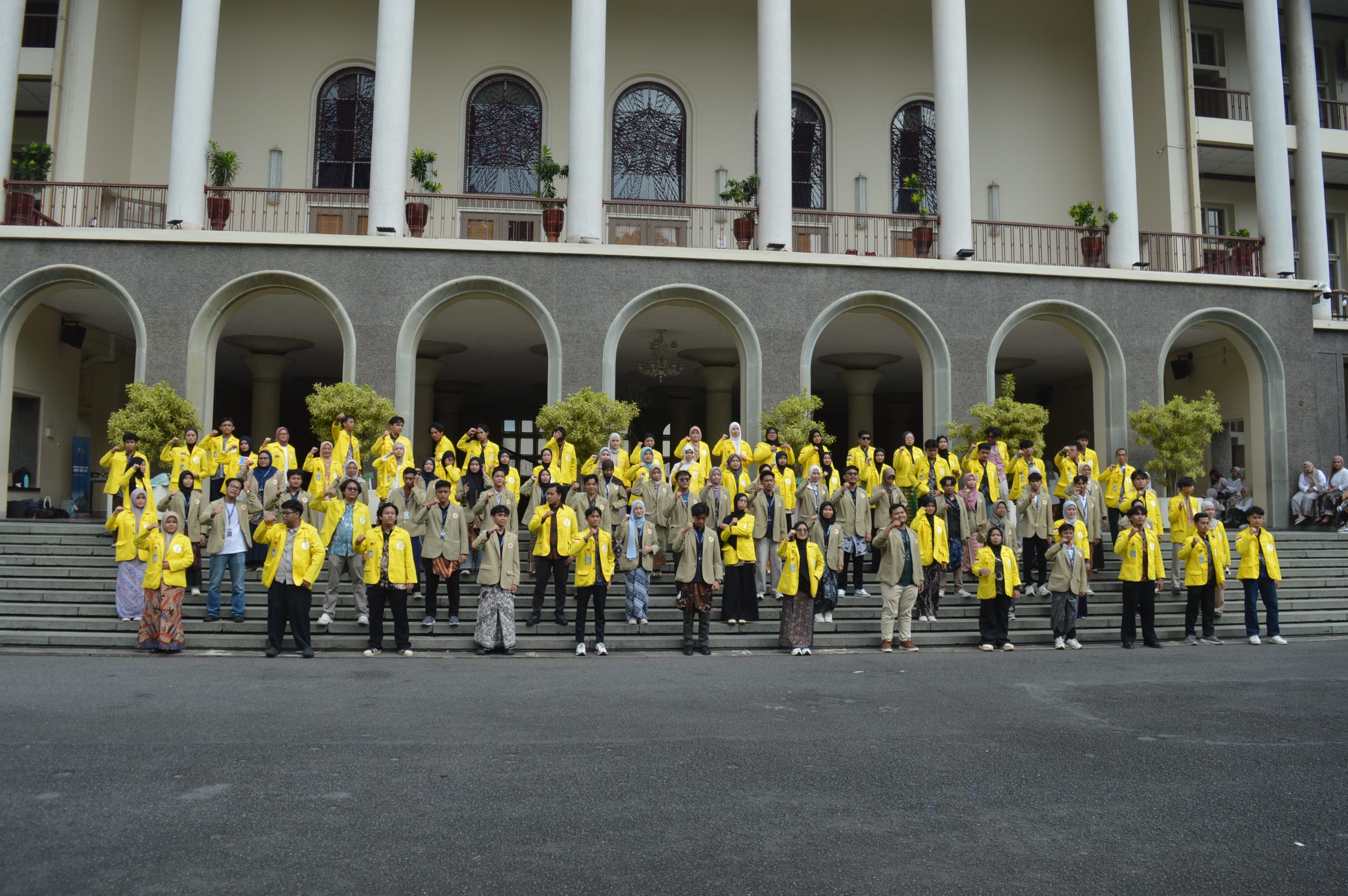
Yogyakarta, June 16, 2026 – The Arabic Literature Student Association of Universitas Gadjah Mada (IKMASA UGM) successfully organized SAMBUT: “IKMASA Menyambut” in collaboration with the West Asian Family Association of Universitas Indonesia (IKABA UI). Held at the Poerbatjaraka Auditorium, Faculty of Cultural Sciences, Universitas Gadjah Mada, the event served as a platform for fostering friendship and strengthening relationships among Arabic Literature students from both universities. The program commenced with welcoming remarks from the faculty advisors of IKMASA UGM and IKABA UI, who emphasized the importance of collaboration and maintaining strong inter-institutional relationships. They highlighted the value of building academic networks and encouraging future cooperation between student organizations.

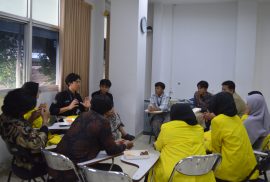
The event continued with a cabinet-sharing session led by the presidents of IKMASA UGM and IKABA UI. During the session, both organizations exchanged insights on their work programs, organizational culture, and leadership strategies. This discussion provided participants with an opportunity to learn from one another’s experiences and organizational practices. Following the sharing session, participants took part in a campus tour around Universitas Gadjah Mada. The activity introduced IKABA UI members to the UGM campus environment while also fostering closer connections among participants. As part of the tour, a group photo session was held at the iconic Balairung UGM as a symbol of friendship and a memorable keepsake of the gathering between IKMASA UGM and IKABA UI. The program then proceeded with a series of Focus Group Discussions (FGDs) involving divisions and departments from both organizations. These discussions provided a space for participants to exchange experiences, share best practices, and discuss organizational management systems within their respective student associations. Overall, the event was conducted smoothly in a warm and enthusiastic atmosphere. Through SAMBUT 2026, both organizations strengthened their ties and reaffirmed their commitment to fostering collaboration, mutual learning, and long-term partnerships among Arabic Literature students across universities.

Author : Ismail
 

Literature and Mythmaking in the Narratives of Chinese Indonesian Life

News Release Monday, 25 May 2026

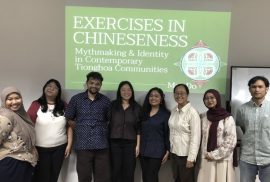
The Master’s Program in Literature once again held a public discussion titled “Exercises in Chineseness: Literature, Mythmaking & Identity in Contemporary Tionghoa Communities” at Room 105 Soegondo, Faculty of Cultural Sciences, Universitas Gadjah Mada, on Wednesday (20/5/2026). The event featured researcher Alexandra Masri Do from Cornell University, moderated by Naria Nur Iftitah from the Master’s Program in Literature, FIB UGM. The discussion explored contemporary Chinese Indonesian identity through literature, collective memory, and everyday cultural practices.

In her presentation, Alexandra highlighted the position of Chinese Indonesians as part of the world’s largest Chinese diaspora population. She explained that Chinese communities in the Indonesian archipelago existed long before the emergence of the modern nation-state, with records of settlements dating back to the seventh century. According to her, “Chinese” identity in Indonesia has never been singular, but rather continuously negotiated through language, culture, historical experience, and intergenerational social relations.

Alexandra also examined how the legacy of Dutch colonialism created social stratifications whose effects continue to persist today. She referred to 1965 and 1998 as two traumatic historical moments deeply embedded in the collective memory of Chinese Indonesian communities. The political circumstances of those periods, she argued, shaped the ways Chinese Indonesians viewed themselves, the state, and the very idea of citizenship.

Through several contemporary literary works, Alexandra demonstrated how the experience of being Chinese in Indonesia is articulated through personal narratives. She quoted The Longing by Alberta Natasia Adji, which portrays the younger generation’s disconnection from their ancestral cultural roots: “I’m a copy of my mother, but I speak the language of the locals. The closest thing I’ve got to my Chinese heritage now is eating noodles with chopsticks and checking my luck according to the Chinese horoscope.”

Referring to the passage, Alexandra noted that Chinese identity often survives only through simple cultural symbols such as chopsticks or zodiac beliefs, while ancestral languages gradually disappear from everyday life.

Beyond literature, Alexandra presented field documentation that she described as both collective and deeply personal, gathered from areas such as Glodok, Pantjoran PIK, Jambi, and Yogyakarta. Photographs of Chinese temples, Chinese schools, markets, and even citizenship archives from 1953 illustrated how Chinese identity continues to be reproduced through social spaces and cultural practices. She referred to this process as “mythmaking,” or the construction of collective narratives surrounding who Chinese Indonesians are and how they are understood.

Alexandra’s research also explored the aspirations of contemporary Chinese Indonesians, particularly the post-1998 generation. She questioned whether the idea of “homeland” is understood as Indonesia, China, or an in-between space of identity. These questions emerge alongside social change, globalization, and the increasing mobility of younger generations.

During the discussion, Alexandra emphasized the importance of fiction and literature as mediums for understanding minority experiences that are often absent from official historical narratives. In her view, literary works are capable of capturing the emotions, anxieties, and hopes of Chinese Indonesian communities more intimately than formal historical documents.

The event proceeded interactively with enthusiastic participation from students and academics. The discussion expanded to issues of discrimination, nationalism, and the representation of Chinese Indonesians in Indonesian popular culture. Through this public lecture, participants were encouraged to see Chinese identity not as a static category, but as an experience continually shaped by history, politics, culture, and everyday life.


[Magister Sastra, Khotibul Umam]

Anthropology Students Win Gold Medals at the National Excellence Competition

News Release Wednesday, 20 May 2026

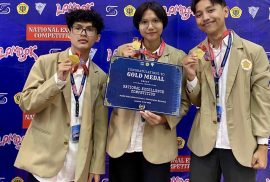
Good news comes from three undergraduate students in Cultural Anthropology at the Faculty of Humanities, UGM, who achieved a proud accomplishment at the 2026 National Excellence Competition (NEC). The NEC was organized by Eduhub Incubator in collaboration with Mataram University. The competition took place on May 9–10, 2026, at the Faculty of Agriculture, Mataram University, Lombok, West Nusa Tenggara. The team, consisting of Dinaesy Fadillah Hidayat, Aly Aydeed, and Nadila Aryani Az-Zalfa, won a Gold Medal in the Tourism and Creative Economy Research Essay category under the guidance of Agus Indiyanto, S.Sos., M.Si.

The competition’s theme was “Integrating Critical Thinking, Social Innovation, and Sustainable Entrepreneurial Capabilities within the Framework of Inclusive Development and Achieving the SDGs in Indonesia.” In their paper, the team addressed the issue of event management and tourism waste in Yogyakarta, which is still considered a challenge in supporting sustainable tourism.

As a solution, the team proposed an innovation in the form of a circular economy-based event management agency. This concept is designed to integrate event management with waste reduction and reuse systems, thereby creating a more environmentally friendly event ecosystem while supporting the creative economy sector in a sustainable manner.

It is hoped that this achievement will motivate other students to remain critical of phenomena occurring in society, to present innovative ideas, and to contribute to addressing various social issues through research and academic work that has a positive impact on the community.


Author: Dewi W – adapted from a report by Dinaesy Fadillah Hidayat

Photo: Dinaesy Fadillah Hidayat et al.


Field Study of Archaeological Ethics and Policy Course at Barong Temple and Dawangsari Stupa

News Release Tuesday, 19 May 2026

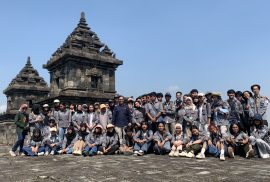
Students from the Class of 2025 of the Undergraduate Archaeology Study Program, Department of Archaeology, Faculty of Cultural Sciences, Universitas Gadjah Mada conducted a field study for the Archaeological Ethics and Policy course on May 13, 2026, at Barong Temple and Dawangsari Stupa. The activity was guided by Dr. Fahmi Prihantoro, S.S., M.A. as part of a direct learning experience designed to introduce students to the practical implementation of archaeological ethics and cultural heritage preservation policies. During the field study, students observed the condition of the sites, the management of the heritage area, and the restoration processes that had been carried out on the cultural properties. Through on-site explanations and discussions, students were encouraged to understand that heritage preservation involves not only technical restoration work, but also ethical considerations related to historical values, cultural significance, and the long-term sustainability of archaeological sites.

This field study became an important opportunity for students to connect theoretical knowledge from the classroom with real practices of cultural heritage management in the field. In addition to deepening their understanding of ethics in archaeological research and preservation, the activity also encouraged students to become more aware of the various challenges involved in protecting cultural heritage sites, ranging from conservation issues to their role and utilization within society. Through this experience, students are expected to gain a broader perspective that archaeology is not only concerned with studying the past, but also plays a significant role in preserving cultural identity and safeguarding Indonesia’s historical heritage for future generations.

[Archeology, Muhammad Irsyad]

Guest Lecture by Dr. Irma Budginaitė-Mačkinė Discusses Lithuania in Post-Soviet Ambiguity

News Release Monday, 11 May 2026

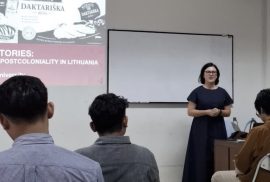
During the final meeting of the first half of the Postcolonialism course, students of the Master’s Program in Literature at Universitas Gadjah Mada had the opportunity to attend a guest lecture titled Baltic Postcolonialism, delivered by Dr. Irma Budginaitė-Mačkinė, Associate Professor of Sociology at Vilnius University, Lithuania. Dr. Irma visited Indonesia as part of a research mobility scheme funded by Project MARS: Non-Western Migration from Global Perspectives.

The lecture was organized by Dr. Arifah Arum Candra Hayuningsih, the lecturer responsible for the first half of the Postcolonialism course. The guest lecture for the Master’s Program in Literature was held on Monday (27/4/2026) at Soegondo Building Room 224, Faculty of Cultural Sciences, Universitas Gadjah Mada.

Postcolonialism is one of the compulsory courses designed to provide students with an understanding of the dynamics of colonialism and its impacts on various aspects of life, including language, literature, economics, politics, and culture. The course does not only focus on countries in Asia and Africa, but also covers other regions such as the Caribbean, Kenya, India, Vietnam, and Eastern Europe, including Lithuania, which experienced forms of domination different from classical colonialism.

These diverse colonial experiences gave rise to postcolonial thinkers who sought to critique and deconstruct colonial hegemony through reflective and critical ideas. Figures such as Aimé Césaire, Albert Memmi, Frantz Fanon, Ngũgĩ wa Thiong’o, Trinh T. Minh-ha, Chandra Talpade Mohanty, and Édouard Glissant contributed diverse perspectives in understanding colonialism and the process of decolonization.

In her presentation, the academic, whose interdisciplinary background spans political science and sociology, highlighted Lithuania’s ambiguous position within postcolonial studies, particularly in the post-Soviet context. To understand this ambiguity, Lithuania must be viewed within a post-imperial framework, as a country transitioning from the rule of the Russian Empire and later the Soviet Union into the post-Soviet era. Lithuania cannot easily be categorized as a “colonized” nation in the classical colonial sense, yet it still experienced forms of colonial-like domination.

Geographically, Lithuania covers an area of approximately 65,300 km², roughly half the size of Java Island, with a population of around 2.9 million people, comparable to the population of Yogyakarta City. Its national language, Lithuanian, belongs to the Baltic branch of the Indo-European language family and remains an important part of the country’s national identity despite historical pressures.

Historically, Lithuania was once part of a political union through the Polish–Lithuanian Commonwealth in 1569. However, in 1795, the country lost its sovereignty and became part of the Russian Empire. Since then, various policies demonstrated that the domination imposed upon Lithuania was neither simple nor singular, but systematic and complex.

During her presentation, the sociologist, who has conducted scientific research for more than a decade, also discussed the perspective of historian Darius Staliūnas, who described Russian domination in Lithuania as extending into many aspects of life. Politically, Lithuania was placed under external control that restricted national sovereignty. Socially, repression in the form of censorship and limitations on freedom became part of the people’s lived experience. Economically, exploitation and the redirection of economic orientation served the interests of the imperial center.

In the spheres of culture, language, and religion, this domination manifested through policies promoting Russification. The Russian government promoted Orthodox Christianity, limited the influence of the Catholic Church, and at one point prohibited the use of the Latin alphabet. These policies reflected systematic attempts to displace Lithuania’s local identity. Furthermore, education and knowledge were also used as instruments of control to shape public ways of thinking according to the interests of those in power.

As a response to these pressures, Lithuanians demonstrated various forms of resistance, one of which was large-scale migration. Between 1865 and 1915, around 700,000 Lithuanians left their country and migrated to regions such as the United States, the United Kingdom, Canada, Brazil, Argentina, and Germany. This migration can be understood as an indirect form of resistance against the domination they experienced.

Following the collapse of the Soviet Union, Lithuania entered a post-Soviet transition phase marked by the restoration of political independence in 1990 and the end of direct external control. Nevertheless, the effects of previous domination continue to be felt today. Like many other Eastern European countries, Lithuania faces challenges as a relatively less-developed nation that is not yet fully modernized and is still striving to catch up with Western countries.

Therefore, Lithuania’s experience demonstrates that colonialism does not always take the form of explicit geographical occupation, but can also be recognized through complex and layered power relations. This ambiguity makes Lithuania a compelling case in postcolonial studies, while also expanding the scope of postcolonial analysis beyond the Global South.


[Magister Sastra, Selvia Parwati Putri]

123…34

Video UGM

[shtmlslider name='shslider_options']
Universitas Gadjah Mada

Faculty of Cultural Sciences
Universitas Gadjah Mada
Jl. Nusantara 1, Bulaksumur Yogyakarta 55281, Indonesia
   fib@ugm.ac.id
   +62 (274) 513096
   +62 (274) 550451

Work Units

  • Office of Journal & Publishing
  • INCULS
  • Information Technology and Database
  • Language Learning Center
  • Library Unit
  • Public Relations
  • Research

Facilities

  • Computer Laboratory
  • Gamelan
  • Guest House
  • Language Library
  • Library
  • Phonetics Library
  • Self Access Unit
  • Student Internet Centre

Importan Links

  • Journal of Humaniora
  • Subscriber Journal
  • Alumni Portal
  • Career
  • Departmens News
  • UGM Streaming

Contacts

  • Academic
  • Administration
  • Dean’s Office
  • Departments / Study Programs
  • Public Relations

© 2024 Faculty of Cultural Sciences Universitas Gadjah Mada

KEBIJAKAN PRIVASI/PRIVACY POLICY

[EN] We use cookies to help our viewer get the best experience on our website. -- [ID] Kami menggunakan cookie untuk membantu pengunjung kami mendapatkan pengalaman terbaik di situs web kami.I Agree / Saya Setuju