• About UGM
  • Academic Portal
  • IT Center
  • Library
  • Research
  • Webmail
  • Informasi Publik
  • English
    • Indonesia
Universitas Gadjah Mada Faculty of Cultural Sciences
Universitas Gadjah Mada
  • Home
  • Profile
    • History
    • Vision and Mission
    • Organizational structure
    • Administration
    • Staff
    • Faculty Members
  • Academic
    • Academic Calendar
    • Undergraduate Programs
      • Bachelor of Cultural Antrophology
      • Bachelor in Archaeolagy
      • Bachelor in History
      • Bachelor in Tourism
      • Bochetor in Korean Language and Culture
      • Bachelor in Indonesian Language and Culture
      • Bachelor in English
      • Bachelor in Arabic
      • Bachelor in Japanese Language and Culture
      • Bachelor in Javanese Language, Literature and Culture
      • Bachelor in French language and literature
    • Graduate Programs
      • Master in Antrophology
      • Master in ArchaeoIogy
      • Master in History
      • Master in Linguistics
      • Master in Literature
      • Master In American Studies
      • Master in Middle Eastern Cultural Studies
    • Post-Graduate Programs / S3
      • Doctor in Antropology
      • Doctor in American Studies
      • Doctor in Humanities
    • Student Service
  • KPPM
    • Research Information
    • Scientific / Academic Publications
    • Community Service
    • International Cooperation
    • Domestic Cooperation
  • Student Organizations
    • Student Executive Council
    • Semi-Autonomous Organizations
      • KAPALASASTRA
      • Christian Student Alliance
      • LINCAK
      • Saskine
      • Catholic Student Family
      • Dian Budaya
      • Sastra Kanuragan (sasgan)
      • Family of Muslim Cultural Sciences Students (KMIB)
      • Bejo Mulyo
    • Autonomous Organizations
      • Family of Anthropology Students (KEMANT)
      • English Department Student Association
      • Tourism Students Association (HIMAPA)
      • Family of Indonesian Literature Students (KMSI)
      • West Asian Literature Student Association (IMABA)
      • Association of Korean-Language Students (HIMAHARA)
      • Family of Regional Indonesian Literatures Students (KAMASUTRA)
      • The Family Body of History Students (BKMS)
      • The French Literature Students Association (HMSP)
      • Family of Anthropology Students
      • Japanese Student Association (HIMAJE)
  • Admission
    • Student Evaluation
  • Home
  • News Release
  • Field Trip the Master’s Program in Anthropology, UGM to the Bonokeling Indigenous Community

Field Trip the Master’s Program in Anthropology, UGM to the Bonokeling Indigenous Community

  • News Release
  • 27 July 2026, 15.28
  • Oleh: Humas FIB
  • 0

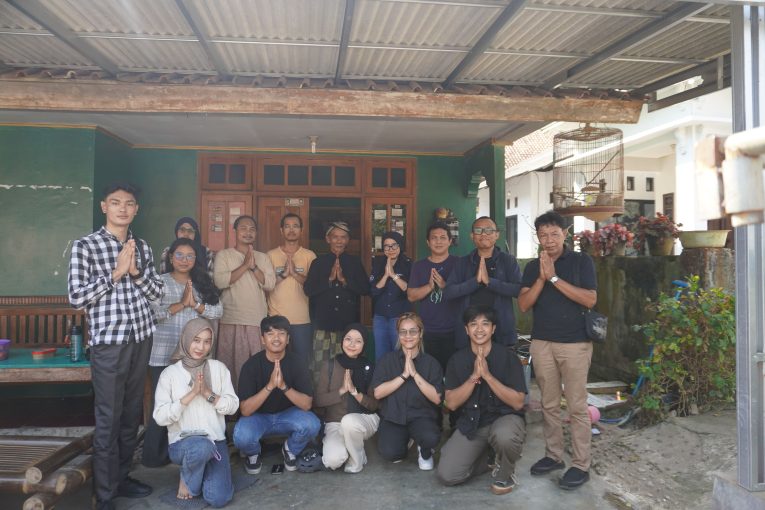
As part of the implementation of experiential learning, students in the Master’s Program in Anthropology at the Faculty of Humanities (FIB), UGM, conducted a field trip on Wednesday, June 17, 2026 to the Bonokeling Indigenous Community in Pekuncen Village, Jatilawang Subdistrict, Banyumas Regency, Central Java. This activity was a field component of the “Traditional Governance Systems” course taught by Dr. Sita Hidayah, M.A. The objective was to deepen students’ understanding of traditional governance practices, community management, and the dynamics of the relationship between traditional systems and formal government through an ethnographic approach.

The students were welcomed by Ki Soemitro, Chair of the Village Customary Council, and Pak Narso, Head of Pekuncen Village. The meeting served as a forum for dialogue on the history of the Bonokeling community, the structure of customary leadership, and the community’s close connection to their ancestors through the concept of anak-putu—a spiritual and genealogical bond that forms the foundation of both the identity and social system of the Bonokeling community. Ki Soemitro explained that the survival of the indigenous community depends not only on written rules but also on the moral adherence of all anak-putu to the values inherited from Kyai Bonokeling. This system has proven capable of preserving traditional governance across generations amid the tide of modernization.

In addition to discussions, the students observed the architecture of traditional houses, communal spatial arrangements, and the conduct of traditional rituals. These observations and discussions revealed that indigenous communities possess the capacity for effective collective governance without relying entirely on formal bureaucratic structures. The Village Head explained that the formal government and traditional institutions do not compete with one another but rather complement each other. Village development policies are always consulted with traditional institutions to preserve and respect sacred spaces and the community’s cultural values. Conversely, various internal community issues—such as family disputes, social conflicts, or violations of customary norms—are resolved through customary deliberation before resorting to state legal mechanisms.

The Bonokeling community is open to technology, such as cell phones, yet remains vigilant to ensure that the values of individualism and consumerism do not supplant the principles of collective living inherited from their ancestors. Amid the tide of globalization, they face various challenges, ranging from adapting to state administrative regulations to the pressure of cultural commercialization through the tourism industry. In response, Ki Soemitro explained that the Bonokeling community employs a strategy of cultural resistance through a process of prudent negotiation. They comply with state administrative requirements to ensure the civil rights of their citizens, while still preserving Kejawen spiritual practices and value systems in their daily lives. Furthermore, traditional institutions strictly limit the commercialization of rituals to ensure that the sacred nature of traditions does not degenerate into mere tourist spectacles.

This activity provides a learning experience that goes beyond classroom instruction. Through direct observation, dialogue, and reflection with the indigenous community, students gain a more comprehensive understanding of traditional governance practices as a living, dynamic social system that continually adapts to the changing times.

Author: Dewi Widyastuti

Tags: Fakultas Ilmu Budaya UGM FIB UGM SDGs 11: Kota dan Pemukiman yang berkelanjutan SDGs 16: Perdamaian Keadilan dan Kelembagaan Yang Tangguh SDGs 4 Pendidikan Berkualitas

Video UGM

[shtmlslider name='shslider_options']
Universitas Gadjah Mada

Faculty of Cultural Sciences
Universitas Gadjah Mada
Jl. Nusantara 1, Bulaksumur Yogyakarta 55281, Indonesia
   fib@ugm.ac.id
   +62 (274) 513096
   +62 (274) 550451

Work Units

  • Office of Journal & Publishing
  • INCULS
  • Information Technology and Database
  • Language Learning Center
  • Library Unit
  • Public Relations
  • Research

Facilities

  • Computer Laboratory
  • Gamelan
  • Guest House
  • Language Library
  • Library
  • Phonetics Library
  • Self Access Unit
  • Student Internet Centre

Importan Links

  • Journal of Humaniora
  • Subscriber Journal
  • Alumni Portal
  • Career
  • Departmens News
  • UGM Streaming

Contacts

  • Academic
  • Administration
  • Dean’s Office
  • Departments / Study Programs
  • Public Relations

© 2024 Faculty of Cultural Sciences Universitas Gadjah Mada

KEBIJAKAN PRIVASI/PRIVACY POLICY

[EN] We use cookies to help our viewer get the best experience on our website. -- [ID] Kami menggunakan cookie untuk membantu pengunjung kami mendapatkan pengalaman terbaik di situs web kami.I Agree / Saya Setuju