
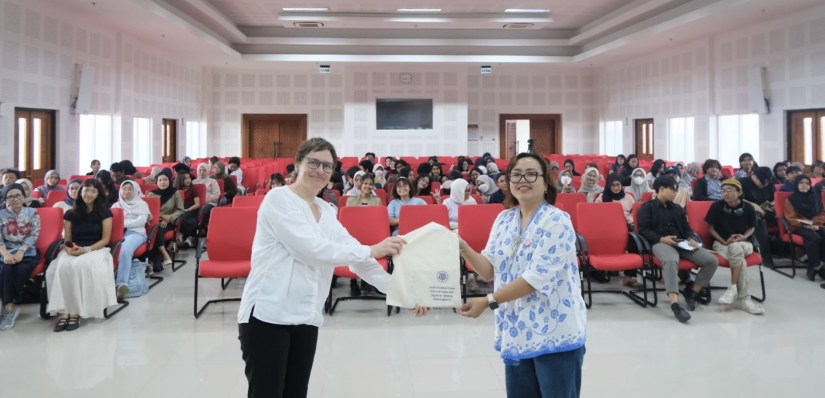
Human migration and displacement are increasingly relevant issues in this era of global cross-regional relations. On Friday, February 13, 2026, the Department of Anthropology at Gadjah Mada University held a film screening and discussion on this topic. When The Water Horse Seeks a New Home is a short film by director Andrianus “Oetjoe” Merdhi, who has produced many films about various communities in Indonesia. The film was also produced with the assistance of Gerhard Hoffstaedter from the University of Brisbane and Prof. Dr. Antje Missbach (Mbak Antje) from the University of Bielefeld. Broadly speaking, this film tells the story of the experiences of Rohingya refugees who crossed the sea to seek asylum in Aceh, Indonesia. The screening was attended by Mbak Antje and facilitated by Dr. Realisa Darathea Masardi (Mbak Lisa) as the event organizer from the Department of Anthropology at UGM.
The film begins with an exposition from the perspective of a Rohingya migrant who fled to Aceh. During their journey, the group faced many challenges, such as engine failure that forced them to drift at sea for several days, unable to control their direction. They received assistance from several patrol officers in the waters they crossed, but no one gave them permission to dock. After a long journey, they finally arrive on the coast of Aceh.
Upon arrival, many local residents express their rejection of their presence. During negotiations with residents over where to live, the refugees wait on the coast, near their boat, not allowed to go far. After that, they settle in a crowded and squalid refugee camp. The residents’ rejection was actually justified, due to concerns about the behavior of the Rohingya refugees. However, there were also residents who empathized with these refugees. After the refugees moved to the camp, he found a hippopotamus toy belonging to one of the refugee children. Some time later, he tried to return the toy, but it turned out that the child and her family had left the camp and could not be contacted.
The empathy shown stems from a sense of shared destiny, because he himself was once a refugee. The Aceh war forced him to leave his home and family. So, he has experienced what the Rohingya refugees are experiencing today. This perspective shows the human side of this conflict, and reveals that many similar experiences have been endured by communities in Indonesia itself.
After the screening, Ms. Antje opened a discussion and QnA session with the audience. A lively discussion ensued, focusing on how civilians can respond and help these refugees. The discussion also touched on how the state can handle this crisis, balancing the interests of its citizens with providing humanitarian assistance to refugees. After the discussion, the event concluded with the Department of Anthropology presenting a memento to Ms. Antje.
Author: Amadeus Abhirama Paramanindita
