• About UGM
  • Academic Portal
  • IT Center
  • Library
  • Research
  • Webmail
  • Informasi Publik
  • English
    • Indonesia
Universitas Gadjah Mada Faculty of Cultural Sciences
Universitas Gadjah Mada
  • Home
  • Profile
    • History
    • Vision and Mission
    • Organizational structure
    • Administration
    • Staff
    • Faculty Members
  • Academic
    • Academic Calendar
    • Undergraduate Programs
      • Bachelor of Cultural Antrophology
      • Bachelor in Archaeolagy
      • Bachelor in History
      • Bachelor in Tourism
      • Bochetor in Korean Language and Culture
      • Bachelor in Indonesian Language and Culture
      • Bachelor in English
      • Bachelor in Arabic
      • Bachelor in Japanese Language and Culture
      • Bachelor in Javanese Language, Literature and Culture
      • Bachelor in French language and literature
    • Graduate Programs
      • Master in Antrophology
      • Master in ArchaeoIogy
      • Master in History
      • Master in Linguistics
      • Master in Literature
      • Master In American Studies
      • Master in Middle Eastern Cultural Studies
    • Post-Graduate Programs / S3
      • Doctor in Antropology
      • Doctor in American Studies
      • Doctor in Humanities
    • Student Service
  • KPPM
    • Research Information
    • Scientific / Academic Publications
    • Community Service
    • International Cooperation
    • Domestic Cooperation
  • Student Organizations
    • Student Executive Council
    • Semi-Autonomous Organizations
      • KAPALASASTRA
      • Christian Student Alliance
      • LINCAK
      • Saskine
      • Catholic Student Family
      • Dian Budaya
      • Sastra Kanuragan (sasgan)
      • Family of Muslim Cultural Sciences Students (KMIB)
      • Bejo Mulyo
    • Autonomous Organizations
      • Family of Anthropology Students (KEMANT)
      • English Department Student Association
      • Tourism Students Association (HIMAPA)
      • Family of Indonesian Literature Students (KMSI)
      • West Asian Literature Student Association (IMABA)
      • Association of Korean-Language Students (HIMAHARA)
      • Family of Regional Indonesian Literatures Students (KAMASUTRA)
      • The Family Body of History Students (BKMS)
      • The French Literature Students Association (HMSP)
      • Family of Anthropology Students
      • Japanese Student Association (HIMAJE)
  • Admission
    • Student Evaluation
  • Home
  • Antropologi Budaya UGM
  • Antropologi Budaya UGM
Arsip:

Antropologi Budaya UGM

Speech by Prof. Dr. Atik Triratnawati, “Masuk Angin: A Blessing or a Curse?”

News Release Thursday, 30 April 2026

Yogyakarta, April 26, 2026 — Prof. Dr. Atik Triratnawati conducted a community service activity by delivering a lecture related to her field at Teladan State High School in Yogyakarta. The title of her lecture posed the question “Masuk Angin (Catching a Cold): A Blessing or a Curse?” and opened up a relevant discussion in the health and well-being sector. The term “masuk angin” has long been part of Indonesian society. The public’s understanding of “masuk angin” highlights the importance of an inclusive and culturally-based approach to health.

Many people still rely on traditional methods such as scraping therapy, herbal remedies, and rest as initial treatments. These practices reflect local wisdom that has the potential to support the healthcare system, provided they are balanced with appropriate medical education. “Masuk angin” is described as a Javanese concept of illness caused by an excess of wind elements within the body. Javanese cosmology forms the basis for health and illness; in medical anthropology, this is referred to as the hot-cold theory.

Prof. Atik explains that “masuk angin” is not a disease or sickness. However, she notes that “masuk angin” falls under magico-religious models—meaning this condition arises from spiritual or supernatural causes, so its treatment follows accordingly, such as scraping therapy (kerokan/pijat), consuming herbal remedies (jamu), and other practices. Additionally, it is referred to as holistic models, where health is viewed as the result of a balance among various aspects of life—not merely the physical. Physical conditions may be influenced by psychological, social, environmental, or spiritual factors, such as stress or an unhealthy lifestyle. She also explained that “wind entering the body” is categorized into several types: ordinary (mild) wind, severe wind, and “kasep” wind (sedentary wind). Her interpretations regarding “masuk angin” include health disorders (illness), failure to adapt, a reflection of low bodily resilience, a signal to rest, and “angin duduk” as a result of magical influences.

Prof. Atik focuses on the field of health from an anthropological perspective. This is because health literacy is key to building a community that is aware of its physical condition. Appropriate education can help the public distinguish between mild symptoms and serious illnesses requiring medical intervention. Additionally, a culture-based approach helps reach communities with limited access to formal healthcare services. By integrating local knowledge into the healthcare system, it is hoped that no group will be left behind.

This discussion underscores that traditional practices such as “catching a chill” are not always an obstacle to health development; rather, they can serve as a bridge toward a more inclusive and sustainable healthcare system. Collaboration among healthcare professionals, academics, and the community is key to achieving this goal.

Author: Dewi Widyastuti
Photo: Prof. Dr. Atik Triratnawati, M.A.

Department of Anthropology Hold a Rohingya Refugee Film

News Release Tuesday, 10 March 2026

Human migration and displacement are increasingly relevant issues in this era of global cross-regional relations. On Friday, February 13, 2026, the Department of Anthropology at Gadjah Mada University held a film screening and discussion on this topic. When The Water Horse Seeks a New Home is a short film by director Andrianus “Oetjoe” Merdhi, who has produced many films about various communities in Indonesia. The film was also produced with the assistance of Gerhard Hoffstaedter from the University of Brisbane and Prof. Dr. Antje Missbach (Mbak Antje) from the University of Bielefeld. Broadly speaking, this film tells the story of the experiences of Rohingya refugees who crossed the sea to seek asylum in Aceh, Indonesia. The screening was attended by Mbak Antje and facilitated by Dr. Realisa Darathea Masardi (Mbak Lisa) as the event organizer from the Department of Anthropology at UGM.

The film begins with an exposition from the perspective of a Rohingya migrant who fled to Aceh. During their journey, the group faced many challenges, such as engine failure that forced them to drift at sea for several days, unable to control their direction. They received assistance from several patrol officers in the waters they crossed, but no one gave them permission to dock. After a long journey, they finally arrive on the coast of Aceh.

Upon arrival, many local residents express their rejection of their presence. During negotiations with residents over where to live, the refugees wait on the coast, near their boat, not allowed to go far. After that, they settle in a crowded and squalid refugee camp. The residents’ rejection was actually justified, due to concerns about the behavior of the Rohingya refugees. However, there were also residents who empathized with these refugees. After the refugees moved to the camp, he found a hippopotamus toy belonging to one of the refugee children. Some time later, he tried to return the toy, but it turned out that the child and her family had left the camp and could not be contacted.

The empathy shown stems from a sense of shared destiny, because he himself was once a refugee. The Aceh war forced him to leave his home and family. So, he has experienced what the Rohingya refugees are experiencing today. This perspective shows the human side of this conflict, and reveals that many similar experiences have been endured by communities in Indonesia itself.

After the screening, Ms. Antje opened a discussion and QnA session with the audience. A lively discussion ensued, focusing on how civilians can respond and help these refugees. The discussion also touched on how the state can handle this crisis, balancing the interests of its citizens with providing humanitarian assistance to refugees. After the discussion, the event concluded with the Department of Anthropology presenting a memento to Ms. Antje.

Author: Amadeus Abhirama Paramanindita

Anthropology Students’ Role in the 38th National Student Scientific Week

ChampionshipNews Release Thursday, 11 December 2025

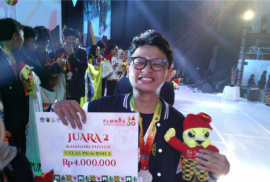
On the 27th of November (the awarding night of the 38th Pekan Ilmiah Mahasiswa Nasional (Pimnas) held in Universitas Hassanudin, Makassar), a bachelor student of Cultural Anthropology from UGM contributed to the medal count of Universitas Gadjah Mada. Muhammad Syukur Shidiq – commonly known as Syukur – and his team earned a silver medal for the poster category of the PKM-RSH 2 class. Their research, titled Antara Safe Space dan Toxic Space: Studi Ekologi Media terhadap Komunitas Marah-Marah di Media Sosial X, applies the concept of media ecology coined by Marshall McLuhan to study the Komunitas Marah-Marah, a community established on X (formerly Twitter).

Komunitas Marah-Marah is viewed as a communal space with two sides, both contradicting each other. This community provides room for freedom of emotional expression (specifically anger, as the name suggests) for its members while giving them affirmation from fellow members. At the same time, negative actions such as cyberbullying, hate speech, and discrimination are also rampant in the space. What started out as a small community has tripled in size in the span of a year. The results of this research can hopefully be used as a contribution to increase digital literacy among the Indonesian digital community, along with creating a safe online space for users and as consideration for policy makers to create better online policies.

As an anthropology student, there are a few lessons Syukur picked up during his Pimnas research. The discipline of anthropology plays a role in understanding Komunitas Marah-Marah as a living digital environment, filled with members with various cultures and perspectives. X as a social media is viewed as an ecology that shapes and influences how people express their emotions. The existence of this community helps shape the understanding of how anger grows and evolves into its own culture in a digital context.

During four months of Pimnas research, Syukur learned some valuable lessons for himself, as a person and as a researcher. Along with getting the opportunity to experience field research first-hand, Syukur learned to collect, sort, and process ethnographic data while working in a systematic workflow. This opportunity gives him the chance to train his cultural intuition and reflectivity as an anthropologist. He also learned to be committed to a research project and working in a multidisciplinary approach. His team members consisted of fellow bachelor students Muh Faiq Fauzan, Fanisa Ratna Dewi, Debora Magdalena Marchya Sihombing, Muhammad Syukur Shidiq, and Adelia Pradipta Nasyaputri. They hail from various departments of social sciences, such as Communication Science, Social Development and Welfare, Philosophy, and Psychology; each with their own methods and perspectives, collaborating towards the same goal to reach a better understanding of a dynamic socio-digital environment.

Author: Amadeus Abhirama Paramanindita

Department of Anthropology Holds Visiting Lecture Framing Child Marriage: Film, Visual Ethnography, and the Ethics of Representation

News Release Wednesday, 3 December 2025

Yogyakarta, November 28, 2025 – The Department of Anthropology at UGM held a Visiting Lecture titled Framing Child Marriage: Film, Visual Ethnography, and the Ethics of Representation. The event featured guest speaker Nur Wucha Wulan Dari, commonly known as Wucha, a film director and graduate of the Master’s Program in Anthropology. The session was opened by Dr. Sita Hidayah, who emphasized that final academic projects have the potential to become visual or non-textual representations of anthropological research presented in a more engaging format.

During the film screening session, Wucha showcased two of her works: Laila and Pasukan Gagal Tobat. Both films explore the issue of child marriage. Laila tells the story of a 15-year-old girl in East Kalimantan who escapes an arranged marriage by fleeing on a boat, while Pasukan Gagal Tobat is an ethnographic film about a group of teenagers who view child marriage as a common and accepted practice in their village.

In the discussion session moderated by Muhammad Ade Putra, Wucha shared her research methods and creative process behind the films. While working in the field, she often faced dilemmas, especially during the production of Pasukan Gagal Tobat, when she encountered extreme weather conditions and witnessed firsthand the social changes occurring within the community. The sensitive issue of child marriage in both films often placed her in challenging ethical positions, leading her and her team to develop a risk matrix. She also frequently conducted regular Focus Group Discussions as part of her approach to building trust with the subjects.

Summarizing the discussion, the moderator emphasized that the camera can serve as a medium for recording field notes, a point of reference, and a space for negotiating positions between the researcher and their subjects.

Author: Novilatul Ananda Ramadhani

Sharing with the Devil: Pujo Semedi Talks to Ghosts through Ethnography

HEADLINESNews Release Wednesday, 26 November 2025

On Friday (November 21, 2025), Prof. Dr. Pujo Semedi served as a panel discussant in the session “Monsters, Devils, and Survival: The Persistence of Plantations and People in the Scholarship of Pujo Semedi” at the 2025 Annual Meeting of the American Anthropological Association (AAA) in New Orleans, LA, supported by FULLBRIGHT funding through the Scholar in Residence Grant at the University of Colorado Boulder for Fall 2025. The panel was inspired by Pujo’s academic work on plantations, which investigates how colonial hegemony in its efforts to build capital accumulation by sacrificing human sociality has instead resulted in the loss of assets and weakened capacities for survival. In his presentation, Pujo invited participants to explore how non-human entities such as “ghosts” influence social and material relations within plantation environments.

Through ethnographic research in Kalimantan’s palm oil plantations, Java’s tea plantations, and Germany’s vineyards, Pujo argues that “ghosts” are understood as empirical and material realities by plantation communities. Although spiritual beings are not bound by physical laws or fixed forms, belief in them becomes a productive lens for ethical and emic understanding. Positioned within a strong postcolonial perspective, Pujo’s ideas are seen as important for advancing research on extraction and imperial accumulation in postcolonial nations. The panel, featuring Carla Jones and five PhD students from the University of Colorado Boulder, embodied efforts to decolonize knowledge, highlighting Pujo Semedi’s role in fostering cross-cultural academic collaboration.

Author: Penulis: Okky Chandra Baskoro

123

Video UGM

[shtmlslider name='shslider_options']
Universitas Gadjah Mada

Faculty of Cultural Sciences
Universitas Gadjah Mada
Jl. Nusantara 1, Bulaksumur Yogyakarta 55281, Indonesia
   fib@ugm.ac.id
   +62 (274) 513096
   +62 (274) 550451

Work Units

  • Office of Journal & Publishing
  • INCULS
  • Information Technology and Database
  • Language Learning Center
  • Library Unit
  • Public Relations
  • Research

Facilities

  • Computer Laboratory
  • Gamelan
  • Guest House
  • Language Library
  • Library
  • Phonetics Library
  • Self Access Unit
  • Student Internet Centre

Importan Links

  • Journal of Humaniora
  • Subscriber Journal
  • Alumni Portal
  • Career
  • Departmens News
  • UGM Streaming

Contacts

  • Academic
  • Administration
  • Dean’s Office
  • Departments / Study Programs
  • Public Relations

© 2024 Faculty of Cultural Sciences Universitas Gadjah Mada

KEBIJAKAN PRIVASI/PRIVACY POLICY

[EN] We use cookies to help our viewer get the best experience on our website. -- [ID] Kami menggunakan cookie untuk membantu pengunjung kami mendapatkan pengalaman terbaik di situs web kami.I Agree / Saya Setuju