• About UGM
  • Academic Portal
  • IT Center
  • Library
  • Research
  • Webmail
  • Informasi Publik
  • English
    • Indonesia
Universitas Gadjah Mada Faculty of Cultural Sciences
Universitas Gadjah Mada
  • Home
  • Profile
    • History
    • Vision and Mission
    • Organizational structure
    • Administration
    • Staff
    • Faculty Members
  • Academic
    • Academic Calendar
    • Undergraduate Programs
      • Bachelor of Cultural Antrophology
      • Bachelor in Archaeolagy
      • Bachelor in History
      • Bachelor in Tourism
      • Bochetor in Korean Language and Culture
      • Bachelor in Indonesian Language and Culture
      • Bachelor in English
      • Bachelor in Arabic
      • Bachelor in Japanese Language and Culture
      • Bachelor in Javanese Language, Literature and Culture
      • Bachelor in French language and literature
    • Graduate Programs
      • Master in Antrophology
      • Master in ArchaeoIogy
      • Master in History
      • Master in Linguistics
      • Master in Literature
      • Master In American Studies
      • Master in Middle Eastern Cultural Studies
    • Post-Graduate Programs / S3
      • Doctor in Antropology
      • Doctor in American Studies
      • Doctor in Humanities
    • Student Service
  • KPPM
    • Research Information
    • Scientific / Academic Publications
    • Community Service
    • International Cooperation
    • Domestic Cooperation
  • Student Organizations
    • Student Executive Council
    • Semi-Autonomous Organizations
      • KAPALASASTRA
      • Christian Student Alliance
      • LINCAK
      • Saskine
      • Catholic Student Family
      • Dian Budaya
      • Sastra Kanuragan (sasgan)
      • Family of Muslim Cultural Sciences Students (KMIB)
      • Bejo Mulyo
    • Autonomous Organizations
      • Family of Anthropology Students (KEMANT)
      • English Department Student Association
      • Tourism Students Association (HIMAPA)
      • Family of Indonesian Literature Students (KMSI)
      • West Asian Literature Student Association (IMABA)
      • Association of Korean-Language Students (HIMAHARA)
      • Family of Regional Indonesian Literatures Students (KAMASUTRA)
      • The Family Body of History Students (BKMS)
      • The French Literature Students Association (HMSP)
      • Family of Anthropology Students
      • Japanese Student Association (HIMAJE)
  • Admission
    • Student Evaluation
  • Home
  • SDGs 16: Perdamaian Keadilan dan Kelembagaan Yang Tangguh
Arsip:

SDGs 16: Perdamaian Keadilan dan Kelembagaan Yang Tangguh

Literary Orations Explore Biopoetics, Nature, Algorithms, and the Future of the Humanities

News Release Thursday, 20 August 2026

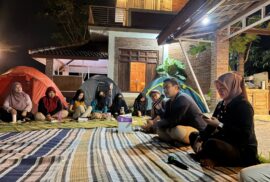
Yogyakarta— The Literary Camp with Nature and the Universe, organized by the Master’s Program in Literary Studies at the Faculty of Cultural Sciences, Universitas Gadjah Mada (UGM), at Pondok A. Salam, Kalimasada, featured a Literary Oration session on Friday evening, August 14. Beginning at 7:30 p.m., the session brought together two speakers from the academic community of FIB UGM: Muhammad Lutfi Dwi Kurniawan, a doctoral student in Humanities at FIB UGM, and Rini Febriani Hauri, a master’s student in Literary Studies at FIB UGM.

The Literary Oration was an important part of the camp, providing a space for reflection on literature, the relationship between humans and nature, technological developments, and the future of the humanities.

In his presentation, “Unveiling the Pulse of the Text: Biopoetics and the Crisis of the Human–Nature Boundary in Literature,” Muhammad Lutfi Dwi Kurniawan introduced biopoetics as a way of exploring the relationship between life, human beings, nature, and literary works.

Broadly speaking, biopoetics is an interdisciplinary approach that brings together biology—the study of life—with poetics, literature, the arts, and other forms of creative expression. It opens up a way of understanding literature not simply as a product of language and culture, but as part of a wider conversation about life and humanity’s relationship with the biological world around us.

In his presentation, Lutfi offered the Achilles tendon as an intriguing example. This important part of the human body connects the calf muscles to the heel bone. The name Achilles comes from Achilles, the legendary Greek hero immortalized in Homer’s epic Iliad. The example illustrates how traces of literature and mythology can become embedded in the language through which human beings describe and understand the world—even in scientific terminology.

From this perspective, biopoetics becomes particularly relevant as the boundary between humans and nature is increasingly being questioned. Literature can provide a space to explore how people understand life, how nature is represented, and how relationships between humans and other living beings are shaped through language, imagination, and experience.

The theme “Unveiling the Pulse of the Text” thus takes literature into a broader intellectual territory, bringing textual studies into conversation with questions of life and the environment. Biopoetics allows literature to engage with scientific knowledge while also inviting us to reconsider the human position—not as something entirely separate from nature, but as part of a larger web of life.

Meanwhile, Rini Febriani Hauri presented “Reading Literature in the Age of Algorithms: Experience, Interpretation, and the Future of the Humanities.” Her presentation invited participants to reconsider the experience of reading literature amid rapid digital transformation and the relentless flow of information.

During her presentation, Rini quoted Franz Kafka:

“A book must be the axe for the frozen sea within us.”

The quotation offered a starting point for thinking about reading as more than an act of gathering information. Reading can be an experience that moves us, unsettles us, and even transforms the way we understand ourselves and the world.

In a digital culture increasingly defined by speed, where information arrives continuously and algorithms help determine what we see and read, Rini encouraged participants to read slowly. The invitation to slow down becomes a form of pause, and perhaps even a quiet resistance to the pressure to move constantly from one piece of information to another and to form immediate judgments.

Reading slowly gives the reader space to allow a text to work its way inward. It creates an opportunity to attend to language, discover layers of meaning, question one’s own experience, and encounter interpretations that might otherwise be missed in hurried reading.

In the age of algorithms, the experience of reading therefore becomes increasingly significant. As technology becomes capable of producing, circulating, and processing an almost limitless amount of text, the human capacity to read, feel, interpret, and make meaning remains something worth preserving.

Together, the two presentations brought into focus two important questions facing contemporary literature: the relationship between humans and nature, and the relationship between humans and technology. On the one hand, biopoetics invites us to reconsider the boundary between humanity and the living world. On the other, the discussion of literature in the age of algorithms asks us to consider how technology is reshaping the experience of reading and interpreting literary works.

Bringing these two themes together broadened the intellectual scope of the Literary Camp. Literature was not treated merely as an activity of reading and writing, but also as a space for understanding a changing world, questioning the boundaries of human experience, and reconsidering the future relationship between humans, nature, and technology.

Held at night, the Literary Oration also formed an integral part of the distinctive atmosphere of the Literary Camp. After spending the afternoon outdoors and experiencing the natural surroundings of Kalimasada, participants gathered to listen, discuss, and exchange perspectives on literature and the wider questions of human life.

The Literary Camp thus offered more than an opportunity to camp and socialize. It created an intellectual space where literary works, ideas, nature, science, technology, and human experience could meet within a single shared experience.

Author: Khotibul Umam
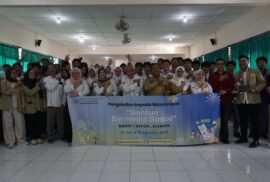
First Stage of the Community Service Program “Polite and Responsible Social Media Use among Adolescents” Held at SMA Negeri 1 Depok, Sleman

News Release Wednesday, 19 August 2026

The first stage of the Community Service Program (PkM) entitled “Polite and Responsible Social Media Use among Adolescents,” organized by the Master’s Program in Linguistics, Faculty of Cultural Sciences, Universitas Gadjah Mada (FIB UGM), was successfully held at SMA Negeri 1 Depok, Sleman. The activity was enthusiastically attended by students and featured a series of educational activities focusing on polite, wise, and responsible social media use.

The activity began with a report on the implementation of the program delivered by the Head of the Master’s Program in Linguistics, Dr. Hayatul Cholsy, S.S., M.Hum. The report outlined the implementation of the program and its objectives, particularly in raising adolescents’ awareness of the importance of politeness in communication on social media.

Following the report, Drs. H. Tri Nardono, Public Relations Vice Principal of SMA Negeri 1 Depok, expressed his appreciation for the implementation of the program. He also welcomed the collaboration between SMA Negeri 1 Depok and the Master’s Program in Linguistics, FIB UGM, as a joint effort to provide students with guidance on using social media wisely and respectfully.

Before the main session, students completed a pretest designed to map their social media habits and experiences. The results provided an initial overview of social media use among the students and supported the delivery of materials that were relevant to their experiences and needs.

The main session on polite social media use was delivered by Prof. I Dewa Putu Wijana, S.U., M.A., with Dr. Wira Kurniawati, S.S., M.A. serving as the moderator. Through the session, students were encouraged to understand the importance of using polite, thoughtful, and responsible language when communicating in digital spaces.

The activity continued with group dynamics, during which students developed ideas and prepared creative follow-up projects. Working in groups, the students created flyers or videos under the theme “Jarimu Harimaumu!” (“Your Fingers, Your Responsibility!”). Through these works, students were encouraged to convey messages about the importance of thinking carefully before posting, commenting, or sharing information on social media.

All student works will be presented during the evaluation activity scheduled for 10 August 2026. The evaluation will form part of the PkM series and will provide an opportunity to assess the students’ understanding and creativity while allowing them to communicate messages about polite and responsible social media use through their own works.

Through this program, the Master’s Program in Linguistics, FIB UGM, continues to contribute to the development of language and digital literacy among adolescents. The collaboration with SMA Negeri 1 Depok is expected to serve as a meaningful step toward fostering a culture of polite, critical, and responsible communication in digital spaces.

The PkM program will continue with the next stage, featuring the evaluation and presentation of the students’ works. We look forward to seeing the students again in the next stage of the program!

Author: Magister Linguistik

UGM Master’s Students Examine the Abajadun Numerical System in Malay and Javanese Manuscript Traditions at SEMALU IV 2026

News Release Monday, 3 August 2026

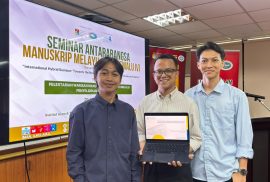
BANGI, SELANGOR — Three Master’s students in Literary Studies from the Department of Language and Literature, Faculty of Cultural Sciences, Universitas Gadjah Mada (UGM)—Priyo Joko Purnomo, M. Aufal Ghufron, and Maulana Nurul Izza—participated as paper presenters at the 4th International Seminar on Malay Manuscripts (Seminar Antarabangsa Manuskrip Melayu/SEMALU IV) 2026.

At the international seminar, organized by the Malay World Manuscript Research Centre (Pusat Penyelidikan Manuskrip Alam Melayu/PPMAM), Institute of the Malay World and Civilization (Institut Alam dan Tamadun Melayu/ATMA), Universiti Kebangsaan Malaysia (UKM), the three researchers presented a study entitled “Fortune-Telling: The Dynamics of the Abajadun Numerical System in Malay and Javanese Manuscript Traditions.”

SEMALU IV 2026 was held at Universiti Kebangsaan Malaysia, Bangi, Selangor, Malaysia, on July 21, 2026. The seminar carried the theme “Preserving the Heritage of Malay World Manuscripts through Research and Innovation” and brought together scholars, researchers, academics, and the general public to discuss the richness of Malay manuscripts and the intellectual heritage of the Malay world.

Through their research, the three UGM students examined the dynamics of the adaptation of the Abajadun numerical system within Malay and Javanese manuscript traditions, particularly in the manuscripts Syair Raksi Macam Baru (SRMB) and Kitab Mujarrabat Pegon (KMP). The study highlights how a numerical system that assigns numerical values to Arabic letters underwent processes of adaptation, negotiation, and localization as it interacted with Malay and Javanese cultures.

The study demonstrates that Abajadun is not merely a system of calculation or fortune-telling. Within the manuscript traditions of the Nusantara, the system developed into a cosmological technology that connects human beings, time, nature, and God within a network of meaning. Through calculations involving letters, names, days, and various other elements, communities sought to understand future possibilities and determine appropriate courses of action.

In the Malay tradition, the study of Syair Raksi Macam Baru reveals the use of the Abajadun system to determine compatibility between couples through the calculation of names. Meanwhile, Kitab Mujarrabat Pegon demonstrates the intersection between the Abajadun numerical system and the Javanese tradition of petungan, including the use of the concept of neptu—the numerical values associated with days and market days—for various purposes, such as determining auspicious times for trading, medical treatment, and marriage.

The study also emphasizes that Malay and Javanese manuscripts serve as spaces for the production and negotiation of knowledge. Numbers, letters, names, days, and fate are woven together into a cultural mechanism that helps communities understand uncertainty and organize various decisions in social life.

Drawing on Stuart Hall’s perspective on cultural representation and E.J. Aarseth’s concept of ergodic literature, the study views Abajadun as a sign system whose meanings are not always directly available in the text. Readers must perform a series of operations, beginning with converting letters into numbers, calculating particular values, and interpreting the results. In this process, readers play an active role in discovering the meanings contained within the manuscripts.

“Abajadun serves as a navigator that guides readers from letters to numbers, from numbers to interpretation, and from interpretation to social decisions,” reflects the central idea proposed in the study.

The participation of UGM Master’s students in SEMALU IV 2026 forms part of broader efforts to expand research on Nusantara manuscripts while demonstrating the relevance of traditional knowledge heritage within contemporary academic discourse. The study of Abajadun also shows that Malay and Javanese manuscripts reflect a creative encounter between Islamic traditions and local cosmologies, giving rise to distinctive knowledge systems in the Nusantara.

Through the SEMALU IV forum, the study further strengthens efforts to preserve the manuscript heritage of the Malay world through research and innovation. Manuscripts are not merely viewed as historical relics, but also as sources of knowledge that can continue to be studied, interpreted, and introduced to new generations.

Author: Khotibul Umam

Field Trip the Master’s Program in Anthropology, UGM to the Bonokeling Indigenous Community

News Release Monday, 27 July 2026

As part of the implementation of experiential learning, students in the Master’s Program in Anthropology at the Faculty of Humanities (FIB), UGM, conducted a field trip on Wednesday, June 17, 2026 to the Bonokeling Indigenous Community in Pekuncen Village, Jatilawang Subdistrict, Banyumas Regency, Central Java. This activity was a field component of the “Traditional Governance Systems” course taught by Dr. Sita Hidayah, M.A. The objective was to deepen students’ understanding of traditional governance practices, community management, and the dynamics of the relationship between traditional systems and formal government through an ethnographic approach.

The students were welcomed by Ki Soemitro, Chair of the Village Customary Council, and Pak Narso, Head of Pekuncen Village. The meeting served as a forum for dialogue on the history of the Bonokeling community, the structure of customary leadership, and the community’s close connection to their ancestors through the concept of anak-putu—a spiritual and genealogical bond that forms the foundation of both the identity and social system of the Bonokeling community. Ki Soemitro explained that the survival of the indigenous community depends not only on written rules but also on the moral adherence of all anak-putu to the values inherited from Kyai Bonokeling. This system has proven capable of preserving traditional governance across generations amid the tide of modernization.

In addition to discussions, the students observed the architecture of traditional houses, communal spatial arrangements, and the conduct of traditional rituals. These observations and discussions revealed that indigenous communities possess the capacity for effective collective governance without relying entirely on formal bureaucratic structures. The Village Head explained that the formal government and traditional institutions do not compete with one another but rather complement each other. Village development policies are always consulted with traditional institutions to preserve and respect sacred spaces and the community’s cultural values. Conversely, various internal community issues—such as family disputes, social conflicts, or violations of customary norms—are resolved through customary deliberation before resorting to state legal mechanisms.

The Bonokeling community is open to technology, such as cell phones, yet remains vigilant to ensure that the values of individualism and consumerism do not supplant the principles of collective living inherited from their ancestors. Amid the tide of globalization, they face various challenges, ranging from adapting to state administrative regulations to the pressure of cultural commercialization through the tourism industry. In response, Ki Soemitro explained that the Bonokeling community employs a strategy of cultural resistance through a process of prudent negotiation. They comply with state administrative requirements to ensure the civil rights of their citizens, while still preserving Kejawen spiritual practices and value systems in their daily lives. Furthermore, traditional institutions strictly limit the commercialization of rituals to ensure that the sacred nature of traditions does not degenerate into mere tourist spectacles.

This activity provides a learning experience that goes beyond classroom instruction. Through direct observation, dialogue, and reflection with the indigenous community, students gain a more comprehensive understanding of traditional governance practices as a living, dynamic social system that continually adapts to the changing times.

Author: Dewi Widyastuti

The 2nd CAUGM Officially Opens; UGM and Chung-Ang University Students Celebrate Cultural Collaboration

News Release Friday, 24 July 2026

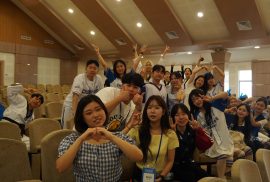
The Korean Language and Culture Study Program at FIB UGM, in collaboration with Chung-Ang University (CAU), held the opening ceremony for the “2nd CAUGM” on Tuesday, July 21, 2026. The opening ceremony took place in the Poerbatjaraka Building Auditorium. This cultural exchange program will run from July 20 through August 1.

The event was attended by 24 students from Chung-Ang University and 70 students from the Korean Language and Culture Program at FIB, UGM. Over the course of two weeks, participants will take part in various activities, such as cultural exchange classes, language exchange sessions, and collaborative activities designed to strengthen cross-cultural understanding between Indonesian and South Korean students.

At today’s opening ceremony, students from both countries presented lively cultural performances. Students from Chung-Ang University performed K-Pop dances and songs, a taekwondo demonstration, and traditional Korean musical instrument performances. Equally captivating, UGM students also presented traditional Indonesian cultural performances, including the Edan-edanan dance, the Sintren dance, singing, and pencak silat.

In addition, one of the main events in this series of collaborative activities is the Korean Festival, which will be open to the public on July 25. The general public and the campus community are invited to attend and experience Korean culture firsthand.

Through this series of activities, students not only gain academic experience but also have the opportunity to interact directly with participants from other countries. This type of cultural exchange is expected to broaden their global perspective, improve their cross-cultural communication skills, and strengthen ties among students from both institutions.

Author: Juleha (朱殷萱Chu Yin Hsuan)

123…13

Video UGM

[shtmlslider name='shslider_options']
Universitas Gadjah Mada

Faculty of Cultural Sciences
Universitas Gadjah Mada
Jl. Nusantara 1, Bulaksumur Yogyakarta 55281, Indonesia
   fib@ugm.ac.id
   +62 (274) 513096
   +62 (274) 550451

Work Units

  • Office of Journal & Publishing
  • INCULS
  • Information Technology and Database
  • Language Learning Center
  • Library Unit
  • Public Relations
  • Research

Facilities

  • Computer Laboratory
  • Gamelan
  • Guest House
  • Language Library
  • Library
  • Phonetics Library
  • Self Access Unit
  • Student Internet Centre

Importan Links

  • Journal of Humaniora
  • Subscriber Journal
  • Alumni Portal
  • Career
  • Departmens News
  • UGM Streaming

Contacts

  • Academic
  • Administration
  • Dean’s Office
  • Departments / Study Programs
  • Public Relations

© 2024 Faculty of Cultural Sciences Universitas Gadjah Mada

KEBIJAKAN PRIVASI/PRIVACY POLICY

[EN] We use cookies to help our viewer get the best experience on our website. -- [ID] Kami menggunakan cookie untuk membantu pengunjung kami mendapatkan pengalaman terbaik di situs web kami.I Agree / Saya Setuju