• About UGM
  • Academic Portal
  • IT Center
  • Library
  • Research
  • Webmail
  • Informasi Publik
  • English
    • Indonesia
Universitas Gadjah Mada Faculty of Cultural Sciences
Universitas Gadjah Mada
  • Home
  • Profile
    • History
    • Vision and Mission
    • Organizational structure
    • Administration
    • Staff
    • Faculty Members
  • Academic
    • Academic Calendar
    • Undergraduate Programs
      • Bachelor of Cultural Antrophology
      • Bachelor in Archaeolagy
      • Bachelor in History
      • Bachelor in Tourism
      • Bochetor in Korean Language and Culture
      • Bachelor in Indonesian Language and Culture
      • Bachelor in English
      • Bachelor in Arabic
      • Bachelor in Japanese Language and Culture
      • Bachelor in Javanese Language, Literature and Culture
      • Bachelor in French language and literature
    • Graduate Programs
      • Master in Antrophology
      • Master in ArchaeoIogy
      • Master in History
      • Master in Linguistics
      • Master in Literature
      • Master In American Studies
      • Master in Middle Eastern Cultural Studies
    • Post-Graduate Programs / S3
      • Doctor in Antropology
      • Doctor in American Studies
      • Doctor in Humanities
    • Student Service
  • KPPM
    • Research Information
    • Scientific / Academic Publications
    • Community Service
    • International Cooperation
    • Domestic Cooperation
  • Student Organizations
    • Student Executive Council
    • Semi-Autonomous Organizations
      • KAPALASASTRA
      • Christian Student Alliance
      • LINCAK
      • Saskine
      • Catholic Student Family
      • Dian Budaya
      • Sastra Kanuragan (sasgan)
      • Family of Muslim Cultural Sciences Students (KMIB)
      • Bejo Mulyo
    • Autonomous Organizations
      • Family of Anthropology Students (KEMANT)
      • English Department Student Association
      • Tourism Students Association (HIMAPA)
      • Family of Indonesian Literature Students (KMSI)
      • West Asian Literature Student Association (IMABA)
      • Association of Korean-Language Students (HIMAHARA)
      • Family of Regional Indonesian Literatures Students (KAMASUTRA)
      • The Family Body of History Students (BKMS)
      • The French Literature Students Association (HMSP)
      • Family of Anthropology Students
      • Japanese Student Association (HIMAJE)
  • Admission
    • Student Evaluation
  • Home
  • UGM Yogyakarta
  • UGM Yogyakarta
  • page. 10
Arsip:

UGM Yogyakarta

The Role of Paradigms in Cultural Ethnographic Research

HEADLINESNews ReleaseSDGSSDGs 4: Quality Education Monday, 14 October 2024

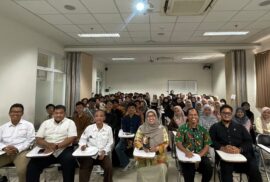
Dr. Sita Hidayah, a lecturer from the Department of Anthropology, Faculty of Cultural Sciences at Gadjah Mada University (UGM), was invited by the Laboratory for Language and Cultural Studies (LKBB) of the Faculty of Humanities, UIN Maulana Malik Ibrahim, Malang, to speak at a Workshop on Ethnographic Research in Culture. The event took place on Wednesday, August 21, 2024, and was attended by university leaders, faculty members, and lecturers from across the campus. The workshop, divided into two sessions, was held at the 3rd-floor auditorium of the Faculty of Humanities.

In her presentation, Dr. Sita, affectionately known as “Mbak Sita,” emphasized the importance of understanding paradigms in research. She stressed that paradigms serve as guiding frameworks in both research and writing. Discussing paradigms, she explained, is crucial to understanding their strengths and weaknesses in the context of theory, as each discipline has paradigms that provide specific direction or ideology. These paradigms, often referred to as theoretical frameworks or conceptual frameworks, help distinguish social sciences from humanities. While the social sciences rely on empirical facts (external), the humanities are rooted in interpretation and understanding (internal). Different paradigms, such as phenomenology, structuralism, and ethnoscience, come with their own methods, analyses, and approaches.

Dr. Sita also referenced her mentor, Prof. Dr. Heddy Shri Ahimsa-Putra, M.A., M.Phil, who has written extensively on paradigms. His works delve into fundamental perspectives that influence key elements such as basic assumptions, values, research topics, models, concepts, research methods, analytical methods, and ethnographic representation. Besides paradigms, Dr. Sita highlighted the importance of addressing the concept of “truth,” especially in the context of UIN, where the majority of attendees are Muslim, to align on shared perceptions of truth in research. Truth, she explained, is empirical and can be explored through two approaches: quantitative (surveys, questionnaires, polling) and qualitative (ethnography). In anthropology, ethnography is often employed, where data comes from community actions and statements gathered in everyday contexts, rather than being directed by the researcher. The ethnographic method typically involves extended stays, mastery of the local language, and the researcher as the primary instrument through participant observation.

The workshop participants displayed great enthusiasm, evident from the numerous questions they posed. Beyond the Q&A session, participants and speakers also shared their experiences in conducting research. Those interested in following the discussions can view the event on the YouTube channel at https://www.youtube.com/watch?v=6ExX2BC413Q

[Public Relation of FIB UGM, Author: Dewi N, Editor: Aldiza, Translator: Aldiza]

MAGANG GEMILANG #4 – French Language and Literature Orchestra Concert “Symphony of Friendship” Celebrating 70 Years of Indonesia-Austria Diplomatic Relations

HEADLINESNews ReleaseSDGSSDGs 16: Peace justice and strong institutionsSDGs 17: Partnerships for the Goals Friday, 11 October 2024

Wednesday, May 8, 2024 – The Austrian Embassy in Indonesia and the Indonesian Ministry of Foreign Affairs collaborated with the Jakarta Concert Orchestra to celebrate the 70th anniversary of diplomatic relations between Indonesia and Austria. The “Symphony of Friendship” Orchestra Concert was held on Wednesday (8/5) at the Jakarta Concert Hall, iNews Tower Building. Several distinguished guests, such as the Austrian Ambassador to Indonesia, the Director General for American and European Affairs of the Indonesian Ministry of Foreign Affairs, as well as diplomats and senior officials from the Ministry of Foreign Affairs strategic partners, were invited to attend the concert.

The orchestra concert, conducted by Avip Priatna, was divided into two parts. In the first part, the Jakarta Concert Orchestra performed works by Anton Bruckner and Johann Strauss. Renowned Austrian violinist Julian Walder, the main guest star of the “Symphony of Friendship” Orchestra Concert, performed a solo of Korngold’s Violin Concerto in the second part.

[Public Relations of FIB UGM, Writer: Arviani Fayzaila Ramadhanti, Translator: Aldiza, Editor: Rifal Fadlurrahman]

Research Methodology Course with Professor Sabine Troeger

HEADLINESNews ReleaseSDGSSDGs 10: Reduced InequalitiesSDGs 17: Partnerships for the GoalsSDGs 4: Quality Education Friday, 11 October 2024

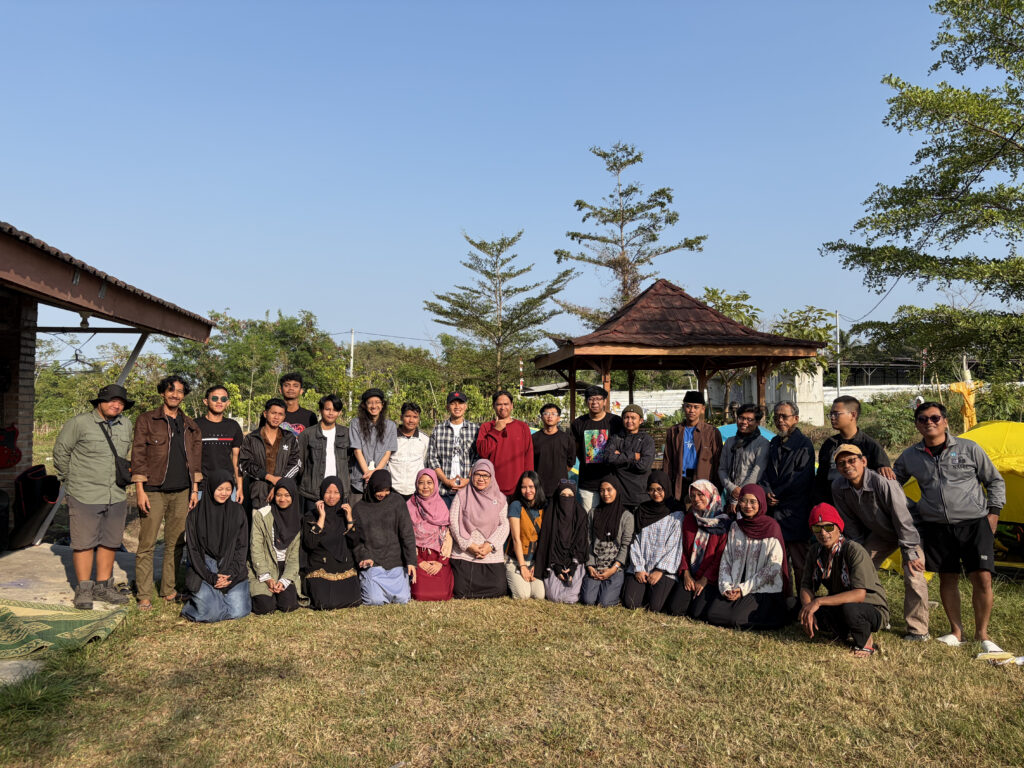
The Department of Anthropology at Universitas Gadjah Mada invited Professor Emeritus Sabine Troeger from the University of Bonn to teach a research methodology course. She is both an experienced educator and practitioner with decades of experience in development studies and climate change. Among her achievements is involvement in the design and implementation of programs by the German International Cooperation Agency (GIZ) in various African and Asian countries. The course was held in 14 sessions during September 2024 and was attended by both undergraduate and graduate Anthropology students. The general lecture with Professor Sabine also served as a preparatory class for undergraduate students selected to participate in the 2024 Merdeka Campus Competition Program (PKKM).

In this course, students had the opportunity to deepen their understanding of applying participatory methods, widely used to engage communities in empowerment programs. Rather than just listening to lectures, students tried using several tools, such as Venn diagrams, spider diagrams, and well-being matrices, to understand how they can be applied in field data collection. In the second half of the course, students presented readings from scholars like Jurgen Habermas, Foucault, and Robert Chambers, which helped them apply theories to their own research.

Although the course was conducted in a block system with consecutive sessions, participants’ enthusiasm remained high from start to finish. This was due to the varied teaching methods and the active role students played in presenting their ideas. Professor Sabine Troeger expressed her delight in conducting the course and seeing the students’ enthusiasm. To close the course, she invited her students to dinner for an informal discussion about their research interests for the future. The hope is that through such activities, quality education as aligned with SDG 4, and partnerships for shared goals as aligned with SDG 17, can be achieved.

[Public Relation of FIB UGM, Writer: Novilatul Ananda Ramadhani, Editor: Aldiza]

Shedding Light on Timor Timur: How to Teach the History of Timor Timur in Indonesia

HEADLINESNews ReleaseSDGSSDGs 16: Peace justice and strong institutionsSDGs 4: Quality Education Thursday, 10 October 2024

On Tuesday, The UGM History Department held a public lecture titled “How to Teach the History of Timor Timur in Indonesia” (9/10). Prof. Dr. Asvi Marwan Adam, a historian and researcher at the National Research and Innovation Agency (BRIN), was the keynote speaker for this lecture. The primary goal of this public lecture was to raise awareness about the history of Timor Timur, which is often presented with a limited or biased perspective.

In his opening address, Dr. Abdul Wahid, Head of UGM’s History Department, noted that this topic is particularly intriguing since it deals with a former Indonesian province and is rarely discussed in depth by academics.

“Timor Timur is our neighbor. We are so close to each other, yet unfortunately, very few Indonesians have thoroughly studied its history,” said Abdul Wahid.

In his lecture, Prof. Dr. Asvi Marwan Adam explained that his deep interest in the history of Timor Timur stemmed from the fact that it has largely disappeared from the history curriculum in Indonesia.  

“With Prabowo’s election as president and the appointment of several ministers who previously served in Timor Timur, could this pose a challenge in teaching Timor Leste’s history? Will the history being written or taught be aligned with those currently in power, meaning that military violence in the past could be covered up?” he questioned.

He emphasized that writing the history of Timor Timur is incredibly complex, especially due to the numerous human rights violations that occurred there. This complexity is reflected in the many films, books, novels, and memoirs focusing on human rights abuses in Timor Timur. Prof. Asvi’s presentation sparked an engaging and lively discussion, with the audience enthusiastically asking questions over two separate discussion sessions.

The panel concluded that a deep understanding of Timor Timur’s history is crucial to be presented objectively and openly within Indonesian education. Understanding the historical events in Timor Timur will help Indonesians view the past with a broader perspective and comprehend its impact on regional relations and humanitarian issues. By studying this history, young generations can become more critical of political interference in historical narratives and better appreciate the importance of justice and reconciliation processes.

[PR of FIB UGM: Aldiza, Translated: Aldiza, Photo: Adnan, Putu]

International Collaboration: IMABTA UGM and PPIDK Timtengka Sign MoU in Jakarta

HEADLINESNews ReleaseSDGs 17: Partnerships for the GoalsSDGs 4: Quality Education Monday, 5 August 2024

The Middle Eastern Cultural Studies Student Association (IMABTA) of UGM and the Indonesian Students Association of the Middle East Region (PPIDK Timtengka) conducted a signing ceremony for a Memorandum of Understanding (MoU) on Wednesday evening, July 31, 2024, from 8:30 PM to 10:30 PM WIB at the Omega Education Group office, Senopati, South Jakarta. The signing of this memorandum was attended by representatives from both organizations. From IMABTA UGM, the signing was represented by Farhan Azis Wildani as Vice Chair of IMABTA UGM and Aisya Dianmar Adzani as Secretary. Meanwhile, from PPIDK Timtengka, the signing was represented by Siti Amaliah as Coordinator of the Indonesian Students Association of the Middle East and Africa. Representatives from several Indonesian Student Associations under the umbrella of PPIDK Timtengka were also present and actively involved in the event. Among the Indonesian Student Associations present at the event were PPI Oman, represented by Fu’ad Alfikr, and two prominent figures who are Ambassadors of Timtengka, Tubagus Muhammad (PPI Syria) and Hanifah Khairiyah (PPMI Egypt). Additionally, Imran Zarkasyi, Rifqy Ramdhani, and Imada Hanimul Haq from PPMI Egypt also attended and actively participated in the discussion forum for planning the realization of future collaborative activities between the two parties following the sacred ceremony.

The signing of the MoU between IMABTA UGM and PPIDK Timtengka is expected to be a strategic step in building cooperative relations between the two parties with the main goal of enhancing the implementation of the Tri Dharma of Higher Education. Additionally, the collaboration aims to strengthen academic relations and fortify the bonds of friendship among students. The forms of cooperation agreed upon include the exchange of information related to education, research, and community service intersecting between the two parties and plans for joint activities. In this regard, IMABTA UGM and PPIDK Timtengka are committed to continuing the collaboration agenda of the “Middle Eastern Culture Week,” which will be held annually. Moreover, both parties are committed to opening opportunities for student research collaboration and scientific publication in the Journal of Middle Eastern Culture & Religion Issues (MECRI).

Siti Amaliah, the Coordinator of PPIDK Timtengka, stated that the Middle East is a vast region that remains open for the study of its dynamics and culture. In the future, this international cooperation and collaborative commitment are expected to be a positive starting point for both parties.

1…89101112…27

Video UGM

[shtmlslider name='shslider_options']
Universitas Gadjah Mada

Faculty of Cultural Sciences
Universitas Gadjah Mada
Jl. Nusantara 1, Bulaksumur Yogyakarta 55281, Indonesia
   fib@ugm.ac.id
   +62 (274) 513096
   +62 (274) 550451

Work Units

  • Office of Journal & Publishing
  • INCULS
  • Information Technology and Database
  • Language Learning Center
  • Library Unit
  • Public Relations
  • Research

Facilities

  • Computer Laboratory
  • Gamelan
  • Guest House
  • Language Library
  • Library
  • Phonetics Library
  • Self Access Unit
  • Student Internet Centre

Importan Links

  • Journal of Humaniora
  • Subscriber Journal
  • Alumni Portal
  • Career
  • Departmens News
  • UGM Streaming

Contacts

  • Academic
  • Administration
  • Dean’s Office
  • Departments / Study Programs
  • Public Relations

© 2024 Faculty of Cultural Sciences Universitas Gadjah Mada

KEBIJAKAN PRIVASI/PRIVACY POLICY

[EN] We use cookies to help our viewer get the best experience on our website. -- [ID] Kami menggunakan cookie untuk membantu pengunjung kami mendapatkan pengalaman terbaik di situs web kami.I Agree / Saya Setuju