• About UGM
  • Academic Portal
  • IT Center
  • Library
  • Research
  • Webmail
  • Informasi Publik
  • English
    • Indonesia
Universitas Gadjah Mada Faculty of Cultural Sciences
Universitas Gadjah Mada
  • Home
  • Profile
    • History
    • Vision and Mission
    • Organizational structure
    • Administration
    • Staff
    • Faculty Members
  • Academic
    • Academic Calendar
    • Undergraduate Programs
      • Bachelor of Cultural Antrophology
      • Bachelor in Archaeolagy
      • Bachelor in History
      • Bachelor in Tourism
      • Bochetor in Korean Language and Culture
      • Bachelor in Indonesian Language and Culture
      • Bachelor in English
      • Bachelor in Arabic
      • Bachelor in Japanese Language and Culture
      • Bachelor in Javanese Language, Literature and Culture
      • Bachelor in French language and literature
    • Graduate Programs
      • Master in Antrophology
      • Master in ArchaeoIogy
      • Master in History
      • Master in Linguistics
      • Master in Literature
      • Master In American Studies
      • Master in Middle Eastern Cultural Studies
    • Post-Graduate Programs / S3
      • Doctor in Antropology
      • Doctor in American Studies
      • Doctor in Humanities
    • Student Service
  • KPPM
    • Research Information
    • Scientific / Academic Publications
    • Community Service
    • International Cooperation
    • Domestic Cooperation
  • Student Organizations
    • Student Executive Council
    • Semi-Autonomous Organizations
      • KAPALASASTRA
      • Christian Student Alliance
      • LINCAK
      • Saskine
      • Catholic Student Family
      • Dian Budaya
      • Sastra Kanuragan (sasgan)
      • Family of Muslim Cultural Sciences Students (KMIB)
      • Bejo Mulyo
    • Autonomous Organizations
      • Family of Anthropology Students (KEMANT)
      • English Department Student Association
      • Tourism Students Association (HIMAPA)
      • Family of Indonesian Literature Students (KMSI)
      • West Asian Literature Student Association (IMABA)
      • Association of Korean-Language Students (HIMAHARA)
      • Family of Regional Indonesian Literatures Students (KAMASUTRA)
      • The Family Body of History Students (BKMS)
      • The French Literature Students Association (HMSP)
      • Family of Anthropology Students
      • Japanese Student Association (HIMAJE)
  • Admission
    • Student Evaluation
  • Home
  • SDGs 17: Partnerships for the Goals
  • SDGs 17: Partnerships for the Goals
  • page. 33
Arsip:

SDGs 17: Partnerships for the Goals

Public Lecture of the Javanese Language, Literature, and Culture Study Program Presents Yumi Sugahara on Historiography of Indonesian Islam

HEADLINESNews ReleaseSDGs 17: Partnerships for the GoalsSDGs 4: Quality Education Friday, 19 September 2025

Yogyakarta, September 17, 2025 – The Javanese Language, Literature, and Culture Study Program, Faculty of Cultural Sciences, Universitas Gadjah Mada, held a public lecture titled “Historiography of Indonesian Islam.” The event featured Yumi Sugahara, a scholar from Osaka University, as a visiting lecturer to discuss cross-national perspectives in writing the history of Indonesian Islam.

In her presentation, Sugahara emphasized that historiography is not merely “a record of events,” but also reflects cultural perspectives in constructing historical narratives. She highlighted the differences between Japanese and Indonesian historians, particularly in relation to the intersections of Islam, culture, and national history.

Several significant scholarly works were referenced in her lecture, including M.C. Ricklefs’ A History of Modern Indonesia since c.1200 (4th edition, Macmillan Education UK, 2008), regarded as one of the most authoritative references in modern Indonesian historiography, and Anthony Reid’s Southeast Asia in the Age of Commerce, 1450–1680 (Yale University), which explores the early modern period of maritime Southeast Asia.

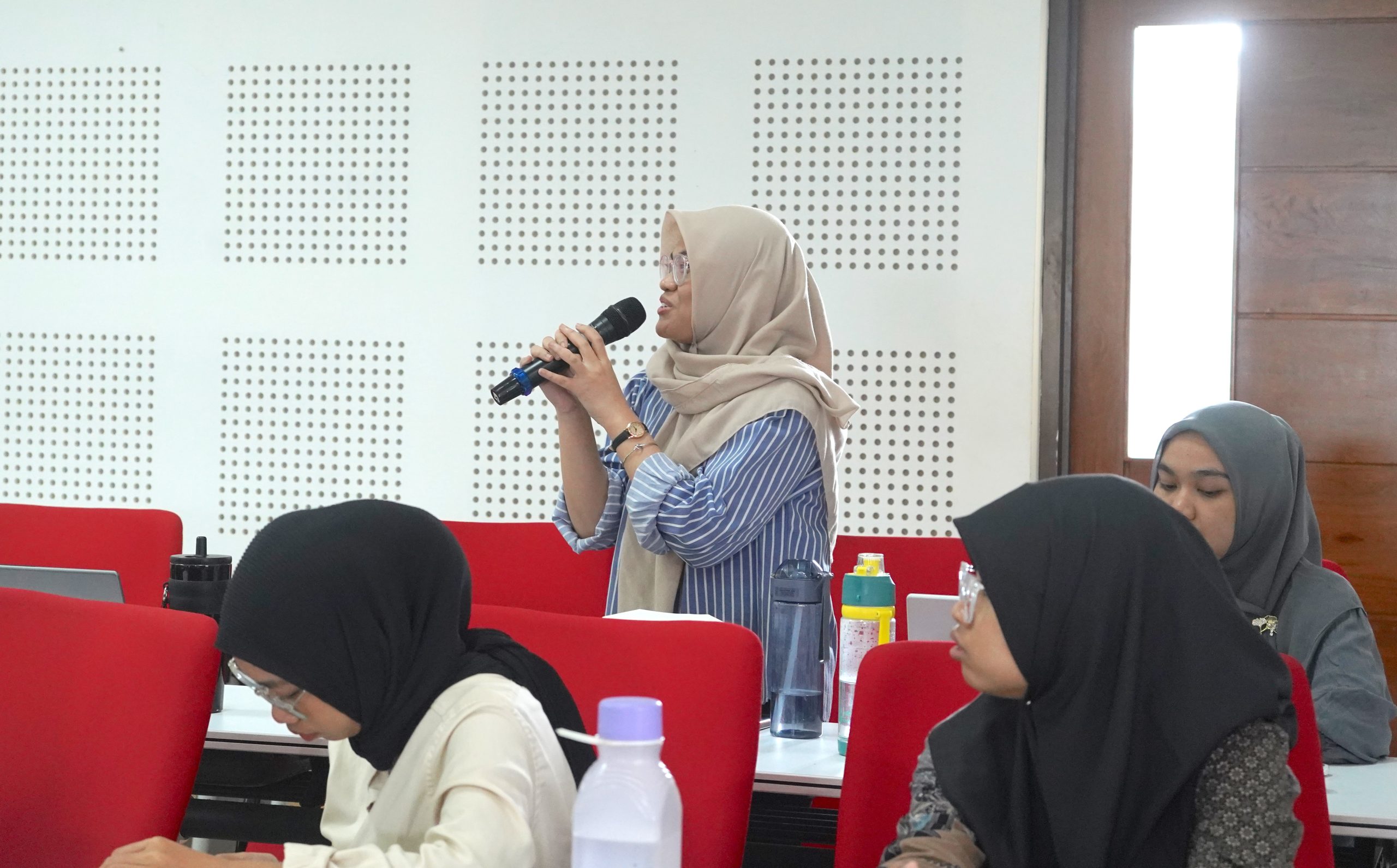
The question-and-answer session unfolded dynamically, with discussions ranging from how Japanese and Indonesian societies differently perceive the relationship between religion and national history, to the contrasting perspectives of Japanese, Western, and Indonesian historians in interpreting Islamicate culture in the archipelago.

This public lecture offered fresh insights for students and academics on cross-cultural approaches to the historiography of Indonesian Islam while also strengthening international academic networks.

The event aligns with the Sustainable Development Goals (SDGs), particularly SDG 4 (Quality Education) by fostering historical literacy and critical understanding, as well as SDG 17 (Partnerships for the Goals) through academic collaboration across nations.

[Public Relations Office, FIB UGM – Alma Syahwalani]

FIB UGM Hosts School Visit from SMA Cikal Amri, East Jakarta

HEADLINESNews ReleaseSDGs 11: Sustainable cities and communitiesSDGs 17: Partnerships for the GoalsSDGs 4: Quality Education Friday, 19 September 2025

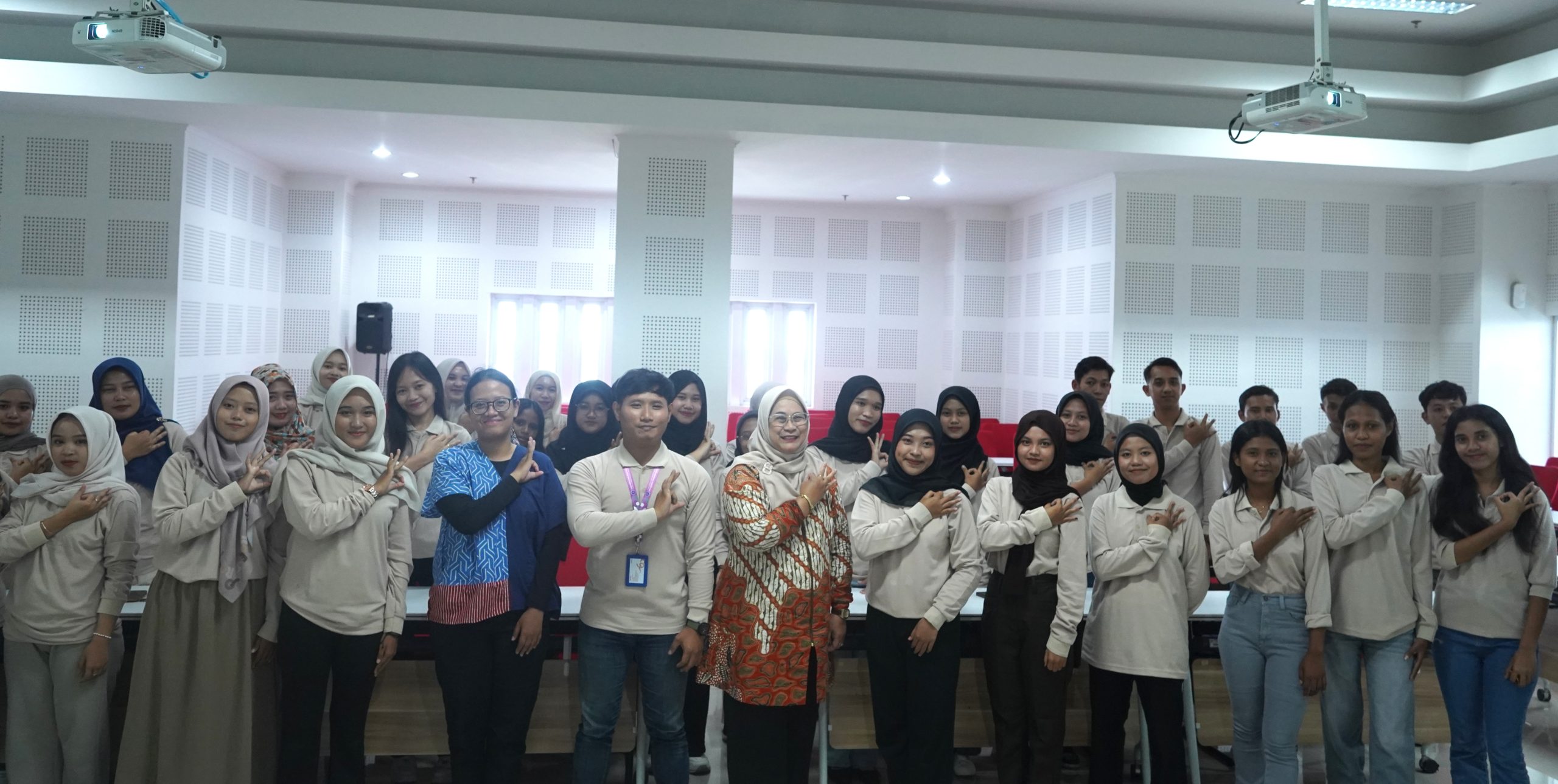
Yogyakarta, 17 September 2025 – The Faculty of Cultural Sciences, Universitas Gadjah Mada (FIB UGM), hosted a school visit from SMA Cikal Amri, East Jakarta. The event was warmly received by the Public Relations team of FIB UGM and provided students with the opportunity to experience academic life and the campus environment at UGM.

The program began with a presentation on the history of FIB UGM, its vision and mission, as well as various academic and non-academic activities. The interactive session allowed students to ask questions and gain deeper insights into learning opportunities and student life at FIB UGM.

After the presentation, the group joined a faculty tour. On the fourth floor, they were introduced to the Indonesian Language and Culture Learning Service (INCULS), a unit that facilitates Indonesian language and cultural learning for international students. The tour continued to Gedung Margono, home to various study programs of FIB UGM. In the same building, students were also invited to visit the Mandala Majapahit Archaeology Museum and the Archaeology Laboratory, both of which play an important role in supporting research and the preservation of cultural heritage.

Through this visit, the students of SMA Cikal Amri not only gained new insights into academic life but also experienced firsthand the importance of preserving language, literature, and culture in both national and international contexts.

This activity reflects FIB UGM’s commitment to supporting the Sustainable Development Goals (SDGs), particularly SDG 4: Quality Education through the introduction of inclusive access to higher education, and SDG 11: Sustainable Cities and Communities through the preservation of cultural heritage in its museum and archaeology laboratory.

[Public Relations of FIB UGM, Alma Syahwalani]

Master’s Program in Literature at FIB UGM Holds Workshop on Breaking Into Reputable Journals: Strategies for Writing and Publishing Academic Articles

SDGs 10: Reduced InequalitiesSDGs 17: Partnerships for the GoalsSDGs 4: Quality EducationSDGs 5: Gender equality Thursday, 18 September 2025

Yogyakarta, 17/9/2025 – The Master’s Program in Literature, Faculty of Cultural Sciences, Universitas Gadjah Mada, organized an academic workshop themed “Breaking Into Reputable Journals: Strategies for Writing and Publishing Academic Articles.” The event, held on Wednesday (17/9) at Auditorium C, Poerbatjaraka Building, featured two keynote speakers: Prof. Dr. Wening Udasmoro, S.S., M.Hum., DEA., professor at the Faculty of Cultural Sciences UGM, and Adwidya Susila Yoga, S.Pd., M.A., an academic as well as a practitioner in scientific publishing. The session was moderated by Nada Nadillah.

In her presentation, Prof. Dr. Wening Udasmoro emphasized that writing for reputable journals requires decisiveness in selecting the issue and accuracy in building methodological frameworks. “The first thing to pay attention to is the material or issue. A strong issue is one that is specific, contextual, and intellectually challenging. Do not fall into the trap of cliché topics,” she explained.

She gave examples of fresh entry points in literary research, such as LGBTQ+ issues in Muslim-majority countries, abortion debates in Muslim contexts, and the rebellion of Indonesian women writers against male-dominated literary traditions.

Prof. Wening also highlighted the importance of a novelty-based literature review. “The literature review is the foundation. It is from there that we can demonstrate our contribution to academic debates. If we only repeat previous studies, our work will not be considered competent,” she stressed.

The second session, delivered by Adwidya Susila Yoga, S.Pd., M.A., underlined the importance of accuracy in identifying target journals and the necessity of determining clear topics. “Writing an article cannot be separated from mapping the topic and having a clear storyline. After that, we need to do optimal sourcing—do not let references pile up only in the introduction while being scarce in the discussion. The next step is the ‘journal hunt,’ which means finding journals that match the topic, are consistent, and have a good reputation,” he explained.

He also warned participants about the dangers of predatory journals. “If a journal has an excessively high publication frequency, an unusually fast review process, an invalid E-ISSN, or ambiguous publication fees, we need to be cautious. Those are usually signs of a predatory journal,” he cautioned.

Furthermore, Adwidya encouraged students to utilize digital tools. “Use digital platforms such as Grammarly, DeepL, Vosviewer, and even AI—but their use must be academically accountable. Do not just use them recklessly,” he noted.

The workshop continued dynamically with a Q&A session between participants and speakers. Naria (Master’s in Literature) raised a question regarding the selection of research material: “Should research objects be literary works that have already received awards? And should research questions always be derived from theory?” she asked.

Responding to this, Prof. Wening stated, “Research objects do not have to be award-winning works. What matters most is the issue we want to bring forward. Focus on novelty and the perspective we present, not the credibility of the text itself. As for research questions, they can arise from the problems we want to examine, not necessarily from theory alone.”

Meanwhile, Andi (Master’s in Public Administration) asked about balancing local research with global issues. “Indonesia’s research strength lies in its rich empirical evidence. How can we balance this with global issues to ensure relevance?” he inquired.

Prof. Wening emphasized, “The key is to focus on contextual issues while still opening up to global debates. Take issues that others may not be familiar with, then connect them to wider discourses. That way, our research will gain international appeal.”

This workshop successfully provided in-depth insights into strategies for writing academic articles and breaking into reputable journals. Participants not only gained theoretical knowledge but also practical guidance from the speakers. With this momentum, the Master’s Program in Literature at FIB UGM hopes its students can produce high-quality, contributive scholarly works capable of competing at both national and international levels.

Author: Marsya Kamila / Public Relations, Master’s Program in Literature

Creative Writing Workshop: Exploring the Art of Flash Fiction with Alexandra Masri Do

SDGs 10: Reduced InequalitiesSDGs 17: Partnerships for the GoalsSDGs 4: Quality EducationSDGs 5: Gender equality Thursday, 18 September 2025

Yogyakarta, 11/9/2025 – The Master’s Program in Literature, Faculty of Cultural Sciences, Universitas Gadjah Mada, hosted a two-day creative writing workshop on flash fiction, held on Tuesday (9/9) and Thursday (11/9) at Soegondo Building, Room 125, FIB UGM.

The event featured international creative writer Alexandra Masri Do, widely known as Maz Do, who holds a Master of Fine Arts (MFA) degree in fiction from Cornell University, USA. Currently in Yogyakarta on a Fulbright scholarship for creative writing and research, Maz Do has published short stories in renowned literary journals such as Guernica, The Baffler, and McSweeney’s Quarterly Concern. The workshop was attended by around 20 participants, not only from the Master’s Program in Literature at UGM but also from various backgrounds outside the program who shared an interest in creative writing.

The first session, titled “Flash Fiction: Discover the Art of Short-Form Storytelling”, introduced the fundamentals of flash fiction as a compact narrative form capable of delivering depth within brevity. Alexandra opened the workshop with a provocative exercise called the Lying Exercise by Steven Doung.

She emphasized that this practice is essential because writing fiction, in a positive sense, involves “lying” by creating new realities through imagination. “Fiction is a lie, but it is a lie that reveals truth. As writers, we invent, we fabricate—but through this act of lying, we reach something deeply human and meaningful,” Maz Do explained.

Through this exercise, participants were encouraged to realize that the “lies” crafted in fiction can, in fact, serve as gateways to broader truths. Following this, Maz Do elaborated on key elements such as shape, perspective, and how a story can be viewed as a series of questions that challenge readers’ expectations.

The second session, titled “Generative Creative Workshop: Write Your Own Flash Fiction”, focused more on practice and story development. Participants engaged in simple yet imaginative exercises such as the Chair Exercise, which connected words to visuals and personal memories. Starting with the word “chair”, participants explored synonyms, compared the visual images that arose, and linked them to personal memories. From these associations, they were asked to compose short sentences and share them in group discussions.

Enthusiasm was evident throughout both days of the workshop. The atmosphere was dynamic, filled with discussions, partner activities, and reflective sharing. The presence of participants from diverse backgrounds—academics, students, and literary enthusiasts alike—brought unique perspectives into the creative process.

The workshop provided valuable insights into how a short narrative can powerfully evoke readers’ imagination. More than just theory, Maz Do equipped participants with practical skills in writing, revising, and sharpening literary sensitivity.

Through this program, the Master’s Program in Literature, FIB UGM reaffirms its commitment to creating open, innovative, and internationally engaged learning spaces. With guidance from Maz Do, flash fiction has proven to be a refreshing medium for exploring imagination and enriching today’s literary practice.

Author: Marsya Kamila / Public Relations, Master’s Program in Literature

UGM Korean Literature Festival 2025: Literature Seminar, Achievements, and Inspiration

SDGs 17: Partnerships for the GoalsSDGs 4: Quality EducationSDGs 5: Gender equality Wednesday, 17 September 2025

Yogyakarta, 6/9/2025 — The Korean Language and Culture Study Program, Faculty of Cultural Sciences, Universitas Gadjah Mada, successfully held the UGM Korean Literature Festival 2025 at the Purbacaraka Auditorium. The event took place from 09.00 to 11.30 WIB and featured a series of activities including a literature seminar, award announcement, and a talk show with Cursed Bunny author, Chung Bora.

The seminar opened with a presentation by Mrs. Alfiana Amrin Rosyadi, one of the founders of the K-Lit UGM community. She shared the journey of K-Lit UGM from its early formation to its successful organization of various literary activities, including translation workshops and the first Korean literature festival in Indonesia.

Following this, Mrs. Febriani Elfida Trihtarani delivered a talk titled “Cursed Bunny: Between Horror, Magical Elements, and Social Issues.” She discussed how Chung Bora’s short story collection explores compelling narratives infused with horror, magical elements, and reflections of social issues in South Korea.

The event continued with the announcement of competition winners. In the Korean Literature Scientific Paper Competition, Az-Zahra Ahsana Amala won first place and received a prize of Rp3,000,000. Zahra also had the opportunity to present her paper titled “Analysis of Borderline Personality Disorder Tendencies in the Main Character of Lee Kkonnnim’s Novel Jugigo Sipeun Ai.” Second place went to Ajeng Adinda Putri (Rp1,500,000), and third place to Rizqi Hauna Nadhira (Rp1,000,000).

Meanwhile, in the Cursed Bunny Novel Video Review Competition, Bernadeta Dheswita Puspitasari won first place (Rp600,000), followed by Yosie Rizkha Amaf in second place (Rp450,000), and Jeanetta Gabriella Bangun in third place (Rp200,000).

All prizes were sponsored by the Korean Language and Culture Study Program, Faculty of Cultural Sciences UGM, as a form of appreciation for student creativity. The organizers hope that this festival will not only serve as a platform for literary engagement but also inspire young generations to be critical, creative, and attentive to the development of Korean literature in Indonesia.

Author: Sherina Azmi A.

1…3132333435…75

Video UGM

[shtmlslider name='shslider_options']
Universitas Gadjah Mada

Faculty of Cultural Sciences
Universitas Gadjah Mada
Jl. Nusantara 1, Bulaksumur Yogyakarta 55281, Indonesia
   fib@ugm.ac.id
   +62 (274) 513096
   +62 (274) 550451

Work Units

  • Office of Journal & Publishing
  • INCULS
  • Information Technology and Database
  • Language Learning Center
  • Library Unit
  • Public Relations
  • Research

Facilities

  • Computer Laboratory
  • Gamelan
  • Guest House
  • Language Library
  • Library
  • Phonetics Library
  • Self Access Unit
  • Student Internet Centre

Importan Links

  • Journal of Humaniora
  • Subscriber Journal
  • Alumni Portal
  • Career
  • Departmens News
  • UGM Streaming

Contacts

  • Academic
  • Administration
  • Dean’s Office
  • Departments / Study Programs
  • Public Relations

© 2024 Faculty of Cultural Sciences Universitas Gadjah Mada

KEBIJAKAN PRIVASI/PRIVACY POLICY

[EN] We use cookies to help our viewer get the best experience on our website. -- [ID] Kami menggunakan cookie untuk membantu pengunjung kami mendapatkan pengalaman terbaik di situs web kami.I Agree / Saya Setuju