• About UGM
  • Academic Portal
  • IT Center
  • Library
  • Research
  • Webmail
  • Informasi Publik
  • English
    • Indonesia
Universitas Gadjah Mada Faculty of Cultural Sciences
Universitas Gadjah Mada
  • Home
  • Profile
    • History
    • Vision and Mission
    • Organizational structure
    • Administration
    • Staff
    • Faculty Members
  • Academic
    • Academic Calendar
    • Undergraduate Programs
      • Bachelor of Cultural Antrophology
      • Bachelor in Archaeolagy
      • Bachelor in History
      • Bachelor in Tourism
      • Bochetor in Korean Language and Culture
      • Bachelor in Indonesian Language and Culture
      • Bachelor in English
      • Bachelor in Arabic
      • Bachelor in Japanese Language and Culture
      • Bachelor in Javanese Language, Literature and Culture
      • Bachelor in French language and literature
    • Graduate Programs
      • Master in Antrophology
      • Master in ArchaeoIogy
      • Master in History
      • Master in Linguistics
      • Master in Literature
      • Master In American Studies
      • Master in Middle Eastern Cultural Studies
    • Post-Graduate Programs / S3
      • Doctor in Antropology
      • Doctor in American Studies
      • Doctor in Humanities
    • Student Service
  • KPPM
    • Research Information
    • Scientific / Academic Publications
    • Community Service
    • International Cooperation
    • Domestic Cooperation
  • Student Organizations
    • Student Executive Council
    • Semi-Autonomous Organizations
      • KAPALASASTRA
      • Christian Student Alliance
      • LINCAK
      • Saskine
      • Catholic Student Family
      • Dian Budaya
      • Sastra Kanuragan (sasgan)
      • Family of Muslim Cultural Sciences Students (KMIB)
      • Bejo Mulyo
    • Autonomous Organizations
      • Family of Anthropology Students (KEMANT)
      • English Department Student Association
      • Tourism Students Association (HIMAPA)
      • Family of Indonesian Literature Students (KMSI)
      • West Asian Literature Student Association (IMABA)
      • Association of Korean-Language Students (HIMAHARA)
      • Family of Regional Indonesian Literatures Students (KAMASUTRA)
      • The Family Body of History Students (BKMS)
      • The French Literature Students Association (HMSP)
      • Family of Anthropology Students
      • Japanese Student Association (HIMAJE)
  • Admission
    • Student Evaluation
  • Home
  • SDGs 16: Peace Justice and Strong Institution
  • SDGs 16: Peace Justice and Strong Institution
Arsip:

SDGs 16: Peace Justice and Strong Institution

Anthropology Students’ Role in the 38th National Student Scientific Week

ChampionshipNews Release Thursday, 11 December 2025

On the 27th of November (the awarding night of the 38th Pekan Ilmiah Mahasiswa Nasional (Pimnas) held in Universitas Hassanudin, Makassar), a bachelor student of Cultural Anthropology from UGM contributed to the medal count of Universitas Gadjah Mada. Muhammad Syukur Shidiq – commonly known as Syukur – and his team earned a silver medal for the poster category of the PKM-RSH 2 class. Their research, titled Antara Safe Space dan Toxic Space: Studi Ekologi Media terhadap Komunitas Marah-Marah di Media Sosial X, applies the concept of media ecology coined by Marshall McLuhan to study the Komunitas Marah-Marah, a community established on X (formerly Twitter).

Komunitas Marah-Marah is viewed as a communal space with two sides, both contradicting each other. This community provides room for freedom of emotional expression (specifically anger, as the name suggests) for its members while giving them affirmation from fellow members. At the same time, negative actions such as cyberbullying, hate speech, and discrimination are also rampant in the space. What started out as a small community has tripled in size in the span of a year. The results of this research can hopefully be used as a contribution to increase digital literacy among the Indonesian digital community, along with creating a safe online space for users and as consideration for policy makers to create better online policies.

As an anthropology student, there are a few lessons Syukur picked up during his Pimnas research. The discipline of anthropology plays a role in understanding Komunitas Marah-Marah as a living digital environment, filled with members with various cultures and perspectives. X as a social media is viewed as an ecology that shapes and influences how people express their emotions. The existence of this community helps shape the understanding of how anger grows and evolves into its own culture in a digital context.

During four months of Pimnas research, Syukur learned some valuable lessons for himself, as a person and as a researcher. Along with getting the opportunity to experience field research first-hand, Syukur learned to collect, sort, and process ethnographic data while working in a systematic workflow. This opportunity gives him the chance to train his cultural intuition and reflectivity as an anthropologist. He also learned to be committed to a research project and working in a multidisciplinary approach. His team members consisted of fellow bachelor students Muh Faiq Fauzan, Fanisa Ratna Dewi, Debora Magdalena Marchya Sihombing, Muhammad Syukur Shidiq, and Adelia Pradipta Nasyaputri. They hail from various departments of social sciences, such as Communication Science, Social Development and Welfare, Philosophy, and Psychology; each with their own methods and perspectives, collaborating towards the same goal to reach a better understanding of a dynamic socio-digital environment.

Author: Amadeus Abhirama Paramanindita

UGM Arabic Study Program Students Refresh Their Minds Before Final Exams Through an Outing Class Titled “Lu’bah Arabiyyah”

News Release Wednesday, 10 December 2025

Yogyakarta, 3 December 2025 — A total of 68 first-year students from the Arabic Study Program at Universitas Gadjah Mada (UGM) attend an outing class at Wisdom Park UGM on Wednesday, 3 December 2025. The activity, titled Lu’bah Arabiyyah, served as a collaborative program for Arabic Writing, Arabic Speaking, and Tasrif courses to help students review lesson material through interactive games while refreshing their minds ahead of final exams. The event was accompanied by lecturers from the Arabic Study Program and supported by student tutors from the 2022 and 2023 cohorts.

During Lu’bah Arabiyyah, students are invited to do a series of game stations set up across Wisdom Park. Each game required them to actively use and recall their Arabic skills in preparation for the final exams. Among the activities were Sentence Relay, Puzzle Tasrif, and Arabic crossword puzzles. After completing all stations, the outing concluded with a communal meal and a shared rujak session with lecturers.

The 2025 cohort participated enthusiastically from start to finish. Many students expressed that Lu’bah Arabiyyah boosted their confidence and motivation ahead of the Final Examinations, as the activities helped them recall and reinforce material learned throughout the semester. Beyond academic preparation, the event also strengthened collaborations and intimacy among students, tutors, and lecturers, which is an important foundation for smoother communication and collaboration in future learning processes.


Author: Muhammad Ardiansyah

Master in Middle Eastern Cultural Studies and Arabic Study Program UGM Held International Public Lecture with Prof. Ayman Shihadeh: “Exploring Skepticism and Tolerance in Premodern Islamic Thought”

News Release Monday, 8 December 2025

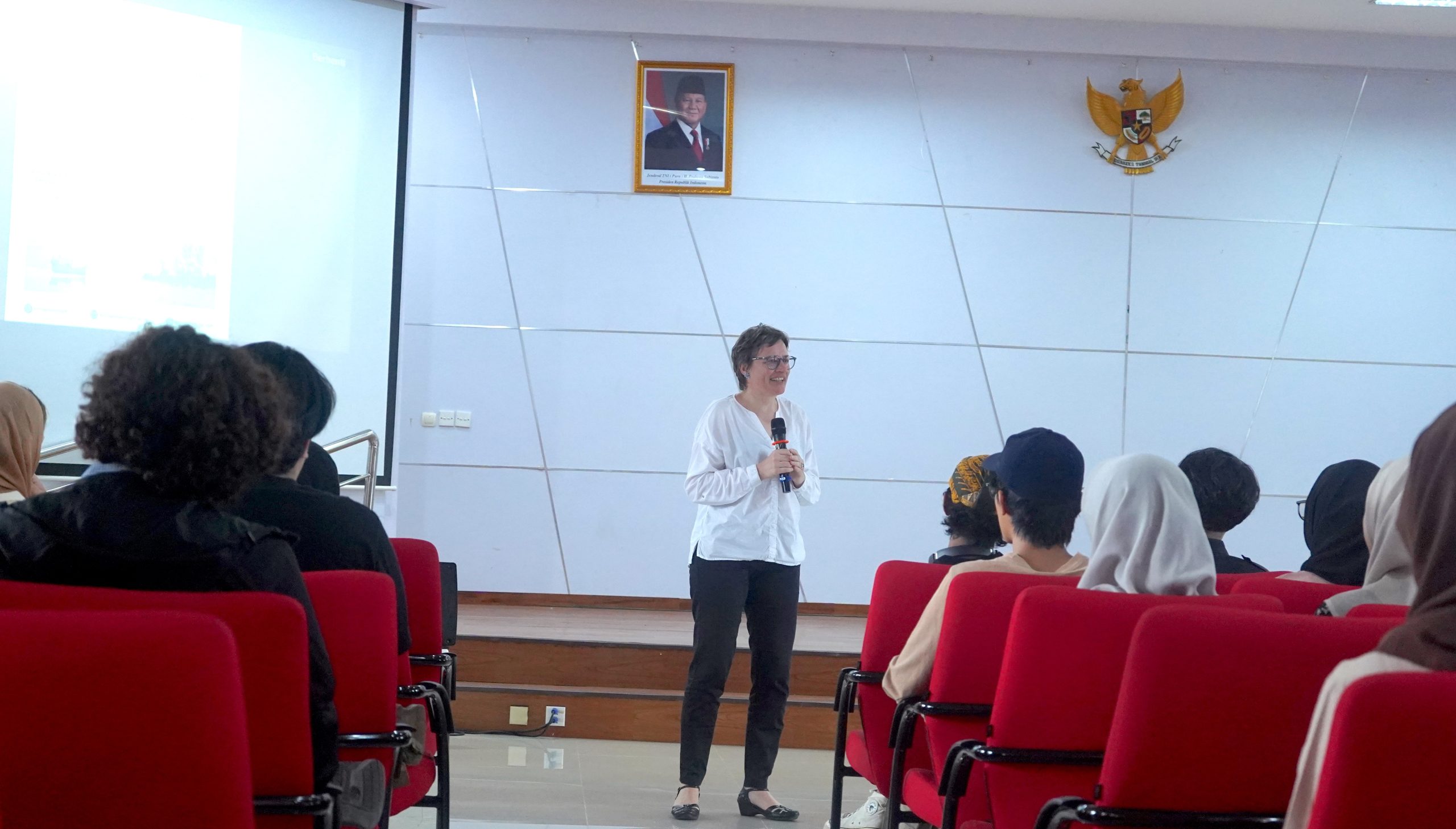
Yogyakarta, 13 November 2025 — The Master’s Program in Middle Eastern Cultural Studies (KBTT) at Universitas Gadjah Mada, in collaboration with the Arabic Study Program, hosted an International Public Lecture titled “Scepticism and Tolerance: A Case from Premodern Islamic Thought.” The event featured Prof. Ayman Shihadeh, a distinguished scholar of Islamic intellectual history from the School of Oriental and African Studies (SOAS), University of London. Held at the Soegondo Auditorium, Faculty of Cultural Sciences UGM, the lecture was also livestreamed via the Arabic Study Program’s YouTube channel, allowing broader public access. The session was moderated by Tohir Mustofa, M.A., lecturer of the Arabic Study Program, and attended by students from both undergraduate and postgraduate levels.

This public lecture highlighted the strategic synergy between the KBTT Program and the Arabic Study Program UGM, reaffirming their shared commitment to bringing world-class academic discourse to students and the wider community. Through its YouTube livestream, the event aimed to reach a wider audience, strengthen public intellectual literacy, and foster a culture of critical and constructive dialogue.

The lecture also supported key Sustainable Development Goals (SDGs), particularly SDG 4 (Quality Education) through accessible high-quality academic learning, SDG 16 (Peace, Justice, and Strong Institutions) by promoting values of tolerance and dialogue, and SDG 17 (Partnerships for the Goals) through interdisciplinary academic collaboration.


Author: Muhammad Ardiansyah

UGM Arabic Study Program Participates in ICESCO Arabic Language Teaching Training

News Release Wednesday, 3 December 2025

Yogyakarta, 13 November 2025 — The Arabic Study Program at Universitas Gadjah Mada (UGM), with Universitas Islam Negeri Sunan Kalijaga, Universitas Ahmad Dahlan, and Pondok Pesantren Muhammadiyyah, took part in the Arabic Language Teaching Training organized by the Islamic World Educational, Scientific and Cultural Organization (ICESCO). The training brought together not only participants from Indonesia but also representatives from various countries such as Malaysia, Thailand, Uzbekistan, Morocco, Russia, and others.

The ICESCO training focused on four fundamental theories in Arabic language teaching and learning. The first was the Grammar–Translation Theory, which is suitable for advanced learners and emphasizes reading, writing, and vocabulary mastery, particularly for academic, religious, and literary purposes. The second was the Behaviorism Theory (as-Sulukiyah), which views language as a form of behavior shaped through repetition and imitation, highlighting the significant role of environment in language acquisition. The third theory, Cognitivism (al-Ma‘rifiyyah), underscores that language learning involves active mental processes such as attention, information processing, and comprehension, placing learners as active participants rather than passive recipients. The final theory, Communicative Theory (at-Tawasuliyyah), emphasizes real-life language use within social contexts, prioritizing fluency and communicative ability over strict grammatical accuracy. This theory also acknowledges dialectal variations as an integral part of everyday language use.

In its concluding remarks, ICESCO highlighted that no single theory is entirely sufficient. Each has strengths and limitations, meaning effective Arabic language instruction requires an integrated approach that adapts to context. The training also emphasized the growing role of technology and artificial intelligence (AI) in designing lessons, generating exercises, and visualizing theoretical applications in more engaging and effective ways.

The Arabic Study Program at UGM’s participation in the ICESCO training reinforces the university’s commitment to strengthening the capacity of Arabic language educators and learners on campus. This initiative aligns with the Sustainable Development Goals (SDGs), particularly SDG 4 (Quality Education), SDG 16 (Peace, Justice, and Strong Institutions), and SDG 17 (Partnerships for the Goals). Through this involvement, the Arabic Study Program at UGM continues to advance as a progressive and globally connected center for Arabic language and cultural studies.

Author: Muhammad Ardiansyah

Muhammad Ghazi Al Ghifari Named Fastest Graduate of FIB at UGM Graduation Period III 2025

SDGs 16: Peace justice and strong institutionsSDGs 4: Quality Education Thursday, 19 June 2025

Yogyakarta, 28/5/2025 — Thirteen students from the Arabic Study Program at Universitas Gadjah Mada (UGM) participated in the Period III Undergraduate Graduation Ceremony for the 2024/2025 academic year. Among them, Muhammad Ghazi Al Ghifari earned the distinction of being the fastest graduate in the Faculty of Cultural Sciences (FIB), completing his degree in just 3 years, 6 months, and 12 days.

The announcement was made by the Dean of FIB, Prof. Dr. Setiadi, M.Si., during the Mangayubagya Graduation Ceremony held on Wednesday, May 28, 2025, at 1:00 PM in the Soegondo Auditorium. In the heartfelt event, Al Ghifari also delivered a speech on behalf of the graduates. He expressed his gratitude to everyone who had supported the graduating students and encouraged his peers to uphold integrity and apply the knowledge gained during their time at university.

Originally from Petaling Banjar Village, Bangka Regency, Bangka Belitung Province, Al Ghifari was admitted to the Arabic Study Program on May 25, 2021, through the Penelusuran Bibit Unggul Berprestasi Seni (Special Admission for Artistic Talent). After completing seven semesters, he defended his undergraduate thesis on February 12, 2025, titled “The Quality of DeepL Translations in Translating Fictional Texts from Arabic to Indonesian”. He officially graduated with a GPA of 3.93 and earned his Bachelor of Arts (S.S.) degree on February 28, 2025, at the age of 21 years and 6 months.

Al Ghifari noted that there was no special formula behind his academic achievement. “I simply committed to writing my thesis every day—even if it was just a paragraph—and consulted with my advisor weekly,” he said. The consistent support of his parents was also a major motivation for completing his studies swiftly and preparing to pursue a master’s degree.

He also praised the Arabic Study Program at UGM as an ideal environment to study the Arabic language, literature, and culture. The program holds national and international accreditation and is supported by a team of highly qualified and professional lecturers. Al Ghifari hopes the program will continue to grow in quality and reputation on the global stage.

Looking ahead, Al Ghifari is determined to pursue a master’s degree with a focus on Middle Eastern political, economic, and cultural issues.

Author: Muhammad Ghazi Al Ghifari

1234

Video UGM

[shtmlslider name='shslider_options']
Universitas Gadjah Mada

Faculty of Cultural Sciences
Universitas Gadjah Mada
Jl. Nusantara 1, Bulaksumur Yogyakarta 55281, Indonesia
   fib@ugm.ac.id
   +62 (274) 513096
   +62 (274) 550451

Work Units

  • Office of Journal & Publishing
  • INCULS
  • Information Technology and Database
  • Language Learning Center
  • Library Unit
  • Public Relations
  • Research

Facilities

  • Computer Laboratory
  • Gamelan
  • Guest House
  • Language Library
  • Library
  • Phonetics Library
  • Self Access Unit
  • Student Internet Centre

Importan Links

  • Journal of Humaniora
  • Subscriber Journal
  • Alumni Portal
  • Career
  • Departmens News
  • UGM Streaming

Contacts

  • Academic
  • Administration
  • Dean’s Office
  • Departments / Study Programs
  • Public Relations

© 2024 Faculty of Cultural Sciences Universitas Gadjah Mada

KEBIJAKAN PRIVASI/PRIVACY POLICY

[EN] We use cookies to help our viewer get the best experience on our website. -- [ID] Kami menggunakan cookie untuk membantu pengunjung kami mendapatkan pengalaman terbaik di situs web kami.I Agree / Saya Setuju