• About UGM
  • Academic Portal
  • IT Center
  • Library
  • Research
  • Webmail
  • Informasi Publik
  • English
    • Indonesia
Universitas Gadjah Mada Faculty of Cultural Sciences
Universitas Gadjah Mada
  • Home
  • Profile
    • History
    • Vision and Mission
    • Organizational structure
    • Administration
    • Staff
    • Faculty Members
  • Academic
    • Academic Calendar
    • Undergraduate Programs
      • Bachelor of Cultural Antrophology
      • Bachelor in Archaeolagy
      • Bachelor in History
      • Bachelor in Tourism
      • Bochetor in Korean Language and Culture
      • Bachelor in Indonesian Language and Culture
      • Bachelor in English
      • Bachelor in Arabic
      • Bachelor in Japanese Language and Culture
      • Bachelor in Javanese Language, Literature and Culture
      • Bachelor in French language and literature
    • Graduate Programs
      • Master in Antrophology
      • Master in ArchaeoIogy
      • Master in History
      • Master in Linguistics
      • Master in Literature
      • Master In American Studies
      • Master in Middle Eastern Cultural Studies
    • Post-Graduate Programs / S3
      • Doctor in Antropology
      • Doctor in American Studies
      • Doctor in Humanities
    • Student Service
  • KPPM
    • Research Information
    • Scientific / Academic Publications
    • Community Service
    • International Cooperation
    • Domestic Cooperation
  • Student Organizations
    • Student Executive Council
    • Semi-Autonomous Organizations
      • KAPALASASTRA
      • Christian Student Alliance
      • LINCAK
      • Saskine
      • Catholic Student Family
      • Dian Budaya
      • Sastra Kanuragan (sasgan)
      • Family of Muslim Cultural Sciences Students (KMIB)
      • Bejo Mulyo
    • Autonomous Organizations
      • Family of Anthropology Students (KEMANT)
      • English Department Student Association
      • Tourism Students Association (HIMAPA)
      • Family of Indonesian Literature Students (KMSI)
      • West Asian Literature Student Association (IMABA)
      • Association of Korean-Language Students (HIMAHARA)
      • Family of Regional Indonesian Literatures Students (KAMASUTRA)
      • The Family Body of History Students (BKMS)
      • The French Literature Students Association (HMSP)
      • Family of Anthropology Students
      • Japanese Student Association (HIMAJE)
  • Admission
    • Student Evaluation
  • Home
  • SDGs 10: Reduced Inequalities
  • (Page 8)
Arsip:

SDGs 10: Reduced Inequalities

Reexamining the Relationship between Anthropology and Ethnography through a Reflective Discussion with Dr. Muhammad Zamzam Fauzanafi and Dr. Sita Hidayah

News Release Wednesday, 3 December 2025

“Ethnography is a skill that should become a strength for you, anthropology students, in addressing challenges in the professional world.”

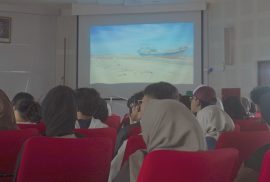
Friday, November 28, 2025, marked the third installment of Ngumbar (Ngulik Materi Bareng), an event organized by the Samhita Social Research Institute. Raising the topic Reexamining the Relationship between Anthropology and Ethnography: Reflections on Knowledge, Methods, and Interpretation in Anthropological Research, the discussion not only explored foundational theories, but also encouraged anthropology students to reflect on their positionality in the process of learning. In collaboration with the Department of Anthropology, Faculty of Cultural Sciences (FIB) UGM, the session featured Dr. Muhammad Zamzam Fauzanafi and Dr. Sita Hidayah as speakers who discussed current dynamics in the field of anthropology. Held in the Multimedia Room, 2nd floor of the Margono Building, the event was attended enthusiastically by students, faculty, and alumni both onsite and online via Zoom.

The discussion began by revisiting long-held assumptions about anthropology as a discipline and ethnography as a method, examined through a reflective lens. The topic was inspired by Tim Ingold’s essay Anthropology is not Ethnography, which sparked significant debate among academics and anthropology students. The relationship and distinctions between anthropology and ethnography were viewed through idiographic (descriptive) and nomothetic (theoretical) approaches in studying socio-cultural phenomena, rather than as fixed and definitive knowledge. This led to conversations about ethical dilemmas, an important aspect for contemporary generations of anthropology students and scholars to recognize. The use of the term “learning” during fieldwork carries ethical consequences, particularly in mitigating power imbalances between researcher and researched.

Dr. Muhammad Zamzam Fauzanafi added that amid debates over the ideological direction of Indonesian anthropology, the Anthropology Department at UGM has become a space where differing academic influences meet and shape curriculum development. “We are fortunate that new lecturers at that time brought diverse perspectives from their studies, and particularly Prof. Laksono and Prof. Heddy have significantly shaped our academic orientation,” he noted.

Continuing the discussion on contemporary dynamics within anthropology, Dr. Sita Hidayah highlighted reflectivity as a strength and distinctive characteristic of Anthropology at UGM. Awareness of positionality has become an integral aspect of anthropological learning. “Developing a reflective and position-conscious curriculum is crucial for facing future challenges, especially in the professional world,” she added. Building student confidence in their ethnographic abilities is essential and needs to be strengthened as a key competence for addressing real-world problems.

Writer: Okky Chandra Baskoro
Photo: Nandito Jodi Syaifulloh

Introduction to the Media Industry: Student Visit from LEM FIB UGM to Tribun Network Jogja

News ReleaseStudent's Activity Monday, 1 December 2025

Yogyakarta, November 26, 2025 – The Executive Board of the Faculty of Humanities (LEM FIB UGM) conducted a student visit to the Tribun Network Jogja office on Wednesday, November 26, 2025. The student visit is a program of the Public Relations and Organization Ministry (RPO) of LEM FIB UGM as part of a series of collaborative activities aimed at expanding students’ knowledge, skills, and direct contributions in the field of media and communication. The student visit was held in Room C of the Tribun Network Jogja office, located at Ringroad Barat Street No. 11, Nusupan, Trihanggo, Gamping, Sleman Regency, Special Region of Yogyakarta. 

Tribun Network Jogja, also known as TribunJogja.Com, is one of the regional newspapers operating in the Special Region of Yogyakarta and is a subsidiary of the Kompas Gramedia Group. The company operates in the mass media sector as part of the Tribun Network.

The visit to Tribun Network Jogja took place from 8:30 a.m. to 12:00 p.m. The event began with an opening speech from a representative of LEM FIB UGM, followed by a presentation by the Digital Manager of Tribun Jogja, Mr Ikrob Didik Irawan. The material covered websites, Search Engine Optimization (SEO), Google Analytics, social media management, creative content creation, and branding strategies. The next activity was a tour of the work environment, which included workspaces, relaxation areas, and a room containing imported newspaper printing machines.

This activity not only focused on theoretical understanding of the media industry but also served as a practical learning experience through the workplace tour, providing a real-world glimpse into the operations of the Tribun Network Jogja. LEM FIB UGM hopes this activity will continue to have a positive impact as a manifestation of students’ commitment to actively contribute to the development of the media and communication industry, while also serving as a sustainable collaborative agenda for the future.

The success of this student visit strengthens the position of LEM FIB UGM as a proactive unit in building external relations and developing student competencies in various fields, ranging from digital communication to creative industry exploration. LEM FIB UGM expresses its highest appreciation to the management of Tribun Network Jogja, especially Mr Ikrob Didik Irawan, for his cooperation, as well as to all participants who have actively participated. The presence and enthusiasm of all elements were key to the success of this Media Industry Introduction activity.

This student visit has tangibly supported the achievement of the Sustainable Development Goals (SDGs), particularly SDG 4 (Quality Education) through sessions on websites, SEO, Google Analytics, social media, creative content, and branding; SDG 10 (Reduced Inequalities) by ensuring that education is accessible to all who need it, regardless of socioeconomic status; and SDG 17 (Partnerships for The Goal) through effective collaboration between LEM FIB UGM students and Tribun Network Jogja.

Author: Gracia Nofidelia Joherman

FIB and INAKOS Hold National Seminar to Strengthen the Korean Studies Ecosystem in Indonesia

News Release Sunday, 30 November 2025

Yogyakarta, November 29, 2025 – Efforts to strengthen the Korean Studies ecosystem in Indonesia have entered a new phase with the hosting of the INAKOS Seminar titled The Role of INAKOS in Reinforcing Korean Studies in Indonesia on Saturday, November 29, 2025, at the Soegondo Building Auditorium, Faculty of Cultural Sciences (FIB) UGM. Organized by The International Association for Korean Studies in Indonesia (INAKOS) in collaboration with the Korean Language and Culture Study Program at FIB UGM and the Korea Foundation, the event marked an important milestone in revitalizing INAKOS as a center for academic collaboration and research development in Korean Studies in Indonesia.

In his opening remarks, the Dean of FIB UGM, Prof. Setiadi, reaffirmed the faculty’s commitment to strengthening the East Asian studies ecosystem.
“We are preparing proper infrastructure to support East Asian studies. The building next to this one is fully dedicated to academic study centers, one of which is Inakos. We aim for all research centers at FIB to be integrated within a multidisciplinary and transdisciplinary environment,” he stated.

Support was also expressed by the Director of the Korea Foundation, Lee Sanghoon, who highlighted the strategic role of INAKOS as an academic bridge between Indonesia and Korea.
“The Korea Foundation fully supports Inakos in revitalizing academic spaces and dialogue for scholars with deep interests in Korea. We believe Inakos will play an important role as a bridge in strengthening Korean Studies in Indonesia,” he said.

Meanwhile, Acting Ambassador of Korea to Indonesia, Park Soo-deok, emphasized the importance of strengthening cross-national collaboration through research and academic dialogue.
“Indonesia and Korea have a long history of cooperation in culture and education. Through research, academic exchange, and scholarly dialogue such as today, both countries continue to build stronger bridges of mutual understanding,” he noted.

On the same occasion, the 2025 President of INAKOS, Suray Agung Nugroho, presented the strategic direction of the newly reactivated organization. He emphasized that INAKOS serves as a home, space, and academic umbrella to unite scholars and observers of Korean Studies in Indonesia, as well as to enhance collaborative and sustainable research.

Following the opening remarks, the audience was treated to a performance of the Korean Fan Dance, presented through a collaboration by students from the Korean Language and Culture Study Program at FIB UGM. The program continued with academic presentations by speakers from UGM, UI, UPI, and Universitas Nasional.

The first presentation was delivered by Rostinue from the University of Indonesia, who explained the role of Korean Studies scholars as academic and cultural bridges that strengthen bilateral interactions between Indonesia and Korea. The next speaker, Ashanti Widyana from the Indonesia University of Education (UPI), presented research trends in UPI’s Korean Language Education Program from 2020 to 2025, focusing on strengthening applied linguistics research, cultural studies, and integrating research outcomes into educational practice.

The session continued with Desitha Dwi Asriani from FISIPOL UGM, who discussed body modification and gender performativity among young Asian men and women from a comparative Indonesia–Korea perspective. The next presentation, by Rurani Adinda from Universitas Nasional, explored differences in the meanings of idioms related to the head in Korean and Indonesian. The final speaker, Achmad Rio, Head of the Korean Language and Culture Study Program at FIB UGM, delivered a talk on analyzing translation patterns of the adnominal ending deon-eass-does using a Korean–Indonesian parallel corpus.

This seminar is expected to serve as an initial step in expanding academic networks in Korean Studies in Indonesia, while strengthening academic contributions to cultural, social, and educational cooperation between Indonesia and Korea. Continued collaboration will open broader spaces for dialogue and encourage innovative scholarly work that benefits society and advances knowledge.

In the long term, this initiative is expected to enhance access to knowledge and opportunities for academic exchange, contributing to human development and a more inclusive and sustainable future for both countries.

[Public Relations of FIB UGM, Candra Solihin]
Sharing with the Devil: Pujo Semedi Talks to Ghosts through Ethnography

HEADLINESNews Release Wednesday, 26 November 2025

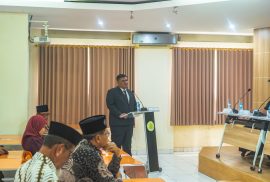
On Friday (November 21, 2025), Prof. Dr. Pujo Semedi served as a panel discussant in the session “Monsters, Devils, and Survival: The Persistence of Plantations and People in the Scholarship of Pujo Semedi” at the 2025 Annual Meeting of the American Anthropological Association (AAA) in New Orleans, LA, supported by FULLBRIGHT funding through the Scholar in Residence Grant at the University of Colorado Boulder for Fall 2025. The panel was inspired by Pujo’s academic work on plantations, which investigates how colonial hegemony in its efforts to build capital accumulation by sacrificing human sociality has instead resulted in the loss of assets and weakened capacities for survival. In his presentation, Pujo invited participants to explore how non-human entities such as “ghosts” influence social and material relations within plantation environments.

Through ethnographic research in Kalimantan’s palm oil plantations, Java’s tea plantations, and Germany’s vineyards, Pujo argues that “ghosts” are understood as empirical and material realities by plantation communities. Although spiritual beings are not bound by physical laws or fixed forms, belief in them becomes a productive lens for ethical and emic understanding. Positioned within a strong postcolonial perspective, Pujo’s ideas are seen as important for advancing research on extraction and imperial accumulation in postcolonial nations. The panel, featuring Carla Jones and five PhD students from the University of Colorado Boulder, embodied efforts to decolonize knowledge, highlighting Pujo Semedi’s role in fostering cross-cultural academic collaboration.

Author: Penulis: Okky Chandra Baskoro

Master Program in Literature UGM Holds a Creative Writing Public Lecture on “Tracing Self-Identity Through Fiction”

News Release Tuesday, 25 November 2025

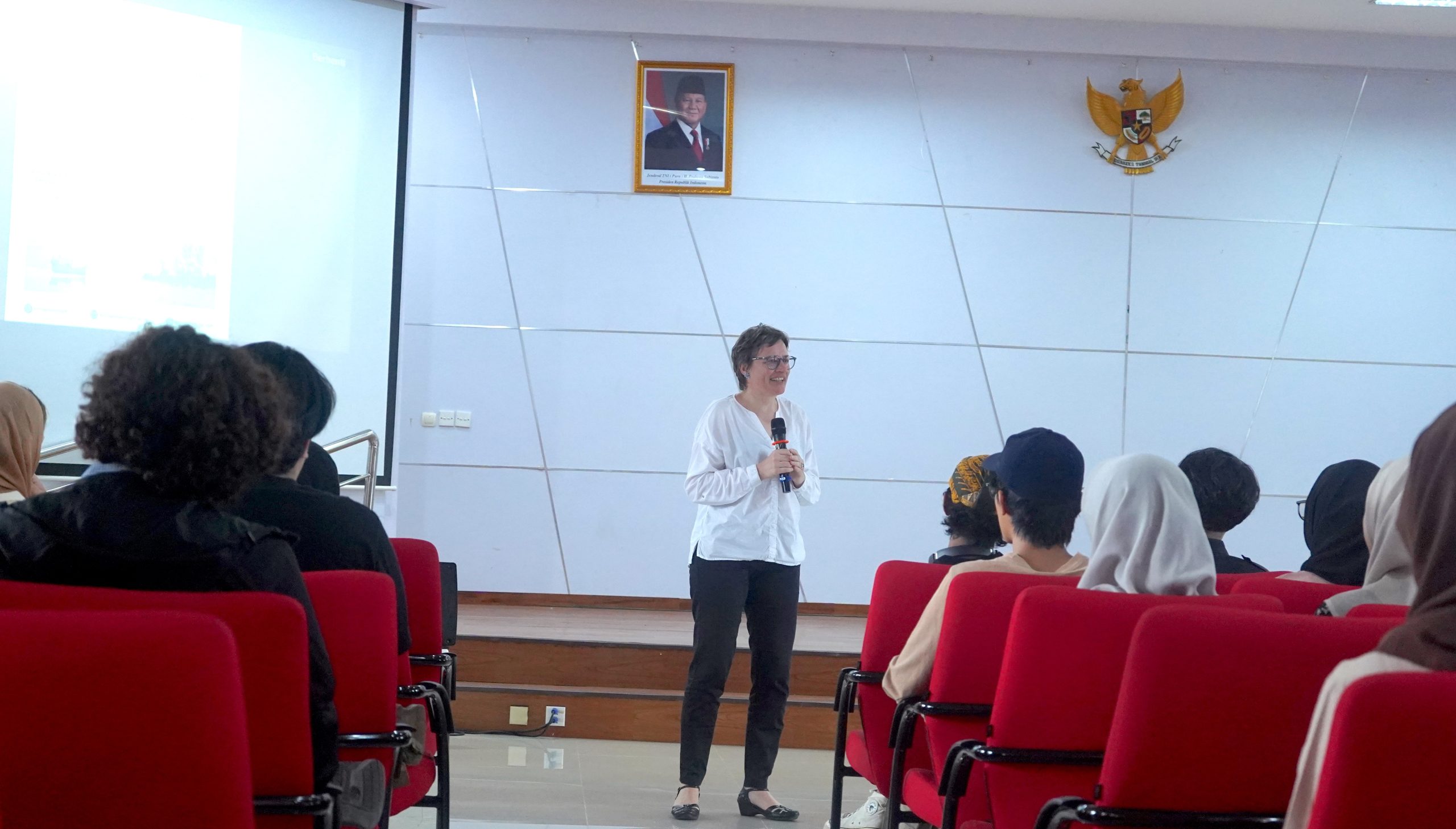
Yogyakarta, 18 November 2025 — As part of its ongoing effort to expand creative dialogue within the academic community, the Master’s Program in Literature, Faculty of Cultural Sciences, Universitas Gadjah Mada, held a public lecture titled “Tracing Self-Identity Through Fiction” on Tuesday, 18 November 2025, in Room 204 of the Soegondo Building, FIB UGM. The event featured California-based writer of Vietnamese–Indonesian descent, Mazdo, as the keynote speaker, with Naria Nur Iftitah serving as moderator. Her presence drew enthusiastic attention from students, alumni, and literary researchers eager to explore how fiction can serve as a medium for reflecting identity, personal experience, and socio-cultural dynamics.

In her presentation, Mazdo explained that writing, for her, is a deep dialogue between personal experience, imagination, and the internal questions that continually shape her creative process. She introduced three of her short stories as examples of how she navigates identity through fiction. The first piece she discussed, When the Moths Came (2023), stems from her personal experience. “This story began from my experience living in an apartment where moths were flying everywhere— in the kitchen, around the living room, everywhere. I felt disturbed, but I thought it would be interesting to turn it into a short story,” she explained. From this simple experience, Mazdo crafted a narrative about a married couple dealing with the constant presence of moths, which disrupt their daily life and create emotional distance between them.

Her second story, The Collector (2024), is rooted in her time studying at the Southeast Asia Program building at Cornell University, which was filled with cultural artifacts. She invited the audience to examine how such objects hold long historical traces, including power relations between the United States and Southeast Asian nations. Through the perspective of two curious and innocent children, she demonstrates how Orientalism and colonial traces can be reimagined in fictional space.

Meanwhile, her story Cut Blooms (2025) highlights the relationship between two sisters—shaped by affection, misunderstanding, and an unbreakable emotional bond. Mazdo shared that the inspiration for this work came from her closeness to her own sisters. “When I write, inspiration can come from anywhere, even from my own life experiences. For example, Cut Blooms comes from my personal experience, but I do not write it literally as it happened. Since I write fiction, only small details that truly happened in my life are adapted into the story,” she explained. This statement helped the audience understand that fiction does not require literal adherence to real events, but instead transforms lived experience into a broader emotional structure.

The public lecture also aligned with values of social and cultural sustainability. Through her stories, Mazdo demonstrated that literature can serve as a tool for cultivating empathy, honoring diverse identities, and encouraging reflection on one’s place within larger historical contexts.

The question-and-answer session unfolded warmly and thoughtfully. The first question came from Marisa Santi (Kagama UGM), who asked about the narrative approach Mazdo most frequently uses, whether she prefers the author as an omniscient narrator or allows the characters full autonomy. Responding to this, Mazdo said, “I tend to use the first approach, where the writer serves as the narrator.” She added that this position allows her to guide the fictional world while still giving her characters space to move freely.

The next question was posed by Marsya Kamila, a student of UGM’s Master’s Program in Literature, who asked whether Mazdo plans to write fiction that explicitly addresses migration or identity exploration in the United States, given that her parents migrated there. Mazdo responded enthusiastically: “Yes, because both of my parents come from Vietnam and Indonesia, I think it would be interesting to write fiction that gives voice to our origins and experiences.” Her answer indicates that family history and migration remain enduring sources of inspiration in her creative journey.

The event concluded with great appreciation from participants, who felt they gained new insights into how fiction operates as a tool for self-exploration, historical reading, and reinterpreting lived experience. The Master’s Program in Literature hopes that similar public lectures will continue to provide creative spaces that strengthen literary literacy while fostering cultural awareness and sustainability in society.

[Master’s Program in Literature, Marsya Kamila]

1…678910…19

Video UGM

[shtmlslider name='shslider_options']
Universitas Gadjah Mada

Faculty of Cultural Sciences
Universitas Gadjah Mada
Jl. Nusantara 1, Bulaksumur Yogyakarta 55281, Indonesia
   fib@ugm.ac.id
   +62 (274) 513096
   +62 (274) 550451

Work Units

  • Office of Journal & Publishing
  • INCULS
  • Information Technology and Database
  • Language Learning Center
  • Library Unit
  • Public Relations
  • Research

Facilities

  • Computer Laboratory
  • Gamelan
  • Guest House
  • Language Library
  • Library
  • Phonetics Library
  • Self Access Unit
  • Student Internet Centre

Importan Links

  • Journal of Humaniora
  • Subscriber Journal
  • Alumni Portal
  • Career
  • Departmens News
  • UGM Streaming

Contacts

  • Academic
  • Administration
  • Dean’s Office
  • Departments / Study Programs
  • Public Relations

© 2024 Faculty of Cultural Sciences Universitas Gadjah Mada

KEBIJAKAN PRIVASI/PRIVACY POLICY

[EN] We use cookies to help our viewer get the best experience on our website. -- [ID] Kami menggunakan cookie untuk membantu pengunjung kami mendapatkan pengalaman terbaik di situs web kami.I Agree / Saya Setuju