• About UGM
  • Academic Portal
  • IT Center
  • Library
  • Research
  • Webmail
  • Informasi Publik
  • English
    • Indonesia
Universitas Gadjah Mada Faculty of Cultural Sciences
Universitas Gadjah Mada
  • Home
  • Profile
    • History
    • Vision and Mission
    • Organizational structure
    • Administration
    • Staff
    • Faculty Members
  • Academic
    • Academic Calendar
    • Undergraduate Programs
      • Bachelor of Cultural Antrophology
      • Bachelor in Archaeolagy
      • Bachelor in History
      • Bachelor in Tourism
      • Bochetor in Korean Language and Culture
      • Bachelor in Indonesian Language and Culture
      • Bachelor in English
      • Bachelor in Arabic
      • Bachelor in Japanese Language and Culture
      • Bachelor in Javanese Language, Literature and Culture
      • Bachelor in French language and literature
    • Graduate Programs
      • Master in Antrophology
      • Master in ArchaeoIogy
      • Master in History
      • Master in Linguistics
      • Master in Literature
      • Master In American Studies
      • Master in Middle Eastern Cultural Studies
    • Post-Graduate Programs / S3
      • Doctor in Antropology
      • Doctor in American Studies
      • Doctor in Humanities
    • Student Service
  • KPPM
    • Research Information
    • Scientific / Academic Publications
    • Community Service
    • International Cooperation
    • Domestic Cooperation
  • Student Organizations
    • Student Executive Council
    • Semi-Autonomous Organizations
      • KAPALASASTRA
      • Christian Student Alliance
      • LINCAK
      • Saskine
      • Catholic Student Family
      • Dian Budaya
      • Sastra Kanuragan (sasgan)
      • Family of Muslim Cultural Sciences Students (KMIB)
      • Bejo Mulyo
    • Autonomous Organizations
      • Family of Anthropology Students (KEMANT)
      • English Department Student Association
      • Tourism Students Association (HIMAPA)
      • Family of Indonesian Literature Students (KMSI)
      • West Asian Literature Student Association (IMABA)
      • Association of Korean-Language Students (HIMAHARA)
      • Family of Regional Indonesian Literatures Students (KAMASUTRA)
      • The Family Body of History Students (BKMS)
      • The French Literature Students Association (HMSP)
      • Family of Anthropology Students
      • Japanese Student Association (HIMAJE)
  • Admission
    • Student Evaluation
  • Home
  • FIB UGM
  • FIB UGM
  • page. 8
Arsip:

FIB UGM

Educative Talkshow SEDASA: Youth Voices for Village Advancement

HEADLINESNews ReleaseStudent's Activity Wednesday, 19 November 2025

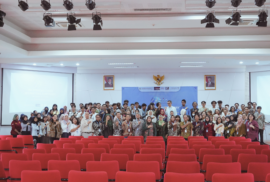
Yogyakarta, September 27, 2025 — A spirit of collaboration and youth empowerment filled the Poerbatjaraka Auditorium at the Faculty of Cultural Sciences, Universitas Gadjah Mada, as the Arabic Study Program Student Association (IKMASA) partnered with the Department of Village Community Development, BEM KM UGM, to hold the inspirational talkshow SEDASA: Suara Pemuda untuk Kemajuan Desa (Youth Voices for Village Advancement). The event, part of the Gemilang Desa 2025 program, took place on Saturday afternoon (27/9) from 13.00 to 15.30 WIB, drawing enthusiastic participation from attendees.

The talkshow featured three distinguished speakers: Joko Susilo, Founder of Gunungkidul Menginspirasi and Head of Training and Consultancy at the Nalar Institute; Prof. Irfan Dwidya Prijambada, M.Eng., Ph.D., Professor at the Faculty of Agriculture UGM; and KPH H. Yudanegara, Ph.D., Head of the Office of Village Community Empowerment, Population, and Civil Registration of the Yogyakarta Special Region, who delivered the keynote address. The discussion was moderated by Antonia Elena Listya Araminta, the 2025 Environmental Ambassador of Yogyakarta, who led the session warmly and interactively.

As the key initiator, IKMASA played a central role in conceptualizing the event, designing its program flow, and fostering institutional collaboration to strengthen youth engagement in village development. The forum served as an important platform for students to engage directly with experts and practitioners on contemporary rural issues, including local potential development, technological innovation, and sustainable community empowerment.

The event attracted a diverse audience, including UGM students, high school participants from Yogyakarta, and delegates from various universities such as UPN and UNDIP, enriching the collaborative atmosphere and strengthening inter-institutional involvement in advancing rural communities.

Following the talkshow, the committee announced the winners of competitions held under the Gemilang Desa 2025 series and presented awards to the participants. The program was officially closed by Faris Zakiy Ramadhan, a 2023 Arabic Study Program student and General Coordinator of Gemilang Desa, who underscored the vital role of students in driving ideas and initiatives for village development.

Through the collaboration between IKMASA and BEM KM UGM, the SEDASA Educational Talkshow not only served as an inspiring space for young people to deepen their understanding of rural issues but also demonstrated a concrete contribution to the Sustainable Development Goals (SDGs), particularly SDG 4 (Quality Education), SDG 8 (Decent Work and Economic Growth), and SDG 17 (Partnership for the Goals).

With strong collaborative energy, SEDASA 2025 reaffirms that UGM students (through the active involvement of IKMASA) are capable of becoming agents of change who contribute meaningfully to the advancement of Indonesian villages and communities.


Author: Lisa Atika

Congratulations! Lembaran Antropologi Journal Receives Best Journal Governance Award

HEADLINESSDGS Tuesday, 18 November 2025

Yogyakarta, 15 October 2025 — After receiving its accreditation rating from SINTA earlier this year, Lembaran Antropologi, a journal managed by the Department of Anthropology at UGM, has once again achieved a new milestone. It was awarded the title of Winner of the Award for Governance of Nationally Accredited and Scopus-Indexed Scientific Journals, Period I of 2025 by the Directorate of Research. The announcement was delivered through Decree No. 12517/UN1.P2/Dit-Lit/PJ.00.02/2025, in which Lembaran Antropologi ranked 9th out of 12 journals that successfully passed the selection.

Lembaran Antropologi aims to promote academic discourse and anthropological analysis in the study of human relations, culture, and society across the Global North and South. The journal publishes two issues each year: Issue 1 (January–June) and Issue 2 (July–December). In its second issue, the journal releases a special edition, a thematic issue often developed in collaboration with experienced researchers in relevant fields. Submissions are open and free of charge. We warmly welcome contributors to share their best work!

Penulis: Penulis: Novilatul Ananda Ramadhani

UGM English Literature Leads National Ranking and Secures Global Position in QS 2025

HEADLINESNews Release Tuesday, 18 November 2025

The English Literature Study Program at Universitas Gadjah Mada has reaffirmed its academic excellence through its achievement in the QS World University Rankings by Subject 2025, placing in the 151–200 band globally and securing the top position in Indonesia. Within the same subject cluster, Universitas Indonesia and Universitas Pendidikan Indonesia also appeared in the global rankings.

This recognition reflects the program’s continued commitment to strengthening its academic and international standing, aligning with UGM’s mission to provide inclusive, high-quality education in support of SDG 4: Quality Education.

From the beginning of their academic journey, students follow a carefully designed series of developmental programs. After completing PPSMB, all new students participate in POPSI, an orientation initiative that offers international exposure through classes taught by lecturers currently studying abroad and sessions with global figures such as ambassadors. The program also emphasizes national identity and campus ethics, ensuring that students balance global awareness with strong civic values.

Cross-cultural learning is further encouraged through joint classes attended by students from Japan and Taiwan, enabling UGM students to build international networks and broaden their intercultural competence—an effort that resonates with SDG 17: Partnerships for the Goals.

The program also maintains a close partnership with the National University of Singapore (NUS). Through this collaboration, students can take part in short academic programs in Singapore and host NUS participants in return. These exchanges not only enrich academic experience but also serve as a platform for introducing Indonesian culture to the global academic community.

Beyond academics, the English Literature program supports student creativity through English Days, an annual theatre production. Students are responsible not only for performing but also for managing the entire event, from concept development to fundraising. This hands-on experience strengthens organizational, creative, and leadership skills, contributing to SDG 8: Decent Work and Economic Growth.

Digital literacy and media management are also nurtured. Through courses in writing and journalism, students gain the skills needed to manage the program’s website and social media channels. The program further contributes to academic assessment by developing AcEPT, UGM’s official Academic English Proficiency Test used for university admissions.

In terms of research and publication, the program’s academic journal has been open to English literature departments across Indonesia since 2024 and has recently earned a Sinta 3 accreditation, reflecting its growing scholarly impact.

The strong alumni network and contributions from retired faculty also play an important role in supporting the program’s development. Their insights and guidance help students pursue continued academic and professional achievements, reinforcing a collaborative academic environment in line with SDG 17.

Through consistent initiatives, active support from academic staff, and a culture of continuous improvement, the program sends a significant number of students to participate in the Indonesia International Student Mobility Awards (IISMA) each year. Their global experiences later inspire and benefit future cohorts.

By staying focused on its long-term vision, the English Literature Study Program at UGM demonstrates that sustained progress, collective commitment, and integration of sustainable development values naturally lead to international recognition.

Photo: freepik.com


[Public Relations of FIB UGM, Candra Solihin]

Korean Days 2025: Two Decades of Indonesia–Korea Cultural Harmony at UGM

HEADLINESNews ReleaseStudent's Activity Tuesday, 18 November 2025

Yogyakarta, 15 November 2025 — Universitas Gadjah Mada once again became a vibrant center of Korean cultural celebration through the Festival Oullim Korea Yogyakarta: 20th Korean Day, held at the UGM Gelanggang Inovasi dan Kreativitas (GIK). This two-decade celebration was made possible through collaboration between the Korean Language and Culture Study Program of the Faculty of Cultural Sciences (FIB UGM) and the Korean Cultural Center Indonesia (KCCI). The festival was officially opened by UGM Rector, Prof. dr. Ova Emilia, M.Med.Ed., Sp.OG(K)., Ph.D., alongside KCCI Director Kim Yong Woon and distinguished guests from government institutions, academia, and cultural communities. Their presence underscored the significance of the festival as a thriving cultural interaction platform within the university environment.

The festival opened with the spirit of Oullim, meaning harmony, showcased through collaborative performances blending Indonesian and Korean traditional arts. A captivating fusion of Indonesian mask dance and Javanese gamelan with Korean fan dance and bukchum (traditional drum dance) delighted audiences. This performance was the result of an intensive week-long collaboration between students of SMKN 1 Kasihan and a visiting Korean art instructor. Students of the Korean Language and Culture Program at FIB UGM supported the process as cultural interpreters and assistants, ensuring smooth communication and rehearsals that culminated in a widely praised performance.

Beyond the stage performances, the festival featured a wide array of programs highlighting the richness of Korean culture. Shows by Salmunori UGM, music and dance showcases, dongari exhibitions, noraebang, and random play dance sessions all contributed to the lively atmosphere. One of the most striking highlights was the Hanbok Fashion Show featuring works by Leesle, a renowned South Korean designer known for dressing prominent Korean celebrities. On this occasion, Leesle presented a special hanbok collection crafted using Indonesian batik fabric, creating designs that symbolized harmonious cultural fusion. The interplay of colors, patterns, and silhouettes embodied the true meaning of Oullim as a representation of unity expressed through artistic beauty.

The festival’s dynamic atmosphere was further enriched by Korean culinary booths serving complimentary dishes to visitors, from tteokbokki to a variety of popular street foods. Additionally, the Korea Tourism Organization (KTO) participated by providing information on South Korean tourism, interactive activities, and destination promotions. Various Korean cultural institutions and communities also contributed, enhancing the festival with educational programs, entertainment, and inclusive cultural engagement. Their involvement reinforced Yogyakarta’s position as one of Indonesia’s key centers for Korean cultural exchange.

In her remarks, the UGM Rector emphasized that the twenty-year continuity of Korean Day reflects the strong cultural relations between Yogyakarta and South Korea, as well as the university’s role in promoting international collaboration. The festival serves as a cultural meeting ground that enriches students’ perspectives and expands UGM’s global network through mutually beneficial partnerships. With its overarching theme of Oullim, the festival fosters an environment that embraces diversity and encourages deep appreciation of cross-cultural heritage.

Through the 2025 Festival Oullim Korea Yogyakarta, UGM hopes to further strengthen collaboration in cultural exchange, education, and academic partnerships between Indonesia and South Korea. The event aligns with key principles of the Sustainable Development Goals (SDGs), particularly SDG 4 on Quality Education through intercultural learning opportunities; SDG 11 on Sustainable Cities and Communities through cultural preservation; and SDG 17 on Partnerships for the Goals through cooperative engagement among universities, government bodies, and international cultural organizations. In this way, the festival stands not only as a celebration of art but also as a meaningful contribution to building harmonious and sustainable global relations.

[Public Relations of FIB UGM, Candra Solihin]

FIB Encourages a Sustainable Campus Culture Through Waste Management Training

HEADLINESNews Release Tuesday, 18 November 2025

Yogyakarta, 14 November 2025 — The Faculty of Cultural Sciences at Universitas Gadjah Mada (FIB UGM) reaffirmed its commitment to developing an environmentally responsible campus by organizing a Workshop on Waste Management and Recycling at the Multimedia Room, RM Margono Building. The program forms part of the UGM Sustainability Campus Action FIB 2025 initiative and serves as a concrete effort to support the Sustainable Development Goals (SDGs), particularly SDG 11 (Sustainable Cities and Communities), SDG 12 (Responsible Consumption and Production), and SDG 13 (Climate Action).

In her opening remarks, the Vice Dean for Research, Community Service, Cooperation, and Alumni of FIB UGM, Dr. Mimi Savitri, M.A., Ph.D., emphasized the essential role of the academic community in maintaining environmental sustainability. She noted that an eco-conscious culture can only be achieved through shared awareness and collective participation across all campus components. The workshop thus served as both a discussion forum and a practical training platform to build new perspectives and habits in waste management, especially for administrative staff, cleaning personnel, the landscaping team, and representatives of LEM FIB UGM, all of whom participated enthusiastically.

The main session featured Prof. Ir. Wiratni, S.T., M.T., Ph.D., IPM., an environmental engineering expert who presented the fundamental concepts of waste management based on the 3R principles—Reduce, Reuse, Recycle. During her presentation, Prof. Wiratni elaborated on the importance of separating organic and inorganic waste, simple recycling techniques applicable in office settings, and case studies of waste management implementation in other campuses. She also highlighted the challenges UGM continues to face in reducing waste production and outlined practical strategies that each work unit can adopt to contribute to long-term solutions.

The event continued with an interactive discussion session between the audience and the speaker. Student participants conveyed their evaluations and aspirations regarding improved facilities to foster a cleaner faculty environment and strengthen discipline in waste sorting. Meanwhile, representatives from the cleaning team shared various ongoing efforts in handling inorganic waste such as leaves and food remnants. “Food waste has thankfully been managed by turning it into animal feed. As for fallen leaves, some are discarded, shredded, and processed into compost,” explained one of the FIB cleaning staff members. The dialogue remained lively as participants exchanged insights on waste management practices currently implemented across UGM, particularly within FIB.

The workshop produced several positive outcomes, including improved staff understanding of waste categories and management methods, as well as stronger collective awareness of the urgency of waste reduction on campus. Several work units also expressed their commitment to implementing continuous waste sorting practices. As a follow-up, FIB UGM plans to provide additional waste-sorting facilities around the faculty and conduct regular monitoring led by the FIB Sustainability Team. These steps align with the faculty’s long-term efforts to support UGM’s green campus goals in accordance with the SDGs.

Through this initiative, FIB UGM hopes that all staff and students can become agents of change in creating a cleaner, healthier, and more resource-efficient academic environment. The workshop reinforces FIB UGM’s dedication to advancing a culture of sustainability and strengthening its contribution to global sustainable development goals, positioning the campus as a real-world model of environmentally friendly practices for the broader community.

[Public Relations of FIB UGM, Candra Solihin]

1…678910…87

Video UGM

[shtmlslider name='shslider_options']
Universitas Gadjah Mada

Faculty of Cultural Sciences
Universitas Gadjah Mada
Jl. Nusantara 1, Bulaksumur Yogyakarta 55281, Indonesia
   fib@ugm.ac.id
   +62 (274) 513096
   +62 (274) 550451

Work Units

  • Office of Journal & Publishing
  • INCULS
  • Information Technology and Database
  • Language Learning Center
  • Library Unit
  • Public Relations
  • Research

Facilities

  • Computer Laboratory
  • Gamelan
  • Guest House
  • Language Library
  • Library
  • Phonetics Library
  • Self Access Unit
  • Student Internet Centre

Importan Links

  • Journal of Humaniora
  • Subscriber Journal
  • Alumni Portal
  • Career
  • Departmens News
  • UGM Streaming

Contacts

  • Academic
  • Administration
  • Dean’s Office
  • Departments / Study Programs
  • Public Relations

© 2024 Faculty of Cultural Sciences Universitas Gadjah Mada

KEBIJAKAN PRIVASI/PRIVACY POLICY

[EN] We use cookies to help our viewer get the best experience on our website. -- [ID] Kami menggunakan cookie untuk membantu pengunjung kami mendapatkan pengalaman terbaik di situs web kami.I Agree / Saya Setuju