• About UGM
  • Academic Portal
  • IT Center
  • Library
  • Research
  • Webmail
  • Informasi Publik
  • English
    • Indonesia
Universitas Gadjah Mada Faculty of Cultural Sciences
Universitas Gadjah Mada
  • Home
  • Profile
    • History
    • Vision and Mission
    • Organizational structure
    • Administration
    • Staff
    • Faculty Members
  • Academic
    • Academic Calendar
    • Undergraduate Programs
      • Bachelor of Cultural Antrophology
      • Bachelor in Archaeolagy
      • Bachelor in History
      • Bachelor in Tourism
      • Bochetor in Korean Language and Culture
      • Bachelor in Indonesian Language and Culture
      • Bachelor in English
      • Bachelor in Arabic
      • Bachelor in Japanese Language and Culture
      • Bachelor in Javanese Language, Literature and Culture
      • Bachelor in French language and literature
    • Graduate Programs
      • Master in Antrophology
      • Master in ArchaeoIogy
      • Master in History
      • Master in Linguistics
      • Master in Literature
      • Master In American Studies
      • Master in Middle Eastern Cultural Studies
    • Post-Graduate Programs / S3
      • Doctor in Antropology
      • Doctor in American Studies
      • Doctor in Humanities
    • Student Service
  • KPPM
    • Research Information
    • Scientific / Academic Publications
    • Community Service
    • International Cooperation
    • Domestic Cooperation
  • Student Organizations
    • Student Executive Council
    • Semi-Autonomous Organizations
      • KAPALASASTRA
      • Christian Student Alliance
      • LINCAK
      • Saskine
      • Catholic Student Family
      • Dian Budaya
      • Sastra Kanuragan (sasgan)
      • Family of Muslim Cultural Sciences Students (KMIB)
      • Bejo Mulyo
    • Autonomous Organizations
      • Family of Anthropology Students (KEMANT)
      • English Department Student Association
      • Tourism Students Association (HIMAPA)
      • Family of Indonesian Literature Students (KMSI)
      • West Asian Literature Student Association (IMABA)
      • Association of Korean-Language Students (HIMAHARA)
      • Family of Regional Indonesian Literatures Students (KAMASUTRA)
      • The Family Body of History Students (BKMS)
      • The French Literature Students Association (HMSP)
      • Family of Anthropology Students
      • Japanese Student Association (HIMAJE)
  • Admission
    • Student Evaluation
  • Home
  • FIB UGM
  • FIB UGM
  • page. 6
Arsip:

FIB UGM

Exploring the Philosophy of Ketupat: FIB UGM Holds Syawalan and Halalbihalal Event

HEADLINESNews Release Thursday, 2 April 2026

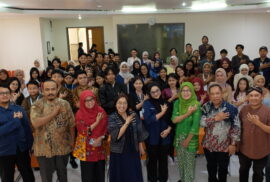
Yogyakarta, March 31, 2026 – The Faculty of Cultural Sciences at Universitas Gadjah Mada (FIB UGM) organized a Syawalan and Halalbihalal event to strengthen the bonds of kinship among the campus community. Various elements of the academic community, including lecturers and educational staff, both active and retired, participated in this Syawalan. The event was filled with various religious and cultural agendas that carried the spirit of togetherness following the fasting month.

The event began with the recitation of the Holy Quran by a student representative from the Arabic Literature Study Program. It was then followed by opening remarks from the Dean of the Faculty of Cultural Sciences. On this occasion, he invited all faculty members and invited guests to forgive one another to cleanse their hearts and begin a better new chapter.

The main agenda of this commemoration was the delivery of the Syawalan reflection by Professor Dr. Sangidu, M.Hum. He highlighted the history behind the use of the term halalbihalal, which has become a strong tradition for the Indonesian people every time they celebrate Eid al-Fitr. He also explained the symbolic meaning of ketupat through the approach of linguistic philosophy.

“The use of the word halalbihalal during Eid al-Fitr originated from President Soekarno’s request for advice and opinions from KH. Wahab regarding the unhealthy political conditions at that time. KH. Wahab suggested organizing a gathering for silaturahim. However, Soekarno refused because the term was considered too common,” explained Professor Sangidu as he shared his knowledge with the attendees.

In Professor Sangidu’s explanation, the word halalbihalal was proposed as an alternative to the word silaturahmi. History records that this term was born in the middle of Ramadan in 1948 when President Soekarno asked for advice from KH. Wahab Chasbullah to ease national political tensions. KH. Wahab initially proposed a silaturahmi event ahead of Eid al-Fitr, but Bung Karno wanted a fresher designation. KH. Wahab then coined the name halalbihalal, reasoning that political elites who blamed each other had committed sins or forbidden (haram) acts. Therefore, they needed to sit at the same table to forgive each other and “make halal” (resolve) the hostility.

In another explanation, Professor Sangidu also touched upon the philosophy of ketupat, which has become a signature Eid dish. Etymologically, the term “ketupat” or “kupat” is rooted in a Javanese phrase, namely ngaku lepat. This generational phrase literally means admitting one’s mistakes.

The philosophy of ngaku lepat carries a moral message that is highly relevant to the celebration of Eid al-Fitr. The presence of ketupat serves as a reminder medium for Muslims to be magnanimous and cast aside their respective egos. Every individual is encouraged to be brave enough to admit the mistakes they have made toward their fellow human beings.

The series of activities concluded with a prayer recitation session. This closing session was led by Dr. Nur Kholid, M.Pd. to pray for goodness, safety, and blessings for everyone in attendance.

This kind of tradition of forgiving each other and gathering together plays an important role in strengthening social harmony within the academic environment. A harmonious and respectful relationship between individuals is the main foundation for building a peaceful, inclusive, and resilient campus community to support collective well-being in the future.

[Public Relations of FIB UGM, Candra Solihin]

Seputar Jawa: Forms of Javanese Proverbs

News Release Tuesday, 31 March 2026

Indonesians often use proverbs or idioms when communicating. One example is the frequent use of the Malay idiom “tak kenal maka tak sayang” to lighten the mood in various formal and informal settings. However, upon closer examination, Javanese culture also has idioms and proverbs that are worth exploring. In his dissertation, Hendrokumoro (2016) explains that Javanese culture has eight types of proverbs, including paribasan, bêbasan, saloka, pêpindhan, sanepa, panyandra, isbat, and sêmboyan.

The first form described is the paribasan. Technically, paribasan is a grammatical unit with a fixed structure that is straightforward and does not contain a metaphor, yet carries a figurative meaning (Padmosoektojo, 1958). One example is the expression ana catur mungkur, which literally means “there is talk of leaving.” The meaning behind this expression is the wise attitude of someone who refuses to pay attention to gossip or negative talk from others (Padmosoektojo, 1958:62).

Furthermore, there is a Javanese proverb known as bebasan.” Bebasan is a proverb with a fixed form, figurative meaning, and emphasizes the metaphorical description of a person’s condition or behavior (Padmosoekotjo, 1958). An example is wis kêbak sundukane “the pricks are already full”, indicating that the person in question has committed many mistakes. This metaphor originates from the culture of elders or leaders in the past who used to insert pins to record the mistakes of their subordinates. If the pins were full, it meant that the person had committed far too many mistakes (Padmosoektojo, 1958:62).

The next category is saloka, Javanese proverbs that take the form of fixed phrases and share similarities in both usage and meaning (Padmosoekotjo, 1958). The primary focus is on the subject or person; what is being likened is a person, a trait, or a situation, using metaphors involving animals or objects (Padmosoekotjo, 1958; Subalidinata, 1968; Dirdjosiswojo, 1956). An example of a saloka is asu bêlang kalung wang ‘a spotted dog wearing a money necklace’, which depicts the common people or the lower class possessing abundant wealth (Padmosoekotjo, 1958:76).

Additionally, there are pêpindhan that function as instruments of comparison. Unlike other forms, pêpindhan often use comparative terms such as lir, pindha, kaya, or their synonyms to equate objects with humans (Padmosoekotjo, 1958; Hadiwidjana, 1967). For example, the expression kuning pindha mas sinangling ‘yellow like gold that has been polished’ is used to describe a yellow color that shimmers beautifully, much like gold that has been polished. Furthermore, sangling itself is a tool used for polishing gold (Padmosoekotjo, 1958: 95).

The next category is sanepa. Sanepa is a metaphor whose meaning actually conveys the opposite or a negation (Subalidinata, 1968). The expression suwe banyu sinaring—“water takes a long time to filter”—for example, is actually used to describe someone who responds very quickly to something (Hendrokumoro, 2016).

Javanese proverbs also employ aesthetic or beautiful forms in the sense of panyandra or candra. Panyandra or candra is used to describe physical beauty as a form of impressive praise (Padmosoekotjo, 1958; Hendrokumoro, 2016). One form of bodily beauty often praised is drijine mucuk eri, which describes fingers as beautiful as thorn tips, characterized by fingertips that are smaller than the base of the finger (Hendrokumoro, 2016).

Another form of Javanese proverb is called Isbat. The form of isbat is similar to saloka, whose content or intended meaning relates to metaphysical, philosophical, or occult dimensions containing spiritual messages (Widati et al., 2015; Subalidinata, 1968). The expression golek gêni adêdamar ‘searching for fire while carrying a lamp’ serves as a philosophical metaphor suggesting that in the pursuit of true knowledge, one requires a foundation of knowledge to serve as a guide (Widati et al., 2015). 

Finally, as a source of inspiration, the term sêmboyan refers to a set of phrases designed to foster optimism and guide action (Hendrokumoro, 2016). The legendary motto rawe-rawe rantas, malang-malang putung—“swinging objects are struck down, obstructing objects are severed”—reflects an unyielding determination to overcome all obstacles in order to achieve the desired goal (Hendrokumoro, 2016:92). 

Author: Haryo Untoro
Editor: Haryo Untoro, Nurul Fajri Rahmani

Bibilography

Dirdjosiswojo. (1956). Paribasan. Jogjakarta: Kalimosodo.

Hendrokumoro. (2016). Peribahasa dalam Bahasa Jawa. Disertasi. Yogyakarta: Program Pascasarjana, Fakultas Ilmu Budaya, Universitas Gadjah Mada.

Padmosoekotjo, S. (1958). Ngengrengan Kasusastraan Djawa I: Kanggo Para Siswa Sekolah Guru lan Sekolah Landjutan Lijane. Jogjakarta: Hien Hoo Sing.

Subalidinata, R.S. (1968). Sarining Kasusastraan Djawa. Jogjakarta: Jaker.

Widati, S., Rahayu, P., dan Prabowo, D.P. (2015). Ensiklopedi Sastra Jawa. Yogyakarta: Kementerian Pendisikan dan Kebudayaan, Balai Bahasa Provinsi Daerah Istimewa Yogyakarta

The Song “Ondel-Ondel” and “Rumah Kita” Enlivens FIB UGM’s 80th Anniversary Senate Meeting

HEADLINESNews Release Monday, 30 March 2026

Yogyakarta, March 3, 2025 – A choir composed of students, lecturers, and administrative staff enlivened the Open Senate Meeting celebrating the 80th Anniversary of the Faculty of Cultural Sciences Universitas Gadjah Mada by performing two popular Indonesian songs, “Ondel-Ondel” and “Rumah Kita.” The performance created an atmosphere of togetherness while celebrating cultural diversity through specially prepared musical arrangements.

The performance was arranged and conducted by Muhammad Rasyid Ridho, who also served as the trainer and conductor. The choir was supported by several accompanying musicians, including Riski Puluhulawa on piano, Emilia Widya Pranasari on viola, Sekar Arrum Sri Kinanthi on violin, and Fairuz Aufa Anza on kendang.

The first song performed was “Ondel-Ondel,” popularized by Benyamin Sueb in 1971. The song is widely recognized as a lively representation of Betawi culture that developed amid the dynamic life of Jakarta. Through its simple yet energetic lyrics, the song portrays ondel-ondel as a cultural icon in the form of giant puppets that were once believed to symbolize protection for the community.

Over time, ondel-ondel has become not only part of tradition but also a symbol of identity and cultural pride for the Betawi people. The song also reminds audiences of the importance of appreciating cultural heritage and preserving local wisdom amid ongoing societal change.

The choir then performed “Rumah Kita,” a song popularized by Achmad Albar together with the legendary band God Bless. Widely known since the late 1980s, the song conveys a heartfelt message about the meaning of home as a space for togetherness.

In the context of the FIB UGM anniversary celebration, the song was interpreted as a symbol of unity among members of the academic community. The campus environment, particularly at Universitas Gadjah Mada, is seen as a shared home where people from diverse backgrounds come together to learn, create, and build their future.

This choir performance, involving members from different groups within the faculty, added vibrancy to the series of events commemorating the 80th anniversary of the Faculty of Cultural Sciences. Through music and performing arts, messages about the importance of unity, respect for diversity, and the preservation of local culture were warmly conveyed to the audience. These values form an essential foundation for fostering an inclusive and sustainable academic community.

[Public Relations of FIB UGM, Candra Solihin]

New Look for a Faculty Landmark: FIB UGM Revitalizes Iconic Signpost

News Release Wednesday, 25 March 2026

The Faculty of Cultural Sciences at Universitas Gadjah Mada (FIB UGM) recently completed the revitalization of its iconic signpost. This renewal provides the beloved campus landmark with a fresher and more aesthetic appearance, benefiting both the academic community and the general public passing by.

The facility’s restoration process involved a series of sequential stages. The improvement efforts began by dismantling the signpost structure from its site. Following this, a comprehensive repainting of all components was carried out to restore the vibrancy of the colors and the legibility of the text. The revitalization phase concluded by reinstalling the signpost in its original position.

Maintaining the physical facilities of the campus is a crucial step in preserving the functionality of public spaces. Regular infrastructure maintenance plays a vital role in extending the lifespan of a facility while minimizing the need for new materials. FIB UGM’s initiative in caring for this faculty icon reflects a clear commitment to maintaining existing facilities, aiming to create a comfortable, well-organized, and sustainable educational environment for future generations.

[Public Relations of FIB UGM, Candra Solihin]

Scientific Article Writing Workshop Encourages High-Quality Academic Publications

News Release Sunday, 15 March 2026

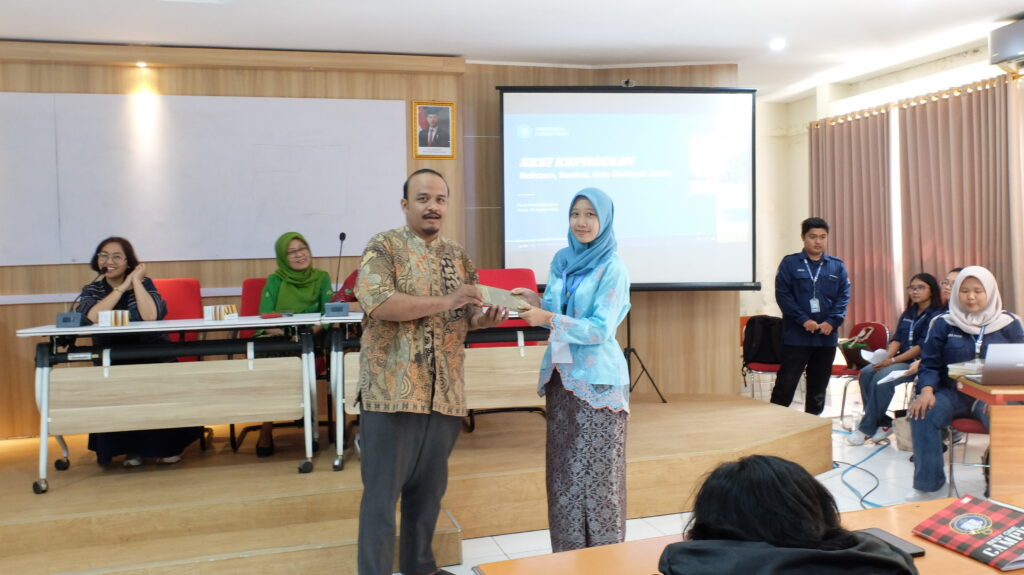
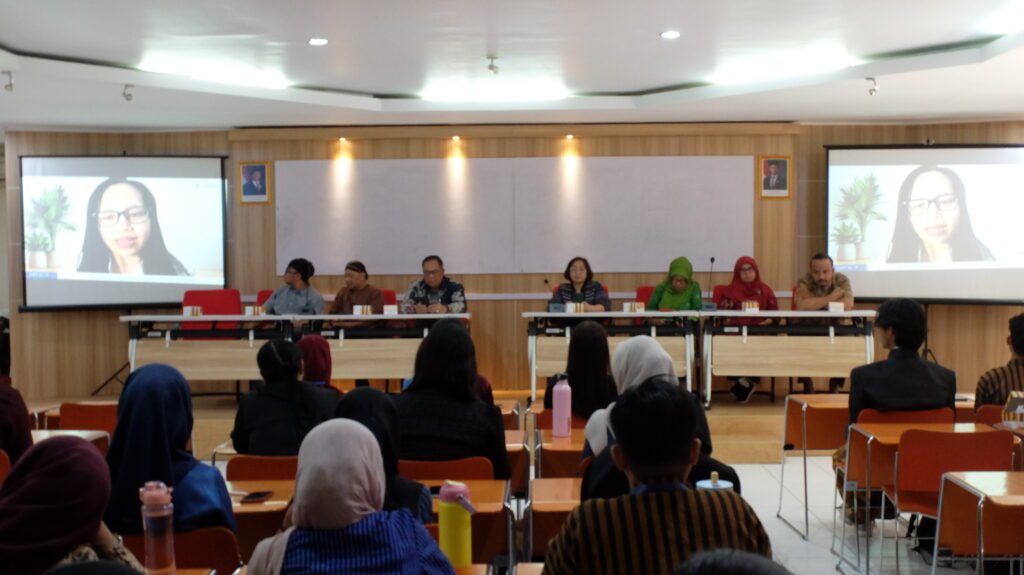
Efforts to strengthen the academic capacity of students and researchers in producing high-quality scientific publications continue to be promoted on campus. The Master’s Program in Literature at the Faculty of Cultural Sciences, Universitas Gadjah Mada organized a “Scientific Article Writing Workshop: Strategies for Publishing in Reputable Journals” on Monday, February 23, 2026, in Room 709 Soegondo, Faculty of Cultural Sciences UGM.

The event, which took place from 12:30 to 15:00 WIB, featured a scholar in cultural and gender studies, Wening Udasmoro, as the main speaker. The workshop aimed to enhance the ability of young academics to write scientific articles capable of competing in reputable international journals.

In her presentation, Wening emphasized that academic publishing is not merely about techniques or quick strategies to get articles accepted by journals. According to her, writing in reputable journals is an important process for testing the intellectual quality of an academic before a broader scholarly community.

She stressed that academic publication should be viewed as a process of learning and intellectual development rather than simply fulfilling administrative academic requirements. Through publication, scholars’ ideas can be read and critically examined by researchers from various universities and countries, thereby enriching academic discourse.

During the session, participants were introduced to the importance of problematization in research. Wening explained that strong research generally begins with social or cultural phenomena that attract attention and generate scholarly questions.

She illustrated how contemporary phenomena—such as the display of luxurious lifestyles on social media—can become entry points for research relevant to current social dynamics. Researchers are encouraged not merely to find objects that have not yet been analyzed but to develop new perspectives that make their research academically significant.

In addition to formulating research problems, participants were also equipped with an understanding of the importance of a strong literature review. The workshop highlighted that scientific research must be built upon a dialogue with theories and previous studies.

Several theoretical frameworks can be used to analyze social phenomena, including the concept of conspicuous consumption, the symbolic value of goods (sign value), and modern consumer culture. These theoretical frameworks help researchers interpret social phenomena in a more critical and systematic way.

Through this training, it is hoped that postgraduate students will be able to produce scientific articles that not only meet academic standards but also contribute to the advancement of knowledge and provide solutions to various social issues.

The workshop was enthusiastically welcomed by the Master’s students in Literature who attended. The discussion was highly interactive, particularly when participants explored strategies for identifying research topics with novelty and academic relevance.

Through initiatives such as this, the Faculty of Cultural Sciences UGM seeks to strengthen a critical, reflective, and productive academic culture in producing high-quality scientific publications at both national and international levels.

Author: Khotibul Umam

1…45678…100

Video UGM

[shtmlslider name='shslider_options']
Universitas Gadjah Mada

Faculty of Cultural Sciences
Universitas Gadjah Mada
Jl. Nusantara 1, Bulaksumur Yogyakarta 55281, Indonesia
   fib@ugm.ac.id
   +62 (274) 513096
   +62 (274) 550451

Work Units

  • Office of Journal & Publishing
  • INCULS
  • Information Technology and Database
  • Language Learning Center
  • Library Unit
  • Public Relations
  • Research

Facilities

  • Computer Laboratory
  • Gamelan
  • Guest House
  • Language Library
  • Library
  • Phonetics Library
  • Self Access Unit
  • Student Internet Centre

Importan Links

  • Journal of Humaniora
  • Subscriber Journal
  • Alumni Portal
  • Career
  • Departmens News
  • UGM Streaming

Contacts

  • Academic
  • Administration
  • Dean’s Office
  • Departments / Study Programs
  • Public Relations

© 2024 Faculty of Cultural Sciences Universitas Gadjah Mada

KEBIJAKAN PRIVASI/PRIVACY POLICY

[EN] We use cookies to help our viewer get the best experience on our website. -- [ID] Kami menggunakan cookie untuk membantu pengunjung kami mendapatkan pengalaman terbaik di situs web kami.I Agree / Saya Setuju