• About UGM
  • Academic Portal
  • IT Center
  • Library
  • Research
  • Webmail
  • Informasi Publik
  • English
    • Indonesia
Universitas Gadjah Mada Faculty of Cultural Sciences
Universitas Gadjah Mada
  • Home
  • Profile
    • History
    • Vision and Mission
    • Organizational structure
    • Administration
    • Staff
    • Faculty Members
  • Academic
    • Academic Calendar
    • Undergraduate Programs
      • Bachelor of Cultural Antrophology
      • Bachelor in Archaeolagy
      • Bachelor in History
      • Bachelor in Tourism
      • Bochetor in Korean Language and Culture
      • Bachelor in Indonesian Language and Culture
      • Bachelor in English
      • Bachelor in Arabic
      • Bachelor in Japanese Language and Culture
      • Bachelor in Javanese Language, Literature and Culture
      • Bachelor in French language and literature
    • Graduate Programs
      • Master in Antrophology
      • Master in ArchaeoIogy
      • Master in History
      • Master in Linguistics
      • Master in Literature
      • Master In American Studies
      • Master in Middle Eastern Cultural Studies
    • Post-Graduate Programs / S3
      • Doctor in Antropology
      • Doctor in American Studies
      • Doctor in Humanities
    • Student Service
  • KPPM
    • Research Information
    • Scientific / Academic Publications
    • Community Service
    • International Cooperation
    • Domestic Cooperation
  • Student Organizations
    • Student Executive Council
    • Semi-Autonomous Organizations
      • KAPALASASTRA
      • Christian Student Alliance
      • LINCAK
      • Saskine
      • Catholic Student Family
      • Dian Budaya
      • Sastra Kanuragan (sasgan)
      • Family of Muslim Cultural Sciences Students (KMIB)
      • Bejo Mulyo
    • Autonomous Organizations
      • Family of Anthropology Students (KEMANT)
      • English Department Student Association
      • Tourism Students Association (HIMAPA)
      • Family of Indonesian Literature Students (KMSI)
      • West Asian Literature Student Association (IMABA)
      • Association of Korean-Language Students (HIMAHARA)
      • Family of Regional Indonesian Literatures Students (KAMASUTRA)
      • The Family Body of History Students (BKMS)
      • The French Literature Students Association (HMSP)
      • Family of Anthropology Students
      • Japanese Student Association (HIMAJE)
  • Admission
    • Student Evaluation
  • Home
  • Fakultas Ilmu Budaya UGM
  • Fakultas Ilmu Budaya UGM
  • page. 3
Arsip:

Fakultas Ilmu Budaya UGM

Prof. Setiadi Discusses Humanitarian and Justice Reflections on Refugee Issues at Masjid Mardliyah Study Session Yogyakarta, Februar

News Release Friday, 27 February 2026

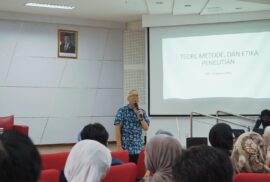
Yogyakarta, February 25, 2026 – The Dean of the Faculty of Cultural Sciences (FIB) at Universitas Gadjah Mada (UGM), Prof. Setiadi, S.Sos., M.Si., delivered a lecture at the Masjid Mardliyah UGM study session under the theme “Humanitarian and Justice Reflections on Refugee Issues.” . The discussion invited participants to examine forced migration not only from a policy perspective, but also through the lens of humanity and social justice.

In his presentation, Prof. Setiadi emphasized that the phenomenon of forced migration cannot be separated from social structures and power relations that often generate marginalization. He noted that when refugee issues arise, public discourse frequently shifts toward debates over who has the authority to address the matter, rather than focusing on substantive solutions and the protection of refugees themselves.

According to him, refugees are individuals striving to rebuild their life histories after being disconnected from their jobs, education, aspirations, and communities. Forced displacement can occur at both micro and macro levels due to conflict, discrimination, political pressure, or natural disasters. In this context, “fleeing” is fundamentally an act of survival in order to secure safety and continuity of life.

Conceptually, the term refugee in the international framework refers to the definition established by the United Nations High Commissioner for Refugees (UNHCR), which describes a refugee as a person who is outside their country of nationality due to a well-founded fear of persecution based on race, religion, nationality, membership in a particular social group, or political opinion, and who is unable or unwilling to return to that country. The definition also extends to individuals forced to leave their habitual residence due to external aggression, occupation, foreign domination, or events seriously disturbing public order. In addition, there are internally displaced persons who are compelled to relocate but remain within their country’s borders.

Prof. Setiadi further encouraged participants to view refugee issues as part of the broader historical dynamics of human life. Refugees are not merely statistical figures; they are individuals with dreams, hopes, and the right to rebuild a dignified future. The greatest challenges are not only administrative in nature, but also social barriers such as stigma, discrimination, and limited access to education and employment.

The study session also underscored the relevance of refugee issues to the Sustainable Development Goals (SDGs). Efforts to ensure protection and justice for refugees align with the global commitment to reducing inequalities (SDG 10) and promoting peace, justice, and strong institutions (SDG 16). Guaranteeing refugees’ access to quality education and decent livelihoods also supports the goals of ending poverty (SDG 1) and ensuring quality education (SDG 4), while international cooperation in addressing refugee crises reflects the importance of global partnerships (SDG 17).

Through this forum, the Dean of FIB UGM reaffirmed that reflecting on refugee issues is a moral imperative to build a more just and compassionate society, placing humanity at the core of policy and social action.

[Public Relation of FIB UGM, Alma Syahwalani]

UGM Campus Mosque Study Highlights the Strengthening of Human Resources and Quality Education as Pillars of National Independence

News Release Monday, 23 February 2026

Yogyakarta, February 20, 2026 – The Campus Mosque of Universitas Gadjah Mada (UGM) held a public lecture featuring Panut Mulyono, Rector of UGM for the 2017–2022 period, Professor of Chemical Engineering at the Faculty of Engineering UGM, and Chair of the Forum of Indonesian Rectors (2021–2022). In his lecture, Prof. Panut addressed the role of Natural Resources (SDA) and Human Resources (SDM) as fundamental capital for national development.

In his presentation, he emphasized that Indonesia is a nation blessed with a large population and abundant natural resources. However, these advantages must be managed properly through the development of high-quality human resources.

“With strong nationalism and a solid work ethic, we can achieve rapid progress,” he stated. He stressed that excellent human resources can only be produced through quality education.

Prof. Panut also highlighted the importance of learning from prominent national education figures such as Ki Hajar Dewantara, who laid the foundation of Indonesia’s educational philosophy. He further quoted Nelson Mandela, who once said that education is the most powerful weapon to change the world.

According to him, education plays a strategic role in determining a nation’s progress and independence. A country with a weak education system will struggle to advance and may even decline. Conversely, quality education serves as a tool to accelerate national progress, particularly in mastering science and technology and enhancing global competitiveness.

From an Islamic perspective, Prof. Panut connected the importance of education with Qur’anic teachings, particularly Surah Al-‘Alaq (1–5), which emphasizes the command to read and seek knowledge as part of worship to Allah SWT. He also referred to Surah Al-Mujadilah verse 11, which highlights the virtue of those who pursue knowledge.

Furthermore, he underlined the crucial role of higher education institutions in continuously improving and innovating within the higher education sector to achieve national independence more swiftly. Universities are expected not only to serve as centers of learning but also to generate tangible impacts in addressing socio-economic challenges, fostering inclusive innovation, and contributing more significantly to sustainable development.

This study aligns with the Sustainable Development Goals (SDGs), particularly SDG 4 (Quality Education), which promotes inclusive and equitable quality education; SDG 8 (Decent Work and Economic Growth), through the enhancement of human resource quality and work ethic; and SDG 9 (Industry, Innovation, and Infrastructure), by strengthening the mastery of science and technology to drive national advancement.

Through this forum, the UGM Campus Mosque serves not only as a spiritual space but also as an intellectual platform that fosters strategic ideas for Indonesia’s progress toward becoming an independent and globally competitive nation.

[Public Relation of FIB UGM, Alma Syahwalani]

Dili Institute of Technology Facilitates Meeting Between UGM Delegation and KAGAMA Timor Leste: Strengthening Collaboration in Education, Research, and Border Community Empowerment

News Release Friday, 20 February 2026

Dili, Timor Leste, 13 February 2026 – The Dili Institute of Technology (DIT) facilitated a meeting between the delegation team from Universitas Gadjah Mada (UGM) and Keluarga Alumni Gadjah Mada (KAGAMA) Timor Leste. The meeting was guided by the spirit of “learning from the past, reflecting on the present, for our better shared future” as the foundation for collaboration.

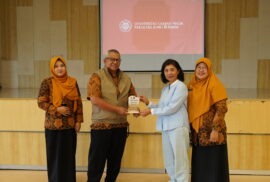
Held at the DIT campus, the meeting was attended by prominent figures, including Manuel Vong, Ph.D., Chair of KAGAMA Timor Leste (former Minister of Tourism of Timor Leste and former Rector of DIT); Aderita Mariana Takeleb, M.Sc., Vice Rector for Academic Affairs at DIT; Napoleon, Head of Fiscal Affairs of KAGAMA; the Dean of the Faculty of Tourism at DIT; Mica Barreto Soares, Ph.D., Director of the MBA Program at DIT; Celline, Head of the Center for Cultural and Arts Studies at Universidade Nacional Timor Lorosa’e (UNTL); as well as lecturers and researchers from UNTL’s Faculty of Social Sciences, many of whom have written extensively on Indonesia–Timor Leste relations.

In his remarks, the Chair of KAGAMA Timor Leste emphasized that the organization’s current strategic programs focus on improving welfare through the agriculture and fisheries sectors, clean and healthy politics, tourism–arts–industry, and sustainable creative culture. Social inequality remains a primary concern, and collaboration with UGM is expected to strengthen quality education and research as key foundations for addressing these disparities.

The meeting produced several short-term follow-up initiatives, including:

  • Training on article writing (both technical and substantive aspects) and journal management and development;

  • Collaboration between UGM and KAGAMA Timor Leste in media news writing (public relations and communications);

  • Organizing a sport tourism event in the form of a heritage fun walk, involving students from UNTL and DIT as the organizing committee;

  • A Literary Festival through UGM’s international community service program (KKN) in border areas, in response to a request from the Education and Cultural Attaché of the Indonesian Embassy in Timor Leste for arts training programs (including gamelan, Indonesia–Timor Leste collaborative dance, and the writing of folk tale books).

UGM and KAGAMA Timor Leste also agreed to adopt a cultural approach as the foundation for cooperation across higher education institutions in Timor Leste. This synergy is expected to broaden the societal impact of knowledge and scholarship, in line with the Sustainable Development Goals (SDGs), particularly SDG 4 (Quality Education), SDG 10 (Reduced Inequalities), SDG 11 (Sustainable Cities and Communities), and SDG 17 (Partnerships for the Goals).

The visit conducted by Universitas Gadjah Mada received support and sponsorship from the Swedish International Development Cooperation Agency (SIDA) as the main sponsor of the organization Cultivating the Humanities and Social Sciences and Supporting Under-Represented Scholars of Asia (CHSS). CHSS itself is a transnational inclusivity initiative established by the Association for Asian Studies (AAS).

[Public Relation of FIB UGM, Alma Syahwalani]

From Literature to the Global Stage: A UGM Master’s Student at the Korea Youth Summit 2026

News Release Thursday, 19 February 2026

It may seem uncommon for a humanities student to be involved in an international forum centered on business and innovation. Yet that is precisely what makes the story of Kharisma Qurrota Ayun compelling. A Master’s student in Literature at Universitas Gadjah Mada (UGM), Kharisma took part in the Korea Youth Summit 2026, organized by Youth Break the Boundaries from February 2–5, 2026, in South Korea.

Rather than attending as a project delegate, Kharisma contributed from behind the scenes as a member of the organizing committee. Far from being a secondary role, her position highlights an important point: global forums are not sustained by ideas alone, but also by the cultural fluency, communication skills, and coordination that make international collaboration possible. Her involvement invites a broader reflection on how the humanities, often perceived as distant from business and technology, play a vital role in knowledge diplomacy and cross-cultural engagement.

The summit’s central agenda, the International Symposium, brought together 34 young innovators from New Zealand, Vietnam, Indonesia, Morocco, Bangladesh, Mexico, and Uzbekistan. Participants presented business-driven solutions to pressing global challenges, including green economic transitions and community-based empowerment initiatives. The symposium functioned not merely as a competition of ideas, but as a shared learning space where diverse perspectives met and evolved.

In this context, Kharisma’s academic training in literary studies proved unexpectedly relevant. Literature sharpens the ability to interpret narratives, understand cultural nuances, and engage with different worldviews, skills that are indispensable in multinational settings. In global conversations, persuasive storytelling and cultural sensitivity are often as important as technical feasibility. Her background equipped her to navigate complex intercultural dynamics while supporting the event’s overall coordination.

As part of the organizing team, she helped ensure the smooth execution of the symposium, facilitated communication among international participants, and maintained the flow of the program. The role demanded meticulous planning, adaptability, and intercultural competence: qualities that reflect the emerging practice of youth-led global diplomacy.

Kharisma’s experience underscores a broader message: humanities graduates are not confined to classrooms or textual analysis. They are equally positioned to contribute to global innovation ecosystems. Her journey illustrates that literature is not only about studying texts, but about cultivating the capacity to “read” societies, bridge differences, and shape meaningful dialogue.

From Yogyakarta to South Korea, her participation signals the growing presence of Indonesian youth in international arenas. It also reminds us that transformative global initiatives rely not only on groundbreaking ideas and capital investment, but on empathy, narrative intelligence, and collaboration across cultures.

[Master of Arts in Literature, Khotibul Umam]

Inauguration Night for New Master’s Students in Literature at UGM Affirms the Five Pillars and Academic Integrity

News Release Thursday, 19 February 2026

The Master’s Program in Literature at the Faculty of Cultural Sciences, Universitas Gadjah Mada (UGM), held an Inauguration Night for New Students of the Even Semester of the 2025/2026 Academic Year at Pondok As-Salam Kalimasada, Sleman Regency, Yogyakarta, on Saturday–Sunday, 14–15 February 2026. Carrying the theme “Our Literature, One Family,” the event marked the initial momentum in shaping the academic identity of master’s students.

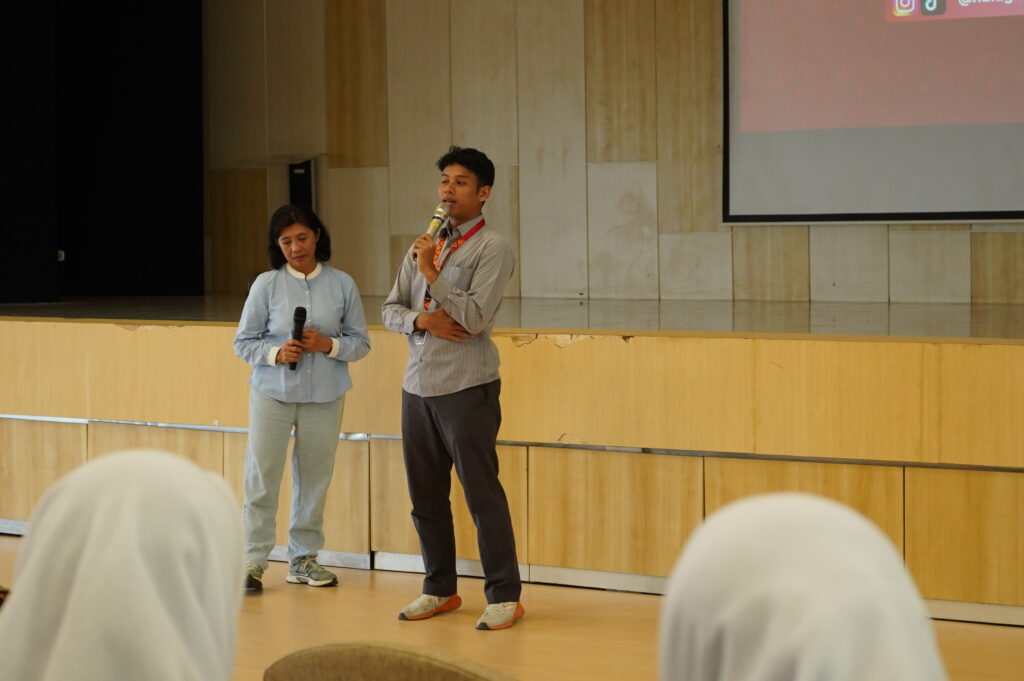
The main session commenced on Saturday at 7:30 p.m. (WIB) and featured the Head of the Master’s Program in Literature, Prof. Dr. Aprinus Salam, M.Hum. In his remarks, he emphasized that at the master’s level, students are expected to demonstrate a higher degree of academic maturity.

“Master’s students are not only required to master course materials. They must also understand the history and philosophy of UGM as the foundation for developing academic attitudes and ethics,” he stated.

Aprinus also highlighted the importance of building a collaborative academic culture. He stressed that an open tradition of discussion, accompanied by mutual support across cohorts, is a prerequisite for fostering a healthy, productive, and sustainable scholarly community.

The event also featured a sharing session with senior students—Khotibul Umam, Marsya Kamila, and Kharisma Qurrota A’yun—who shared their experiences regarding time management, academic dynamics, and strategies for preparing research proposals as initial preparation for graduate studies.

The keynote lecture was delivered by Professor of Philosophy at UGM, Prof. Drs. M. Mukhtasar Syamsuddin, M.Hum., Ph.D., who elaborated on UGM’s Five Pillars as the philosophical foundation of the university. He explained that UGM is grounded in five principal identities: a National University, a University of Struggle, a Pancasila University, a People-Oriented University, and a Center of Culture. These pillars serve as the institutional direction as well as ethical guidelines for the entire academic community.

“UGM is not merely an educational institution, but a space for shaping the nation’s character. Therefore, its core values must be embodied in students’ daily conduct,” he remarked.

During the discussion session, Mukhtasar Syamsuddin also underscored the importance of interdisciplinary openness, particularly for literature students. According to him, the complexity of social and cultural issues demands cross-disciplinary dialogue; therefore, students should not construct rigid boundaries between literature, philosophy, and other fields of study. This perspective is highly relevant to the reflective and humanistic character of literary studies.

The main session concluded at 9:30 p.m. and was followed by performances by the 2025/2026 Even Semester cohort, including poetry readings and musical performances that strengthened solidarity among members. After the evening program, participants rested and continued the agenda the following day.

On the second day, Sunday (15/2), activities began with congregational dawn prayer, followed by a morning walk and group games designed to reinforce togetherness. The event concluded with a session for sharing hopes and a group photo before participants returned to their respective homes.

Through this inauguration night, the Master’s Program in Literature at the Faculty of Cultural Sciences, UGM, reaffirmed its commitment to postgraduate education that is oriented not only toward academic achievement but also toward the cultivation of integrity, interdisciplinary awareness, and moral responsibility in upholding the university’s core values. The event marked the beginning of the intellectual journey of 33 new students in developing critical, reflective literary studies that contribute meaningfully to society.

[Master of Arts in Literature, Rini Febriani Hauri]

12345…25

Video UGM

[shtmlslider name='shslider_options']
Universitas Gadjah Mada

Faculty of Cultural Sciences
Universitas Gadjah Mada
Jl. Nusantara 1, Bulaksumur Yogyakarta 55281, Indonesia
   fib@ugm.ac.id
   +62 (274) 513096
   +62 (274) 550451

Work Units

  • Office of Journal & Publishing
  • INCULS
  • Information Technology and Database
  • Language Learning Center
  • Library Unit
  • Public Relations
  • Research

Facilities

  • Computer Laboratory
  • Gamelan
  • Guest House
  • Language Library
  • Library
  • Phonetics Library
  • Self Access Unit
  • Student Internet Centre

Importan Links

  • Journal of Humaniora
  • Subscriber Journal
  • Alumni Portal
  • Career
  • Departmens News
  • UGM Streaming

Contacts

  • Academic
  • Administration
  • Dean’s Office
  • Departments / Study Programs
  • Public Relations

© 2024 Faculty of Cultural Sciences Universitas Gadjah Mada

KEBIJAKAN PRIVASI/PRIVACY POLICY

[EN] We use cookies to help our viewer get the best experience on our website. -- [ID] Kami menggunakan cookie untuk membantu pengunjung kami mendapatkan pengalaman terbaik di situs web kami.I Agree / Saya Setuju