• About UGM
  • Academic Portal
  • IT Center
  • Library
  • Research
  • Webmail
  • Informasi Publik
  • English
    • Indonesia
Universitas Gadjah Mada Faculty of Cultural Sciences
Universitas Gadjah Mada
  • Home
  • Profile
    • History
    • Vision and Mission
    • Organizational structure
    • Administration
    • Staff
    • Faculty Members
  • Academic
    • Academic Calendar
    • Undergraduate Programs
      • Bachelor of Cultural Antrophology
      • Bachelor in Archaeolagy
      • Bachelor in History
      • Bachelor in Tourism
      • Bochetor in Korean Language and Culture
      • Bachelor in Indonesian Language and Culture
      • Bachelor in English
      • Bachelor in Arabic
      • Bachelor in Japanese Language and Culture
      • Bachelor in Javanese Language, Literature and Culture
      • Bachelor in French language and literature
    • Graduate Programs
      • Master in Antrophology
      • Master in ArchaeoIogy
      • Master in History
      • Master in Linguistics
      • Master in Literature
      • Master In American Studies
      • Master in Middle Eastern Cultural Studies
    • Post-Graduate Programs / S3
      • Doctor in Antropology
      • Doctor in American Studies
      • Doctor in Humanities
    • Student Service
  • KPPM
    • Research Information
    • Scientific / Academic Publications
    • Community Service
    • International Cooperation
    • Domestic Cooperation
  • Student Organizations
    • Student Executive Council
    • Semi-Autonomous Organizations
      • KAPALASASTRA
      • Christian Student Alliance
      • LINCAK
      • Saskine
      • Catholic Student Family
      • Dian Budaya
      • Sastra Kanuragan (sasgan)
      • Family of Muslim Cultural Sciences Students (KMIB)
      • Bejo Mulyo
    • Autonomous Organizations
      • Family of Anthropology Students (KEMANT)
      • English Department Student Association
      • Tourism Students Association (HIMAPA)
      • Family of Indonesian Literature Students (KMSI)
      • West Asian Literature Student Association (IMABA)
      • Association of Korean-Language Students (HIMAHARA)
      • Family of Regional Indonesian Literatures Students (KAMASUTRA)
      • The Family Body of History Students (BKMS)
      • The French Literature Students Association (HMSP)
      • Family of Anthropology Students
      • Japanese Student Association (HIMAJE)
  • Admission
    • Student Evaluation
  • Home
  • Faculty of Cultural Sciences
  • Faculty of Cultural Sciences
  • page. 30
Arsip:

Faculty of Cultural Sciences

PAKSI RARAS ALIT, THE CHAIRMAN OF KAGAMA FIB-IKADASDAYA ALUMNI 2022-2027

HEADLINESNews Release Wednesday, 31 January 2024

The elected Chair of the KAGAMA FIB-Ikasasdaya Alumni for 2022-2027, Paksi Raras Alit, is a graduated student of Javanese Literature at his Bachelor’s level and Master of Literature at his Master’s level at from Faculty of Cultural Sciences, Gadjah Mada University. This man, who was born on June 16th 1985 in Jogja, apparently has had the blood of an artist since birth. How could it not be, he was born into a family and environment of artists. His mother, Noor W.A (rest in peace), was a Jogja theater figure who founded the Jeprik Theater and initiated the sampakan theater genre in the 1980s. Since he was a toddler, Paksi has even been involved in staging several Jeprik theater plays, such as “Megatruh (Sendrek)”. During his school era, his artistic skills were further honed by regularly representing his school in several art competitions and winning several trophies and awards. He continued his enthusiasm for art at school after entering college. 

During college, Paksi increasingly demonstrated his existence in the world he was interested in. He was a part of several music arts communities and several bands such as Revolver, Community of Terang Bulan Acoustic Malioboro, Bonanza, and Jasmine Akustik which released an album in 2011. It wasn’t enough just to join, Paksi then created the Mantradisi Arts Group which explored music and Macapat, and released works in the album compilation of Tembi Music Festival in 2016. Paksi then acted as a scriptwriter, director and musician in Mantradisi’s works. Apart from Mantradisi, Paksi also founded a group called PAKSIBAND. This Javanese keroncong group has successfully released several singles such as “Keroncong Suka-suka” (2021), “Gembira Loka” (2022), and “Keroncong Lebaran” (2022).

Beside being busy in the world of music, Paksi is also involved in the world of acting. He was involved as an actor in the performance “Dongeng Cinta-Ceuk Aing” (2020) by Sujiwo Tejo, and played as the main actor in the musical film “Ayun-ayun Negeri” (2021) by Garin Nugroho. In the world of literature and culture, Paksi is active in the movement to preserve Javanese language and script. This is proven by him establishing the Jawacana community which is involved in Javanese literature. This community consists of UGM Javanese Literature alumni as well as Javanese literature and culture activists in Yogyakarta. Paksi Raras Alit also has activities in organizing arts and culture festivals in Yogyakarta. Amazingly, Paksi was appointed as a member of the Yogyakarta City Cultural Council in 2021.

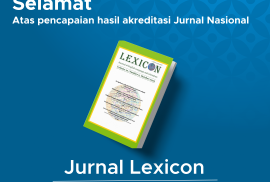
[Appreciation Post] Lexicon Accreditation SINTA 3

HEADLINESNews Release Tuesday, 30 January 2024

Lexicon, a journal published by the English Studies Programme, Faculty of Cultural Sciences, UGM, with the English Studies Association in Indonesia (ESAI), achieved national accreditation by Kementrian Pendidikan, Kebudayaan, Riset, dan Teknologi Republik Indonesia (Ministry of Education, Culture, Research, and Technology). Currently, Lexicon is accredited as a SINTA (Science and Technology Index) 3 journal.

Lexicon is a biannual journal that releases a new issue every April and October. Lexicon publishes articles in linguistics (focusing on pragmatics, sociolinguistics, discourse analysis, and translation) and literature (focusing on interpreting short stories, novels, plays, and poems). Submission to the Lexicon journal is free and is always open throughout the year. The writers can be from any region of the globe, but submission is strictly restricted to articles written in English.

Link to Lexicon: http://jurnal.ugm.ac.id/lexicon 

This article is already published on https://english.fib.ugm.ac.id/2024/01/26/appreciation-post-lexicon-categorized-as-a-sinta-3-journal/ 

JAPAN FOUNDATION (JF) JAKARTA VISIT TO THE FACULTY OF CULTURAL SCIENCES, GADJAH MADA UNIVERSITY

HEADLINESNews Release Monday, 29 January 2024

The Japan Foundation is a non-profit institution owned by the Japanese government which is specifically dedicated to international cultural exchange activities. This institution seeks to create various activities and provide facilities and information so that individuals can interact with each other with the aim of deepening mutual understanding between Japanese society and other countries through arts and cultural exchange activities, education and learning Japanese in abroad, and Japanese studies abroad, and also collect the material and then distribute it. Even though it is based in Tokyo, The Japan Foundation already has 24 branch offices spread throughout the world. One of them is in Jakarta, Indonesia. The Japan Foundation Jakarta is tasked with carrying out activities initiated by the head office, contributing to Japanese and Indonesian cultural exchange activities, supporting and collaborating with external organizations, conducting research, and providing information related to all cultural exchange activities carried out by The Japan Foundation.

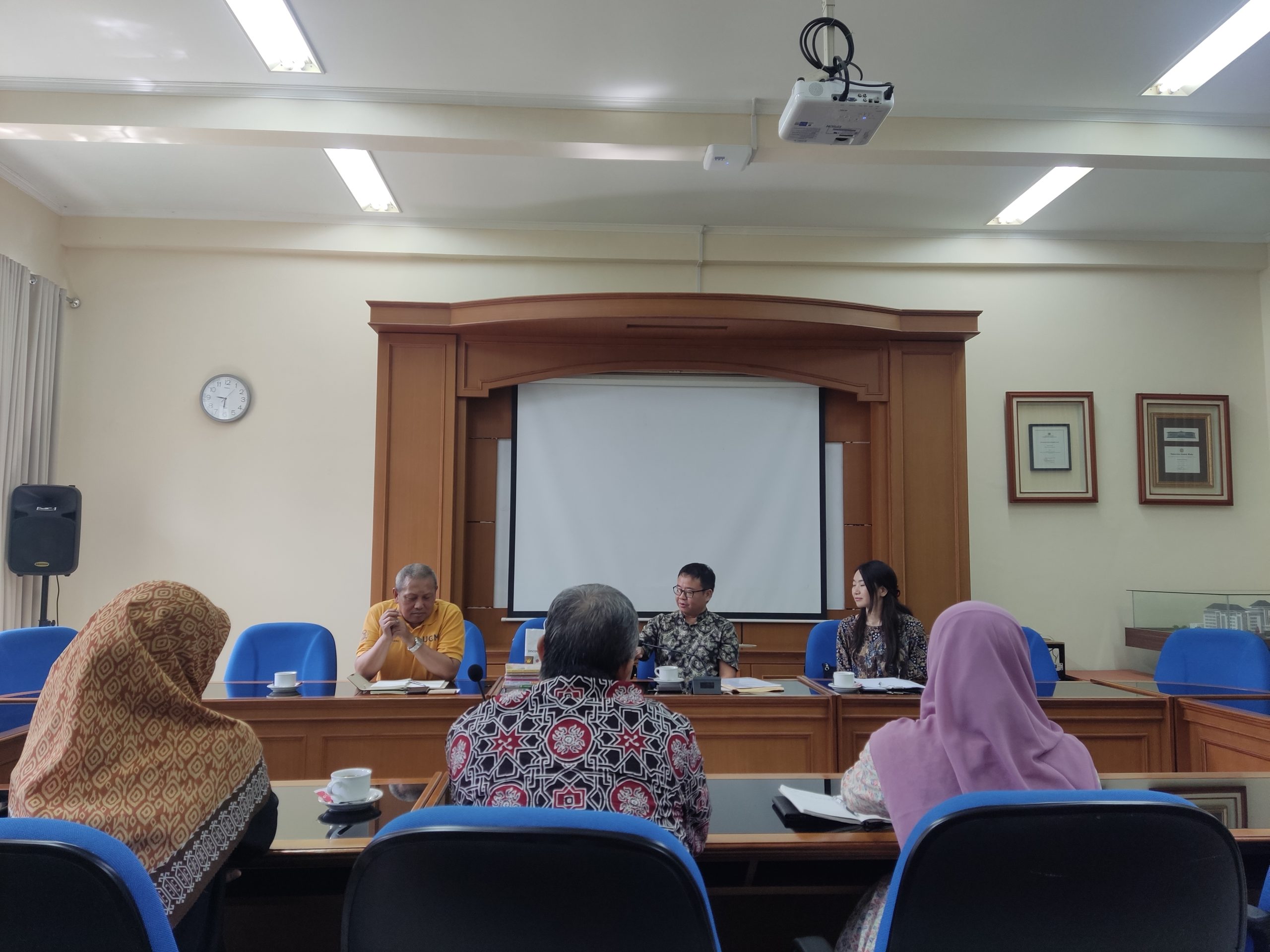
In order to provide support and strengthen collaboration, the Japan Foundation (JF) Jakarta visited the Japanese Language and Culture Study Program, Gadjah Mada University on Friday 26th of January 2024 at the Faculty of Cultural Sciences. The visit from the Japan Foundation (JF) Jakarta was represented by Deputy Mr. Yamazaki Takaya and Mrs. Kadoi Minako from the division of Japan Language Education. On this occasion, a meeting was held to discuss the cooperation that has existed for approximately 35 years since the establishment of the Japanese Language and Culture Study Program, Faculty of Cultural Science, Gadjah Mada University in 1989. Apart from that, there were several important things that were also discussed, including making plans regarding future cooperation, discussing the development of Japanese science and the challenges faced in the current and future eras. It is hoped that this meeting will have a positive impact on the cooperative relationship between the two organizations in the future. In this way, the goals of both the Japan Foundation (JF) and the Japanese Language and Culture Study Program, especially in the field of education, can be carried out well.


DISCUSSION MEETING ABOUT PERFORMANCE ACHIEVEMENT TARGET FOR FACULTY OF CULTURAL SCIENCES GADJAH MADA UNIVERSITY IN 2024

HEADLINESNews Release Monday, 29 January 2024

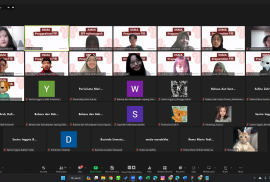
On January 25th 2024 at the Faculty of Cultural Sciences, a Faculty Working Meeting was held. The meeting discussed strategies for achieving Performance Achievement Targets, while the location of the meeting was in rooms 707 and 709 on the 7th floor of the Soegondo building. Dean of the Faculty of Cultural Sciences, Prof. Dr. Setiadi, S.Sos., M.Si., directly chaired the meeting which was attended by all lecturers at the Faculty of Cultural Sciences for approximately 4 hours starting from 9.00 am. The meeting was held in a hybrid manner and was attended by a total of 154 lecturers as meeting participants.

The Dean of Cultural Science Faculty led the Meeting

The Performance Achievement Target itself contains many things regarding the performance of each faculty’s resources, some of which are about things that the faculty has, the growth that is occurring, and what needs to be improved. Strengthening partnership cooperation in tridharma activities involving lecturers and students, developing an integrated innovation ecosystem, as well as increasing recognition of the excellence of study programs at national and international levels were also important points in the meeting. There are 30 indicators mandated directly by universities to faculties. Furthermore, the mandate giver who is the Chancellor of Gadjah Mada University, Prof. Dr. Ova Emilia, M.Med.Ed., Sp.OG(K), Ph.D., through the Planning Directorate will monitor and evaluate the achievement of performance indicator targets periodically/every quarter.


Decoding the Use of Language: How Men and Women Speak Different Social Tunes

News Release Saturday, 27 January 2024

Ever wonder why men and women sometimes seem like they’re speaking different languages? Linguists have been digging into this mystery, going beyond vocabulary differences to explore how men and women communicate in unique ways. This article aims to discover the fascinating world of gender-specific language patterns, pulling insights from reliable sources to give you the lowdown on this captivating aspect of human interaction.

Communication Styles: Reading Between the Lines

When it comes to social interactions, men and women often showcase distinct communication styles. Women, in particular, have a knack for using implicit language, especially when expressing their wants or likes. Picture this: you’re on a date, and your girlfriend doesn’t outright say where she’d like to go. Instead, she drop hints, leaving it to you to play detective and figure out their unspoken preferences. This tendency aligns with what linguists have found – women often use subtle communication strategies to get their point across (Lakoff, 1975).

Tag Questions and Rising Intonation: The Women’s Secret Language

One of the landmark studies on gender-specific language use, led by Deborah Tannen in 1975, shed light on the prevalence of tag questions in women’s speech. Tannen argued that women deploy tag questions as a way of hedging, adding a touch of uncertainty or seeking reassurance. She also pointed out that women frequently use rising intonation on statements, making them sound like questions. This linguistic quirk adds a layer of complexity to women’s communication, requiring a nuanced interpretation to grasp their intended meaning.

Different Strokes: Men vs. Women in Language

Linguists have delved into the intriguing differences in emphasis between men’s and women’s language, shedding light on unique communication styles. Research indicates that men typically prioritize conveying information, striving for clarity and directness. In contrast, women often assign a higher significance to social connections and the cultivation of relationships (Tannen, 1990). For instance, women may engage in sharing gossip as a means to foster and maintain relationships among themselves (Tannen, 1991). This communication practice, far from being trivial, serves as a social bonding mechanism, strengthening connections within their social circles. On the other hand, men tend to share information selectively, focusing on relaying pertinent and crucial details.

In conclusion, the use of language between men and women unfolds as a multifaceted phenomenon, intricately woven with various linguistic nuances. Deborah Tannen’s groundbreaking work in 1975 marked a significant milestone, offering a gateway to a deeper comprehension of these distinctive communication styles. The delicacy inherent in women’s language, coupled with their strong emphasis on social connections, contributes to the rich tapestry of human communication. Importantly, recognizing and appreciating these nuanced differences in language aligns with the global pursuit of achieving the United Nations Sustainable Development Goal (SDG) 5 – Gender Equality. SDG 5 emphasizes the importance of dismantling gender stereotypes and promoting equal opportunities in various spheres, including communication. As our understanding of gender differences in language continues to evolve, it becomes increasingly crucial to consider these nuances not only for enhancing interpersonal communication but also as part of a broader commitment to fostering gender equality. By acknowledging and valuing the unique ways in which men and women communicate, we contribute to creating a more inclusive and respectful world.

References:
Lakoff, R. (1975). Language and Woman’s Place. Harper & Row.
Tannen, D. (1975). You Just Don’t Understand: Women and Men in Conversation. William Morrow and Company, Inc.
Tannen, D. (1990). You’re Wearing THAT?: Understanding Mothers and Daughters in Conversation. Random House.
Tannen, D. (19911990). You just don’t understand: women and men in conversation. 1st Ballantine Books ed. New York, Ballantine.

This article has previously been published by Pusat Bahasa FIB UGM through this link.

1…2829303132

Video UGM

[shtmlslider name='shslider_options']
Universitas Gadjah Mada

Faculty of Cultural Sciences
Universitas Gadjah Mada
Jl. Nusantara 1, Bulaksumur Yogyakarta 55281, Indonesia
   fib@ugm.ac.id
   +62 (274) 513096
   +62 (274) 550451

Work Units

  • Office of Journal & Publishing
  • INCULS
  • Information Technology and Database
  • Language Learning Center
  • Library Unit
  • Public Relations
  • Research

Facilities

  • Computer Laboratory
  • Gamelan
  • Guest House
  • Language Library
  • Library
  • Phonetics Library
  • Self Access Unit
  • Student Internet Centre

Importan Links

  • Journal of Humaniora
  • Subscriber Journal
  • Alumni Portal
  • Career
  • Departmens News
  • UGM Streaming

Contacts

  • Academic
  • Administration
  • Dean’s Office
  • Departments / Study Programs
  • Public Relations

© 2024 Faculty of Cultural Sciences Universitas Gadjah Mada

KEBIJAKAN PRIVASI/PRIVACY POLICY

[EN] We use cookies to help our viewer get the best experience on our website. -- [ID] Kami menggunakan cookie untuk membantu pengunjung kami mendapatkan pengalaman terbaik di situs web kami.I Agree / Saya Setuju