• About UGM
  • Academic Portal
  • IT Center
  • Library
  • Research
  • Webmail
  • Informasi Publik
  • English
    • Indonesia
Universitas Gadjah Mada Faculty of Cultural Sciences
Universitas Gadjah Mada
  • Home
  • Profile
    • History
    • Vision and Mission
    • Organizational structure
    • Administration
    • Staff
    • Faculty Members
  • Academic
    • Academic Calendar
    • Undergraduate Programs
      • Bachelor of Cultural Antrophology
      • Bachelor in Archaeolagy
      • Bachelor in History
      • Bachelor in Tourism
      • Bochetor in Korean Language and Culture
      • Bachelor in Indonesian Language and Culture
      • Bachelor in English
      • Bachelor in Arabic
      • Bachelor in Japanese Language and Culture
      • Bachelor in Javanese Language, Literature and Culture
      • Bachelor in French language and literature
    • Graduate Programs
      • Master in Antrophology
      • Master in ArchaeoIogy
      • Master in History
      • Master in Linguistics
      • Master in Literature
      • Master In American Studies
      • Master in Middle Eastern Cultural Studies
    • Post-Graduate Programs / S3
      • Doctor in Antropology
      • Doctor in American Studies
      • Doctor in Humanities
    • Student Service
  • KPPM
    • Research Information
    • Scientific / Academic Publications
    • Community Service
    • International Cooperation
    • Domestic Cooperation
  • Student Organizations
    • Student Executive Council
    • Semi-Autonomous Organizations
      • KAPALASASTRA
      • Christian Student Alliance
      • LINCAK
      • Saskine
      • Catholic Student Family
      • Dian Budaya
      • Sastra Kanuragan (sasgan)
      • Family of Muslim Cultural Sciences Students (KMIB)
      • Bejo Mulyo
    • Autonomous Organizations
      • Family of Anthropology Students (KEMANT)
      • English Department Student Association
      • Tourism Students Association (HIMAPA)
      • Family of Indonesian Literature Students (KMSI)
      • West Asian Literature Student Association (IMABA)
      • Association of Korean-Language Students (HIMAHARA)
      • Family of Regional Indonesian Literatures Students (KAMASUTRA)
      • The Family Body of History Students (BKMS)
      • The French Literature Students Association (HMSP)
      • Family of Anthropology Students
      • Japanese Student Association (HIMAJE)
  • Admission
    • Student Evaluation
  • Home
  • 2026
  • page. 8
Arsip:

2026

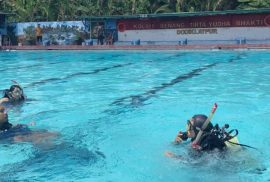
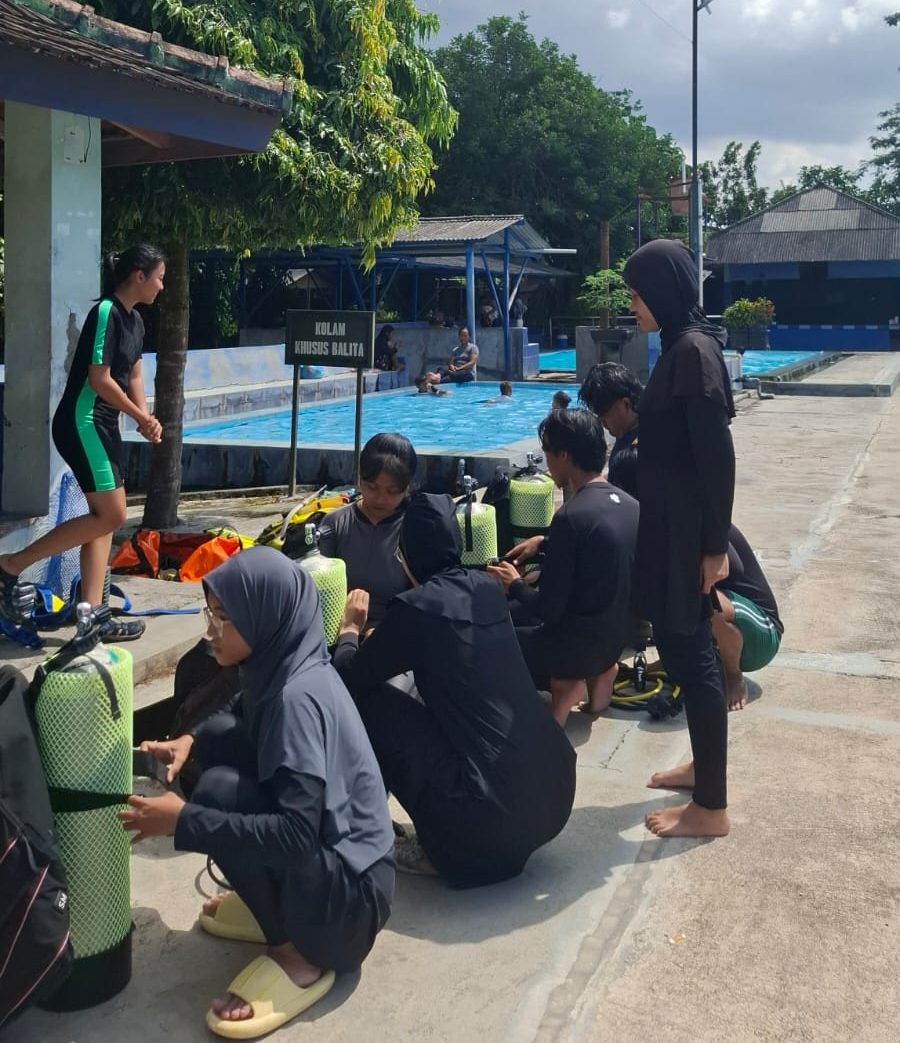
Strengthening Diving Skills Through HIMA UGM Scuba Diving Training

News Release Friday, 22 May 2026

The Archaeology Student Association (HIMA) of the Faculty of Cultural Sciences, Universitas
Gadjah Mada, through its Underwater Archaeology Division, conducted a scuba diving training
activity as part of efforts to develop students’ skills in maritime and underwater archaeology. The
activity was held on May 17, 2026, and attended by members of the Underwater Archaeology
Division under the guidance of certified instructors from Sentra Selam Jogja. During the training,
students were introduced to various materials, including diving equipment, proper usage
techniques, and underwater communication signals.

This scuba diving training program was part of a series of activities conducted prior to the Open
Water Training, which is usually carried out in open sea environments. Therefore, the activity
served as a practical learning experience that supported students’ understanding of underwater
archaeological research, particularly in the observation and documentation of cultural remains in
aquatic environments. Through this activity, HIMA demonstrated its commitment to improving
students’ competencies and field experience relevant to underwater archaeology and maritime
studies.
Author: Jovinka Aldinova Kiranamurti
Photo: Divisi Arkeologi Bawah Air
Transformation of Arabic Language Learning in the AI Era Highlighted in International Seminar

News Release Wednesday, 20 May 2026

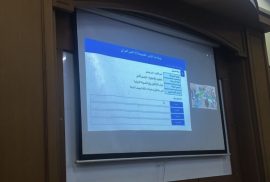
 Efforts to strengthen the integration of technology in Arabic language education were once again highlighted through an international seminar titled “Arabic Linguistic Analysis and Instructional Design.” Held virtually on Thursday, April 30, 2026, the seminar brought together educators, academics, and Arabic language practitioners from various countries. The event served as a discussion forum to explore the development of Arabic language teaching methods in the era of Artificial Intelligence (AI). Through this forum, participants were encouraged to understand the importance of utilizing technology in education while still maintaining scientific and pedagogical foundations in language learning.

Throughout the seminar, participants were introduced to a five-hour learning roadmap consisting of three main stages: theoretical reinforcement, hands-on practice, and professional development for educators. Through this approach, participants gained a broader understanding of how AI can be implemented effectively and sustainably in Arabic language learning. One of the main highlights of the seminar was the introduction of “Mubeen,” an AI model specifically designed for Arabic linguistic needs. Compared to general AI models, Mubeen is considered more capable of handling the complexities of the Arabic language, including accurate tashkil (diacritical marks), morphological structure analysis, and understanding cultural contexts embedded in Arabic usage.

In addition to the presentation sessions, the seminar also featured interactive activities where participants were directly involved in prompt engineering practices. During this session, participants created descriptive Arabic texts, which were later analyzed using the Pedagogical Judge (القاضي البيداغوجي) approach to evaluate their educational quality. The discussions became increasingly engaging, particularly when addressing the role of AI in education. Some participants viewed AI as a tool that could help educators reduce repetitive administrative and planning tasks. Others, however, expressed concerns that excessive reliance on AI could make the learning process overly mechanical. These differing perspectives enriched the discussion and broadened participants’ understanding of technology’s role as a supporting tool in education.

Although conducted virtually, participants remained highly enthusiastic throughout the seminar. This was reflected in the active question-and-answer sessions, discussions, and exchanges of experiences regarding the use of technology in Arabic language learning. As the seminar concluded, the event not only became a platform for sharing knowledge and insights, but also encouraged participants to commit to implementing the training outcomes in their respective institutions. Through this initiative, participants are expected to develop Arabic language teaching methods that are more innovative, adaptive, and relevant to technological advancements in the digital era.

Author : Indana Zulfa Maulida

Anthropology Students Win Gold Medals at the National Excellence Competition

News Release Wednesday, 20 May 2026

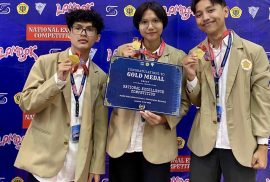
Good news comes from three undergraduate students in Cultural Anthropology at the Faculty of Humanities, UGM, who achieved a proud accomplishment at the 2026 National Excellence Competition (NEC). The NEC was organized by Eduhub Incubator in collaboration with Mataram University. The competition took place on May 9–10, 2026, at the Faculty of Agriculture, Mataram University, Lombok, West Nusa Tenggara. The team, consisting of Dinaesy Fadillah Hidayat, Aly Aydeed, and Nadila Aryani Az-Zalfa, won a Gold Medal in the Tourism and Creative Economy Research Essay category under the guidance of Agus Indiyanto, S.Sos., M.Si.

The competition’s theme was “Integrating Critical Thinking, Social Innovation, and Sustainable Entrepreneurial Capabilities within the Framework of Inclusive Development and Achieving the SDGs in Indonesia.” In their paper, the team addressed the issue of event management and tourism waste in Yogyakarta, which is still considered a challenge in supporting sustainable tourism.

As a solution, the team proposed an innovation in the form of a circular economy-based event management agency. This concept is designed to integrate event management with waste reduction and reuse systems, thereby creating a more environmentally friendly event ecosystem while supporting the creative economy sector in a sustainable manner.

It is hoped that this achievement will motivate other students to remain critical of phenomena occurring in society, to present innovative ideas, and to contribute to addressing various social issues through research and academic work that has a positive impact on the community.


Author: Dewi W – adapted from a report by Dinaesy Fadillah Hidayat

Photo: Dinaesy Fadillah Hidayat et al.


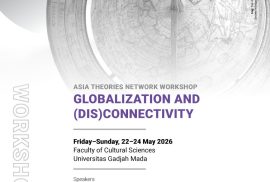
Asia Theories Network Workshop 2026 to Discuss Globalization and the Dynamics of (Dis)Connectivity in the Digital Era

News Release Wednesday, 20 May 2026

The Faculty of Cultural Sciences at Universitas Gadjah Mada, through the organization of the Asia Theories Network (ATN) Workshop 2026, presents an international academic forum bringing together leading scholars from Asia, the United States, and Europe to discuss the paradoxes of globalization and disconnection in the digital era. The event will take place from May 22–24, 2026, in Room 709, Soegondo Building, Faculty of Cultural Sciences, Universitas Gadjah Mada.

Carrying the theme “Globalization and (Dis)Connectivity,” the workshop highlights various issues concerning the transformation of identities, communities, and institutions in an increasingly digitally connected world. Participants are invited to discuss how digital and cultural networks not only foster global integration but also generate new forms of social isolation and disconnection within contemporary society.

ATN Workshop 2026 will also feature interdisciplinary dialogues involving the fields of literature, education, politics, and cultural studies. Academics and researchers will explore a range of contemporary issues, including digital social movements, coalition politics, decolonial discourse, digital well-being, and Anthropocene-related issues concerning the relationship between humans and the environment. The combination of global and local perspectives in each session serves as one of the workshop’s major strengths, including discussions of regional cases such as Taiwan’s Sunflower Movement and media controversies in Indonesia.

In addition to the academic forum, participants will also have the opportunity to experience the cultural richness of Yogyakarta through various cultural activities, including temple visits, traditional performances, and local culinary experiences. These activities aim to introduce Indonesian culture to the international academic community while strengthening cross-cultural exchange among nations.

The organization of the Asia Theories Network Workshop 2026 also supports the achievement of the Sustainable Development Goals (SDGs), particularly SDG 4 on Quality Education through the strengthening of international academic collaboration and the development of critical scholarly discourse, SDG 10 on Reduced Inequalities through intercultural dialogue and global-local perspectives, and SDG 17 on Partnerships for the Goals through international academic cooperation among researchers, educational institutions, and intellectual communities from various countries.

[Public Relations of FIB UGM, Alma Syahwalani]

Matragama: Nurturing a Literary Community in the Land of a Thousand Temples

News Release Wednesday, 20 May 2026

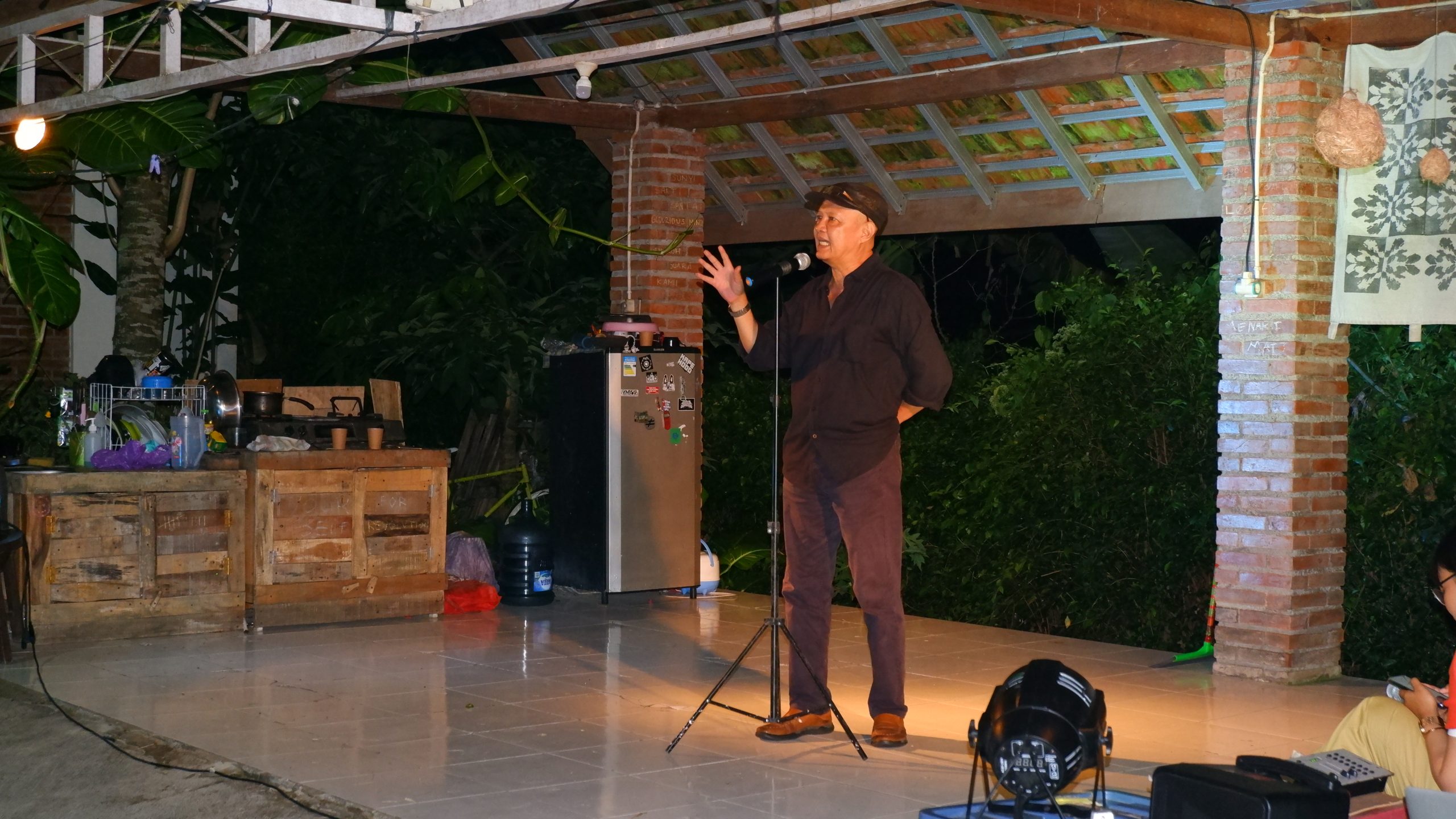
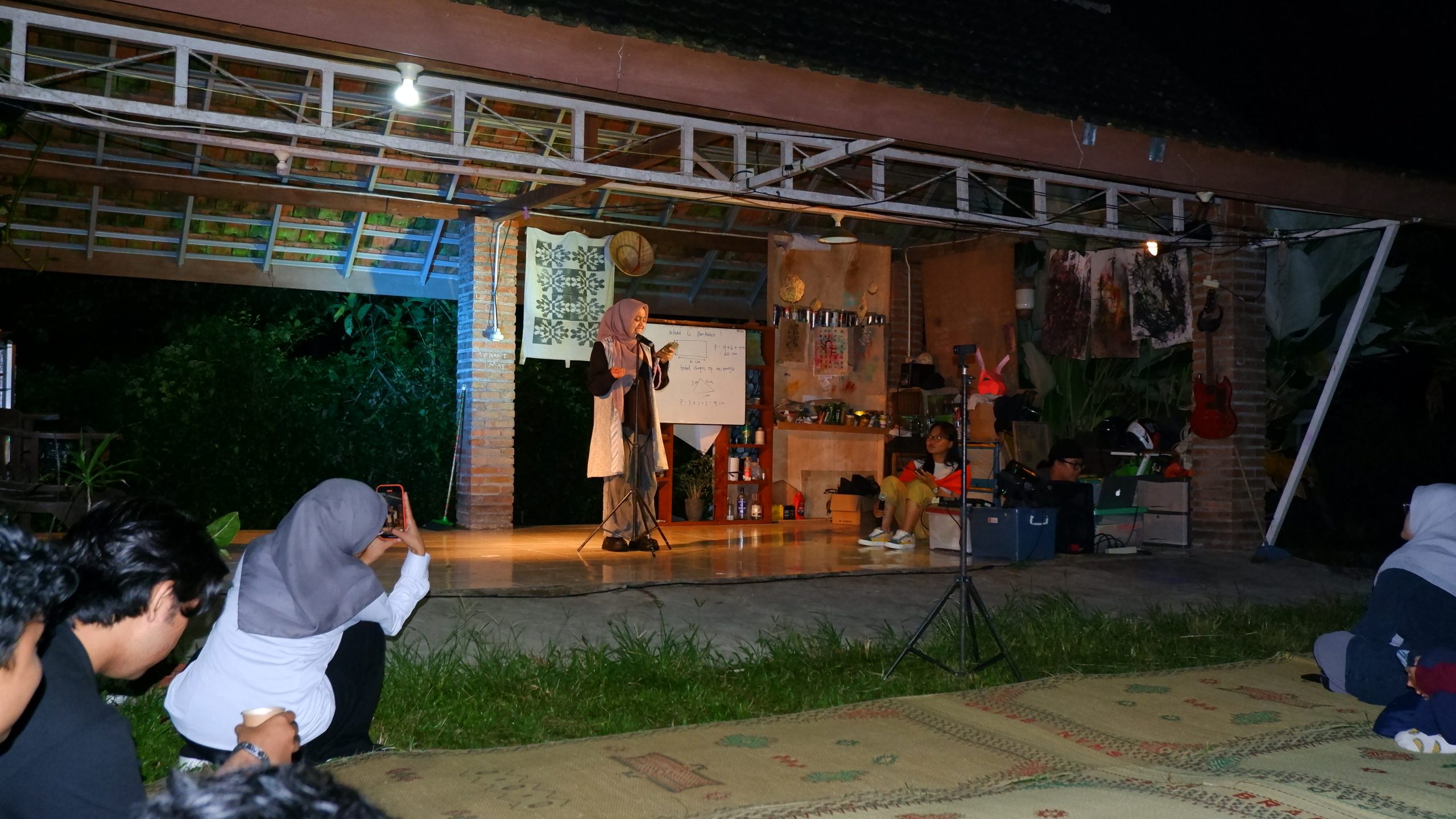
Yogyakarta, May 16, 2026 – At Pondok A. Salam Kalimasada in Pakem, Sleman, Yogyakarta, a new chapter of Matragama became more than merely an organizational agenda. It transformed into a gathering space for people who believe that literature still needs to be nurtured collectively. Since 6:00 PM WIB, people arrived one by one, bringing voices, stories, laughter, and memories. They sat on woven mats in the cold night air, while the dim light in the corner of the lodge made every conversation feel more intimate. The event was attended by the extended Matragama family from various generations, doctoral students of Humanities Studies, and invited guests from Middle Eastern Cultural Studies, American Studies, Linguistics, History, Anthropology, and various circles within the Faculty of Cultural Sciences at UGM.

Since its establishment in 2022 under the leadership of Billy, Matragama has continued moving forward through a relay of generations. Leadership was then continued by Awan in the second generation, and now enters a new phase with Brian steering the third generation. That evening marked a sign that the relay had not stopped. Amid the cold air of Pakem and the warmth of conversations beginning to grow, Matragama seemed to be rediscovering its flame.

The head of Matragama, Giandra Febrian Haidar, opened the event in a calm yet confident tone. In his remarks, he expressed hope that literature would not remain confined to classrooms alone, but would also grow in gathering spaces, through long nights, and among people who still wish to listen to one another.

The Head of UGM’s Master’s Program in Literature, Aprinus Salam, was also present and delivered warm remarks. Before the students and invited guests, he emphasized the importance of organizing and building communities as part of intellectual and cultural processes. According to him, literature cannot live in isolation. It grows through encounters, conversations, and collective work. Aprinus also stated that Pondok A. Salam Kalimasada could serve as a venue for literary and artistic activities—an open house for anyone wishing to keep the pulse of culture alive.

After the opening session, warmly guided by Pute as the host, poem after poem began to be recited. Short stories were brought to life through voices. Under the theme Little Candles at the Foot of Merapi, moments of silence felt deeply meaningful, as though everyone was gathering something from within themselves. The readers appeared one after another: M. Iqbal Saputra, Romzul Falah, Awabeen Samsuding, Ella Manikam, Nuzul Ilmiawan, Islahudin Muhammad, Khatibul Umam, and several invited guests. They did not merely read poetry, but also shared anxieties and inner experiences with the audience.

At times, the sound of crickets slipped between the poetry readings. Some listeners bowed their heads in silence as the poems were recited. Then a light drizzle fell gently, as though helping preserve the calm and warmth of the night. As the rain grew heavier, some participants slowly moved to the terrace and inside the lodge while continuing to listen attentively. Words continued floating through the night air, mingling with the cold winds from the slopes of Mount Merapi and the aroma of coffee and boiled soybeans wafting from the lodge.

In between sessions, M. Iqbal Saputra, a committee member from the technical division, shared his reflections on the importance of literary appreciation nights such as this. According to him, events like the launch of Matragama are something that should exist amidst the turbulence of changing times. He said that poetry, storytelling, and even simple discussions are efforts to become whole human beings again—to see life from various perspectives and then determine one’s path, whether through writing, action, or perhaps simply through a smile.

One of the evening’s most captivating moments came through a dramatic reading by Luthfi, a doctoral student in Humanities at UGM. The dramatic performance transformed the text from mere writing into a moving body, a pulsating voice, and emotions vividly alive before the audience’s eyes. The invited guests were swept into the intimate yet energetic atmosphere.

In the middle of the appreciation night, Rini Febriani Hauri read her short story titled The Three Deaths of Dayang Temulun in a calm and rhythmic voice. The climax of the event came when Rini’s short story was discussed collectively. The discussion was moderated by Giandra, featuring Ricky Yudhistira Nasution, a doctoral student in Humanities at UGM, as the speaker. The short story, which won Second Place in the 2025 International HB Jassin Award, was explored through the lens of magical realism—a landscape where bodies, earth, trees, mist, and memories coexist without rigid boundaries between the real and the supernatural. The discussion unfolded warmly. It examined how literature operates within collective memory, myth, the body, and human history. Participants listened enthusiastically; some remained silent in contemplation, while others immersed themselves in endless interpretive possibilities.

The night grew later, yet no one truly wished to leave. After the entire series of events concluded, the atmosphere became more relaxed. Some people sang together, while others chatted freely, joked, and shared long laughter. Some sat in circles discussing books and literature, while others simply enjoyed the night while exchanging unfinished life stories beyond the formal forum. It was there that Matragama truly felt alive—not in banners, event schedules, or ceremonial formalities, but in encounters and conversations that continued glowing deep into the night.

Several invited guests from various departments and communities within UGM’s Faculty of Cultural Sciences also shared reflections and hopes for Matragama. Representatives from Middle Eastern Cultural Studies, American Studies, Linguistics, History, and Anthropology expressed hopes that inter-organizational bonds would continue warmly. They also wished for Matragama to have a long life and remain consistent as a shared space for nurturing literature, art, and culture.

At the foot of Merapi that night, literature appeared like little candles—not grand, but enough to keep the warmth of encounters and conversations alive. The drizzle still fell softly as people slowly began leaving Pondok Kalimasada one by one.

Author: Rini Febriani Hauri

1…678910…33

Video UGM

[shtmlslider name='shslider_options']
Universitas Gadjah Mada

Faculty of Cultural Sciences
Universitas Gadjah Mada
Jl. Nusantara 1, Bulaksumur Yogyakarta 55281, Indonesia
   fib@ugm.ac.id
   +62 (274) 513096
   +62 (274) 550451

Work Units

  • Office of Journal & Publishing
  • INCULS
  • Information Technology and Database
  • Language Learning Center
  • Library Unit
  • Public Relations
  • Research

Facilities

  • Computer Laboratory
  • Gamelan
  • Guest House
  • Language Library
  • Library
  • Phonetics Library
  • Self Access Unit
  • Student Internet Centre

Importan Links

  • Journal of Humaniora
  • Subscriber Journal
  • Alumni Portal
  • Career
  • Departmens News
  • UGM Streaming

Contacts

  • Academic
  • Administration
  • Dean’s Office
  • Departments / Study Programs
  • Public Relations

© 2024 Faculty of Cultural Sciences Universitas Gadjah Mada

KEBIJAKAN PRIVASI/PRIVACY POLICY

[EN] We use cookies to help our viewer get the best experience on our website. -- [ID] Kami menggunakan cookie untuk membantu pengunjung kami mendapatkan pengalaman terbaik di situs web kami.I Agree / Saya Setuju