
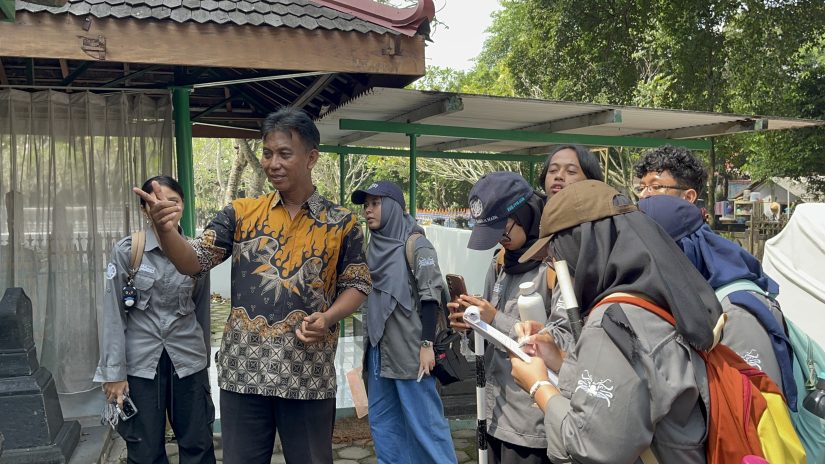
The Archaeology Student Association of the Department of Archaeology at Universitas Gadjah Mada, through its Research and Scientific Development Division, once again organized its annual program Eksplorasi 2026 under the theme “Exploring the Heritage of the Islamic Mataram Kingdom from Yogyakarta to Surakarta.” The program involved 15 Archaeology students from the 2024 and 2025 cohorts under the supervision of Aditya Revianur. The first stage of the exploration was conducted on May 22, 2026, at the former Kedaton Pleret and Kerta sites in Pleret, Bantul, Special Region of Yogyakarta, while the following stage took place on May 23, 2026, at the former Kartasura Palace area in Sukoharjo, Central Java. Another stage of the program is also planned to be conducted at the end of July 2026 as part of the continuing exploration of the Islamic Mataram heritage.
Eksplorasi is one of the flagship programs of the Research and Scientific Development Division, designed as a field-learning platform for archaeology students. Through this activity, participants were not only invited to visit historical sites, but were also directly involved in archaeological survey practices, site observation, basic mapping and documentation, as well as contextual interpretation of the surrounding cultural landscape. These field activities provided students with valuable experience in understanding how archaeological research is conducted in practice, from identifying archaeological remains to interpreting the broader historical and cultural context of the sites.
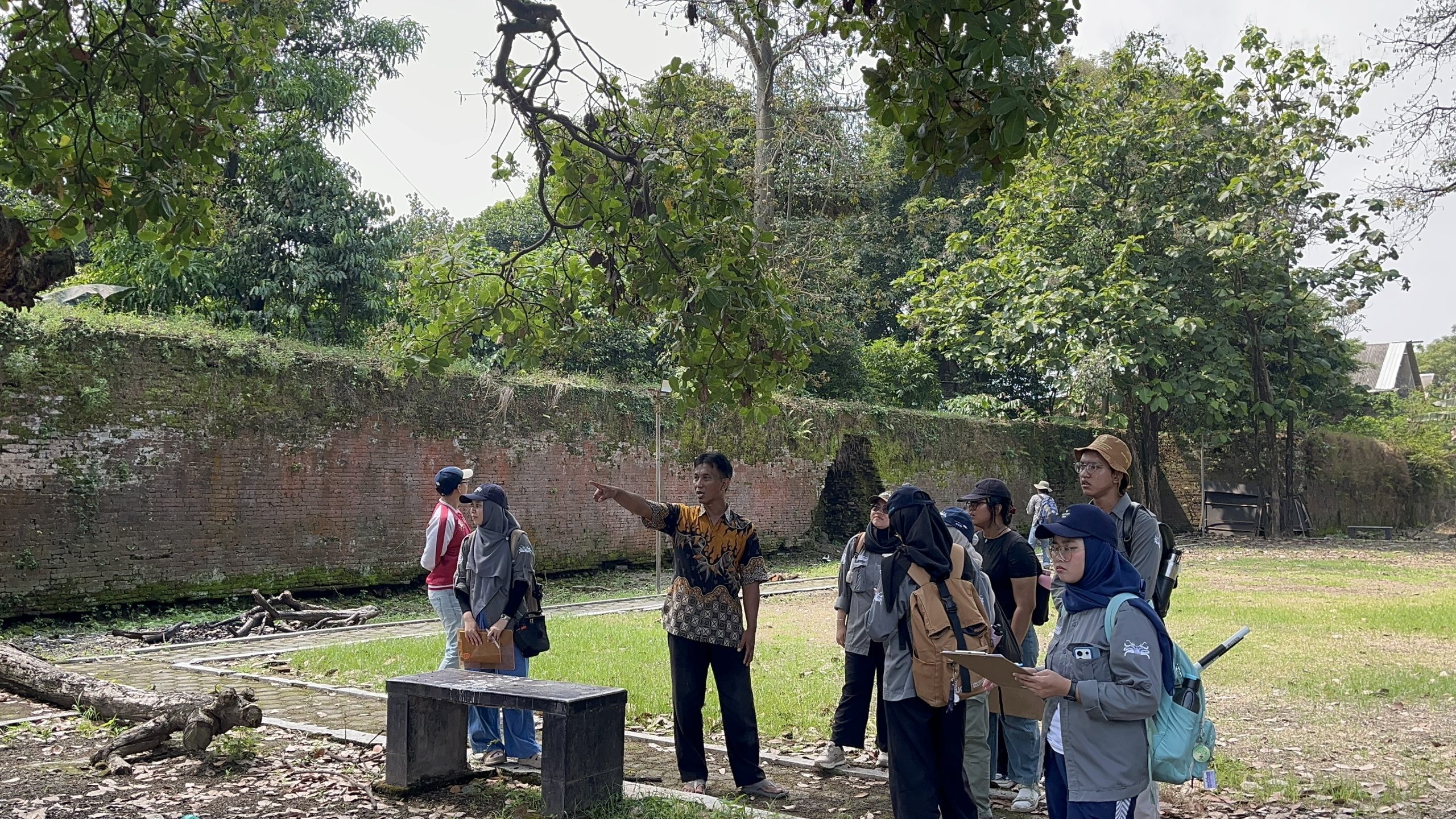
By focusing on the remains of the Islamic Mataram Kingdom, the program also aims to strengthen students’ awareness of cultural heritage preservation. The areas of Pleret, Kerta, and Kartasura were selected due to their major historical significance in the political and cultural development of the Islamic Mataram Kingdom in Java. Through this exploration, students were encouraged to view the sites not merely as physical remnants of the past, but also as cultural spaces that preserve traces of social, political, and historical dynamics from earlier periods. The outcomes of the program will later be developed into scientific articles and documentary videos, contributing to students’ academic portfolios while also serving as educational media to promote awareness of cultural heritage conservation in Indonesia.
Author: Muhammad Irsyad
