
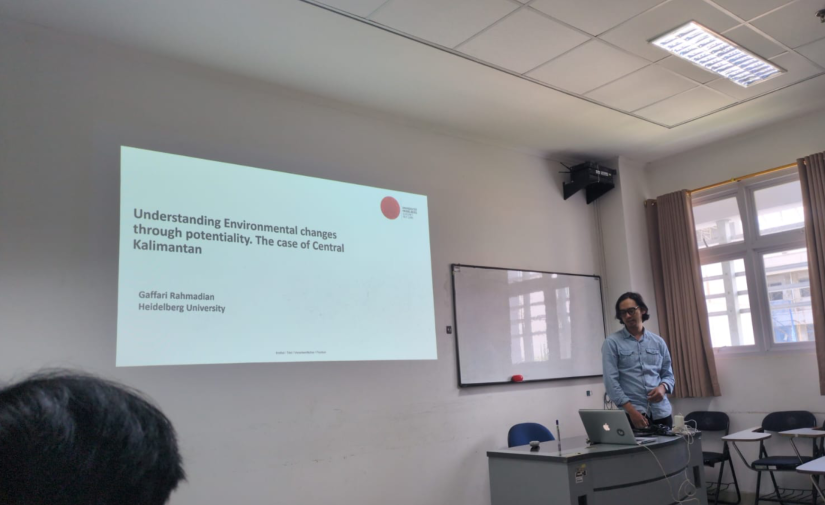
On the afternoon of March 12, 2026, at the Department of Anthropology, Universitas Gadjah Mada, Dr. Gaffari Rahmadian invited the Master’s class Paradoxes of Market and Development to examine the relationship between humans and non-humans in development discourse through a new perspective. Drawing on Giorgio Agamben’s philosophy of potentialities, Dr. Gaffari developed this concept to analyze the relationship between humans and nature within narratives of development.
For many policymakers and corporations, “potential” is a powerful term often paired with promises of job creation, increased foreign exchange, and economic progress. However, through Agamben’s lens, Dr. Gaffari challenged this logic. Potential, he argued, is not something static or merely a “resource waiting to be extracted.”
“Potential is a capacity or force—present in both objects and humans—that has not yet been realized into something actual,” he explained. He further emphasized that potential also includes the capacity not to realize itself. This is where true freedom lies—when communities possess potential yet refuse to be governed by systems that seek to exploit it, that is where they are genuinely free.
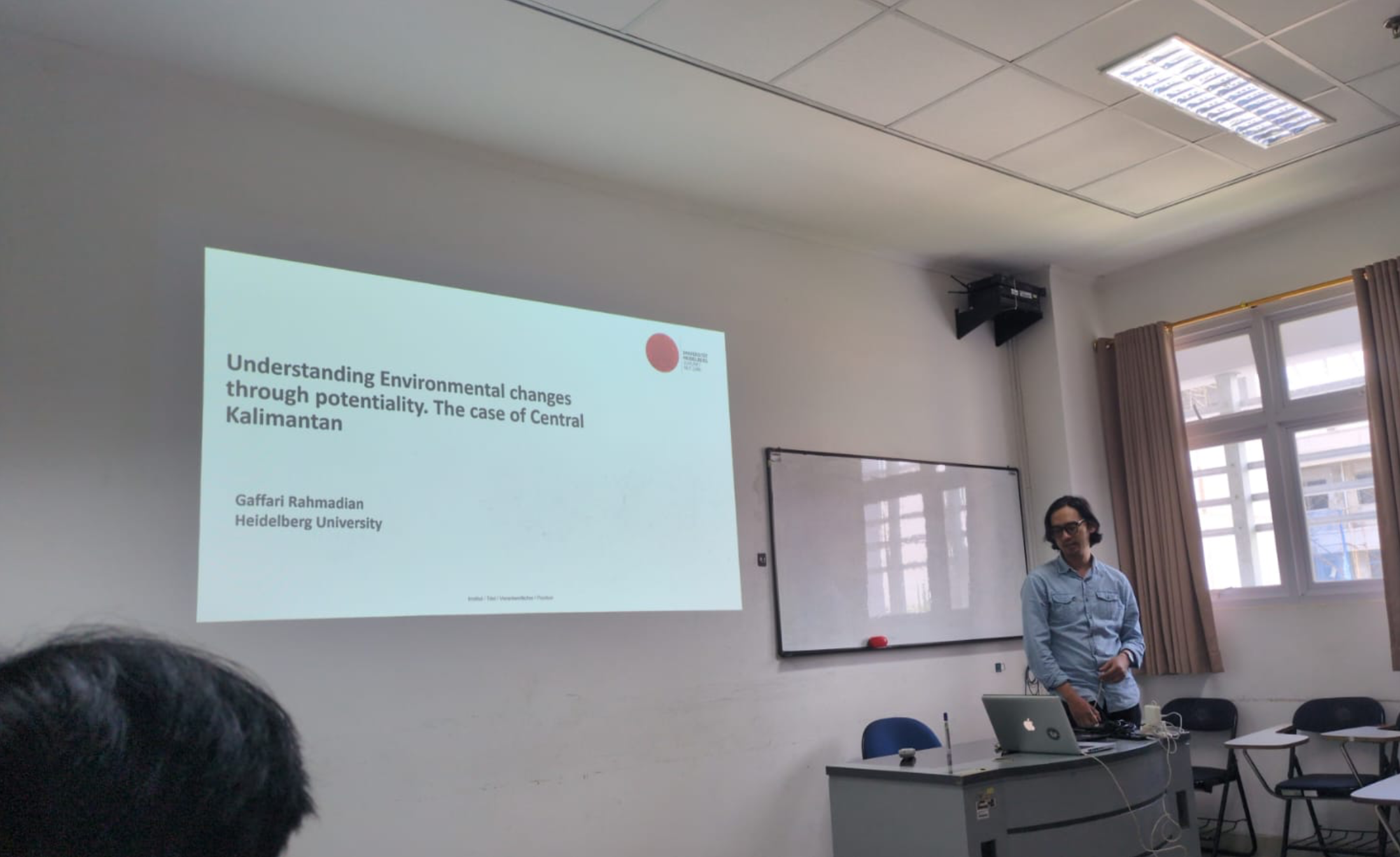
After the presentation, the classroom atmosphere became more dynamic. Graduate students immersed themselves in a deep discussion, unpacking various real-world cases and connecting Agamben’s theoretical framework with the socio-political realities they observe.
Author : Daiva Keefe
Photo : Dr. Des Christy
