• About UGM
  • Academic Portal
  • IT Center
  • Library
  • Research
  • Webmail
  • Informasi Publik
  • English
    • Indonesia
Universitas Gadjah Mada Faculty of Cultural Sciences
Universitas Gadjah Mada
  • Home
  • Profile
    • History
    • Vision and Mission
    • Organizational structure
    • Administration
    • Staff
    • Faculty Members
  • Academic
    • Academic Calendar
    • Undergraduate Programs
      • Bachelor of Cultural Antrophology
      • Bachelor in Archaeolagy
      • Bachelor in History
      • Bachelor in Tourism
      • Bochetor in Korean Language and Culture
      • Bachelor in Indonesian Language and Culture
      • Bachelor in English
      • Bachelor in Arabic
      • Bachelor in Japanese Language and Culture
      • Bachelor in Javanese Language, Literature and Culture
      • Bachelor in French language and literature
    • Graduate Programs
      • Master in Antrophology
      • Master in ArchaeoIogy
      • Master in History
      • Master in Linguistics
      • Master in Literature
      • Master In American Studies
      • Master in Middle Eastern Cultural Studies
    • Post-Graduate Programs / S3
      • Doctor in Antropology
      • Doctor in American Studies
      • Doctor in Humanities
    • Student Service
  • KPPM
    • Research Information
    • Scientific / Academic Publications
    • Community Service
    • International Cooperation
    • Domestic Cooperation
  • Student Organizations
    • Student Executive Council
    • Semi-Autonomous Organizations
      • KAPALASASTRA
      • Christian Student Alliance
      • LINCAK
      • Saskine
      • Catholic Student Family
      • Dian Budaya
      • Sastra Kanuragan (sasgan)
      • Family of Muslim Cultural Sciences Students (KMIB)
      • Bejo Mulyo
    • Autonomous Organizations
      • Family of Anthropology Students (KEMANT)
      • English Department Student Association
      • Tourism Students Association (HIMAPA)
      • Family of Indonesian Literature Students (KMSI)
      • West Asian Literature Student Association (IMABA)
      • Association of Korean-Language Students (HIMAHARA)
      • Family of Regional Indonesian Literatures Students (KAMASUTRA)
      • The Family Body of History Students (BKMS)
      • The French Literature Students Association (HMSP)
      • Family of Anthropology Students
      • Japanese Student Association (HIMAJE)
  • Admission
    • Student Evaluation
  • Home
  • 2025
  • page. 18
Arsip:

2025

Public Lecture “Trauma and Cultural Awareness”: Understanding Trauma Through a Cultural Perspective

News Release Friday, 31 October 2025

Yogyakarta, October 31, 2025 — The American Studies Program, Faculty of Cultural Sciences, Universitas Gadjah Mada (FIB UGM), held a Public Lecture titled “Trauma and Cultural Awareness” at the Soegondo Building, FIB UGM.

The event featured Dr. Jack Leslie Redfern, Jr. from Goshen College, Indiana, United States, an affiliate professor renowned for his expertise in cross-cultural studies and trauma psychology.

In his presentation, Dr. Leslie explained that trauma is an intense emotional, psychological, or physical response to an event or series of events that exceed an individual’s capacity to cope. According to him, trauma can leave lasting effects on one’s functioning and overall well-being.

Furthermore, Dr. Leslie emphasized that trauma is not only defined by the objective event but also by the subjective experience of the person who undergoes it. He added that repeated minor stressors (chronic adversity) can have an impact as severe as a single catastrophic event.

In addition, cultural context plays a crucial role in shaping how trauma is recognized, expressed, and addressed within a society. Dr. Leslie illustrated this by referring to conditions in several rural Javanese villages, where values such as saving face and preserving family honor (rasa malu) often discourage individuals from disclosing experiences of domestic violence. Instead of seeking professional help, such cases are typically resolved internally through community elders or neighborhood meetings (RT/RW).

Through this public lecture, students were encouraged to understand that trauma management cannot be separated from the social and cultural contexts of a community. Cultural awareness, he explained, is essential for fostering empathy and developing more humane approaches toward trauma survivors.

This activity also aligns with the Sustainable Development Goals (SDGs), particularly SDG 3 (Good Health and Well-being) and SDG 4 (Quality Education). Through academic programs like this, FIB UGM reaffirms its commitment to deepening students’ understanding of mental health and cultural diversity while fostering awareness of the importance of inclusive, human-centered social support.

[Public Relations Office, FIB UGM – Alma Syahwalani]
“Prameswari”: A Gapura Renggan Artwork by Javanese Language, Literature, and Culture Students Featured in Sestra Manitra

News Release Thursday, 30 October 2025

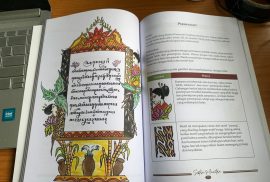
Yogyakarta, October 30, 2025 — Three students from the Javanese Language, Literature, and Culture Study Program, Faculty of Cultural Sciences, Universitas Gadjah Mada (FIB UGM)—Eka Nur Cahyani, Alma Syahwalani, and Nur Wakhid Fajar S.—contributed to the book Sestra Manitra through an artistic work titled “Prameswari.” The piece takes the form of a Gapura Renggan, a decorative gate that harmoniously combines aesthetic beauty with the philosophical values of Javanese culture.

The Prameswari artwork presents a text rich in meaning about the ideal woman from the Javanese cultural perspective. The text reads:

“Tiyang wadon kang kasebut Prameswari langkung luhuring estri. Tiyang wadon utama ana ing manah kudu sabar, nrima, rila, lan sumarah. Wong wadon kang sinau olah rasa kudu bisa nampa kanthi lila legawa lan lembah manah.”

The passage translates as follows:

“A woman referred to as a queen, one who holds a higher virtue than other noble women. A woman with a noble heart must be patient, sincere, generous, and accepting. A woman who learns to master her emotions can embrace life with humility and an open heart.”

Through this work, Eka, Alma, and Wakhid aim to portray the noble virtues of Javanese women—emphasizing patience, sincerity, and inner wisdom. Prameswari serves not only as a symbol of respect for women’s roles in Javanese culture but also as a medium for younger generations to reflect on the essence of feminine virtue from a local cultural perspective.

The students’ participation in Sestra Manitra demonstrates the synergy between learning and cultural preservation, where students not only engage in literary creation but also develop artistic expressions that reflect Javanese cultural identity.

This initiative aligns with the Sustainable Development Goals (SDGs), particularly SDG 4 (Quality Education) and SDG 5 (Gender Equality). Through such activities, students are encouraged to appreciate cultural values while promoting the recognition of women’s wisdom and strength—supporting the realization of humanistic and gender-inclusive education.

Moreover, Prameswari represents a concrete effort in preserving regional culture, contributing to social and cultural sustainability within the community. The work embodies the spirit upheld by the Faculty of Cultural Sciences, Universitas Gadjah Mada, to nurture a young generation that is cultured, ethical, and dedicated to the values of humanity.

[Public Relations of FIB UGM, Alma Syahwalani]

Arabic Study Program UGM Students Learn Digital Promotion Strategies in the Ninth Entrepreneurship Class

News Release Thursday, 30 October 2025

Yogyakarta, October 27, 2025 – The Arabic Study Program, Faculty of Cultural Sciences, Universitas Gadjah Mada, continued its Entrepreneurship course series with the ninth session, featuring an inspiring guest speaker, Reisa Nurma Boruregar, S.S., a young entrepreneur, digital marketing practitioner, and proud alumni of the study program. In this session, Reisa delivered a lecture titled “Developing Entrepreneurship through Digital Promotion,” which focused on strategies for marketing, branding, and leveraging digital media to build sustainable businesses.

Reisa began the lecture by sharing her personal journey of starting a business from scratch, from selling products through BlackBerry Messenger to managing multiple ventures such as ReisaGarage, Jogja Nasi Bento, and Layana Indonesia. She emphasized the importance of adaptability to changes in social media algorithms and digital trends. According to her, one of the most common mistakes entrepreneurs make is their reluctance to evolve with technology and digital advertising trends, even though these are crucial to maintaining business relevance in today’s market.

Students were guided to understand how to choose the right sales platforms, identify target markets, and find products and suppliers aligned with consumer demand. Reisa also introduced various digital tools that can be used for market research, identifying trending products, and analyzing high-performing content on platforms such as TikTok and Shopee.

The session also explored effective digital marketing strategies, both paid and unpaid. Reisa explained that paid promotions could include collaborative content (collab posts), endorsements, affiliate marketing systems, and paid digital advertisements. Meanwhile, unpaid promotions could be optimized through organic content that is relatable, entertaining, inspiring, informative, visually engaging, and encourages audience interaction.

In addition to promotional strategies, Reisa also discussed the importance of setting realistic pricing structures based on production, operational, tax, commission, and profit margin considerations. Students were encouraged to think strategically about pricing and sales targets to achieve sustainable business growth.

Through this session, Arabic Study Program students not only learned about digital marketing techniques but also discovered how creativity and digital literacy can be transformed into tangible economic strength.

This course actively supports the achievement of the Sustainable Development Goals (SDGs), particularly SDG 4 (Quality Education) by providing practical entrepreneurial education, SDG 8 (Decent Work and Economic Growth) by fostering tech-savvy young entrepreneurs, and SDG 9 (Industry, Innovation, and Infrastructure) through the application of digital innovation in developing competitive and sustainable business models.

[Arabic Literature, Muhammad Ardiansyah]

UGM Korean Language and Culture Study Program Facilitates Student Participation in TOPIK 102 to Enhance Language Competence

HEADLINESNews Release Wednesday, 29 October 2025

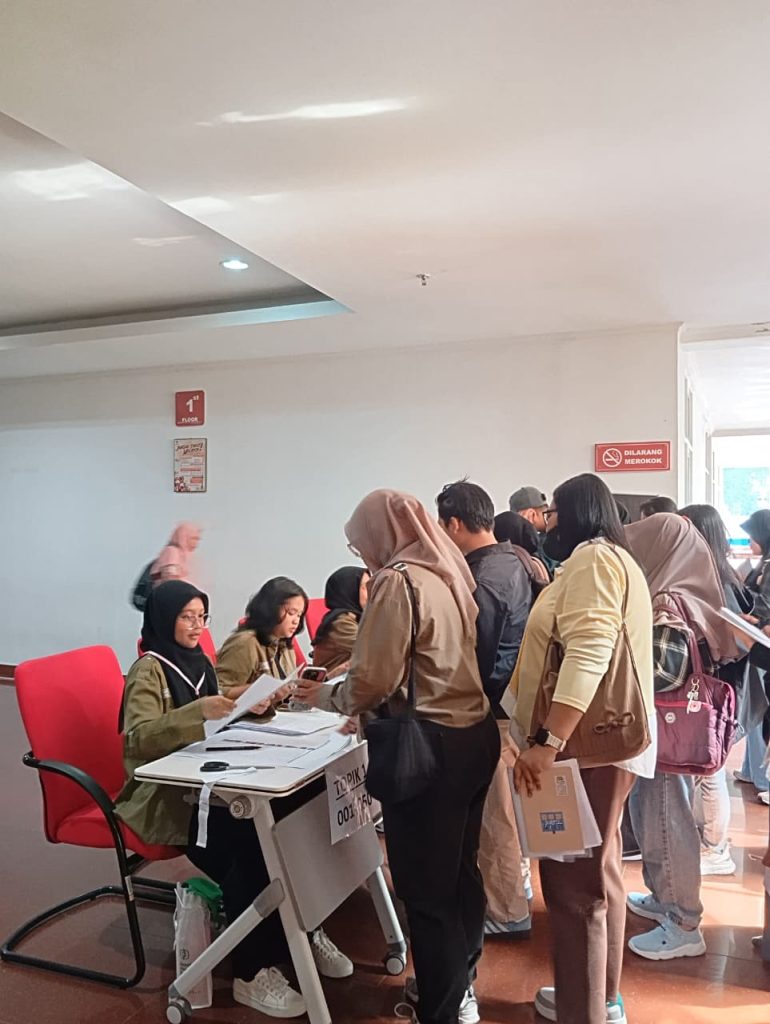
Yogyakarta, October 19, 2025 — The Faculty of Cultural Sciences, Universitas Gadjah Mada (UGM) once again served as the venue for the 102nd Test of Proficiency in Korean (TOPIK). The event, held on Sunday, October 19, 2025, was attended by 219 participants for TOPIK I and 203 participants for TOPIK II. As an internationally recognized language proficiency test, TOPIK serves as an important instrument for learners of the Korean language to assess their mastery and readiness to pursue further studies or careers in Korean-speaking environments.

As part of its commitment to supporting student development, the Korean Language and Culture Study Program, Faculty of Cultural Sciences UGM, provided registration fee support for students who took part in the test. This year, 41 students received Rp100,000 each. This support, offered annually, reflects the program’s ongoing effort to help students continuously sharpen their language proficiency through internationally certified examinations. The initiative is also expected to motivate students to further enhance their academic and professional competencies while strengthening their readiness to face various challenges and opportunities in the world of work.

Through the implementation of TOPIK on campus, the Korean Language and Culture Study Program not only facilitates students in assessing their Korean language proficiency but also seeks to strengthen graduates’ preparedness for the workforce and broaden their opportunities to contribute on a global scale. This initiative represents the program’s continuous commitment to fostering a high-quality and competitive learning environment that remains relevant to global developments.

Photo: Pixabay

Author: Eunike Serafia N.S

Alihwahana Workshop “From Paper to Stage”: Reviving Javanese-Islamic Epics through Performing Arts

News Release Wednesday, 29 October 2025

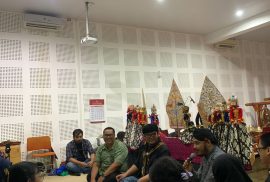
Yogyakarta, October 29, 2025 — The Study Program of Javanese Language, Literature, and Culture, Faculty of Cultural Sciences, Universitas Gadjah Mada (FIB UGM), held an event titled “From Paper to Stage: Alihwahana Workshop on Javanese-Islamic Epics from Literary Texts to Performance.” The workshop served as a learning platform for students to practice the process of alihwahana—the transformation of literary texts into creative and communicative performing arts.

The event opened with I Made Christian Wiranata Rediana as the master of ceremonies, who began the program with a joint prayer for its smooth running. The workshop then continued with an opening remark by Head of the Javanese Language, Literature, and Culture Study Program, Daru Winarti, M.Hum. In her speech, Daru expressed hope that this activity would serve as a space for students to enhance their artistic abilities while realizing that literary texts hold great potential to be brought to life on stage.

The workshop featured several experienced speakers in the fields of art and culture, including Kusnanta Riwus Ginanjar, S.Sn. (actor, playwright, director, and puppeteer of Wayang Golek Menak), Rinal Khaidar Ali, ST., M.Eng. (activist of Wayang Golek Menak), and Dr. Drs. Sudibyo, M.Hum. (Head of the Department of Language and Literature, FIB UGM). The event was moderated by Dr. Rudy Wiratama, lecturer at the Javanese Language, Literature, and Culture Study Program.

In his presentation, Kusnanta Riwus Ginanjar explained the four main characteristics of art, which he considers the foundation of creative processes: seni, senengan, seneb, and serem.

“Art brings joy and entertainment. However, art is also subjective (senengan), can evoke tragedy or fear (seneb), and has a side that can both enlighten and mislead (serem),” he explained.

Kusnanta emphasized that his experiences in theater, puppetry, and film have shaped his understanding of the meaning of alihwahana. According to him, ancient manuscripts should not remain locked away in archives but instead be revived and shared with the public through performing arts such as wayang kulit, wayang golek, or theater.

He further added that the process of alihwahana is not limited to classical manuscripts but can also be applied to modern literary works such as novels or stories. Through such adaptation, students are encouraged to broaden their perspectives on literature as a living source of cultural expression.

The “From Paper to Stage” Workshop was not only a platform for sharing artistic knowledge but also a reflection of FIB UGM’s academic commitment to promoting inclusive and quality education in line with the principles of the Sustainable Development Goals (SDGs). Through this activity, students were trained to think creatively, work collaboratively, and develop awareness of the importance of cultural preservation in the context of sustainability. The effort to bring Javanese manuscripts to life through performing arts represents a tangible implementation of humanistic education that values sustainability, creativity, and local wisdom.

In addition to enriching students’ learning experiences, this workshop also embodies the spirit of preserving local cultural continuity as part of sustainable community development. The synergy between art and education in this activity illustrates how the treasures of Javanese literature can remain relevant in modern society while strengthening Indonesia’s cultural identity—rooted in tradition yet open to innovation.

[Public Relations of FIB UGM, Alma Syahwalani]

1…1617181920…84

Video UGM

[shtmlslider name='shslider_options']
Universitas Gadjah Mada

Faculty of Cultural Sciences
Universitas Gadjah Mada
Jl. Nusantara 1, Bulaksumur Yogyakarta 55281, Indonesia
   fib@ugm.ac.id
   +62 (274) 513096
   +62 (274) 550451

Work Units

  • Office of Journal & Publishing
  • INCULS
  • Information Technology and Database
  • Language Learning Center
  • Library Unit
  • Public Relations
  • Research

Facilities

  • Computer Laboratory
  • Gamelan
  • Guest House
  • Language Library
  • Library
  • Phonetics Library
  • Self Access Unit
  • Student Internet Centre

Importan Links

  • Journal of Humaniora
  • Subscriber Journal
  • Alumni Portal
  • Career
  • Departmens News
  • UGM Streaming

Contacts

  • Academic
  • Administration
  • Dean’s Office
  • Departments / Study Programs
  • Public Relations

© 2024 Faculty of Cultural Sciences Universitas Gadjah Mada

KEBIJAKAN PRIVASI/PRIVACY POLICY

[EN] We use cookies to help our viewer get the best experience on our website. -- [ID] Kami menggunakan cookie untuk membantu pengunjung kami mendapatkan pengalaman terbaik di situs web kami.I Agree / Saya Setuju