
[gview file=”https://fib.ugm.ac.id/wp-content/uploads/sites/10/2015/12/Pengumuman-Lomba-Sastra-dan-Seni-UGM-2015.pdf”]
[gview file=”https://fib.ugm.ac.id/wp-content/uploads/sites/10/2015/12/foto-16.pdf”]
[gview file=”https://fib.ugm.ac.id/wp-content/uploads/sites/10/2015/12/Pengumuman-Lomba-Sastra-dan-Seni-UGM-2015.pdf”]
[gview file=”https://fib.ugm.ac.id/wp-content/uploads/sites/10/2015/12/foto-16.pdf”]
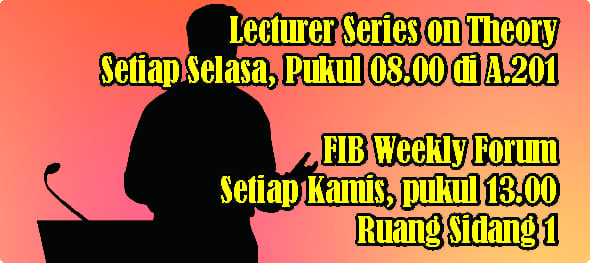
Lecture Series on Theory
Hari/Tanggal: Selasa, 1 Desember 2015
Waktu: 08.00 – 10.00
Ruang: A 201
Pemateri: Dr. Haryatmoko
Topik: Jean Baudrillard: Tatanan Tanda dan Teori Pencitraan
2. Public Lecture
Hari/Tanggal: Rabu, 2 Desember 2015
Waktu: 13.00 – 15.00
Ruang: Ruang Sidang Pimpinan
Pemateri: Dr. Paul Thomas (Indonesian Studies, Monash University)
Topik: Translation Studies
3. Weekly Forum
Hari/Tanggal: Kamis, 3 Desember 2015
Waktu: 13.00 – 15.00
Ruang: Ruang Sidang 1
Pemateri: Dr. Paul Thomas (Indonesian Studies, Monash University)
Topik: Trends in Translation Research.
4. Lecture Series on Theory
Hari/tanggal: Selasa, 8 Desember 2015
Waktu: 08.00 – 10.00
Ruang: Ruang A201
Pemateri: Dr. Haryatmoko
Topik: Anti-Oedipus: Gilles Deleuze Mendobrak Psikoanalisis
5. Public Lecture
Hari/Tanggal: Rabu, 9 Desember 2015
Waktu: 13.00 – 15.00
Ruang: Ruang Sidang Pimpinan
Pemateri: Dr. Paul Thomas (Indonesian Studies, Monash University)
Topik: Translation Studies
6. Weekly Forum
Hari/Tanggal: Kamis, 10 Desember 2015
Waktu: 13.00 – 15.00
Ruang: Ruang Sidang 1
Pemateri: Dr. Paul Thomas (Indonesian Studies, Monash University)
Topik: Trends in Translation Research.
Salah satu “warisan” yang masih melekat pada budaya bangsa Indonesia karena proses kolonialisme adalah nilai-nilai modernitas pada aspek budaya pada sebagaian masyarakat Indonesia. Aspek budaya modern ini, oleh Kolonial Belanda ditanamkan dengan beragam cara. Cara itu antara lain melalui pendidikan, agama, bahasa, teknologi, iklan, jenis pakaian, dan peralatan rumah tangga. Identifikasi modernitas dalam budaya misalnya, dapat ditemukan dalam iklam “Bepergian dengan kereta api”. Iklan ini menegaskan pesan bahwa keluarga modern berpergian dengan kereta api”. Demikian juga pada iklan rokok, dengan mengangkat pesan, “yang tidak merokok, tidak modern”. Pada iklan kaca mata dan arloji juga membawa pesan yang sama, tidak modern, bila tidak memakai kaca mata dan arloji.
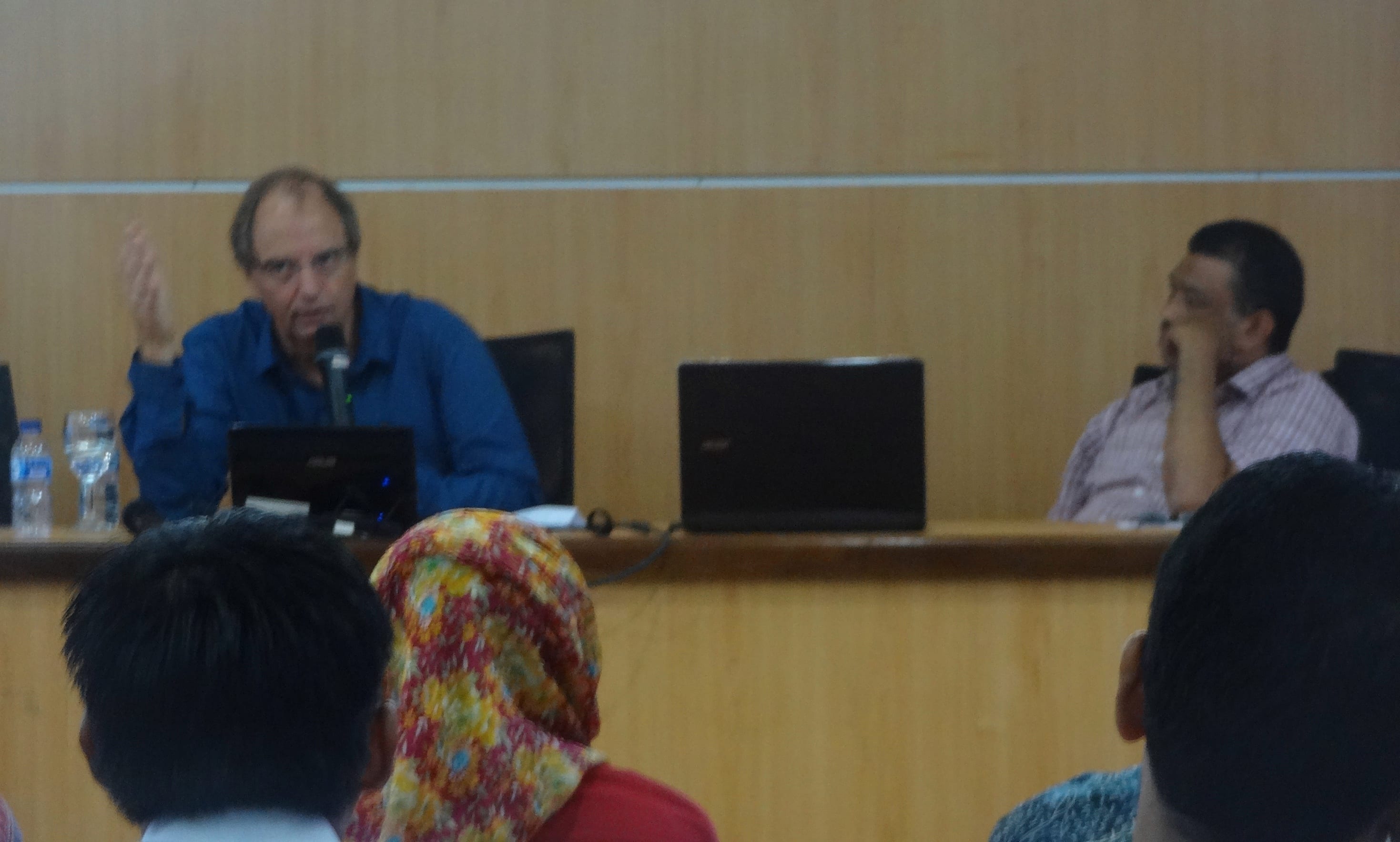
Modern juga bisa dinilai dari kebiasaan sehari-hari warga, misalnya dengan kebiasaan membaca surat kabar dan menghadiri pasar malam yang diterangi listrik. Gambaran itu menjadi sebagian dari ceramah Prof. Dr. Henk Schulte Nordholt dalam kuliah umum bertajuk, “Modernity and Cultural Citizenship in the Late Colonial Indonesia” di ruang Multimedia Fakultas Ilmu Budaya, Universitas Gadjah Mada, Senin, 23 Maret 2015.
Menurut Henk, sejumlah kemajuan dalam bidang pendidikan seperti yang ditunjukan kaum pergerakan seperti Ki hajar Dewantara, HOS, Cokroaminoto, dan kaum pergerakan lainnya, salah satu karena kaum berpendidikan Indonesia yang berhasil mengambil nilai-nilai modernitas yang berkembang di luar Indonesia. Berpikir menjadi negara merdeka dan menjadi negara yang bebas adalah mimpi yang ingin diwujudkan. Meskipun demikian, pendidikan di Indonesia pada era colonial gagal menghasilkan kelas menengah yang kuat dan mengambil peran politik yang dominan, sehingga sebagian orang-orang Indonesia yang berpendidikan hanya mampu berpartisipasi dalam system colonial. Kaum terpelajar banyak yang lebih suka bekerja sebagai pegawai administrasi kantoran dan perkebunan colonial.
Prof. Henk lebih lanjut mengatakan bahwa kebiasaan orang-orang Indonesia, terutama di luar Jawa yang senang dengan pesta menjadi salah satu bagian dari proses transfer modernitas colonial di negara koloni. Kesenangan terhadap hadiah, pakain (fashion) , dan sepatu sebagai bagian dari symbol modernitas pada waktu itu yang mudah diterima oleh masyarakat Indonesia, khususnya di perkotaan.
Dengan realitas itu, menurut Bambang Purwanto yang ikut mendampingi Prof. Henk, Kolonial hanya ditolak secara politik, tetapi diterima dalam konteks budaya. Penerimaan atas sejumlah nilai-nilai modernitas yang berjalan bersamaan dengan proses kolonialisme di Indonesia seperti yang disampaikan oleh Henk, membuktikan hal tersebut. Terkadang kita tidak menyadari bahwa “kebanggaan yang kita bangun lahir dari sesuatu yang kita benci secara politik, namun nilai-nilai budayanya kita ambil sedemikian luas”. Lihatlah nilai-nilai yang dibangun oleh warga negara yang dikategorikan sebagai “indies” di Nusantara. Di dalam keluarga, pasti berkomunikasi menggunakan bahasa Belanda.
Henk Schulte Nordholt adalah Professor of Indonesian History at Leiden University; Head of Research at Royal Netherlands Institute at Southeast Asian and Caribbean Studies (KITLV), Belanda.
“Kembali ke laut”. Inilah paradigma baru yang mendasari beberapa kebijakan pemerintah Indonesia di bawah Presiden Joko Widodo sekarang. Kesadaran akan pentingnya lautan bagi kemakmuran dan kemajuan bangsa Indonesia dapat ditafsirkan sebagai kesadaran pada salah satu akar peradaban yang tumbuh dan berkembang dengan kuat di kawasan Nusantara pada masa lampau. Akar peradaban ini sebagian tersimpan dalam tradisi kelautan yang masih bertahan hingga saat ini, sebagian lagi tersimpan dalam ingatan kolektif (collective memory) masyarakat Indonesia, yang muncul dalam bentuk legenda, mitos, ungkapan, pantun, mantra, doa, dan sebagainya.
Sebagai fakultas yang membangun dan mengembangkan kajian-kajian atas aneka ragam fenomena kebudayaan, Fakultas Ilmu Budaya menetapkan tema “Dunia Maritim Indonesia dalam Perspektif Budaya, Bahasa, dan Sastra” untuk merayakan ulang tahunnya yang ke-69 pada 3 Maret 2015 yang akan datang. Penetapan tema ini sangat sesuai dengan tradisi kajian komparatif dan historis yang telah berakar kuat di Fakultas Ilmu Budaya.
Orientasi baru ke kawasan laut untuk pembangunan di atas tentu telah membuka lahan kajian baru untuk bidang kebudayaan. Kajian kebudayaan dapat diarahkan pada kehidupan sosial nelayan atau masyarakat yang tinggal di kawasan pantai, tetapi juga tradisi, pandangan hidup, kepercayaan, mitos, yang hidup di kalangan mereka.
Berangkat dari tema tersebut, Dies FIB UGM ke-69 tahun ini akan dimeriahkan dengan aneka kegiatan. Rangkaian kegiatan tersebut adalah lomba penulisan artikel untuk mahasiswa S1 hingga S3 FIB, pertandingan olahraga, anjangsana ke beberapa sesepuh Fakultas dan ziarah makam Sawitsari, donor darah, hari keluarga dan ekspresi seni, dan diakhiri dengan puncak acara berupa Rapat Senat Terbuka.
Kegiatan yang mengawali rangkaian acara dies adalah lomba penulisan artikel. Lomba yang bertema sama dengan tema Dies Natalis FIB, yaitu “Dunia Maritim Indonesia dalam Perspektif Budaya, Bahasa, dan Sastra” ini diperuntukkan bagi Mahasiswa S1, S2, dan S3. Kegiatan ini sudah dibuka sejak awal Desember 2014 dan akan ditutup pada Kamis, 12 Februari 2015. Dalam lomba ini peserta dibagi menjadi dua kategori, yakni kategori S1 dan kategori S2/S3. Masing-masing kategori tersebut dibagi dalam dua kelompok, yaitu kelompok Budaya (mencakup Antropologi, Sejarah, Arkeologi, dan Pariwisata); dan kelompok Sastra/Linguistik. Masing-masing kategori dan kelompok tersebut akan meloloskan 3 pemenang sehingga secara keseluruhan diperoleh 12 artikel pemenang lomba. Para pemenang lomba kemudian akan menyampaikan artikel mereka di depan khalayak dalam presentasi pemenang lomba penulisan artikel pada Rabu, 25 Februari 2015.
Adapun pertandingan olahraga merupakan rangkaian acara berikutnya. Sebagai wahana untuk mendekatkan setiap unit (khususnya tenaga pendidik dan tenaga kependidikan) yang ada di lingkungan Fakultas Ilmu Budaya, dipertandingkan cabang olahraga bulutangkis ganda putra dan ganda campuran, serta cabang tenis meja tunggal putra. Ajang yang akan dilaksanakan pada 7 dan 14 Februari 2015 untuk bulu tangkis dan 6 serta 13 Februari untuk tenis meja ini diharapkan dapat memberikan kesempatan kepada warga Fakultas Ilmu Budaya untuk menyalurkan bakat mereka di bidang olahraga.
Selain itu, Fakultas Ilmu Budaya bekerja sama dengan PMI juga akan memberikan sumbangsih kepada masyarakat dengan mengajak civitas akademika Fakultas Ilmu Budaya untuk memperkuat semangat saling menolong dengan menyumbangkan darahnya dalam kegiatan “Donor Darah”. Kegiatan yang akan dilaksanakan Kamis—Jumat, 26—27 Februari 2015 ini dilatarbelakangi oleh kebutuhan darah, terutama di DIY, yang semakin meningkat. Dengan kegiatan ini diharapkan sumbangan Fakultas terhadap kesehatan dapat dirasakan nyata oleh masyakat.
Anjangsana ke rumah beberapa dosen dan karyawan purnatugas serta ziarah ke makam Sawitsari yang merupakan kegiatan rutin juga akan turut memeriahkan agenda dies tahun ini. Acara yang rencananya akan dilaksanakan Rabu, 18 Februari 2015 ini akan diikuti civitas akademika FIB dan anggota Darmawanita FIB. Melalui kegiatan ini diharapkan tali silaturahim dengan Bapak/Ibu dosen dan karyawan sesepuh serta purnatugas yang (pernah) mengabdikan diri di Fakultas Ilmu Budaya tetap terjaga dengan baik serta memori terhadap para sesepuh dan pendiri fakultas juga tetap tertanam.
Sementara itu, salah satu kegiatan yang dinantikan dalam setiap Dies Fakultas adalah hari keluarga, yaitu kegiatan yang menghadirkan seluruh anggota keluarga masing-masing dosen dan karyawan FIB. Tahun ini, dalam acara hari keluarga juga akan digelar ekspresi seni yaitu pementasan Jaranan (dari Jawa Timur). Acara ini akan dilaksanakan Minggu, 1 Maret 2015 di kampus FIB. Acara tersebut akan dibanjiri dengan ratusan doorprize dan para anggota keluarga akan diajak untuk mengikuti aneka lomba keluarga.
Puncak Dies akan dilaksanakan pada Selasa, 3 Maret dalam acara Rapat Senat Terbuka. Dalam rapat ini, Guru Besar FIB yang akan menyampaikan pidato Dies adalah Prof. Dr. Sangidu, M.Hum. dengan judul “Arti Air dan Ikan menurut kode Bahasa, Sastra, dan Budaya”. Di samping itu, Dekan FIB juga akan menyampaikan laporan tahunan. Rapat Senat Terbuka kali ini akan dikemas dengan nuansa budaya dengan menambahkan musik gamelan (karawitan). Gamelan ini akan disajikan oleh Gamelan Mahasiswa Sastra Nusantara (GAMASUTRA) yang mengiringi masuknya Pimpinan Senat Fakultas, Guru Besar, dan Pimpinan Fakultas ke ruang rapat. Seperti semenjak 3 tahun sebelumnya, Rapat Senat akan ditutup dengan penampilan paduan suara dosen dan karyawan FIB. Salah satu lagu yang akan disajikan adalah lagu bertajuk “Tanduk Majeng” (lagu tradisional Madura) yang menceritakan kehidupan nelayan.
Berbicara mengenai kearifan lokal dan identitas bangsa, hal terpenting yang harus dilakukan adalah proses pelestarian. Upaya pemertahanannya menjadi harga mati sebagai bentuk penghargaan atas warisan leluhur. Melalui beberapa kajian dan pendekatan terkait nilai dan budaya, upaya demikian mampu direalisasikan. Bentuk realisasi nyata tersebut diwujudkan melalui Diplomasi Budaya sebagai upaya memperkuat citra Indonesia dalam sudut pandang Internasional. Kegiatan tersebut dilaksanakan melalui forum The 3rd International Seminar of Archaeology, Historiography, and Culture in Malayan yang diselenggarakan oleh Universiti Kebangsaan Malaysia (UKM). Bertempat di Bilik Canselori, acara berlangsung selama dua hari, 23-24 Desember 2014. Acara diisi dengan mendiskusikan sebanyak 74 kertas kerja yang dipresentasikan delegasi dari hampir seluruh Asia Tenggara, yang terdiri dari peneliti, akademisi dan guru besar.
Dalam kesempatan tersebut, dua mahasiswa Prodi Sastra Jawa Jurusan Sastra Nusantara turut serta mempresentasikan kertas kerjanya. Fajar Wijanarko mendiskusikan konsep kekuasan Jawa yang terdapat di dalam teks Ramayana dengan judul kertas kerja Sastra Cetha-asthabrata: Dualisme Rajadharma dan Rajaniti dalam Ramyana. Ia memfokuskan kajian terhadap naratif Asthabrata dan Sastra Cetha di dalam Serat Rama. Mahasiswa yang juga Dimas Sleman 2014 ini menyatakan bahwa dalam historiografi tradisional Indonesia, kekuasaan bukan suatu anggapan teoritis, melainkan realitas. Kekuasaan merupakan daya yang bersifat ketuhanan, yang mampu menghidupkan seluruh alam semesta. “Menakar kekuasaan adalah langkah merefleksi citra bangsa dengan tetap mempertahankan ekologi masyarakat timur yang merekam dua fungsi ganda, yakni antara transenden-vertikal dan imanen-horisontal,” imbuhnya.
Melalui uraian naratif Asthabrata dan Sastra Cetha dalam Serat Rama, lanjut Fajar, figur pemimpin dan citra kepemimpinan madani mampu dikonstruksikan. Hal demikian merupakan catatan warisan kekayaan intelektual masa lampau yang syarat akan nilai. Di dalam Sastra Cetha diantaranya terdapat wejangan Sri Rama kepada Bharata. Ramawijaya menguraikan bahwa kepemimpinan bukanlah sebuah otoritas diri, melainkan keseimbangan. Keseimbangan yang mengedepankan ketenangan. Selanjutnya, melalui Asthabrata dipaparkan delapan dewa sebagai panutan yang merefleksikan kesatuan kosmos, yang membentuk aspek keserasian dalam praktis kepemimpinan. “Delapan dewa tersebut ialah Indra yang bijak dan bestari, Surya yang cermat dalam keuangan, Bayu yang berkepribadian kuat dan berpendirian, Kuwera yang dermawan dan berperikemanusiaan, Baruna yang bersahaja dan menngayomi, Yama yang adil dan tegas, Candra yang mempesona dan memikat dan Brama yang berani dalam bersiasat,” urai Fajar.
Berbeda dengan Fajar, Taufiq Hakim mengangkat tema sastra Melayu. Mahasiswa semester tujuh ini mendiskusikan kertas kerjanya yang berjudul Estetika di dalam Hikayat Malim Deman. Melalui penggalian makna yang ditekankan pada aspek estetik di dalam Hikayat, Taufiq menemukan adanya ajaran tentang kebijaksanaan, kesetiaan, ketakziman, kesadaran dan kerja keras. “Nilai-nilai tersebut merupakan pemerkaya kehidupan rohaniah pembaca hikayat,” tuturnya.
Dari sisi sejarah penceritaan, lanjut Taufiq, dulunya cerita penglipur lara Melayu ini disiarkan secara lisan. Bahasa cerita yang indah merupakan daya tarik pencerita untuk memikat calon pendengar. Begitu juga dengan makna-makna estetik yang terkandung di dalam cerita. Sama halnya ketika tradisi lisan tersebut bertransformasi ke dalam tradisi tulis seperti dalam manuskrip Hikayat Malim Deman. Selain menggunakan bahasa yang indah, isinya pun tak lepas dari makna-makna yang bernilai. Si Empunya cerita menuliskan refleksi keindahan di sekitarnya ke dalam Hikayat. “Makna-makna estetik yang terdapat di dalam hikayat ini merupakan cerminan bahwa dulunya bangsa Melayu mempunyai peradaban yang luhur,” pungkas Taufiq. [Jurusan Sastra Nusantara]
