• About UGM
  • Academic Portal
  • IT Center
  • Library
  • Research
  • Webmail
  • Informasi Publik
  • Indonesia
    • English
Universitas Gadjah Mada Fakultas Ilmu Budaya
Universitas Gadjah Mada
  • Beranda
  • Profil
    • Sejarah
    • Visi & Misi
    • Struktur Organisasi
    • Manajemen
    • Tenaga Kependidikan
    • Tenaga Pendidik
  • Akademik
    • Kalender Akademik
    • Program Sarjana
      • Antropologi Budaya
      • Arkeologi
      • Sejarah
      • Pariwisata
      • Bahasa dan Kebudayaan Korea
      • Bahasa dan Sastra Indonesia
      • Sastra Inggris
      • Sastra Arab
      • Bahasa dan Kebudayaan Jepang
      • Bahasa, Sastra, dan Budaya Jawa
      • Bahasa dan Sastra Prancis
    • Program Master/S2
      • Magister Antropologi
      • Magister Arkeologi
      • Magister Sejarah
      • Magister Sastra
      • Magister Linguistik
      • Magister Pengkajian Amerika
      • Magister Kajian Budaya Timur Tengah
    • Program Doktor/S3
      • Antropologi
      • Ilmu-ilmu Humaniora
      • Pengkajian Amerika
    • Beasiswa
    • Layanan Mahasiswa
  • KPPM
    • Info Penelitian
    • Skema Penelitian FIB UGM Tahun 2026
    • Pengabdian Masyarakat
    • Kerjasama Luar Negeri
    • Kerjasama Dalam Negeri
  • Organisasi Mahasiswa
    • Lembaga Eksekutif Mahasiswa
    • Badan Semi Otonom
      • KAPALASASTRA
      • Persekutuan Mahasiswa Kristen
      • LINCAK
      • Saskine
      • Keluarga Mahasiswa Katolik
      • Dian Budaya
      • Sastra Kanuragan (Sasgan)
      • Keluarga Muslim Ilmu Budaya (KMIB)
      • BSO RAMPOE UGM
      • Bejo Mulyo
    • Himpunan Mahasiswa Program Studi (HMPS)
      • Badan Keluarga Mahasiswa Sejarah
      • Himpunan Mahasiswa Arkeologi
      • Himpunan Mahasiswa Bahasa dan Kebudayaan Korea
      • Himpunan Mahasiswa Pariwisata
      • Himpunan Mahasiswa Bahasa dan Kebudayaan Jepang
      • Himpunan Mahasiswa Bahasa dan Sastra Prancis
      • Ikatan Mahasiswa Sastra Arab
      • Ikatan Mahasiswa Jurusan Sastra Inggris
      • Keluarga Mahasiswa Antropologi Budaya
      • Keluarga Mahasiswa Bahasa dan Sastra Indonesia
      • Keluarga Mahasiswa Sastra Nusantara
  • Pendaftaran
  • Beranda
  • HEADLINE
  • hal. 142
Arsip:

HEADLINE

Call for Papers MO3: Museum of our Own, In Search of a Local Museology for Asia

AGENDAHEADLINENews Release Senin, 20 Oktober 2014

Department of Archaeology Universitas Gadjah Mada
Yogyakarta, 18th-20th November 2014

Background

Over the last three decades there has been a rise in museum criticism. What were common practices in museology are now being challenged; especially the ways museums curate their collections, or work with their different stakeholders. Under the pressure of such critique, museum practices have changed significantly worldwide. Museums in the so-called West, for example, have been attempting to ‘decolonize’ their practices, if only partial and incomplete, confronting their colonial roots, while trying to develop new methodologies deemed more suitable for collections and display in the post colonial present. Similarly methodological shifts have been happening in areas of museum conservation and education.

Co-terminus with this rethinking of museums in the West has been similar developments in museology in so-called non-traditional museum spaces, including, and perhaps, especially in Asia, with significant rise in the number of museums as well as an increase in museum training programmes. Despite these sea changes, and the long history of established museum tradition in many non-western societies – in many instances since the 19th century – these local museums remain marginal institutions. In fact, the word ‘museum’ still remains uncommon within the cultural vocabulary of many such societies. Recently academics have tried to identify non-western museological models, where, for example, preservation practices that parallel those in conventional museums can be found. Still these models have not developed sufficiently. Nor are they sufficiently valorized and embedded within museum practice to have the desired effect of improving the status of museums in and the value of museums to these societies.

In response to the need to strengthen museum practice in several of these countries, numerous museum professionals travel to Europe and North America to study museology. This is complemented by a growing number of locally based museology training programmes in Asia. In Indonesia, for example, formal training programs in the field of museology were recently developed in a number of Universities. The archaeology departments of the Universitas Gadjah Mada and Universitas Indonesia have museology training programs at both the Bachelors and the Masters levels. These programmes were developed with the assistance of institutions in the West. But have these local based programs worked? Or, do those who return with ‘western’ museology training really impact the local situation enough?

Five years into the museology education programs Universitas Gadjah Mada, it is now timely to reflect on the state of museums and museum education in Indonesia and Asia in general. More than a critical assessment of the programs themselves, we want to ask questions about how to rethink museological practices that have been already defined in the West for our own museums. We now have museology training programs but do they sufficiently serve our needs? Is the limited valorization of local museums based solely in the fact that they are ‘innately’ western institutions or are there other, more practical reasons for their shortcomings? How do we further develop a training program that responds to local needs? What histories of museums should be mobilized to inform a local museum practice? What, we want to ask, is a museum of our own? The conference will be divided in a number of interrelated sessions addressing different topics in in museology, both at concept and practical levels.

Sila kunjungi:

http://arkeologi.fib.ugm.ac.id/main/2014/05/call-for-papers/

https://www.facebook.com/events/1473094699629048/?notif_t=plan_user_joinedhttps://www.facebook.com/events/1473094699629048/?notif_t=plan_user_joined

Leaflet 1

Leaflet 2

MO3 – APPLICATION FORM_seminar logo

Seminar TOR Indo Participant

Lecture Series on Theory FIB UGM

AGENDAHEADLINENews Release Senin, 13 Oktober 2014

Senin, 30 Mei 2016 ; pukul 13.00 – 15.00
Ruang Sidang 1 Dekanat FIB UGM

Pembicara: Lyn Parker
University of Western Australia

Topik: “Understanding Social, Economic and Health Vulnerabilities in Indonesia”

This talk will outline a large, proposed inter-disciplinary research project which aims to understand social, economic and health vulnerabilities in Indonesia. Although Indonesia is developing rapidly, around half the population is still clustered around the poverty line, contributing to their vulnerability. Using a common framework of the “life course” in eight field sites across Indonesia, the team will conduct deep ethnographic research as well as quantitative research to explore the risks that people face in their everyday life and how they can be mitigated to avoid bad outcomes. The project will a.) identify key vulnerable groups and the factors and conditions contributing to their vulnerability; b.) investigate the effectiveness of social networks in lessening risk, focusing on people’s agency, resourcefulness and adaptability; c.) assess the effectiveness of state and community welfare programs in reducing vulnerability; and d.) pinpoint strategies for reducing vulnerabilities in the future. The findings will show how vulnerable citizens in Indonesia can be made more secure, helping to build a more stable and prosperous country.

Bio-note: Lyn Parker is an anthropologist and Professor in Asian Studies, in the School of Social Science, University of Western Australia. She has published several books and many articles on Indonesia, including Adolescents in Contemporary Indonesia, with Pam Nilan (Routledge, 2013) and From Subjects to Citizens: Balinese Villagers in the Indonesian Nation-State. NIAS, 2003).

Call For Participants: A Day International Conference, Negotiation of Discourses in Europe

AGENDAHEADLINENews Release Kamis, 9 Oktober 2014

The multicultural era is an old global phenomenon which cannot be denied by countries on different continents. The exchange of ideas and cultures, as well as travel of people from one place to another, is not a new experience for people in the world. It can be traced to the historical experiences of people travelling from France to Nusantara in the 16th century, or those from Java travelling to Suriname 100 years ago. In term of ideas and cultures, the word “original” may be difficult to prove, because it is not easy to show that originality. Europe is a continent that has witnessed this phenomenon. The European people have travelled to many different continents since the middle ages, initially through colonialism but later for other purposes. They brought their different cultural products and symbolic capitals to all parts of the world. People from outside of Europe, such as Asia, Africa and Latin America, have also been travelling to Europe, to marry, seek refuge or employment, and other such reasons. The movement of people from other countries to Europe has introduced new discourses, because these people come from different cultural, ethnic, and religious backgrounds. They have their own languages, fashion systems, foods and traditions, but they must speak European languages, deal with new climates, new rules, and new values; this meeting of the old and new may sometimes create conflict. How these immigrants have to negotiate in this different environment, and how the European peoples who have long inhabited the continent also have to deal with these different, outside cultures, is an interesting subject to be explored. It leads to questions such as: How is the process of negotiation done? Which actors are involved in the negotiation? What instruments do they use in the negotiation? What challenges do different groups face during the negotiation?

This international conference, titled Negotiation of Discourses in Europe, is organised by French Department of the Faculty of Cultural Sciences, Universitas Gadjah Mada, Yogyakarta. This conference invites scholars from many different disciplines in the social sciences and humanities to participate as presenters or in the audience

Lecture Series On Theory & FIB Weekly Forum

AGENDAHEADLINE Selasa, 7 Oktober 2014

Lecture Series on Theory FIB UGM

Kamis, 09 Oktober 2014
Jam 08.00-09.45
di Ruang Sidang 1 FIB UGM
Pembicara :
Dr. Leonard Epafras
Tentang :
“Mengenal lebih dekat Mikhail Bakhtin”

Abstrak:
Kuliah teori ini akan memperkenalkan filsuf dan kritikus sastra Rusia yang tidak banyak dikenal, Mikhail Bakhtin (1895-1975). Kuliah akan mengulas gagasan-gagasannya seperti dialogisme, chronotope, heteroglosia, dll., serta sumbangsihnya bagi teori sastra, sejarah, kajian budaya, kajian agama, dan filsafat. Kuliah akan diakhiri dengan contoh pemanfaatan teori Bakhtin dalam kajian sejarah terhadap sebuah teks klasik Sufi-Yahudi dari abad ke-13 Mesir.

FIB Weekly Forum

Kamis, 09 Oktober 2014
Ruang Sidang 1 FIB UGM – Pukul 13.00
Problem Harmoni Sosial dalam Hubungan Antar Beragama
Pemateri:
Ahmad Munjid, Ph.D.

“Cultural Dialogue Through Gamelan”: National University of Singapore (Nus) dan Prasasti (Pradangga Sastra Inggris)

HEADLINENews Release Kamis, 2 Oktober 2014

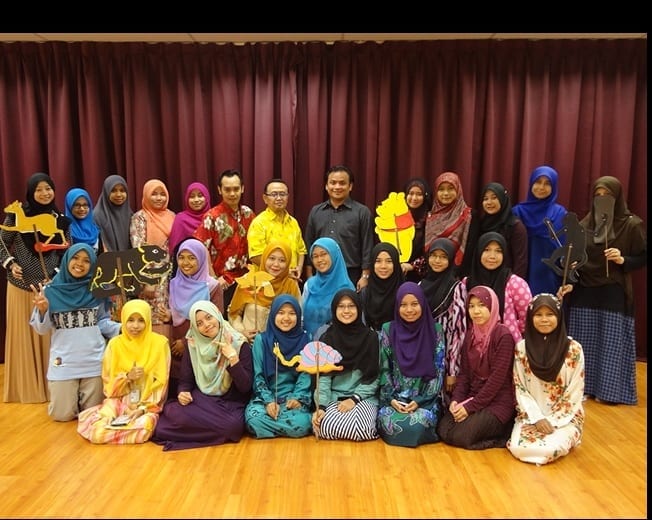
Pertunjukan Wayang Kulit berbahasa Inggris dengan dalang Ki Eddy Pursubaryanto (staf pengajar Jurusan Sastra Inggris FIB UGM) menjadi puncak acara bertajuk “Cultural Dialogue Through Gamelan”. Cerita yang dibawakan adalah “The Return of Dewi Sri”, sebuah cerita dalam mitos agrikultur tentang Dewi Sri yang dipercaya sebagai Dewi Kesuburan dan Dewi Padi. Para penabuh gamelan merupakan gabungan antara mahasiswa NUS dan PRASASTI (Pradangga Sastra Inggris). Acara ini merupakan kolaborasi antara 12 mahasiswa NUS yang dipimpin oleh Miguel Escobar Varela dan PRASASTI – kelompok gamelan mahasiswa Jurusan Sastra Inggris FIB-UGM. Acara tersebut berlangsung pada hari Kamis, 25 September 2014 malam bertempat di Balai Budaya Minomartani, Yogyakarta. Pada sore hari selama 2 jam, sebelum pertunjukan Wayang Kulit, kedua kelompok mahasiswa mengadakan workshop gamelan khusus untuk mengiringi pertunjukan Wayang Kulit pendek. Workshop dipandu oleh Nanang Karbito, S.Sn. dan Eddy Pursubaryanto.

Miguel Escobar (alumnus INCULS FIB-UGM) mengatakan bahwa kegiatan mahasiswa NUS selama lima hari tersebut merupakan kegiatan wajib selama libur tengah semester (mid-semester break) dari matakuliah “Theatre and the World” yang juga dia ampu. Pada semester ini kota Yogyakarta dipilih sebagai tempat field-trip mereka. Selain menjadi tamu Fakultas Ilmu Budaya UGM untuk workshop gamelan dan Wayang Kulit, mereka juga menonton Wayang Kulit di Pusat Kusnadi Hardjasoemantri pada hari Jumat 26 September 2014 serta mengunjungi beberapa tempat yang terkait dengan World Theatre. Pengalaman di Yogyakarta diharapkan dapat memberi pendalaman tentang tradisi teater Asia terutama Wayang Kulit.

Rahmawan Jatmiko (koordinator program) acara ini mengatakan bahwa acara ini dapat meningkatkan kerjasama yang berkaitan dengan kegiatan seni dan menjadi sarana untuk meningkatkan cross-cultural understanding di antara para mahasiswa dari dua kultur yang berbeda. Selain itu, kegiatan ini sangat bermanfaat untuk mempererat kerjasama antar universitas yang tergabung dalam ASEAN University Network (AUN). Dikatakan selanjutnya, kegiatan ini dapat lebih memperkenalkan daya tarik FIB-UGM kepada pihak lain di luar negeri sehingga mereka tertarik untuk berkunjung lagi ke UGM atau bahkan belajar dan melakukan kegiatan kolaborasi akademik yang lain. Ditambahkan oleh Rahmawan, pertemuan semacam ini akan memunculkan kerjasama lain yang dapat dilakukan oleh NUS dan FIB-UGM.

Links:


1…140141142143144…150

Rilis Berita

  • Lulus dalam 3,5 Tahun: Strategi Tiga Mahasiswa Prodi Bahasa, Sastra, dan Budaya Jawa UGM dalam Menyelesaikan Studinya
  • Ziarah Makam Sawitsari, Agenda Rutinan FIB UGM Menyambut Dies Natalis ke-80
  • Prof. Suhandano Soroti Tantangan Studi Bahasa di Era Digital pada Dies Natalis ke-80 FIB UGM
  • FIB UGM Berikan Penghargaan Mahasiswa Berprestasi pada Dies Natalis ke-80
  • Mahasiswa FIB UGM Ciptakan Buku Pop-Up “8 Dekade Membangun Peradaban” untuk Visualisasikan Sejarah Fakultas

Arsip Berita

Video UGM

[shtmlslider name='shslider_options']
Universitas Gadjah Mada

Fakultas Ilmu Budaya
Universitas Gadjah Mada
Jl. Nusantara 1, Bulaksumur Yogyakarta 55281, Indonesia
   fib@ugm.ac.id
   +62 (274) 513096
   +62 (274) 550451

Unit Kerja

  • Pusat Bahasa
  • INCULS
  • Unit Jaminan Mutu
  • Unit Penelitian & Publikasi
  • Unit Humas & Kerjasama
  • Unit Pengabdian kepada Masyarakat & Alumni
  • Biro Jurnal & Penerbitan
  • Teknologi Informasi dan Pangkalan Data
  • Pusaka Jawa

Fasilitas

  • Perpustakaan
  • Laboratorium Bahasa
  • Laboratorium Komputer
  • Laboratorium Fonetik
  • Student Internet Centre
  • Self Access Unit
  • Gamelan
  • Guest House

Informasi Publik

  • Daftar Informasi Publik
  • Prosedur Permohonan Informasi Publik
  • Daftar Informasi Tersedia Setiap Saat
  • Daftar Informasi Wajib Berkala

Kontak

  • Akademik
  • Dekanat
  • Humas
  • Jurusan / Program Studi

© 2024 Fakultas Ilmu Budaya Universitas Gadjah Mada

KEBIJAKAN PRIVASI/PRIVACY POLICY

[EN] We use cookies to help our viewer get the best experience on our website. -- [ID] Kami menggunakan cookie untuk membantu pengunjung kami mendapatkan pengalaman terbaik di situs web kami.I Agree / Saya Setuju