
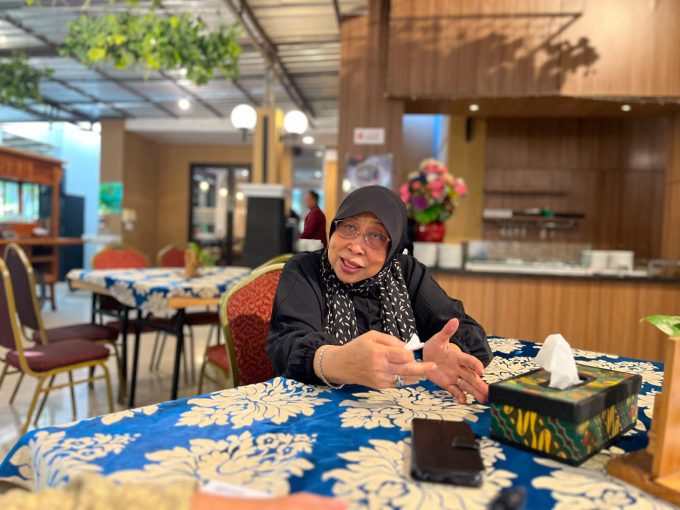
On Friday (June 5, 2026), we had the opportunity to interview Professor Emerita of Universiti Kebangsaan Malaysia, Prof. Dr. Noriah Mohamed, who is also an alumna of the Javanese Language, Literature, and Culture Study Program (formerly Javanese Literature) at Universitas Gadjah Mada. Interestingly, despite being from Malaysia, she possesses a strong affinity for Javanese culture.
In the interview, she shared that she is still deeply connected to her Javanese heritage. “My father’s parents were Javanese. My grandfather was from Solo, while my grandmother was from Kebumen,” she shared. Her interest in Javanese culture also grew from childhood experiences. “When I was a child, my grandfather enjoyed singing Javanese songs (nembang), and that is where my interest began to grow.”
In short, she later enrolled in the Javanese Literature Study Program at Universitas Gadjah Mada and wrote her undergraduate thesis on the Javanese people in Selangor. Her interest in Javanese culture did not stop there. She also enjoys various Javanese literary works, such as the tales of Damarwulan and Panji Jayengtilam.
Her interest in Javanese literature later led her to a manuscript titled Serat Jayengbaya. The term Jayengbaya itself is a combination of the words jaya + ing + baya, which means ‘triumphant over danger.’ There is something unique in this text: Ranggawarsita, as the author, uses hypothetical forms, such as “if I were…”, covering various states of being, ranging from professions and animals to God. She later developed her study of the text into her Master’s thesis in Literature at Universitas Gadjah Mada, which has now been published.
During the conversation, she assessed that Javanese culture today is experiencing a decline, both in Malaysia and in Indonesia. This condition, according to her, is a shared challenge to revive cultural values that are beginning to erode. Therefore, she emphasized the importance of the younger generation rediscovering their identity. “We need to recognize ourselves, to know who we are. Do not become someone else. Furthermore, culture should not only be studied but also practiced and passed down,” she explained.
Author : Haryo Untoro
