
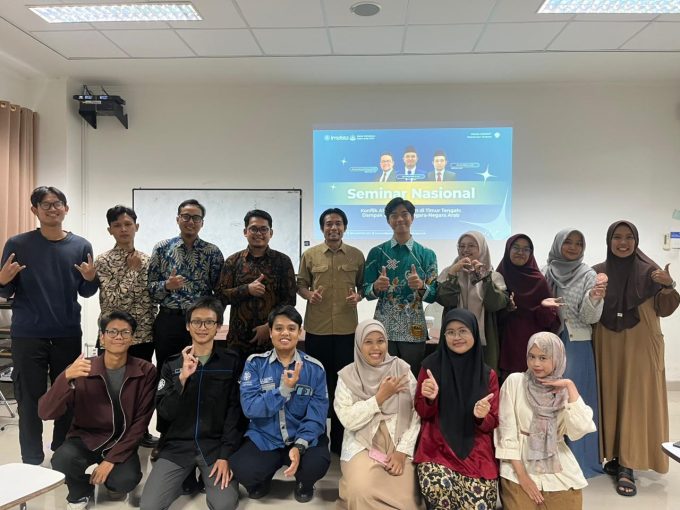
Yogyakarta, May 13, 2026 – The Middle Eastern Cultural Studies Master’s Program and the Arabic Literature Study Program at Universitas Gadjah Mada (UGM) held a national seminar. The seminar was titled “The US-Israel vs. Iran Conflict in the Middle East: Impact and Attitudes of Arab States.” It took place in the Soegondo Building, rooms 407-409, and featured three distinguished speakers: Agus Hidayatullah, Lc., M.A., Moh. Nur Salim, Lc., M.Sc. from the Indonesian Embassy in Cairo, Egypt, and Nikmatur Rahman Chaniago, S.S., M.MECASt. from the Indonesian Embassy in Tehran, Iran. The event was conducted in a hybrid format. Nur Salim attended in person, while the other two speakers joined online. The seminar began with remarks from KBTT professor Prof. Dr. Sangidu, M.Hum., and from the head of the Department of Intercultural Studies, Prof. Dr. Aris Munandar, M.Hum.
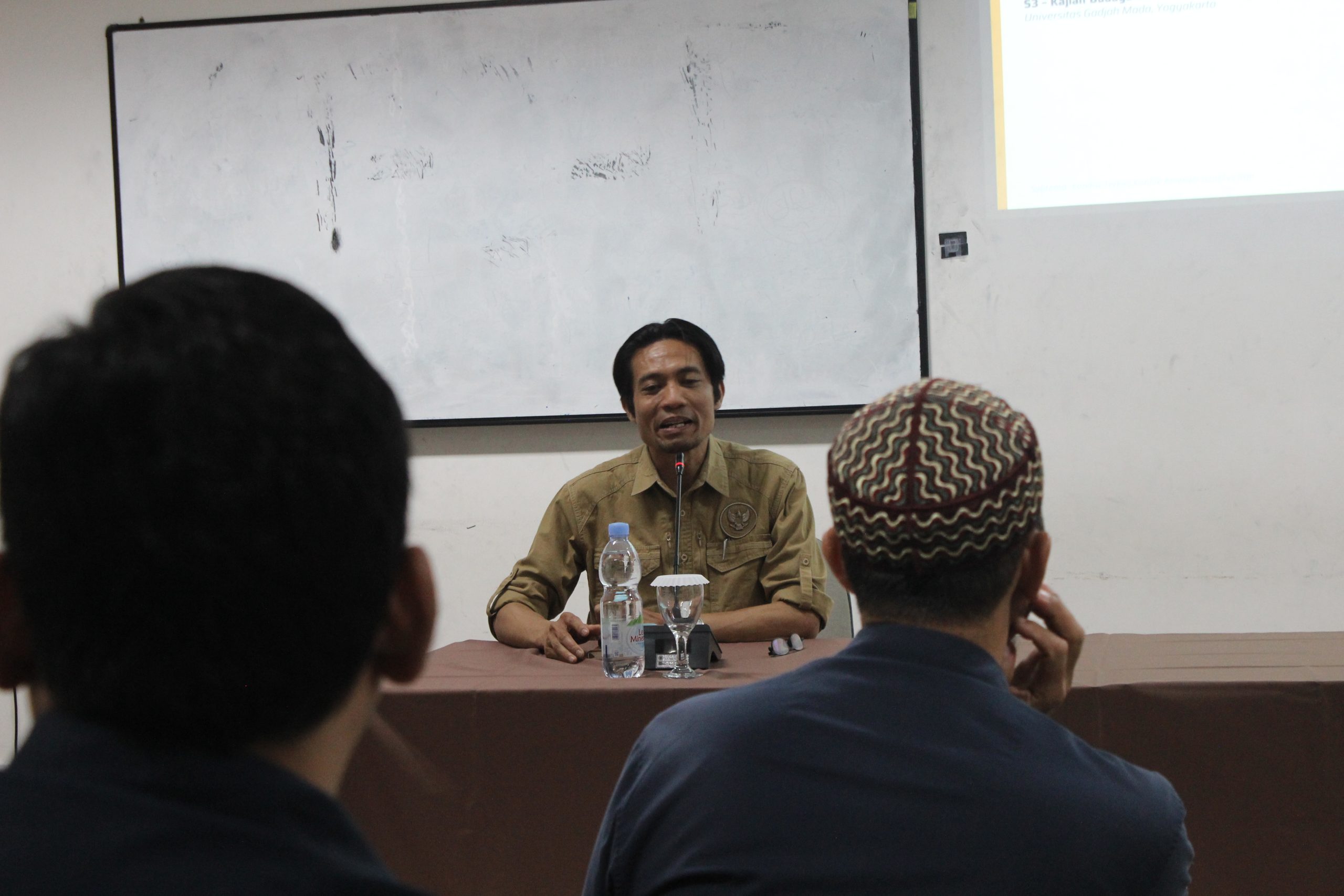
The first session was delivered by Moh. Nur Salim, Lc., M.Sc., who emphasized that the US-Israel vs. Iran conflict is not simply a battle between two camps, but a global issue with extraordinary impact. He also stated that China has great potential to mediate peace between the US, Israel, and Iran. Following Nur Salim, Agus Hidayatullah, Lc., M.A., presented the next session. He discussed the impact of the war on Egypt’s economy and diplomacy, while its impact on Indonesia included soaring energy prices and the safety of thousands of Indonesian citizens in the Middle East. As a member of the Indonesian Embassy in Cairo, he explained that the Indonesian Embassy plays a role in repatriating Indonesian citizens from various affected countries to Indonesia. Concluding the speaker sessions, Nikmatur Rahman Chaniago, S.S., M.MECASt., stated that the people of Tehran face a sociopolitical reality far more complex than media narratives suggest, demonstrating resilience through long-standing political stoicism. The Indonesian Embassy in Tehran’s role amidst geopolitical isolation is to protect Indonesian citizens by handling cases involving detained ship crew members and facilitating humanitarian aid.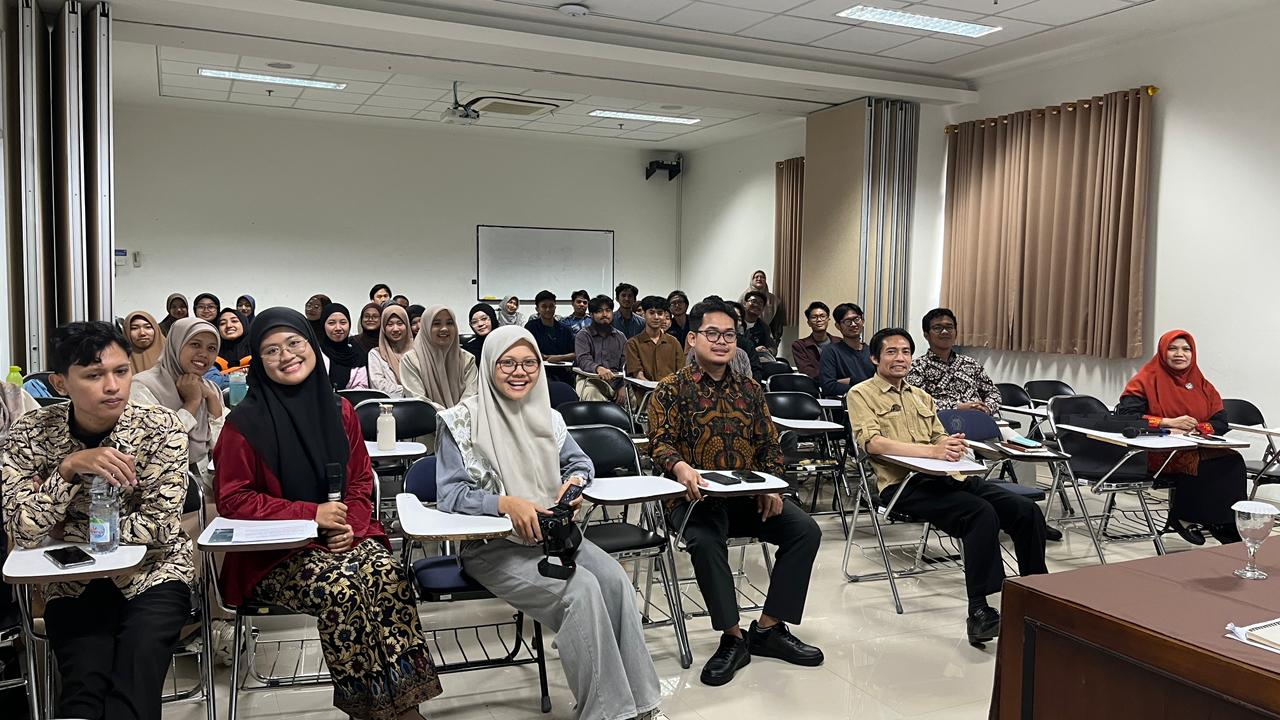
The event concluded with a closing statement from the moderator, a souvenir presentation by the Head of the Master’s Program in Middle Eastern Cultural Studies, Dr. Mahmudah, M.Hum., and a group photo. The main takeaway for Middle Eastern Cultural Studies students is to ground academic analysis in humanitarian perspectives, emphasizing real-life experiences over purely geopolitical narratives. This approach ensures our understanding goes deeper than surface-level conflict.
Penulis: Jesisca Amanda Florantika
