
What happens if technology continues to advance regardless of its users’ age?
Undeniably, technology has now permeated various aspects of human life. The rapid expansion of technology, supported by massive infrastructure development for networks and the internet, has made adapting to technology increasingly commonplace. Looking at our own country, it is no longer unusual for children and the elderly to be familiar with smartphones or devices in their daily lives. Technological innovation, which shows no signs of stopping, forces us to keep up with the latest updates regardless of age. This is increasingly evident in the adoption of technology and apps for accessing public services like hospitals. While systems for booking appointments and recording medical records in real-time offer convenience, transparency, and comfort, they often overlook one crucial aspect: the users themselves. Hospital visitors or patients, predominantly the elderly, are forced to adapt without consideration for their specific conditions.
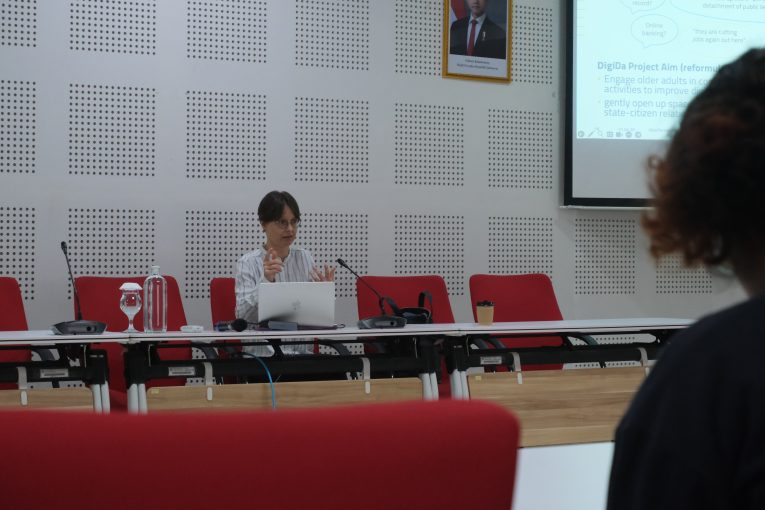
The digital divide—the disparity in access to and adaptation of technology—is often understood as a limitation related to gender, age, or geopolitical factors, and now requires re-examination. Socially, the adoption of technology and digitalization does not always align with the development of supporting infrastructure, particularly among the elderly. This served as the catalyst for the Visiting Lecture “Ageing and Digital Welfare on the German-Polish Border,” held on April 1, 2026. The lecture, delivered by Dr. Katharina Schneider from the Katholische Hochschule für Sozialwesen Berlin, Germany, shared preliminary findings from field research in a retirement community regarding the responses of retirees or the elderly to digitalization efforts in their lives. The process of digitizing elderly health data, intended to facilitate access and monitoring for the government, private sector, or family members in caregiving, is not without challenges. The reluctance of the elderly to participate in digitization efforts is closely tied to social support and conditions; this is a particular issue in Germany, where many elderly individuals without family must navigate technological adaptation on their own.
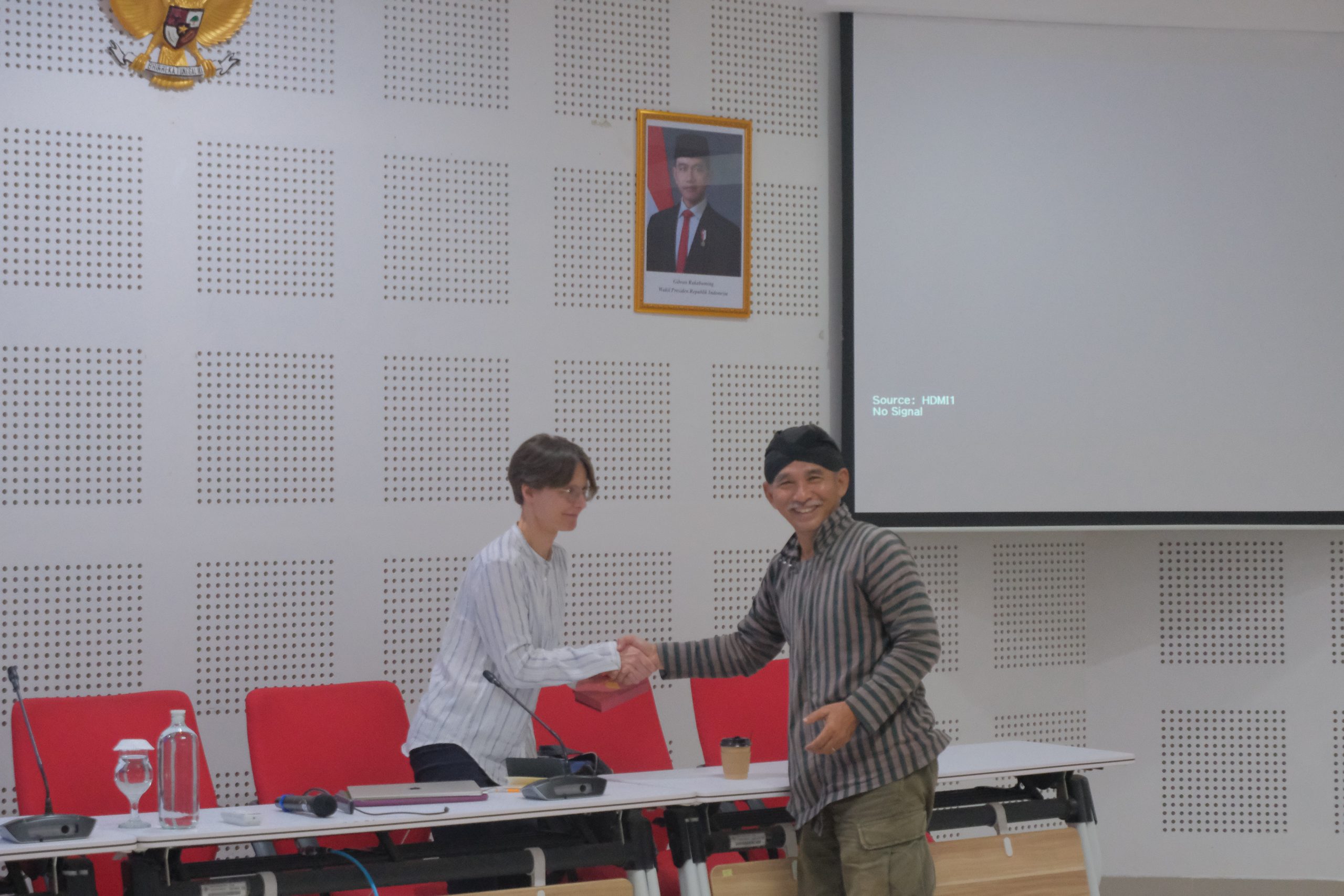
Through her observations, Katharina Schneider noted that the conditions of elderly care in Germany and in developing countries in Southeast Asia are starkly contrasting. The willingness to use gadgets or smartphones to support daily life is voluntary, whereas resistance is more commonly encountered among German seniors. Several questions regarding the ideas and methods for achieving the digital welfare envisioned by the state versus the reality on the ground sparked discussion and reflection on future care practices, particularly in developing countries like Indonesia. To what extent can the care provided to our parents and grandparents ensure their well-being in old age?
Author: Okky Chandra Baskoro (Dept. of Anthropology)
