
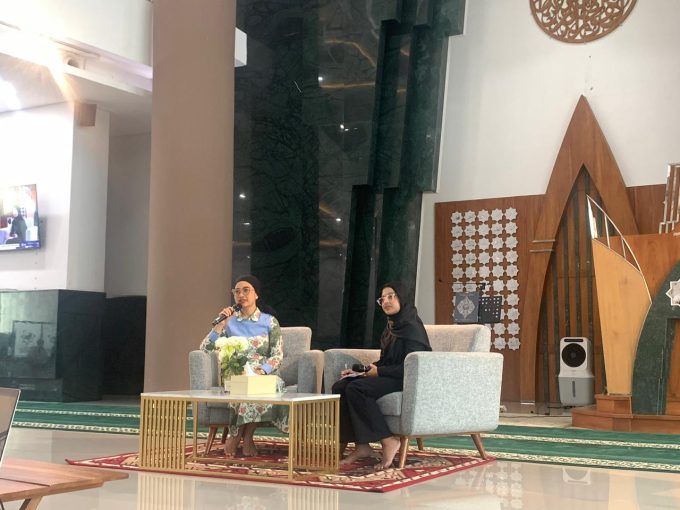
Yogyakarta, February 26, 2026 – Indonesian novelist and sociologist Okky Madasari, Ph.D., delivered a critical reflection titled “The Representation of Marginalized Voices: Who Speaks for Them?” at a public discussion forum in Yogyakarta. In her presentation, she encouraged participants to question who truly speaks on behalf of marginalized communities.
Okky elaborated on various forms of marginalization occurring across different spheres of life, including economic, political, cultural, identity-based, and even global political marginalization. According to her, marginalized groups often face not only limited access to resources but also the loss of space to represent themselves within public discourse.
“Representation that does not stem from empathy and solidarity will continue to exclude and sideline marginalized communities,” she emphasized. She warned that without critical awareness, voices claiming to represent marginalized groups may, in fact, reinforce unequal power relations and perpetuate social exclusion.
In the context of Ramadan, Okky also underscored the importance of social piety. “Ramadan is about social piety. A mosque is not only a place of worship, but also a space for dialogue and critical education,” she stated. She encouraged society to transform religious spaces into arenas for fostering empathy, solidarity, and advocacy for vulnerable groups.
The discussion is closely aligned with the Sustainable Development Goals (SDGs), particularly the commitment to reducing inequalities (SDG 10) by strengthening the participation and representation of vulnerable groups in decision-making processes. Furthermore, the promotion of critical dialogue, social justice, and inclusive public spaces supports the goal of peace, justice, and strong institutions (SDG 16). Efforts to build collective awareness and social solidarity also contribute to the creation of inclusive and sustainable communities, in line with SDG 11.
Through this reflection, Okky Madasari reaffirmed that advocating for marginalized voices is not merely about providing them with speaking space, but about ensuring empathy, solidarity, and structural transformation so that they can become full subjects in social and political life.
[Public Reation of FIB UGM, Alma Syahwalani]
