• About UGM
  • Academic Portal
  • IT Center
  • Library
  • Research
  • Webmail
  • Informasi Publik
  • English
    • Indonesia
Universitas Gadjah Mada Faculty of Cultural Sciences
Universitas Gadjah Mada
  • Home
  • Profile
    • History
    • Vision and Mission
    • Organizational structure
    • Administration
    • Staff
    • Faculty Members
  • Academic
    • Academic Calendar
    • Undergraduate Programs
      • Bachelor of Cultural Antrophology
      • Bachelor in Archaeolagy
      • Bachelor in History
      • Bachelor in Tourism
      • Bochetor in Korean Language and Culture
      • Bachelor in Indonesian Language and Culture
      • Bachelor in English
      • Bachelor in Arabic
      • Bachelor in Japanese Language and Culture
      • Bachelor in Javanese Language, Literature and Culture
      • Bachelor in French language and literature
    • Graduate Programs
      • Master in Antrophology
      • Master in ArchaeoIogy
      • Master in History
      • Master in Linguistics
      • Master in Literature
      • Master In American Studies
      • Master in Middle Eastern Cultural Studies
    • Post-Graduate Programs / S3
      • Doctor in Antropology
      • Doctor in American Studies
      • Doctor in Humanities
    • Student Service
  • KPPM
    • Research Information
    • Scientific / Academic Publications
    • Community Service
    • International Cooperation
    • Domestic Cooperation
  • Student Organizations
    • Student Executive Council
    • Semi-Autonomous Organizations
      • KAPALASASTRA
      • Christian Student Alliance
      • LINCAK
      • Saskine
      • Catholic Student Family
      • Dian Budaya
      • Sastra Kanuragan (sasgan)
      • Family of Muslim Cultural Sciences Students (KMIB)
      • Bejo Mulyo
    • Autonomous Organizations
      • Family of Anthropology Students (KEMANT)
      • English Department Student Association
      • Tourism Students Association (HIMAPA)
      • Family of Indonesian Literature Students (KMSI)
      • West Asian Literature Student Association (IMABA)
      • Association of Korean-Language Students (HIMAHARA)
      • Family of Regional Indonesian Literatures Students (KAMASUTRA)
      • The Family Body of History Students (BKMS)
      • The French Literature Students Association (HMSP)
      • Family of Anthropology Students
      • Japanese Student Association (HIMAJE)
  • Admission
    • Student Evaluation
  • Home
  • SDGs 5: Kesetaraan Gender
  • (Page 2)
Arsip:

SDGs 5: Kesetaraan Gender

The Indonesia Chss Hub Team, Represented by UGM Leadership, Contributes to the Southeast Asian Cinema Dialogue at the AAS 2026 Forum

News Release Monday, 26 October 2026

Lahore, Pakistan — Friday, 9 October 2026 The participation of Universitas Gadjah Mada (UGM) as the leader of the Indonesia Hub in the project Cultivating the Humanities and Social Sciences and Supporting Under-Represented Scholars of Asia (CHSS) 2026 continued through the engagement of UGM academics in the international forum of the Association for Asian Studies (AAS) held on 25–27 September 2026. This involvement underscores UGM’s ongoing commitment to advancing equality in global academic exchange by ensuring that scholars from Southeast Asia have a meaningful voice in international scholarly conversations.

The AAS is an academic organisation that supports the development of Asian studies and brings together academics, researchers, and educators from various disciplines. The event was also attended by the President of the Association for Asian Studies, Elora Shehabuddin, along with AAS leaders including Krisna Uk, Hilary Finchum-Sung, and Brandon Johnson. Their presence reflected the significance of the forum as a platform for fostering cross-regional dialogue and strengthening the foundation for education for sustainability across Asia.

During the forum, Prof. Wening Udasmoro participated as a discussant in the book launch session of Archipelagic Cinemas: Screening Southeast Asian Modernity, authored by Dag S. Yngvesson, Assistant Professor at the Faculty of Arts, University of Nottingham Malaysia. Yngvesson is an academic and filmmaker whose research focuses on Southeast Asian cinema, media, and issues of history and cultural representation. His work exemplifies how scholarly inquiry can serve as a vehicle for empowerment, giving communities the tools to narrate their own histories and cultural identities.

The session, entitled “Archipelagic Cinemas: Screening Southeast Asian Modernity,” was held in a Roundtable & Book Launch format from 15:00 to 16:30 at the Auditorium A-13/MCB. It involved Dr. Furrukh Khan and Tajwar Awan from the Lahore University of Management Sciences (LUMS), as well as an academic from Cambodia. The diversity of participants demonstrated a shared commitment to equality in knowledge production, ensuring that perspectives from across Southeast and South Asia are represented in global academic discourse.

The discussion focused on the development of cinema in Indonesia, the Philippines, Thailand, and Malaysia, and its relationship to modernity and the socio-cultural dynamics of Southeast Asia. These conversations highlighted how film serves as a vital medium for preserving and transmitting cultural heritage, allowing societies to document their histories, traditions, and evolving identities through visual storytelling.

Prof. Wening Udasmoro’s involvement in the forum expanded UGM’s contributions to cross-national scholarly dialogue, particularly in the development of humanities and social sciences studies. Her participation reflects a broader effort to promote education for sustainability by integrating cultural and historical perspectives into academic curricula and research agendas that address the long-term challenges facing the region.

This participation aligns with the objectives of the CHSS 2026 project to strengthen international academic networks and broaden the engagement of Asian scholars in global knowledge exchange. By facilitating such collaborations, the project actively advances empowerment among underrepresented scholars, providing them with platforms to share their research and contribute to international debates on culture, media, and society.

Through these collaborations, UGM also encourages the exchange of perspectives on Southeast Asian cinema, history, and culture while reinforcing the contribution of Indonesian academics to international scholarly conversations. This reflects a dedication to cultural heritage preservation, as cinematic and academic explorations of the region’s past help ensure that future generations can access and appreciate the rich traditions of Southeast Asia.

The engagement of UGM scholars in forums such as the AAS also reinforces the importance of equality in academic representation, particularly for scholars from under-represented regions. By creating spaces where diverse voices can be heard, the CHSS 2026 project and UGM’s leadership contribute to a more inclusive and equitable global academic landscape.

Moving forward, UGM’s continued leadership of the CHSS Indonesia Hub is expected to foster deeper collaborations among scholars across Asia, promoting education for sustainability, empowerment, and the preservation of cultural heritage through interdisciplinary research and international dialogue. The success of this participation in the AAS 2026 forum serves as a testament to the transformative potential of academic exchange in building a more connected and culturally aware global community.

Contributors: Nada & Jusma, 2026
Universitas Gadjah Mada Takes the Lead as Indonesia Hub for the AAS: CHSS Project 2026, Fostering Academic Collaboration and Supporting Under-Represented Scholars in Asia

News Release Monday, 26 October 2026

Universitas Gadjah Mada Becomes the Leader of Indonesia’s HUB in the AAS Project: CHSS (Cultivating the Humanities and Social Sciences and Supporting Under-Represented Scholars of Asia Project) 2026 through International Collaboration

Sleman, October 6, 2026 — Universitas Gadjah Mada (UGM) has been officially entrusted to lead Indonesia’s HUB in the AAS Project: CHSS (Cultivating the Humanities and Social Sciences and Supporting Under-Represented Scholars of Asia Project) 2026 through international collaboration. The announcement was made at Universitas Gadjah Mada on Tuesday, October 6, 2026, at 5:00 p.m. Western Indonesia Time (WIB). This appointment affirms UGM’s position as one of the key hubs for the development of humanities and social sciences in Asia.

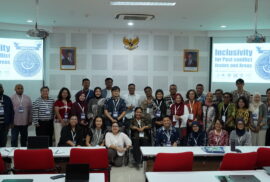
CHSS 2026 is an international academic forum held on 23–27 September 2026 at the Lahore University of Management Sciences (LUMS), Lahore, Pakistan. The forum brought together academics, researchers, and institutional leaders from various Asian countries to shape a more inclusive and future-oriented direction for humanities and social science scholarship.

In this event, Universitas Gadjah Mada (UGM) participated through representatives of the Faculty of Cultural Sciences (FIB) UGM, namely Prof. Dr. Wening Udasmoro, Dr. Aprillia Firmonasari, and Dr. Merry Andriani. Their presence reflects FIB UGM’s strong commitment to capacity building for scholars, particularly those who have long been under-represented in global academic conversations.

The event was attended by the President of the Association for Asian Studies (AAS), Elora Shehabuddin, along with AAS leaders including Krisna Uk, Hilary Finchum-Sung, and Brandon Johnson. The presence of these prominent academic leaders underscored the growing global attention to equal access and equal opportunities within the international academic community.

Also in attendance was Eren Zink, Senior Research Advisor at SIDA (Swedish International Development Cooperation Agency). SIDA’s involvement highlighted the importance of development policies that promote education for sustainability in the Global South, ensuring that scientific progress is shared equitably across nations.

Other participants included representatives of the HUB from Indonesia, led by Universitas Gadjah Mada, as well as HUBs from Vietnam, Pakistan, India, Thailand, and Timor-Leste. The participation of these countries made CHSS 2026 a vital platform for cross-national discussions on the future of humanities and social sciences in Asia.

The meeting focused on the Theory of Change, an approach used to maximize outcomes that directly benefit society in CHSS programs. Through this approach, every academic activity is designed not merely to remain at the discursive level, but to deliver tangible empowerment for both scholarly communities and society at large.

The event also served as a space for knowledge exchange, network development, and academic collaboration on various Asian and Global South issues, such as migration, education, gender, governance, climate change, public health, and cultural heritage. These issues are closely linked to the sustainable development agenda, including guaranteed equal access to education and equal opportunities for all.

In particular, gender issues were a central concern of the forum, in line with the spirit of women’s empowerment in the academic ecosystem. Women scholars from Asia and the Global South are seen as needing greater space to lead research, publish their work, and contribute to international scholarly networks.

UGM’s participation in the forum further strengthened international cooperation and opened up opportunities for cross-country research collaboration. The networks established are expected to broaden access for young researchers and under-represented scholars to academic resources, research funding, and global publication outlets.

As a follow-up, UGM will host an international workshop in Yogyakarta on 19–23 October 2026. This workshop continues UGM’s commitment to leading Indonesia’s HUB and strengthening Indonesia’s role in the landscape of humanities and social science research across Asia.

In addition, the CHSS event coincided with a pre-workshop consisting of two panels. The first panel discussed the issue of migration, while the second addressed gender issues in relation to the theory of disjointness. Both panels served as important forums for understanding the complex social dynamics of Asia and the Global South.

With this achievement, UGM hopes to continue promoting a more open and equitable academic governance, ensuring that the humanities and social sciences make real contributions to sustainable education, equal access, and community empowerment at both the local and global levels.

Contributors: Nada & Jusma, 2026
Exploration of Multicultural Identity and Gender in Indonesian Literature Highlights Doctoral Defense at FIB UGM

News Release Tuesday, 6 October 2026

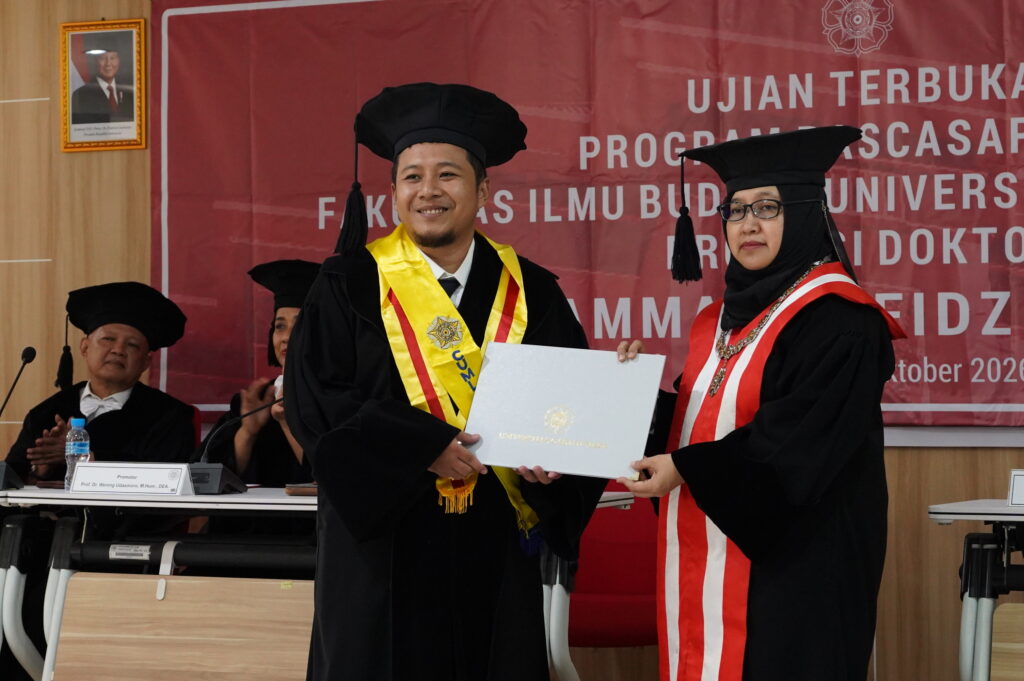
A solemn and proud atmosphere filled the Multimedia Room of the Margono Building, Faculty of Cultural Sciences, Universitas Gadjah Mada. This special moment marked the success of two academics from the Indonesian Literature Study Program, Department of Indonesian Language and Literature, Faculty of Languages and Arts (FBS), Universitas Negeri Medan (Unimed)—Wahyu Wiji Astuti, S.S., M.A. and Muhammad Hafidz Assalam, S.S., M.A.—who officially earned their Doctoral degrees in Humanities. Their presence drew the attention of the academic community as, in addition to being fellow lecturers in the same department, they are a married couple.

During the public doctoral defense, Wahyu Wiji Astuti defended her dissertation titled “Pembentukan Subjek dan Identitas dalam Kumpulan Cerpen Malim Pesong: Kajian Psikoanalisis Lacan” (Subject Formation and Identity in the Short Story Collection Malim Pesong: A Lacanian Psychoanalytic Study). Supervised by Prof. Dr. Pujiharto, S.S., M.Hum., her research explores the dynamics of identity formation and subject psychology in literary works through Jacques Lacan’s psychoanalytic approach, particularly within the context of North Sumatra’s multicultural society.

Meanwhile, her husband, Muhammad Hafidz Assalam, was supervised by Professor of Literature and Gender at FIB UGM, who also serves as Vice Rector for Education and Learning at UGM, Prof. Dr. Wening Udasmoro, S.S., M.Hum., DEA. He presented his research titled “Narasi Feminin Pada Cerpen Perempuan Tahun 2020-an: Kompleksitas dan Ambiguitas Tubuh Perempuan” (Feminine Narratives in Women’s Short Stories of the 2020s: Complexity and Ambiguity of the Female Body), which highlights gender representation, female body dynamics, and feminist discourse in contemporary Indonesian short stories of the 2020s decade.

The Dean and the board of examiners of FIB UGM expressed high appreciation for the academic achievements of both doctoral candidates. Successfully defending their dissertations simultaneously before the UGM board of examiners under the guidance of prominent promoters is expected to strengthen literary research synergy, increase scientific publications, and bring a positive impact to the development of teaching at the Department of Indonesian Language and Literature, Unimed.


[Humas FIB, Maylafaizza Nafisha Zifa]

UGM Arabic Literature Graduate Proves Career Opportunities on the Global Stage

News Release Thursday, 25 June 2026

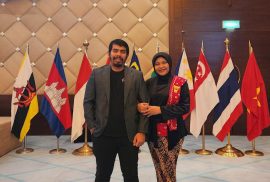
For most humanities students, the question “What will you do after graduation?” often weighs heavily on their minds throughout their college years. The outdated assumption that Arabic literature graduates will end up only as translators or educators is still commonly heard. However, Desthy Umayah has clearly shattered that old paradigm. This 2011 graduate of the Arabic Literature program at the Faculty of Cultural Sciences (FIB) at UGM has successfully demonstrated that a career path for literature graduates can reach the highest echelons of international diplomacy by becoming a diplomat at the Indonesian Embassy in Kuwait City for the 2023–2026 assignment period.

Desthy’s interest in the Arabic language actually began back in school. However, she never imagined that her decision to pursue a degree in Arabic Literature at UGM would lead her to the global stage. UGM not only offers a high-quality curriculum but also provides an academic ecosystem that is attuned to the times.

As the Arab Spring (a wave of revolutions across the Arab world) was unfolding, the Arabic Literature program at UGM actively responded by organizing academic discussions featuring alumni who were working at the Ministry of Foreign Affairs. This moment marked a turning point for Desthy. It was in those small classrooms that she realized the knowledge she was acquiring was vital to analyzing global geopolitical issues.

For Desthy, university is a mental laboratory. While on campus, she actively developed herself through the Arabic Language Student Association (IMABA), the Marching Band, and the Rampoe UGM arts community. It was through these non-academic activities that the soft skills crucial to a diplomat—such as negotiation, public speaking, leadership, and teamwork—developed organically. Recognizing the importance of these non-academic skills, Desthy urged students not to become “butterfly students” (class-home-class-home). According to her, the professional world isn’t just looking for those who excel on paper, but for individuals who are ready to grow and are resilient in the field through organizational experience.

The combination of classroom theory and practical experience in campus organizations proved to be Desthy’s strongest asset when she entered the global arena. One of the academic skills she gained at UGM that became her main tool in the field was her proficiency in the official language required for bureaucratic matters.

“Although the Arabic used in everyday conversation is Ammiya (colloquial Arabic), which varies by country, the Fusha (standard Arabic) taught by our professors during our studies at UGM has actually become a crucial foundation that is extremely useful in a professional diplomatic career,” he explained.


Desthy’s journey conveys a valuable message that will always be relevant to generations of FIB UGM students year after year: success on the global stage does not come overnight, but is the result of making the most of the campus ecosystem. A degree in the field of culture has proven to provide a competitive edge that other academic disciplines lack.

“For me, studying Arabic Literature isn’t just about learning the language; it’s also a foundation that makes us more attuned to culture, helps us understand other people’s perspectives, and ultimately helps me grow as a diplomat,” said Desthy.

In closing, she offered words of encouragement worth pondering for every student currently in college who is uncertain about their future.

“If you love languages, are interested in international issues, and enjoy encountering new perspectives, don’t hesitate. The world of diplomacy can be a really exciting career path to pursue,” she concluded.

Photo: Dhesti Umayah
Author: Zaidan Abdurrahman
Editor: Candra Solihin

FIB UGM Honors Outstanding Alumni at the 80th Anniversary

News Release Thursday, 12 March 2026

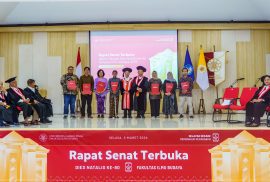
Yogyakarta, March 3, 2026 – The Faculty of Cultural Sciences at Universitas Gadjah Mada (UGM) awarded two outstanding alumni during the peak of its 80th anniversary celebration in the Poerbatjaraka Auditorium. The awards were presented to Setya Amrih Prasaja, S.S., M.Pd., and Dra. Rini Suryati as a token of appreciation for their dedication to the advancement of science and education, as well as their tangible contributions to the broader community.

The first outstanding alumni award was given to Prasaja, a graduate of the Javanese Language, Literature, and Culture Study Program. Prasaja is widely recognized as the driving force behind the digitization of the Javanese script. His efforts to integrate this traditional script into the international standard (Unicode) have now produced results, allowing the Javanese script to be widely used across various digital devices, such as mobile phones and computers.

In addition to his role as the founder of the Segajabung community, Prasaja currently serves as the Head of the Language and Literature Section at the Department of Culture of the Special Region of Yogyakarta. His contributions are considered crucial in maintaining the relevance of local culture during an era of massive digital transformation.

The second award went to Suryati, who is also an alumna of the Javanese Language, Literature, and Culture Study Program. Suryati is a senior journalist for the Jakarta bureau of the Kedaulatan Rakyat daily newspaper, having built her career since 1992. Her reporting focuses on strategic issues in politics, social affairs, and education.

Throughout her career, Suryati has recorded various journalistic achievements, including an assignment at the 2023 Hajj Media Center and conducting an exclusive interview with President Joko Widodo. Beyond journalism, she is also an active author whose books received national recognition from the Ministry of Higher Education, Science, and Technology and the Ministry of Religious Affairs in 2025.

The initiative by the UGM Faculty of Cultural Sciences to appreciate its alumni demonstrates the educational institution’s commitment to continuously supporting the development of high-quality human resources. Efforts to preserve language through technology and strengthen literacy through journalistic work represent a long-term investment. This serves as a vital foundation for preserving cultural heritage and continually educating the nation for a more inclusive future.

[Public Relations of FIB UGM, Candra Solihin]

1234

Video UGM

[shtmlslider name='shslider_options']
Universitas Gadjah Mada

Faculty of Cultural Sciences
Universitas Gadjah Mada
Jl. Nusantara 1, Bulaksumur Yogyakarta 55281, Indonesia
   fib@ugm.ac.id
   +62 (274) 513096
   +62 (274) 550451

Work Units

  • Office of Journal & Publishing
  • INCULS
  • Information Technology and Database
  • Language Learning Center
  • Library Unit
  • Public Relations
  • Research

Facilities

  • Computer Laboratory
  • Gamelan
  • Guest House
  • Language Library
  • Library
  • Phonetics Library
  • Self Access Unit
  • Student Internet Centre

Importan Links

  • Journal of Humaniora
  • Subscriber Journal
  • Alumni Portal
  • Career
  • Departmens News
  • UGM Streaming

Contacts

  • Academic
  • Administration
  • Dean’s Office
  • Departments / Study Programs
  • Public Relations

© 2024 Faculty of Cultural Sciences Universitas Gadjah Mada

KEBIJAKAN PRIVASI/PRIVACY POLICY

[EN] We use cookies to help our viewer get the best experience on our website. -- [ID] Kami menggunakan cookie untuk membantu pengunjung kami mendapatkan pengalaman terbaik di situs web kami.I Agree / Saya Setuju