• About UGM
  • Academic Portal
  • IT Center
  • Library
  • Research
  • Webmail
  • Informasi Publik
  • English
    • Indonesia
Universitas Gadjah Mada Faculty of Cultural Sciences
Universitas Gadjah Mada
  • Home
  • Profile
    • History
    • Vision and Mission
    • Organizational structure
    • Administration
    • Staff
    • Faculty Members
  • Academic
    • Academic Calendar
    • Undergraduate Programs
      • Bachelor of Cultural Antrophology
      • Bachelor in Archaeolagy
      • Bachelor in History
      • Bachelor in Tourism
      • Bochetor in Korean Language and Culture
      • Bachelor in Indonesian Language and Culture
      • Bachelor in English
      • Bachelor in Arabic
      • Bachelor in Japanese Language and Culture
      • Bachelor in Javanese Language, Literature and Culture
      • Bachelor in French language and literature
    • Graduate Programs
      • Master in Antrophology
      • Master in ArchaeoIogy
      • Master in History
      • Master in Linguistics
      • Master in Literature
      • Master In American Studies
      • Master in Middle Eastern Cultural Studies
    • Post-Graduate Programs / S3
      • Doctor in Antropology
      • Doctor in American Studies
      • Doctor in Humanities
    • Student Service
  • KPPM
    • Research Information
    • Scientific / Academic Publications
    • Community Service
    • International Cooperation
    • Domestic Cooperation
  • Student Organizations
    • Student Executive Council
    • Semi-Autonomous Organizations
      • KAPALASASTRA
      • Christian Student Alliance
      • LINCAK
      • Saskine
      • Catholic Student Family
      • Dian Budaya
      • Sastra Kanuragan (sasgan)
      • Family of Muslim Cultural Sciences Students (KMIB)
      • Bejo Mulyo
    • Autonomous Organizations
      • Family of Anthropology Students (KEMANT)
      • English Department Student Association
      • Tourism Students Association (HIMAPA)
      • Family of Indonesian Literature Students (KMSI)
      • West Asian Literature Student Association (IMABA)
      • Association of Korean-Language Students (HIMAHARA)
      • Family of Regional Indonesian Literatures Students (KAMASUTRA)
      • The Family Body of History Students (BKMS)
      • The French Literature Students Association (HMSP)
      • Family of Anthropology Students
      • Japanese Student Association (HIMAJE)
  • Admission
    • Student Evaluation
  • Home
  • SDGs 5: Gender Equality
  • SDGs 5: Gender Equality
Arsip:

SDGs 5: Gender Equality

Si Anak Pemberani and the Voice of the Common People Amidst the Injustice that Still Occurs

News Release Friday, 29 May 2026

Novel Si Anak Pemberani Tere Liye’s work once again feels relevant to various phenomena occurring in Indonesia today. Through the character of Eliana, readers are invited to see how a young girl’s courage can become a voice for the underprivileged, often marginalized by power and vested interests.

In the story, the villagers must face threats to their living space. This situation is reminiscent of numerous ongoing issues in Indonesia, from land conflicts and environmental degradation to the struggles of indigenous peoples and villagers to defend their homes. In these conditions, the common people are often in a vulnerable position, while major decisions are often made without truly listening to their voices.

Eliana’s character stands as a symbol of courage in fighting injustice. She doesn’t remain silent when she sees things that harm those around her. This figure also demonstrates the crucial role women play in social struggles. Today, more and more women in Indonesia are standing at the forefront of speaking out on environmental issues, education, and community rights, despite often facing pressure and challenges.

Through a warm story that is close to everyday life,The Brave Boyis not only a novel about childhood, but also a reflection on the courage to speak out. This book reminds us that change often begins with the courage of ordinary people who choose not to remain silent when facing injustice around them.

Author: Faiza S.

Universitas Gadjah Mada and Universitas Islam Darussalam Community Service Program (PkM)

News Release Wednesday, 6 May 2026

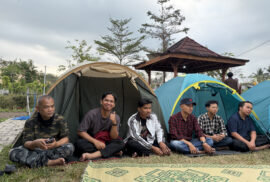
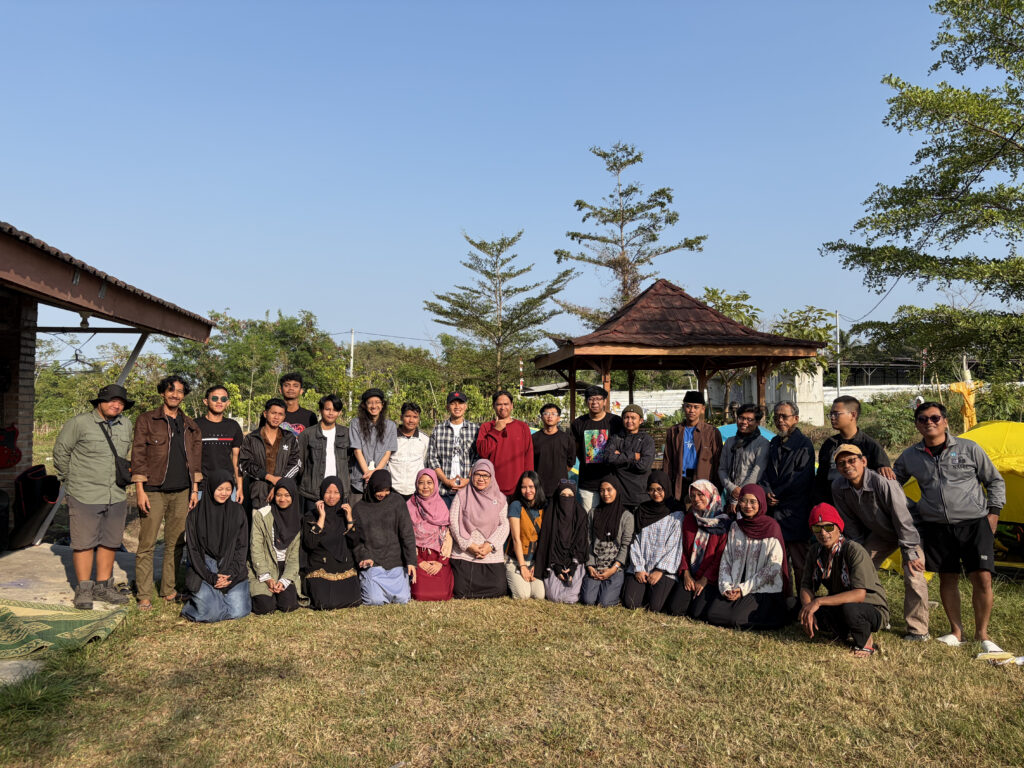
Ciamis, 25 April 2026 — The Department of Intercultural Studies, Faculty of Cultural Sciences, Universitas Gadjah Mada held a Community Service Program (PkM) and Expert Lecture at Universitas Islam Darussalam on 25–26 April 2026. The event brought lecturers, students, and the pesantren community together in a setting that combined academic discussion with everyday interaction.

The visit also continued an existing connection between the two institutions, especially through Prof. Dr. K.H. Fadlil Munawwar Manshur. In his remarks, he described the program as more than a formal academic agenda. For him, it was a form of silaturahim, where knowledge is shared in a more personal and open way.

The delegation was led by Prof. Dr. Aris Munandar, who spoke about the role of American Studies in reading global influence. He pointed out that influence does not always come in direct or visible forms. In many cases, it appears through everyday habits such as academic writing, publication systems, and standards that scholars gradually follow. 

Therefore, according to him, the American Studies program plays an important role in helping scholars critically recognize and navigate these subtle influences, which often emerge through habits in academic writing, publication systems, and scholarly standards.

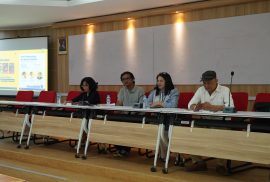
Several speakers then presented their topics in parallel sessions. Dr. Mahmudah discussed feminism in Arabic literature and its place in Islamic education. Dr. Amin Basuki focused on how American academic patterns can be seen in SINTA-indexed journals, especially in the way articles are structured and evaluated. Dr. Muhammad Zakki Masykur talked about Arabic and the works of Javanese ulama which showed that local traditions remain active in knowledge production. Meanwhile, Dr. Stedi Wardoyo explained how morality in Japanese society often grows from family life and social habits, not only from religion.

Outside the formal sessions, the program also included shared activities such as joining the Shalawat Burdah gathering with the pesantren community. Moments like this made the visit feel less formal and more connected. It showed that community service is not only about delivering material, but also about building relationships.

As an institution that provides education from early levels to university, Universitas Islam Darussalam also offers space for future collaboration, especially in character education. This program, in a simple way, shows that academic cooperation can grow through meeting, talking, and spending time together.

FIB UGM Soft Skills Training Equips Graduating Students to Seize Career and Entrepreneurship Opportunities

News Release Friday, 27 February 2026

Yogyakarta, February 24, 2026 – The Faculty of Cultural Sciences Universitas Gadjah Mada (FIB UGM) held a Soft Skills Training titled “Briefing for Graduating Students and Undergraduates” from 1:00 to 3:00 p.m. WIB at the 3rd Floor Auditorium of the Poerbatjaraka Building. The event featured an alumna of the Indonesian Literature Program at FIB UGM and Chair of IWAPI, as well as founder of Bundaco, Erwina Kusmarini, S.S., who shared her experience in identifying business opportunities and building independence after graduation.

In her remarks, Vice Dean for Research, Community Service, Cooperation, and Alumni of FIB UGM, Dr. Mimi Savitri, M.A., Ph.D., emphasized the importance of providing students with preparation prior to graduation. “This activity certainly offers valuable preparation and insights for all of you after graduating from FIB UGM,” she said.

The Coordinator for Academic and Student Affairs, Yusuf Sulistiyo, A.Md., S.Psi., M.M., delivered academic announcements before the main session began. The moderator, Dr. phil. Ramayda Akmal, S.S., M.A., then introduced the speaker and presented her brief profile.

In her presentation, Erwina Kusmarini highlighted the theme “The Story of Bundaco and the Spirit of Seizing Opportunities.” She recounted how she started her business in 2004 from her home in Klaten with a single household sewing machine. She began her entrepreneurial journey without a family background in business and without formal education in engineering or economics. Limited capital, networks, and technical skills were among the challenges she faced in the early stages. She learned directly from local tailors, fabric vendors, and the surrounding community to develop her enterprise.

Bundaco, short for Bunda Collection, has grown into a garment manufacturing business producing school uniforms, community apparel, Muslim fashion, and custom orders for institutions and organizations. She emphasized the importance of maintaining quality and service as the foundation for business growth.

When the COVID-19 pandemic struck, production shifted to personal protective equipment and cloth masks to respond to community needs. This innovation sustained the business while expanding its market reach. In the following years, she was entrusted to lead IWAPI Klaten and initiated garment production and digital marketing training programs for hundreds of women-led micro, small, and medium enterprises.

During the question-and-answer session, Erwina encouraged students to be courageous in taking the first step and to continue learning. She stressed that a background in cultural studies is not a barrier to entrepreneurship. Social awareness and the ability to recognize opportunities, she noted, are essential assets in building a business.

The training concluded with the presentation of a token of appreciation from the faculty to the speaker, followed by a group photo session. Through this initiative, FIB UGM seeks to prepare graduates who are adaptive, competitive, and capable of making meaningful contributions to society. Such programs are expected to foster a generation that is not only ready to enter the workforce, but also able to create opportunities and empower their communities in a sustainable manner.

[Humas FIB UGM, Candra Solihin]

FIB and INAKOS Hold National Seminar to Strengthen the Korean Studies Ecosystem in Indonesia

News Release Sunday, 30 November 2025

Yogyakarta, November 29, 2025 – Efforts to strengthen the Korean Studies ecosystem in Indonesia have entered a new phase with the hosting of the INAKOS Seminar titled The Role of INAKOS in Reinforcing Korean Studies in Indonesia on Saturday, November 29, 2025, at the Soegondo Building Auditorium, Faculty of Cultural Sciences (FIB) UGM. Organized by The International Association for Korean Studies in Indonesia (INAKOS) in collaboration with the Korean Language and Culture Study Program at FIB UGM and the Korea Foundation, the event marked an important milestone in revitalizing INAKOS as a center for academic collaboration and research development in Korean Studies in Indonesia.

In his opening remarks, the Dean of FIB UGM, Prof. Setiadi, reaffirmed the faculty’s commitment to strengthening the East Asian studies ecosystem.
“We are preparing proper infrastructure to support East Asian studies. The building next to this one is fully dedicated to academic study centers, one of which is Inakos. We aim for all research centers at FIB to be integrated within a multidisciplinary and transdisciplinary environment,” he stated.

Support was also expressed by the Director of the Korea Foundation, Lee Sanghoon, who highlighted the strategic role of INAKOS as an academic bridge between Indonesia and Korea.
“The Korea Foundation fully supports Inakos in revitalizing academic spaces and dialogue for scholars with deep interests in Korea. We believe Inakos will play an important role as a bridge in strengthening Korean Studies in Indonesia,” he said.

Meanwhile, Acting Ambassador of Korea to Indonesia, Park Soo-deok, emphasized the importance of strengthening cross-national collaboration through research and academic dialogue.
“Indonesia and Korea have a long history of cooperation in culture and education. Through research, academic exchange, and scholarly dialogue such as today, both countries continue to build stronger bridges of mutual understanding,” he noted.

On the same occasion, the 2025 President of INAKOS, Suray Agung Nugroho, presented the strategic direction of the newly reactivated organization. He emphasized that INAKOS serves as a home, space, and academic umbrella to unite scholars and observers of Korean Studies in Indonesia, as well as to enhance collaborative and sustainable research.

Following the opening remarks, the audience was treated to a performance of the Korean Fan Dance, presented through a collaboration by students from the Korean Language and Culture Study Program at FIB UGM. The program continued with academic presentations by speakers from UGM, UI, UPI, and Universitas Nasional.

The first presentation was delivered by Rostinue from the University of Indonesia, who explained the role of Korean Studies scholars as academic and cultural bridges that strengthen bilateral interactions between Indonesia and Korea. The next speaker, Ashanti Widyana from the Indonesia University of Education (UPI), presented research trends in UPI’s Korean Language Education Program from 2020 to 2025, focusing on strengthening applied linguistics research, cultural studies, and integrating research outcomes into educational practice.

The session continued with Desitha Dwi Asriani from FISIPOL UGM, who discussed body modification and gender performativity among young Asian men and women from a comparative Indonesia–Korea perspective. The next presentation, by Rurani Adinda from Universitas Nasional, explored differences in the meanings of idioms related to the head in Korean and Indonesian. The final speaker, Achmad Rio, Head of the Korean Language and Culture Study Program at FIB UGM, delivered a talk on analyzing translation patterns of the adnominal ending deon-eass-does using a Korean–Indonesian parallel corpus.

This seminar is expected to serve as an initial step in expanding academic networks in Korean Studies in Indonesia, while strengthening academic contributions to cultural, social, and educational cooperation between Indonesia and Korea. Continued collaboration will open broader spaces for dialogue and encourage innovative scholarly work that benefits society and advances knowledge.

In the long term, this initiative is expected to enhance access to knowledge and opportunities for academic exchange, contributing to human development and a more inclusive and sustainable future for both countries.

[Public Relations of FIB UGM, Candra Solihin]

Master Program in Literature UGM Holds a Creative Writing Public Lecture on “Tracing Self-Identity Through Fiction”

News Release Tuesday, 25 November 2025

Yogyakarta, 18 November 2025 — As part of its ongoing effort to expand creative dialogue within the academic community, the Master’s Program in Literature, Faculty of Cultural Sciences, Universitas Gadjah Mada, held a public lecture titled “Tracing Self-Identity Through Fiction” on Tuesday, 18 November 2025, in Room 204 of the Soegondo Building, FIB UGM. The event featured California-based writer of Vietnamese–Indonesian descent, Mazdo, as the keynote speaker, with Naria Nur Iftitah serving as moderator. Her presence drew enthusiastic attention from students, alumni, and literary researchers eager to explore how fiction can serve as a medium for reflecting identity, personal experience, and socio-cultural dynamics.

In her presentation, Mazdo explained that writing, for her, is a deep dialogue between personal experience, imagination, and the internal questions that continually shape her creative process. She introduced three of her short stories as examples of how she navigates identity through fiction. The first piece she discussed, When the Moths Came (2023), stems from her personal experience. “This story began from my experience living in an apartment where moths were flying everywhere— in the kitchen, around the living room, everywhere. I felt disturbed, but I thought it would be interesting to turn it into a short story,” she explained. From this simple experience, Mazdo crafted a narrative about a married couple dealing with the constant presence of moths, which disrupt their daily life and create emotional distance between them.

Her second story, The Collector (2024), is rooted in her time studying at the Southeast Asia Program building at Cornell University, which was filled with cultural artifacts. She invited the audience to examine how such objects hold long historical traces, including power relations between the United States and Southeast Asian nations. Through the perspective of two curious and innocent children, she demonstrates how Orientalism and colonial traces can be reimagined in fictional space.

Meanwhile, her story Cut Blooms (2025) highlights the relationship between two sisters—shaped by affection, misunderstanding, and an unbreakable emotional bond. Mazdo shared that the inspiration for this work came from her closeness to her own sisters. “When I write, inspiration can come from anywhere, even from my own life experiences. For example, Cut Blooms comes from my personal experience, but I do not write it literally as it happened. Since I write fiction, only small details that truly happened in my life are adapted into the story,” she explained. This statement helped the audience understand that fiction does not require literal adherence to real events, but instead transforms lived experience into a broader emotional structure.

The public lecture also aligned with values of social and cultural sustainability. Through her stories, Mazdo demonstrated that literature can serve as a tool for cultivating empathy, honoring diverse identities, and encouraging reflection on one’s place within larger historical contexts.

The question-and-answer session unfolded warmly and thoughtfully. The first question came from Marisa Santi (Kagama UGM), who asked about the narrative approach Mazdo most frequently uses, whether she prefers the author as an omniscient narrator or allows the characters full autonomy. Responding to this, Mazdo said, “I tend to use the first approach, where the writer serves as the narrator.” She added that this position allows her to guide the fictional world while still giving her characters space to move freely.

The next question was posed by Marsya Kamila, a student of UGM’s Master’s Program in Literature, who asked whether Mazdo plans to write fiction that explicitly addresses migration or identity exploration in the United States, given that her parents migrated there. Mazdo responded enthusiastically: “Yes, because both of my parents come from Vietnam and Indonesia, I think it would be interesting to write fiction that gives voice to our origins and experiences.” Her answer indicates that family history and migration remain enduring sources of inspiration in her creative journey.

The event concluded with great appreciation from participants, who felt they gained new insights into how fiction operates as a tool for self-exploration, historical reading, and reinterpreting lived experience. The Master’s Program in Literature hopes that similar public lectures will continue to provide creative spaces that strengthen literary literacy while fostering cultural awareness and sustainability in society.

[Master’s Program in Literature, Marsya Kamila]

123…12

Video UGM

[shtmlslider name='shslider_options']
Universitas Gadjah Mada

Faculty of Cultural Sciences
Universitas Gadjah Mada
Jl. Nusantara 1, Bulaksumur Yogyakarta 55281, Indonesia
   fib@ugm.ac.id
   +62 (274) 513096
   +62 (274) 550451

Work Units

  • Office of Journal & Publishing
  • INCULS
  • Information Technology and Database
  • Language Learning Center
  • Library Unit
  • Public Relations
  • Research

Facilities

  • Computer Laboratory
  • Gamelan
  • Guest House
  • Language Library
  • Library
  • Phonetics Library
  • Self Access Unit
  • Student Internet Centre

Importan Links

  • Journal of Humaniora
  • Subscriber Journal
  • Alumni Portal
  • Career
  • Departmens News
  • UGM Streaming

Contacts

  • Academic
  • Administration
  • Dean’s Office
  • Departments / Study Programs
  • Public Relations

© 2024 Faculty of Cultural Sciences Universitas Gadjah Mada

KEBIJAKAN PRIVASI/PRIVACY POLICY

[EN] We use cookies to help our viewer get the best experience on our website. -- [ID] Kami menggunakan cookie untuk membantu pengunjung kami mendapatkan pengalaman terbaik di situs web kami.I Agree / Saya Setuju