• About UGM
  • Academic Portal
  • IT Center
  • Library
  • Research
  • Webmail
  • Informasi Publik
  • English
    • Indonesia
Universitas Gadjah Mada Faculty of Cultural Sciences
Universitas Gadjah Mada
  • Home
  • Profile
    • History
    • Vision and Mission
    • Organizational structure
    • Administration
    • Staff
    • Faculty Members
  • Academic
    • Academic Calendar
    • Undergraduate Programs
      • Bachelor of Cultural Antrophology
      • Bachelor in Archaeolagy
      • Bachelor in History
      • Bachelor in Tourism
      • Bochetor in Korean Language and Culture
      • Bachelor in Indonesian Language and Culture
      • Bachelor in English
      • Bachelor in Arabic
      • Bachelor in Japanese Language and Culture
      • Bachelor in Javanese Language, Literature and Culture
      • Bachelor in French language and literature
    • Graduate Programs
      • Master in Antrophology
      • Master in ArchaeoIogy
      • Master in History
      • Master in Linguistics
      • Master in Literature
      • Master In American Studies
      • Master in Middle Eastern Cultural Studies
    • Post-Graduate Programs / S3
      • Doctor in Antropology
      • Doctor in American Studies
      • Doctor in Humanities
    • Student Service
  • KPPM
    • Research Information
    • Scientific / Academic Publications
    • Community Service
    • International Cooperation
    • Domestic Cooperation
  • Student Organizations
    • Student Executive Council
    • Semi-Autonomous Organizations
      • KAPALASASTRA
      • Christian Student Alliance
      • LINCAK
      • Saskine
      • Catholic Student Family
      • Dian Budaya
      • Sastra Kanuragan (sasgan)
      • Family of Muslim Cultural Sciences Students (KMIB)
      • Bejo Mulyo
    • Autonomous Organizations
      • Family of Anthropology Students (KEMANT)
      • English Department Student Association
      • Tourism Students Association (HIMAPA)
      • Family of Indonesian Literature Students (KMSI)
      • West Asian Literature Student Association (IMABA)
      • Association of Korean-Language Students (HIMAHARA)
      • Family of Regional Indonesian Literatures Students (KAMASUTRA)
      • The Family Body of History Students (BKMS)
      • The French Literature Students Association (HMSP)
      • Family of Anthropology Students
      • Japanese Student Association (HIMAJE)
  • Admission
    • Student Evaluation
  • Home
  • SDGs 4: Quality Education
  • SDGs 4: Quality Education
  • page. 21
Arsip:

SDGs 4: Quality Education

Raudhah Kitabah, UGM Arabic Study Program Students Explore the Role of Media in Information Distribution

SDGs 4: Quality Education Wednesday, 24 September 2025

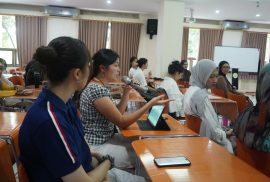
Yogyakarta, September 23, 2025 – The Arabic Study Program Association IKMASA UGM held its second Raudhah Al-Kitabah discussion forum, this time focusing on “The Role of Media in Information Dissemination and Provocation: A Critical Discourse Analysis Perspective.” The event brought in expert speakers who explored how media shapes the flow of information, influences public opinion, and even carries the potential for provocation within society. The forum was actively attended by Arabic Study Program students as part of their effort to deepen their understanding of contemporary issues in the Arab world.

Through this discussion, participants were invited to examine the relationship between media and the social, cultural, and political dynamics of the Middle East. The speakers emphasized the crucial importance of media literacy and the ability to conduct critical discourse analysis to distinguish between valid information and misleading provocation.

As an outcome of the forum, students produced a discussion summary that not only serves as a reference for further academic study but also provides recommendations on how media should ideally function—as a tool for education and knowledge dissemination rather than mere propaganda.

Beyond the topic itself, the forum strengthened the academic culture among students, encouraging them to read critically, conduct research, and exchange ideas in a constructive and reflective way.


Author: Ikmasa UGM

FIB UGM–Iwate University Collaboration: Summer School Opens with Cultural Heritage Protection Talk

SDGs 11: Sustainable cities and communitiesSDGs 17: Partnerships for the GoalsSDGs 4: Quality Education Tuesday, 23 September 2025

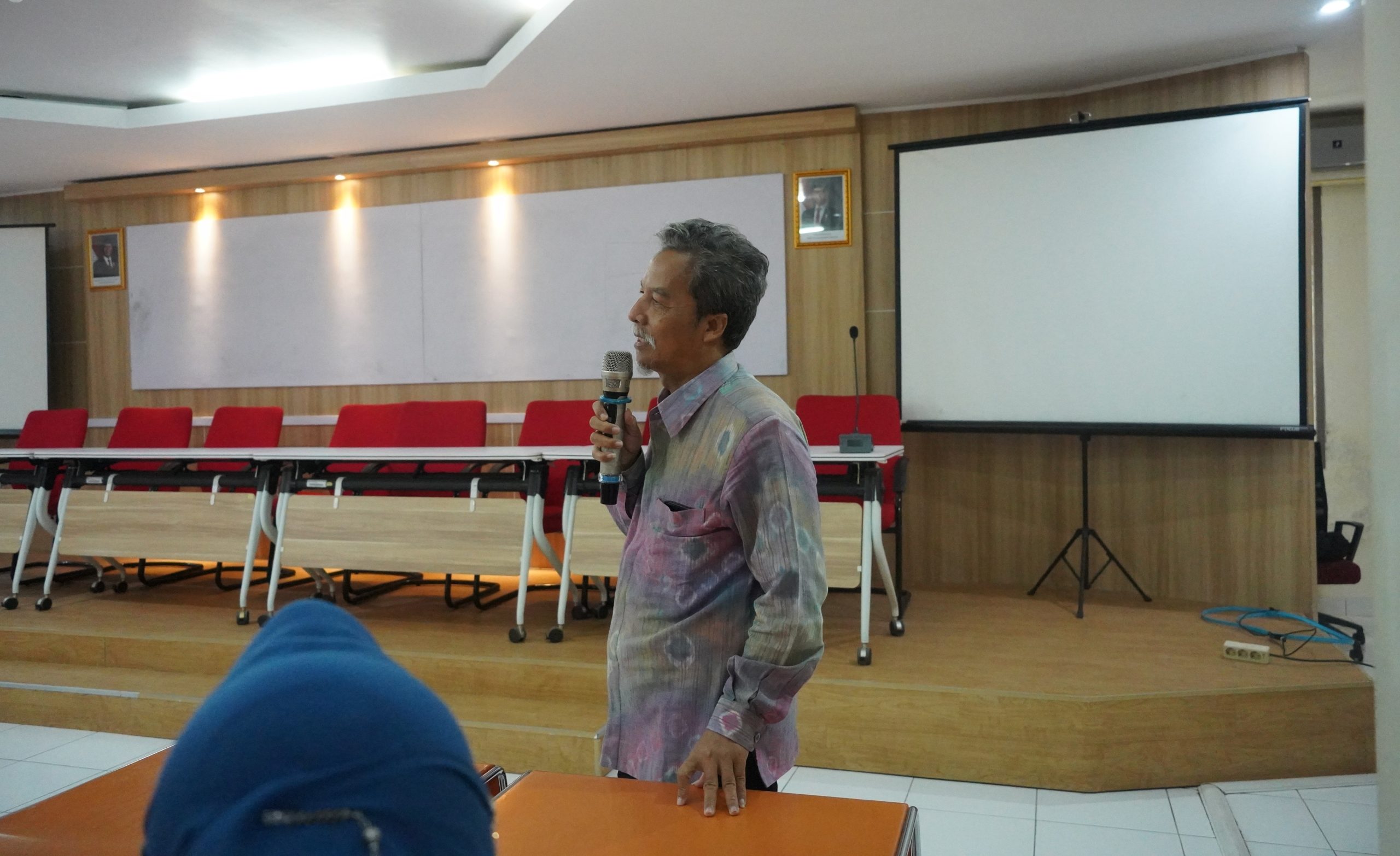
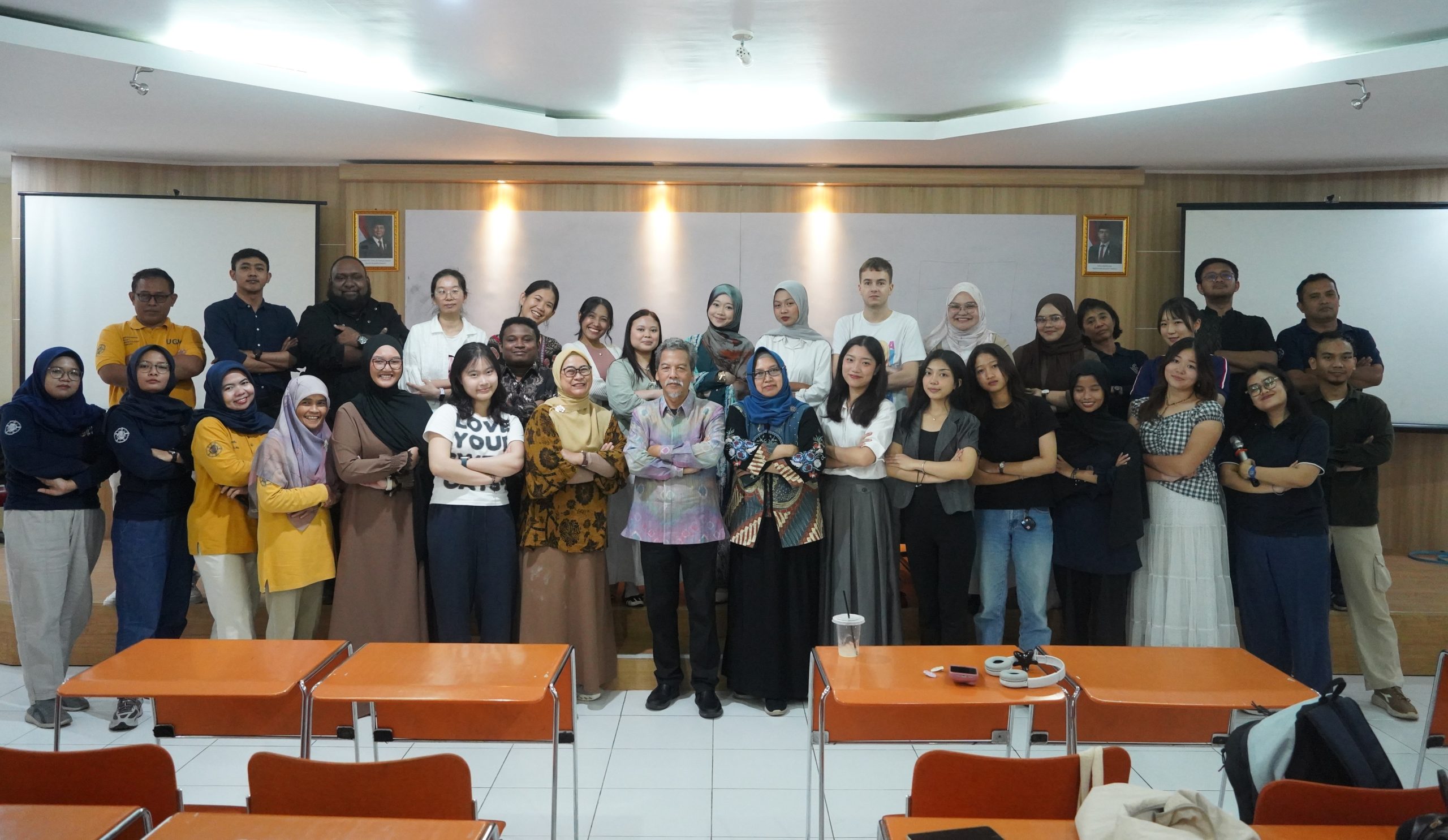
Yogyakarta, 19/9/2025– The Department of Archaeology, Faculty of Cultural Sciences (FIB) Universitas Gadjah Mada officially opened its Summer School program in collaboration with Iwate University, Japan, at the Multimedia Room, Margono Building, FIB UGM. The opening session featured Dwi Pratnyawan, S.S., M.A., who delivered a lecture titled Protecting Archaeological Site (Cultural Heritage).

The event brought together Archaeology students from UGM and international students from Iwate University. This academic forum highlighted the significance of safeguarding cultural heritage as both an identity marker and a collective memory of society.

In his presentation, Dwi explained that cultural heritage preservation, based on Indonesia’s Cultural Heritage Law, rests on three pillars: Protection, Development, and Utilization. He provided concrete examples, including rescue excavations at the Morangan Temple site near Prambanan, regular maintenance at Prambanan’s Siwa Temple, and zoning efforts to establish protective boundaries.

Development, he emphasized, involves research, revitalization, and adaptation, while utilization aims to maximize public benefit without compromising sustainability. However, he also addressed critical challenges such as weak enforcement—citing the use of Borobudur for a Red Bull commercial and damage to Majapahit sites due to illegal brick excavations—and uncoordinated developments, such as the destruction of parts of Trowulan to build a new museum.

The session concluded with an engaging Q&A discussion, where both Indonesian and Japanese students raised questions on how best to preserve cultural heritage amid rapid modernization and urban development.

This initiative strongly aligns with the global Sustainable Development Goals (SDGs), particularly SDG 11 (Sustainable Cities and Communities), which stresses the importance of protecting the world’s cultural heritage, and SDG 17 (Partnerships for the Goals), as reflected in the international collaboration between UGM and Iwate University.

Cultural Harmony and Appreciation of Works at the 14th Gugur Gunung Festival

SDGs 11: Sustainable cities and communitiesSDGs 17: Partnerships for the GoalsSDGs 4: Quality Education Monday, 22 September 2025

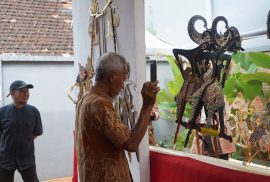
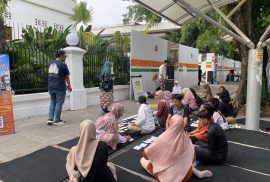
Yoigyakarta, 19/9/2025 – A warm and meaningful atmosphere filled the Poerbatjaraka Auditorium, Faculty of Cultural Sciences (FIB) UGM, on Friday evening (Sept 19). Hundreds of attendees gathered for “Gugur Gunung 14: Anniversary of the Javanese Language, Literature, and Culture Study Program, as well as the Retirement Celebration of Dr. Sri Ratna Saktimulya, M.Hum.” The event was not merely a birthday celebration, but also a tribute, a gathering of kinship, and a cultural encounter across generations and nations.

Carrying the theme “Tataning Ucap Sirnaning Dhêsti” which means “Arranging Words to Avoid Misfortune,” the program opened solemnly with the Indonesian national anthem, Gadjah Mada Hymn, and Sastra March. A series of keynote remarks followed, delivered by Head of Study Program Dr. Daru Winarti, M.Hum., Osaka University’s representative Dr. Yumi Sugahara, Dean of FIB UGM Prof. Dr. Setiadi, and Vice Rector for Education and Teaching, Prof. Dr. Wening Udasmoro. The presence of cultural leaders from Kadipaten Pakualaman, government representatives of Yogyakarta, and international students from Osaka University enriched the evening with diverse cultural resonance.

A touching and symbolic moment took place in the Ambal Warsa procession, when the Head of Study Program, together with the Head of the Student Association Kamastawa, received a ceremonial tumpeng—a symbol of continuity for the Javanese Language, Literature, and Culture Study Program. The loud applause that followed embodied the spirit of togetherness, the very soul of Gugur Gunung.

The stage came alive with cultural performances, starting with the graceful Sekar Pudyastuti welcoming dance, symbolizing safety and blessing. A performance by Osaka University students added an international touch, before the audience was captivated by Tari Andhira from Sanggar Sigrak Delimo, which retold the heroic story of Nyi Ageng Sérang—a courageous Javanese heroine who fought against Dutch colonial forces.

The highlight of the night was the retirement tribute to Dr. Sri Ratna Saktimulya, M.Hum., fondly known as “Doktor Sakti.” Renowned as an academic, researcher, and cultural advocate, she has contributed greatly through her research, publications, and community service, and has been awarded the prestigious Satyalancana Karyasatya. As her parting gift, she presented “Adisari: The Light of Love Behind Conquest”, a performance art adaptation of an ancient manuscript, creatively transformed into a stage production.

The 14th Gugur Gunung was more than just a commemoration of the Study Program’s journey—it was also a reflection on the importance of preserving and celebrating culture. From students and lecturers to international collaborations, all came together on one stage, proving that Javanese language and culture continue to live, endure, and inspire.

Korean Language and Literature Students at UGM Try Out EPS TOPIK Simulation Through Guest Lecture

News ReleaseSDGs 10: Mengurangi KetimpanganSDGs 10: Reduced InequalitiesSDGs 4: Quality EducationSDGs 8: Decent work and economic growth Friday, 19 September 2025

Yogyakarta, 18/9/2025 — The Korean Language and Culture Study Program, Faculty of Cultural Sciences at Universitas Gadjah Mada, held a guest lecture for the course Comprehensive Korean I under the theme “흥미로운 세상: EPS TOPIK and Korean Language for Migrant Workers.” The event took place at the Soegondo Building Auditorium and featured program alumnus Adam Ferdian Bagastama, S.Hum., as the main speaker.

In his presentation, Adam shared firsthand experiences about the career prospects for graduates of the Korean Language and Culture Study Program. He previously worked as a translator at a textile factory producing footwear before becoming an instructor at LPK Hankuk Sippo in Tulungagung, East Java. Each year, the institution trains more than 200 participants preparing to join the official Indonesia–Korea government-to-government (G to G) employment program.

Adam also explained that one of the main requirements for joining the program is passing the EPS TOPIK (Employment Permit System – Test of Proficiency in Korean), a language proficiency test focused on practical and job-specific vocabulary relevant to fields such as manufacturing, fisheries, shipbuilding, and services.

To provide a real experience, students were invited to take part in a quiz consisting of EPS TOPIK-style questions. Aura, one of the participants, admitted that the questions were quite challenging. “The quiz was difficult because the vocabulary was very specific and different from what we usually learn in class,” she said.

Through this guest lecture, students are expected not only to understand the importance of mastering Korean academically but also to gain a clearer picture of concrete career opportunities after graduation, both within Indonesia and through official employment programs in South Korea.


Author: Sherina Azmi A

Master’s Program in Literature at FIB UGM Holds Workshop on Breaking Into Reputable Journals: Strategies for Writing and Publishing Academic Articles

SDGs 10: Reduced InequalitiesSDGs 17: Partnerships for the GoalsSDGs 4: Quality EducationSDGs 5: Gender equality Thursday, 18 September 2025

Yogyakarta, 17/9/2025 – The Master’s Program in Literature, Faculty of Cultural Sciences, Universitas Gadjah Mada, organized an academic workshop themed “Breaking Into Reputable Journals: Strategies for Writing and Publishing Academic Articles.” The event, held on Wednesday (17/9) at Auditorium C, Poerbatjaraka Building, featured two keynote speakers: Prof. Dr. Wening Udasmoro, S.S., M.Hum., DEA., professor at the Faculty of Cultural Sciences UGM, and Adwidya Susila Yoga, S.Pd., M.A., an academic as well as a practitioner in scientific publishing. The session was moderated by Nada Nadillah.

In her presentation, Prof. Dr. Wening Udasmoro emphasized that writing for reputable journals requires decisiveness in selecting the issue and accuracy in building methodological frameworks. “The first thing to pay attention to is the material or issue. A strong issue is one that is specific, contextual, and intellectually challenging. Do not fall into the trap of cliché topics,” she explained.

She gave examples of fresh entry points in literary research, such as LGBTQ+ issues in Muslim-majority countries, abortion debates in Muslim contexts, and the rebellion of Indonesian women writers against male-dominated literary traditions.

Prof. Wening also highlighted the importance of a novelty-based literature review. “The literature review is the foundation. It is from there that we can demonstrate our contribution to academic debates. If we only repeat previous studies, our work will not be considered competent,” she stressed.

The second session, delivered by Adwidya Susila Yoga, S.Pd., M.A., underlined the importance of accuracy in identifying target journals and the necessity of determining clear topics. “Writing an article cannot be separated from mapping the topic and having a clear storyline. After that, we need to do optimal sourcing—do not let references pile up only in the introduction while being scarce in the discussion. The next step is the ‘journal hunt,’ which means finding journals that match the topic, are consistent, and have a good reputation,” he explained.

He also warned participants about the dangers of predatory journals. “If a journal has an excessively high publication frequency, an unusually fast review process, an invalid E-ISSN, or ambiguous publication fees, we need to be cautious. Those are usually signs of a predatory journal,” he cautioned.

Furthermore, Adwidya encouraged students to utilize digital tools. “Use digital platforms such as Grammarly, DeepL, Vosviewer, and even AI—but their use must be academically accountable. Do not just use them recklessly,” he noted.

The workshop continued dynamically with a Q&A session between participants and speakers. Naria (Master’s in Literature) raised a question regarding the selection of research material: “Should research objects be literary works that have already received awards? And should research questions always be derived from theory?” she asked.

Responding to this, Prof. Wening stated, “Research objects do not have to be award-winning works. What matters most is the issue we want to bring forward. Focus on novelty and the perspective we present, not the credibility of the text itself. As for research questions, they can arise from the problems we want to examine, not necessarily from theory alone.”

Meanwhile, Andi (Master’s in Public Administration) asked about balancing local research with global issues. “Indonesia’s research strength lies in its rich empirical evidence. How can we balance this with global issues to ensure relevance?” he inquired.

Prof. Wening emphasized, “The key is to focus on contextual issues while still opening up to global debates. Take issues that others may not be familiar with, then connect them to wider discourses. That way, our research will gain international appeal.”

This workshop successfully provided in-depth insights into strategies for writing academic articles and breaking into reputable journals. Participants not only gained theoretical knowledge but also practical guidance from the speakers. With this momentum, the Master’s Program in Literature at FIB UGM hopes its students can produce high-quality, contributive scholarly works capable of competing at both national and international levels.

Author: Marsya Kamila / Public Relations, Master’s Program in Literature

1…1920212223…111

Video UGM

[shtmlslider name='shslider_options']
Universitas Gadjah Mada

Faculty of Cultural Sciences
Universitas Gadjah Mada
Jl. Nusantara 1, Bulaksumur Yogyakarta 55281, Indonesia
   fib@ugm.ac.id
   +62 (274) 513096
   +62 (274) 550451

Work Units

  • Office of Journal & Publishing
  • INCULS
  • Information Technology and Database
  • Language Learning Center
  • Library Unit
  • Public Relations
  • Research

Facilities

  • Computer Laboratory
  • Gamelan
  • Guest House
  • Language Library
  • Library
  • Phonetics Library
  • Self Access Unit
  • Student Internet Centre

Importan Links

  • Journal of Humaniora
  • Subscriber Journal
  • Alumni Portal
  • Career
  • Departmens News
  • UGM Streaming

Contacts

  • Academic
  • Administration
  • Dean’s Office
  • Departments / Study Programs
  • Public Relations

© 2024 Faculty of Cultural Sciences Universitas Gadjah Mada

KEBIJAKAN PRIVASI/PRIVACY POLICY

[EN] We use cookies to help our viewer get the best experience on our website. -- [ID] Kami menggunakan cookie untuk membantu pengunjung kami mendapatkan pengalaman terbaik di situs web kami.I Agree / Saya Setuju