• About UGM
  • Academic Portal
  • IT Center
  • Library
  • Research
  • Webmail
  • Informasi Publik
  • English
    • Indonesia
Universitas Gadjah Mada Faculty of Cultural Sciences
Universitas Gadjah Mada
  • Home
  • Profile
    • History
    • Vision and Mission
    • Organizational structure
    • Administration
    • Staff
    • Faculty Members
  • Academic
    • Academic Calendar
    • Undergraduate Programs
      • Bachelor of Cultural Antrophology
      • Bachelor in Archaeolagy
      • Bachelor in History
      • Bachelor in Tourism
      • Bochetor in Korean Language and Culture
      • Bachelor in Indonesian Language and Culture
      • Bachelor in English
      • Bachelor in Arabic
      • Bachelor in Japanese Language and Culture
      • Bachelor in Javanese Language, Literature and Culture
      • Bachelor in French language and literature
    • Graduate Programs
      • Master in Antrophology
      • Master in ArchaeoIogy
      • Master in History
      • Master in Linguistics
      • Master in Literature
      • Master In American Studies
      • Master in Middle Eastern Cultural Studies
    • Post-Graduate Programs / S3
      • Doctor in Antropology
      • Doctor in American Studies
      • Doctor in Humanities
    • Student Service
  • KPPM
    • Research Information
    • Scientific / Academic Publications
    • Community Service
    • International Cooperation
    • Domestic Cooperation
  • Student Organizations
    • Student Executive Council
    • Semi-Autonomous Organizations
      • KAPALASASTRA
      • Christian Student Alliance
      • LINCAK
      • Saskine
      • Catholic Student Family
      • Dian Budaya
      • Sastra Kanuragan (sasgan)
      • Family of Muslim Cultural Sciences Students (KMIB)
      • Bejo Mulyo
    • Autonomous Organizations
      • Family of Anthropology Students (KEMANT)
      • English Department Student Association
      • Tourism Students Association (HIMAPA)
      • Family of Indonesian Literature Students (KMSI)
      • West Asian Literature Student Association (IMABA)
      • Association of Korean-Language Students (HIMAHARA)
      • Family of Regional Indonesian Literatures Students (KAMASUTRA)
      • The Family Body of History Students (BKMS)
      • The French Literature Students Association (HMSP)
      • Family of Anthropology Students
      • Japanese Student Association (HIMAJE)
  • Admission
    • Student Evaluation
  • Home
  • SDGs 4 Pendidikan Berkualitas
  • SDGs 4 Pendidikan Berkualitas
  • page. 10
Arsip:

SDGs 4 Pendidikan Berkualitas

FIB UGM Students Achieve a Series of Victories at PORSENIGAMA 2025

ChampionshipNews Release Sunday, 30 November 2025

Yogyakarta, November 29, 2025 — The Faculty of Cultural Sciences (FIB) of Universitas Gadjah Mada recorded an impressive achievement at the 2025 Gadjah Mada Sports and Arts Week (PORSENIGAMA). Based on the official recap, the FIB contingent secured victories across various sports and arts categories, in both individual and team competitions, highlighting the strong competitiveness of its students beyond academic fields.

In the athletics division, FIB earned three achievements through I Putu Arya Ananda Adi Nugraha Santosa, who won third place in the Men’s 1500 m, Yustisia Raka Saputra who claimed first place in the Men’s Long Jump, and Ahmad Mikail who took third place in the Men’s 200 m. In orienteering, Rangga Rayhan Paristyo and Shang Narendra Paramarthadewa Suryaputra secured second place in the General Team category.

Outstanding results also came from the FIB Men’s Hockey Team, which won first place. The team members included Alif Yoga Pratama, Arjuna, Fadly Bayu Laksono, Jonathan Ephram Purnomo, Reihan Mandiri Wangsa, Rasendriya Evan Muhammad Walia, Ferdika Dwi Cahya, Firlan Maulana Sayogya, Ibrahim, Jonathan Kefas, Muhammad Farhan, and Muhammad Thoriq Aziz. In addition, Rasendriya Evan Muhammad Walia received the Top Scorer award.

In judo, Wanita Perkasa Bijaksana earned third place in the Women’s +57 kg category and second place in the Women’s +57 kg Tachiwaza category, while Dewan Gusti Dinantaka took third place in the Men’s +90 kg Tachiwaza. In karate, Muhammad Faiz Darmawan won second place in the Men’s Individual Kata, followed by Human Irsyad Sabil in third place for the same category. Kevin Naufal Bagaskara secured third place in Men’s Kumite +60 kg, and Sarah Jasmine Kahiking earned third place in Women’s Kumite +55 kg.

In archery, Affa Arif Hukmana Rahayu won second place in the Men’s Barebow Individual Qualification and third place in the Individual Elimination in the same division. FIB also excelled in pencak silat, with Labibah Haya Nurmaulidza taking first place in Women’s Class C and Lakshita Pradnya Dayinta claiming first place in the Women’s Artistic Single category.

Achievements in the arts category also strengthened FIB’s position. Alna Hafifah won first place in Poetry Reading, Najmah ‘Ulya Syahidah secured first place in Comic Strip, and the monologue category received the Best Directing title. In scriptwriting, Berekhya Kiri Grace Syandana earned third place. In modern dance, FIB won first place through the team consisting of Azra Khansa Ahista Melody Putri Wijayanto, Fransisca Cindy Putri Tet Hun, Justin Liepangi, Kyla Ajizah Rahardhi, Nadia Nasywa Naila Pentha Calista, Nadira Renata Nur Setyaningrum, Nicola Shevarelia Bima Putri, Oryza Sativa Rosyadi, Salsabila Rizky Alifa Zul’am, and Syaira Radhwa Aqila. For traditional dance, Alexandra Gendhis Danurdara, Arba’Athun Nisa Adhya Nur Baity, Audrey Gizella Islamey, Ermin Dhiva Nurhaliza, and Hapsari Inez Kinasih secured third place in the group category.

In the keroncong vocal category, Muhammad Isa Dafa Hakam won first place in the Men’s Solo performance, and Dian Patmisari earned second place in the Women’s Solo category.

These achievements reflect the commitment of FIB students to developing their full potential through healthy, collaborative, and quality-oriented competition. The accomplishments not only bring pride to the faculty, but also emphasize the importance of support and facilities for interest and talent development within higher education environments, contributing positively to the growth of character and the competitive capacity of the younger generation.

Photo: pixabay.com
[Public Relations of FIB UGM, Candra Solihin]

FIB UGM Graduates 91 Bachelor Degree Students in the November 2025 Ceremony

News Release Thursday, 27 November 2025

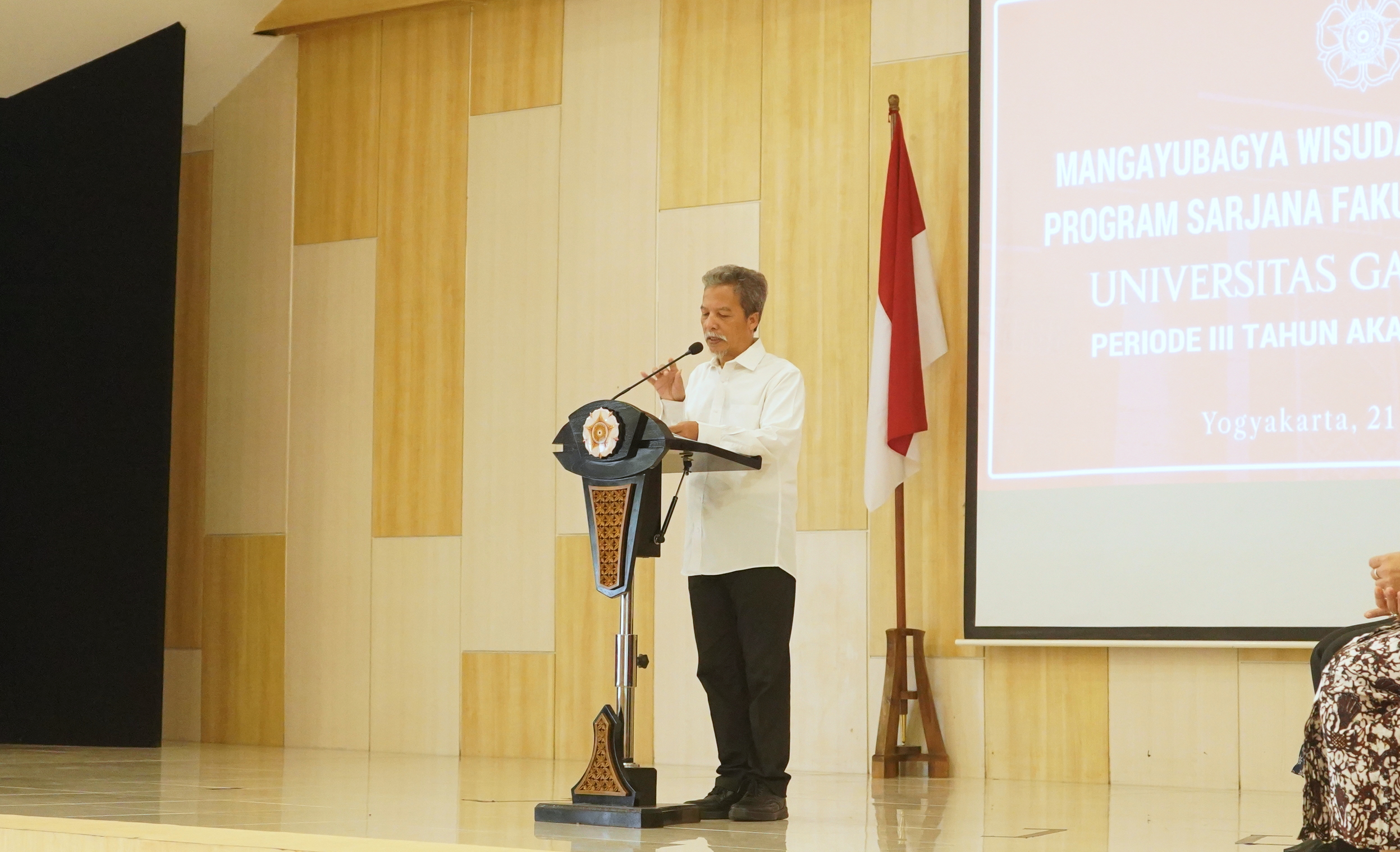
Yogyakarta, November 26, 2025 – The Faculty of Cultural Sciences at Universitas Gadjah Mada officially graduated 91 Bachelor Degree students in the First Graduation Period of the 2025/2026 Academic Year, held on November 26, 2025 at the Poerbatjaraka Auditorium, FIB UGM. The ceremony was attended by graduates from 11 study programs, as well as one graduate from a previous period who joined the procession this time.

The graduation ceremony took place solemnly and included the presentation of academic achievements and messages for the graduates. Based on faculty data, the cohort consists of 25 male graduates and 66 female graduates. Cultural Anthropology marked the highest number of graduates with 21 students, followed by English Literature with 13 graduates, and Indonesian Language and Literature and Tourism with 11 graduates each. A total of 73 graduates earned the distinction of cum laude.

In his remarks, the Dean of FIB UGM emphasized the faculty’s commitment to strengthening academic contributions. “FIB contributes around seven areas of study recognized by QS out of 27 at UGM. This is our goal in strengthening FIB, not only by focusing on one or two individuals, but by building a shared spirit, a spirit of synergy in advancing knowledge,” stated the Dean of FIB UGM.

In addition, a representative of the graduates’ parents delivered a message encouraging students to view graduation as the beginning of a long journey. “Continue learning and seeking knowledge because graduation is not the end, but the beginning of your long journey. Be a person who brings benefit, because the best human being is the one who brings the most benefit to others. Use your knowledge to bring light not only to yourselves, but also to your families, communities, the nation, and the world. Hold firmly to character, for it is the key foundation in earning public trust,” she said.

The representative of the top graduates, Catharina Maida from the French Language and Literature Program with a GPA of 3.91, also expressed gratitude and optimism for the future. “Our challenges are still long ahead. There will be many more obstacles in life,” she said.

During the event, the faculty also released other academic achievements, including the fastest study completion and graduate age statistics. Maritza Vidyatsabita from the English Literature Program completed her studies in the shortest time of 3 years, 2 months, and 5 days. Meanwhile, the youngest graduate is Bulan Churniati from English Literature, aged 21 years, 1 month, and 10 days.

This graduation ceremony not only marks the completion of the students’ academic journey, but also the beginning of their contribution to the progress of society. The values of knowledge, collaboration, and character highlighted throughout the ceremony are expected to guide the graduates in building a more sustainable future and bringing meaningful benefits to the wider community.

[Public Relations of FIB UGM, Candra Solihin]

Two Journals from the Faculty of Cultural Sciences UGM Receive EQUITY WCU Support Program Toward Scopus Indexing

News Release Thursday, 27 November 2025

Universitas Gadjah Mada has selected Humaniora and Poetika: Jurnal Ilmu Sastra as recipients of the Journal Governance Support Program Toward Scopus Indexing through the EQUITY WCU 2025/2026 initiative.

Both academic journals under the Faculty of Cultural Sciences (FIB) UGM were chosen under the scheme aimed at strengthening the quality of academic publication management and increasing the global visibility of research originating from Indonesia.

Humaniora, first published in 1989, is known as an academic, open-access, and peer-reviewed journal focusing on cultural studies from an Indonesian perspective. Since 2022, all articles have been published in English and the journal is issued twice a year. It accepts submissions throughout the year and is committed to advancing interdisciplinary humanities scholarship.

Meanwhile, Poetika: Jurnal Ilmu Sastra is a biannual academic journal that highlights social issues through literary research, particularly topics related to marginalized groups. The journal is published by the Postgraduate Program in Literature at FIB UGM and is indexed in DOAJ, as well as accredited SINTA 2 by the National Research and Innovation Agency of Indonesia (BRIN).

With the support of the EQUITY WCU Program, Humaniora and Poetika are expected to strengthen the role of knowledge in driving social progress and expanding equitable access to academic insights. This effort to improve the quality of scholarly publications reflects a sustainable commitment to advancing education and research with meaningful impact for the future.

[Public Relations of FIB UGM, Candra Solihin]

Two FIB UGM Journals Selected for the “Towards Scopus” Scheme in the EQUITY WCU 2025/2026 Program

News Release Wednesday, 26 November 2025

Yogyakarta, 25 November 2025 — The Faculty of Cultural Sciences (FIB) of Universitas Gadjah Mada has once again marked an important achievement in strengthening the governance of scholarly publications. Through the official announcement of the UGM Journal Management Assistance Program for Scopus Indexing and Quartile Improvement (EQUITY WCU 2025/2026), two journals under FIB UGM Jurnal Humaniora and Poetika: Jurnal Ilmu Sastra were selected as recipients in the Towards Scopus Scheme.

A total of 26 journals from various faculties across UGM were announced as awardees. Within this list, Jurnal Humaniora and Poetika ranked 17th and 18th, representing FIB UGM as two humanities journals deemed to have strong potential to progress toward Scopus indexing.

Through this program, each selected journal is required to prepare a final proposal that incorporates reviewer recommendations, develop a sustainability plan through 2030, and outline achievable targets projected until May 2026. In addition, journal managers must complete administrative documents, including the Statement of Absolute Responsibility (SPTJM), and upload all required files through UGM’s official administrative system.

This achievement demonstrates FIB UGM’s commitment to improving the quality of scholarly publication governance and expanding its academic contribution at the global level. With the selection of these two journals, FIB UGM reinforces its capacity to strengthen the role of the humanities internationally through enhanced editorial standards, broadened academic networks, and the dissemination of research relevant to contemporary scholarly development.

This accomplishment aligns closely with the principles of the Sustainable Development Goals (SDGs), particularly in supporting quality education through strengthened credibility and accessibility of academic publications. Efforts to enhance journal quality also reflect the faculty’s commitment to building a sustainable research ecosystem, fostering a strong academic culture, and encouraging both national and international collaboration as part of developing inclusive and globally competitive knowledge.

[Public Relations of FIB UGM, Alma Syahwalani]

Master Program in Literature UGM Holds a Creative Writing Public Lecture on “Tracing Self-Identity Through Fiction”

News Release Tuesday, 25 November 2025

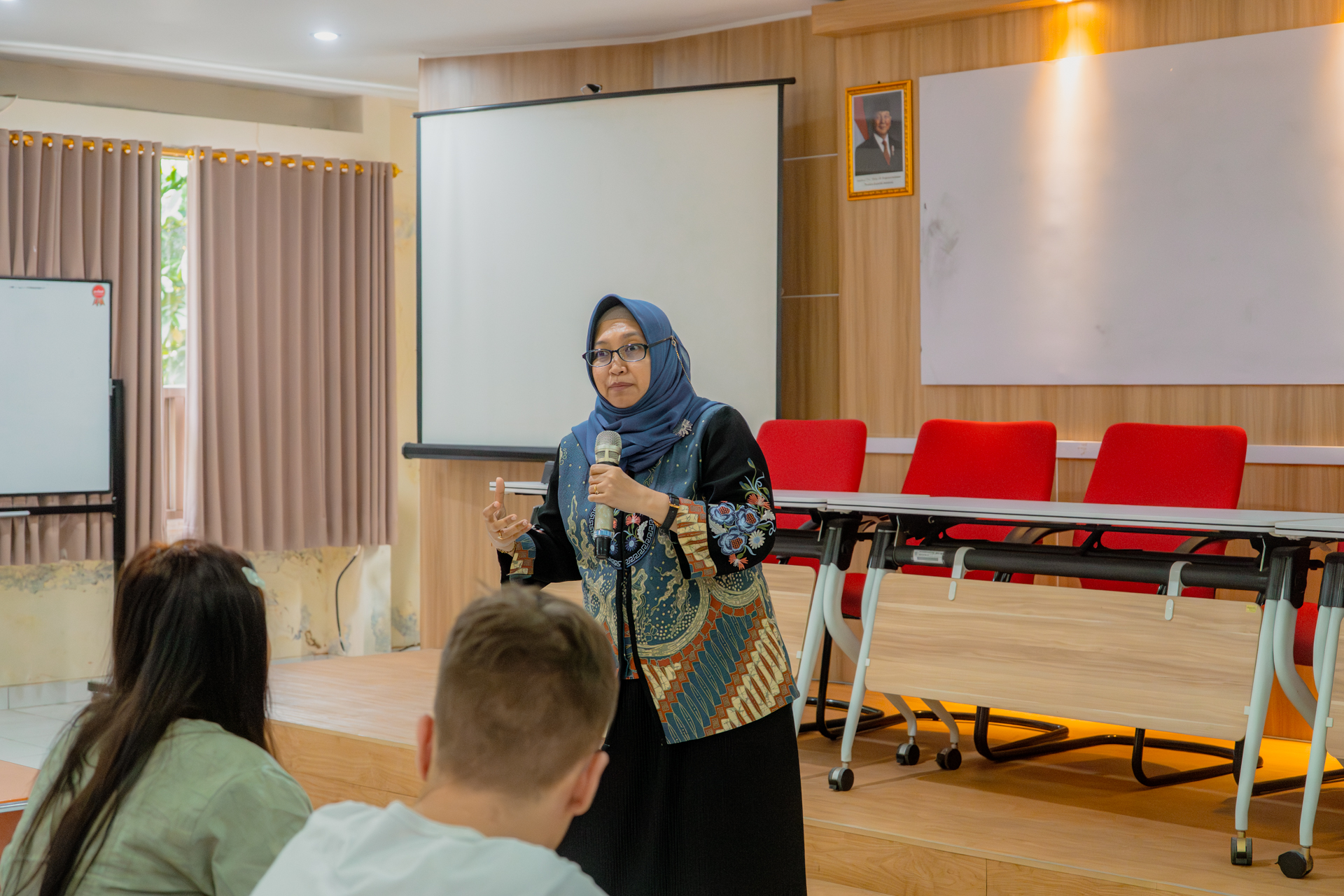
Yogyakarta, 18 November 2025 — As part of its ongoing effort to expand creative dialogue within the academic community, the Master’s Program in Literature, Faculty of Cultural Sciences, Universitas Gadjah Mada, held a public lecture titled “Tracing Self-Identity Through Fiction” on Tuesday, 18 November 2025, in Room 204 of the Soegondo Building, FIB UGM. The event featured California-based writer of Vietnamese–Indonesian descent, Mazdo, as the keynote speaker, with Naria Nur Iftitah serving as moderator. Her presence drew enthusiastic attention from students, alumni, and literary researchers eager to explore how fiction can serve as a medium for reflecting identity, personal experience, and socio-cultural dynamics.

In her presentation, Mazdo explained that writing, for her, is a deep dialogue between personal experience, imagination, and the internal questions that continually shape her creative process. She introduced three of her short stories as examples of how she navigates identity through fiction. The first piece she discussed, When the Moths Came (2023), stems from her personal experience. “This story began from my experience living in an apartment where moths were flying everywhere— in the kitchen, around the living room, everywhere. I felt disturbed, but I thought it would be interesting to turn it into a short story,” she explained. From this simple experience, Mazdo crafted a narrative about a married couple dealing with the constant presence of moths, which disrupt their daily life and create emotional distance between them.

Her second story, The Collector (2024), is rooted in her time studying at the Southeast Asia Program building at Cornell University, which was filled with cultural artifacts. She invited the audience to examine how such objects hold long historical traces, including power relations between the United States and Southeast Asian nations. Through the perspective of two curious and innocent children, she demonstrates how Orientalism and colonial traces can be reimagined in fictional space.

Meanwhile, her story Cut Blooms (2025) highlights the relationship between two sisters—shaped by affection, misunderstanding, and an unbreakable emotional bond. Mazdo shared that the inspiration for this work came from her closeness to her own sisters. “When I write, inspiration can come from anywhere, even from my own life experiences. For example, Cut Blooms comes from my personal experience, but I do not write it literally as it happened. Since I write fiction, only small details that truly happened in my life are adapted into the story,” she explained. This statement helped the audience understand that fiction does not require literal adherence to real events, but instead transforms lived experience into a broader emotional structure.

The public lecture also aligned with values of social and cultural sustainability. Through her stories, Mazdo demonstrated that literature can serve as a tool for cultivating empathy, honoring diverse identities, and encouraging reflection on one’s place within larger historical contexts.

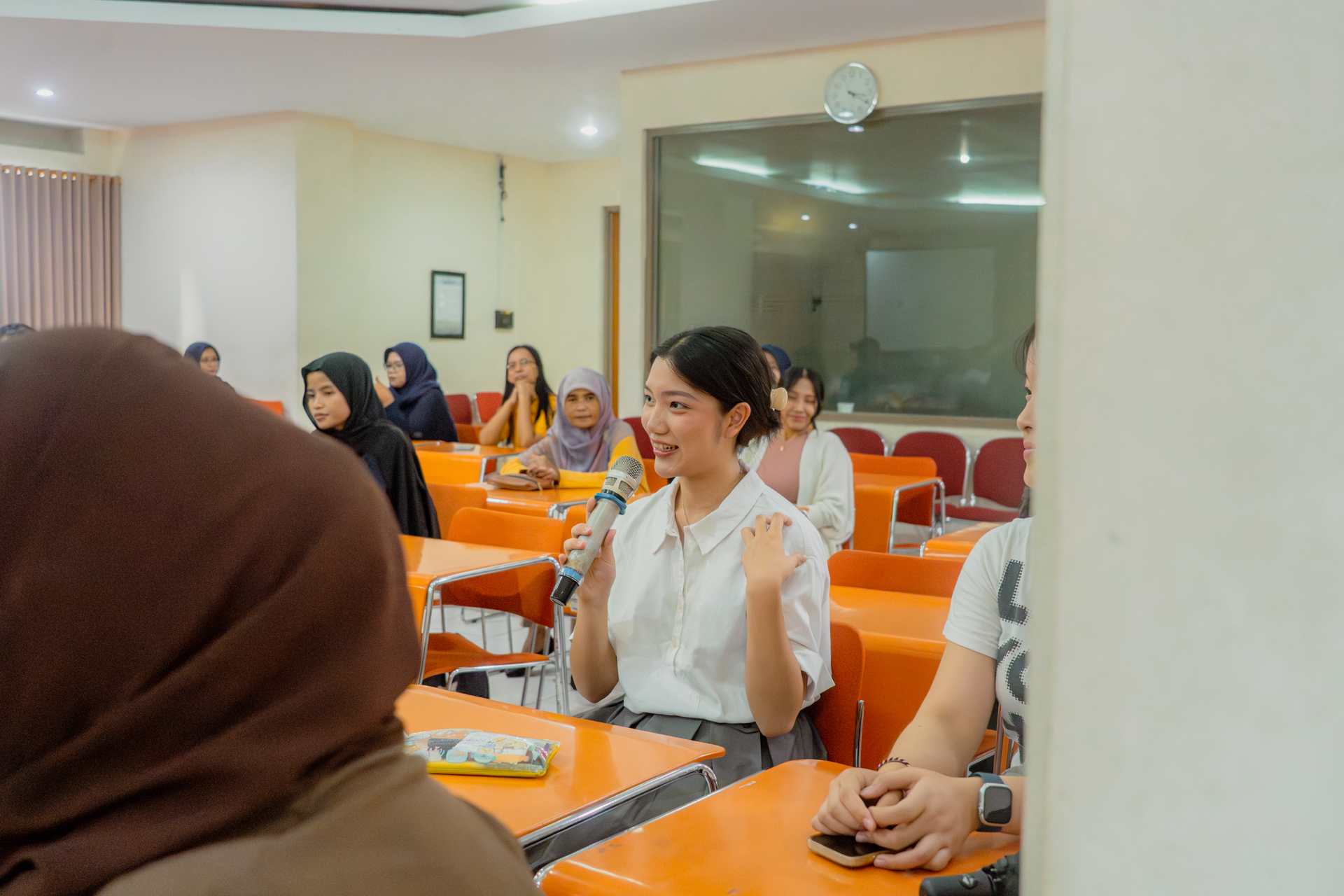
The question-and-answer session unfolded warmly and thoughtfully. The first question came from Marisa Santi (Kagama UGM), who asked about the narrative approach Mazdo most frequently uses, whether she prefers the author as an omniscient narrator or allows the characters full autonomy. Responding to this, Mazdo said, “I tend to use the first approach, where the writer serves as the narrator.” She added that this position allows her to guide the fictional world while still giving her characters space to move freely.

The next question was posed by Marsya Kamila, a student of UGM’s Master’s Program in Literature, who asked whether Mazdo plans to write fiction that explicitly addresses migration or identity exploration in the United States, given that her parents migrated there. Mazdo responded enthusiastically: “Yes, because both of my parents come from Vietnam and Indonesia, I think it would be interesting to write fiction that gives voice to our origins and experiences.” Her answer indicates that family history and migration remain enduring sources of inspiration in her creative journey.

The event concluded with great appreciation from participants, who felt they gained new insights into how fiction operates as a tool for self-exploration, historical reading, and reinterpreting lived experience. The Master’s Program in Literature hopes that similar public lectures will continue to provide creative spaces that strengthen literary literacy while fostering cultural awareness and sustainability in society.

[Master’s Program in Literature, Marsya Kamila]

1…89101112…40

Video UGM

[shtmlslider name='shslider_options']
Universitas Gadjah Mada

Faculty of Cultural Sciences
Universitas Gadjah Mada
Jl. Nusantara 1, Bulaksumur Yogyakarta 55281, Indonesia
   fib@ugm.ac.id
   +62 (274) 513096
   +62 (274) 550451

Work Units

  • Office of Journal & Publishing
  • INCULS
  • Information Technology and Database
  • Language Learning Center
  • Library Unit
  • Public Relations
  • Research

Facilities

  • Computer Laboratory
  • Gamelan
  • Guest House
  • Language Library
  • Library
  • Phonetics Library
  • Self Access Unit
  • Student Internet Centre

Importan Links

  • Journal of Humaniora
  • Subscriber Journal
  • Alumni Portal
  • Career
  • Departmens News
  • UGM Streaming

Contacts

  • Academic
  • Administration
  • Dean’s Office
  • Departments / Study Programs
  • Public Relations

© 2024 Faculty of Cultural Sciences Universitas Gadjah Mada

KEBIJAKAN PRIVASI/PRIVACY POLICY

[EN] We use cookies to help our viewer get the best experience on our website. -- [ID] Kami menggunakan cookie untuk membantu pengunjung kami mendapatkan pengalaman terbaik di situs web kami.I Agree / Saya Setuju