• About UGM
  • Academic Portal
  • IT Center
  • Library
  • Research
  • Webmail
  • Informasi Publik
  • English
    • Indonesia
Universitas Gadjah Mada Faculty of Cultural Sciences
Universitas Gadjah Mada
  • Home
  • Profile
    • History
    • Vision and Mission
    • Organizational structure
    • Administration
    • Staff
    • Faculty Members
  • Academic
    • Academic Calendar
    • Undergraduate Programs
      • Bachelor of Cultural Antrophology
      • Bachelor in Archaeolagy
      • Bachelor in History
      • Bachelor in Tourism
      • Bochetor in Korean Language and Culture
      • Bachelor in Indonesian Language and Culture
      • Bachelor in English
      • Bachelor in Arabic
      • Bachelor in Japanese Language and Culture
      • Bachelor in Javanese Language, Literature and Culture
      • Bachelor in French language and literature
    • Graduate Programs
      • Master in Antrophology
      • Master in ArchaeoIogy
      • Master in History
      • Master in Linguistics
      • Master in Literature
      • Master In American Studies
      • Master in Middle Eastern Cultural Studies
    • Post-Graduate Programs / S3
      • Doctor in Antropology
      • Doctor in American Studies
      • Doctor in Humanities
    • Student Service
  • KPPM
    • Research Information
    • Scientific / Academic Publications
    • Community Service
    • International Cooperation
    • Domestic Cooperation
  • Student Organizations
    • Student Executive Council
    • Semi-Autonomous Organizations
      • KAPALASASTRA
      • Christian Student Alliance
      • LINCAK
      • Saskine
      • Catholic Student Family
      • Dian Budaya
      • Sastra Kanuragan (sasgan)
      • Family of Muslim Cultural Sciences Students (KMIB)
      • Bejo Mulyo
    • Autonomous Organizations
      • Family of Anthropology Students (KEMANT)
      • English Department Student Association
      • Tourism Students Association (HIMAPA)
      • Family of Indonesian Literature Students (KMSI)
      • West Asian Literature Student Association (IMABA)
      • Association of Korean-Language Students (HIMAHARA)
      • Family of Regional Indonesian Literatures Students (KAMASUTRA)
      • The Family Body of History Students (BKMS)
      • The French Literature Students Association (HMSP)
      • Family of Anthropology Students
      • Japanese Student Association (HIMAJE)
  • Admission
    • Student Evaluation
  • Home
  • SDGs 17: Partnership for the Goals
  • SDGs 17: Partnership for the Goals
Arsip:

SDGs 17: Partnership for the Goals

HIMAJE UGM Holds Kizuna Camp 2026 to Strengthen Student Bonding

News ReleaseStudent's Activity Thursday, 9 July 2026

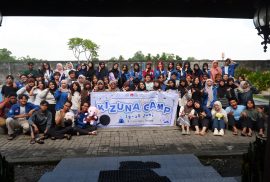
The Japanese Student Association (HIMAJE) of the Japanese Language and Culture Study Program, Universitas Gadjah Mada (UGM), held Kizuna Camp 2026 on 20–21 June 2026 at Villa Joglo Tanjung, Kalasan, Yogyakarta. The internal event, attended by HIMAJE members from different academic years, aimed to strengthen relationships among students, foster solidarity, and cultivate a stronger sense of family and togetherness within the organization.

Throughout the two-day program, participants took part in a variety of activities designed to enhance teamwork, communication, and coordination in a relaxed and enjoyable atmosphere. The program included games, group discussions, morning exercise, outbound activities, and a shared dinner. The event was also attended by lecturers from the Japanese Language and Culture Study Program, who had the opportunity to interact with students in an informal setting, further strengthening the relationship between lecturers and students beyond the classroom.

Through Kizuna Camp 2026, HIMAJE UGM hopes to foster a more harmonious, active, and united student organization. In addition to providing an opportunity for members to get to know one another better and share organizational experiences, the program is expected to strengthen students’ sense of belonging to HIMAJE and support the sustainability of its future programs.

Author: Prodi Bahasa dan Kebudayaan Jepang

UGM Korean Language and Culture Study Program Lecturers Conduct Community Service at SMA Negeri 1 Yogyakarta to Introduce the Korean Language and Culture Study Program

News Release Thursday, 2 July 2026

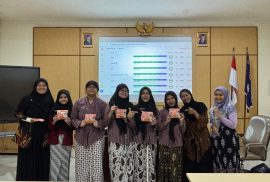
Yogyakarta, May 21, 2026 – Lecturers from the Korean Language and Culture Study Program, Faculty of Cultural Sciences, Universitas Gadjah Mada, conducted a Community Service Program (Pengabdian kepada Masyarakat/PkM) at SMA Negeri 1 Teladan Yogyakarta. The program aimed to introduce the fundamentals of the Korean language and culture while providing students with an overview of UGM’s Korean Language and Culture Study Program. The participants were members of the school’s Korean language extracurricular club.

The program began with an introduction to the Korean alphabet (Hangeul), the foundation of learning the Korean language. Students were introduced to the shapes, pronunciation, and basic principles of the Hangeul writing system, enabling them to gain a fundamental understanding of Korean orthography.

The participants were then introduced to commonly used Korean vocabulary and expressions frequently encountered in everyday life. The session was delivered interactively, allowing students to connect the material with their prior exposure to Korean culture through popular media such as K-pop, Korean dramas, and other digital content.

To encourage active participation, the PKM team organized an interactive quiz on Korean culture. Through the quiz, students tested their knowledge of various aspects of Korean culture commonly encountered in daily life. Each answer was subsequently discussed, providing an opportunity to clarify misconceptions while expanding the participants’ understanding of Korean culture in a more comprehensive manner.

In addition to the language and cultural sessions, the program also included a socialization session on the Korean Language Proficiency Test. During this session, students received information on the importance of language proficiency certification, the benefits of taking the test, and an overview of its content as preparation for those interested in pursuing Korean language and culture studies at the university level.

Through this Community Service Program, the Korean Language and Culture Study Program at UGM hopes to foster students’ interest in and understanding of the Korean language and culture. The activity also served as an opportunity to introduce the study program to prospective students, enabling more high school students to become familiar with its academic offerings, competency development opportunities, and future career prospects.

As part of the university’s commitment to the Tri Dharma of Higher Education, this community service initiative is expected to strengthen collaboration between the university and secondary schools while inspiring younger generations to develop cross-cultural perspectives and a strong enthusiasm for learning foreign languages, particularly Korean.


Author: Aura Adiba Wijaya Litianko

Ramayda Akmal Revisits Ariel Heryanto’s Ideas, Inviting the Public to Rethink How We Understand Indonesia

News Release Thursday, 2 July 2026

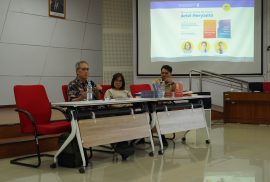
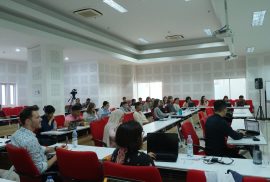
Yogyakarta — Ramayda Akmal, an author and lecturer at the Faculty of Cultural Sciences (FIB), Universitas Gadjah Mada (UGM), invited the public to revisit the ideas of Ariel Heryanto, Professor Emeritus at Monash University, during a discussion titled Ramayda Akmal Reads Ariel Heryanto, held at the Soegondo Auditorium, 7th Floor of the Faculty of Cultural Sciences, UGM, on Monday (June 29), from 1:00 to 3:00 p.m.

Moderated by Giandra Febrian, a graduate student in UGM’s Master’s Program in Literature, the event featured Ariel Heryanto as the keynote speaker. The discussion centered on two of his books, Huruf demi Huruf (Letter by Letter) and Nasib Publik dalam Republik (The Fate of the Public in the Republic), inviting participants to explore contemporary social, political, and cultural issues in Indonesia through these works.

In his opening remarks, Prof. Aprinus Salam, Head of UGM’s Master’s Program in Literature, reflected on his long intellectual journey with Ariel Heryanto. He also shared several archival photographs documenting their years of friendship, offering both a nostalgic recollection and a tribute to Ariel’s contributions to Indonesian scholarship.

Opening her presentation, Ramayda described Huruf demi Huruf as a collection of essays that encapsulates many of the most pressing issues confronting contemporary Indonesia. According to her, Ariel’s writings do more than address significant social and political questions—they encourage readers to reexamine assumptions that are often taken for granted. These include the notion of elections as a “democratic celebration,” the idea of the middle class, interpretations of the May 1998 mass rapes as a language of power rather than merely racial violence, and the extent to which Indonesia’s post-independence social structure continues to reflect the colonial legacy of the Dutch East Indies.

Ramayda also highlighted Ariel Heryanto’s distinctive intellectual approach, which does not rely exclusively on Western theoretical frameworks. Instead, many of his essays seek to understand Asian societies through the experiences, histories, knowledge, and intellectual traditions produced by fellow Asian societies—an approach often referred to as South–South knowledge exchange. In her reading, Ariel consistently situates Indonesian culture within its broader relationships with other Asian societies.

She further argued that one of Ariel’s greatest strengths lies in his ability to examine the increasingly complex relationship between popular culture, capitalism, and power. According to Ramayda, the rise of digital media has created various forms of alternative cultural production that appear open and inclusive while remaining embedded within capitalist structures.

“What makes Mas Ariel’s writings enduring is that they continue to invite new questions as the examples themselves become increasingly complex. Earlier, we discussed whether alternative literature belongs to pop culture or whether it should be understood as an alternative product. It is heavily facilitated by highly capitalist media. Although the space is remarkably diverse and inclusive—anyone can write and anyone can read—you still have to pay for the product. This makes the relationship between capitalism, popular culture, political power, and dominant forces even more complex,” Ramayda explained.

During the discussion, Ramayda also shared her personal appreciation for the essay “Huruf demi Huruf,” the title essay of the book. She described it as one of Ariel’s most memorable works because it begins with deeply personal childhood experiences before expanding into a broader reflection on Indonesia’s contemporary condition.

Meanwhile, Ariel Heryanto reflected on the question that has motivated his writing since around 1976. He explained that he has long been preoccupied with understanding why profound social inequality can persist within societies that nevertheless appear relatively stable, peaceful, and seemingly free of major upheaval.

The discussion became particularly lively when an audience member asked whether Indonesia might face national disintegration, referring to the title of Ariel’s book Nasib Publik dalam Republik. Responding to the question, Ariel argued that capitalism remains the most powerful force shaping the modern nation-state.

“In my view, the greatest force in the world today is capitalism—not radicalism, not separatism. Those forces certainly exist, but none surpasses capitalism. As long as a state operates within a capitalist system, it will endure—not only domestically but also internationally. In other words, nationalism is itself a product of, and serves the interests of, capitalism. The fate of a nation ultimately depends on whether it is constituted through a capitalist system,” Ariel said.

Through this discussion, the organizers hoped that both longtime readers and newcomers to Ariel Heryanto’s work would see the forum as an opportunity to critically engage with Indonesia’s contemporary challenges through the perspectives of literature, culture, and the social sciences.

The event concluded with a book-signing session by Ariel Heryanto. Many participants took the opportunity to have their books signed, take photographs, and engage in informal conversations with Ariel about the ideas discussed during the event. Their enthusiasm reflected the enduring interest in Ariel Heryanto’s works and intellectual contributions, which continue to offer relevant perspectives for understanding Indonesia’s contemporary social, political, and cultural issues.


Author: Khotibul Imam

SMA 1 Banyudono Boyolali Visits the Faculty of Cultural Science at UGM to Learn About Academic Programs and Campus Life

News Release Monday, 29 June 2026

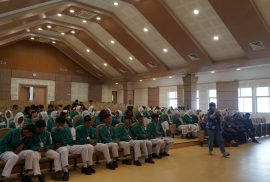
The Faculty of Cultural Sciences Gadjah Mada University (FIB UGM) hosted an educational visit from SMA 1 Banyudono on Tuesday, June 23, 2026, at the Poerbatjaraka Building Auditorium, FIB UGM. The event was attended by 83 students, accompanied by their teachers, as part of an effort to introduce students to the world of higher education.

The visit aimed to provide insight into higher education, particularly the various degree programs available at FIB UGM. During the presentation session, participants received information about the faculty’s profile, academic strengths, the new student admission process, and career prospects for graduates of the various degree programs offered by FIB.

In addition to learning about the degree programs, the students also gained an overview of the various learning support facilities available on the FIB UGM campus. These facilities include lecture halls, a library, language labs, and various resources that support the development of students’ competencies in both academic and non-academic fields.

This event also introduced student life at FIB UGM through presentations on student organizations, Badan Semi Otonom (BSO), and various programs that students can participate in. Through these sessions, participants were encouraged to understand the importance of developing their interests, talents, and leadership skills while pursuing higher education.

Through this visit, it is hoped that students from SMA 1 Banyudono will gain a more comprehensive understanding of the college environment and the opportunities for personal development available at FIB UGM. This event also serves as a means to strengthen the relationship between the FIB UGM, and high schools in support of improving access to information on higher education for the younger generation.


[Humas FIB UGM, Maylafaizza Nafisha Zifa] 

Four UGM Arabic Literature Students Participate in Qatar Debate Indonesian Chapter

News Release Tuesday, 23 June 2026

Universitas Islam Indonesia hosted the Qatar Debate Indonesian Chapter, widely known as UNISI Debate. This prestigious competition brought together 16 universities across Indonesia—including public, private, and Islamic higher education institutions—and involved 22 professional adjudicators with expertise in Arabic debate.

The Arabic Literature Study Program of Universitas Gadjah Mada participated by sending four student delegates: Hashifa Zara Ahfiyani and Ahsana Matswayasha (fourth semester), as well as Ismail and Rayya Adhiya Syifa (second semester). The team competed in five preliminary rounds held over two days.

During the first three rounds on April 11, 2026, the UGM team faced Institut Darul Ulum Banyuanyar, UIN Maulana Malik Ibrahim, and Universitas Sebelas Maret. The fourth and fifth rounds, held on April 12, 2026, saw the team competing against a swing team (a combined team from Universitas Islam Indonesia and UIN Sultanah Nahrasiyah Lhokseumawe), before facing UIN Maulana Malik Ibrahim once again.

Out of the five rounds, the UGM team secured two victories—during the third round against Universitas Sebelas Maret and the fourth round against the swing team. In the fourth round, one of the delegates, Ismail, was also awarded Best Speaker.

This participation marked the team’s first experience in a national-level Arabic debate competition connected to an international platform. One of the delegates, Rayya, noted that the experience serves as an initial step toward revitalizing Arabic debate activities at UGM. She also emphasized that the preparation process and competition provided valuable lessons, including improving language proficiency, developing argumentation skills, and strengthening teamwork.

Beyond competition, this participation represents an important milestone for students to grow, build confidence, and contribute to reviving the culture of Arabic debate within the academic environment.

Author: Hashifa Zara Ahfiyani

123…15

Video UGM

[shtmlslider name='shslider_options']
Universitas Gadjah Mada

Faculty of Cultural Sciences
Universitas Gadjah Mada
Jl. Nusantara 1, Bulaksumur Yogyakarta 55281, Indonesia
   fib@ugm.ac.id
   +62 (274) 513096
   +62 (274) 550451

Work Units

  • Office of Journal & Publishing
  • INCULS
  • Information Technology and Database
  • Language Learning Center
  • Library Unit
  • Public Relations
  • Research

Facilities

  • Computer Laboratory
  • Gamelan
  • Guest House
  • Language Library
  • Library
  • Phonetics Library
  • Self Access Unit
  • Student Internet Centre

Importan Links

  • Journal of Humaniora
  • Subscriber Journal
  • Alumni Portal
  • Career
  • Departmens News
  • UGM Streaming

Contacts

  • Academic
  • Administration
  • Dean’s Office
  • Departments / Study Programs
  • Public Relations

© 2024 Faculty of Cultural Sciences Universitas Gadjah Mada

KEBIJAKAN PRIVASI/PRIVACY POLICY

[EN] We use cookies to help our viewer get the best experience on our website. -- [ID] Kami menggunakan cookie untuk membantu pengunjung kami mendapatkan pengalaman terbaik di situs web kami.I Agree / Saya Setuju