• About UGM
  • Academic Portal
  • IT Center
  • Library
  • Research
  • Webmail
  • Informasi Publik
  • English
    • Indonesia
Universitas Gadjah Mada Faculty of Cultural Sciences
Universitas Gadjah Mada
  • Home
  • Profile
    • History
    • Vision and Mission
    • Organizational structure
    • Administration
    • Staff
    • Faculty Members
  • Academic
    • Academic Calendar
    • Undergraduate Programs
      • Bachelor of Cultural Antrophology
      • Bachelor in Archaeolagy
      • Bachelor in History
      • Bachelor in Tourism
      • Bochetor in Korean Language and Culture
      • Bachelor in Indonesian Language and Culture
      • Bachelor in English
      • Bachelor in Arabic
      • Bachelor in Japanese Language and Culture
      • Bachelor in Javanese Language, Literature and Culture
      • Bachelor in French language and literature
    • Graduate Programs
      • Master in Antrophology
      • Master in ArchaeoIogy
      • Master in History
      • Master in Linguistics
      • Master in Literature
      • Master In American Studies
      • Master in Middle Eastern Cultural Studies
    • Post-Graduate Programs / S3
      • Doctor in Antropology
      • Doctor in American Studies
      • Doctor in Humanities
    • Student Service
  • KPPM
    • Research Information
    • Scientific / Academic Publications
    • Community Service
    • International Cooperation
    • Domestic Cooperation
  • Student Organizations
    • Student Executive Council
    • Semi-Autonomous Organizations
      • KAPALASASTRA
      • Christian Student Alliance
      • LINCAK
      • Saskine
      • Catholic Student Family
      • Dian Budaya
      • Sastra Kanuragan (sasgan)
      • Family of Muslim Cultural Sciences Students (KMIB)
      • Bejo Mulyo
    • Autonomous Organizations
      • Family of Anthropology Students (KEMANT)
      • English Department Student Association
      • Tourism Students Association (HIMAPA)
      • Family of Indonesian Literature Students (KMSI)
      • West Asian Literature Student Association (IMABA)
      • Association of Korean-Language Students (HIMAHARA)
      • Family of Regional Indonesian Literatures Students (KAMASUTRA)
      • The Family Body of History Students (BKMS)
      • The French Literature Students Association (HMSP)
      • Family of Anthropology Students
      • Japanese Student Association (HIMAJE)
  • Admission
    • Student Evaluation
  • Home
  • SDGs 16: Peace Justice and Strong Institution
  • SDGs 16: Peace Justice and Strong Institution
Arsip:

SDGs 16: Peace Justice and Strong Institution

Matragama: Nurturing a Literary Community in the Land of a Thousand Temples

News Release Wednesday, 20 May 2026

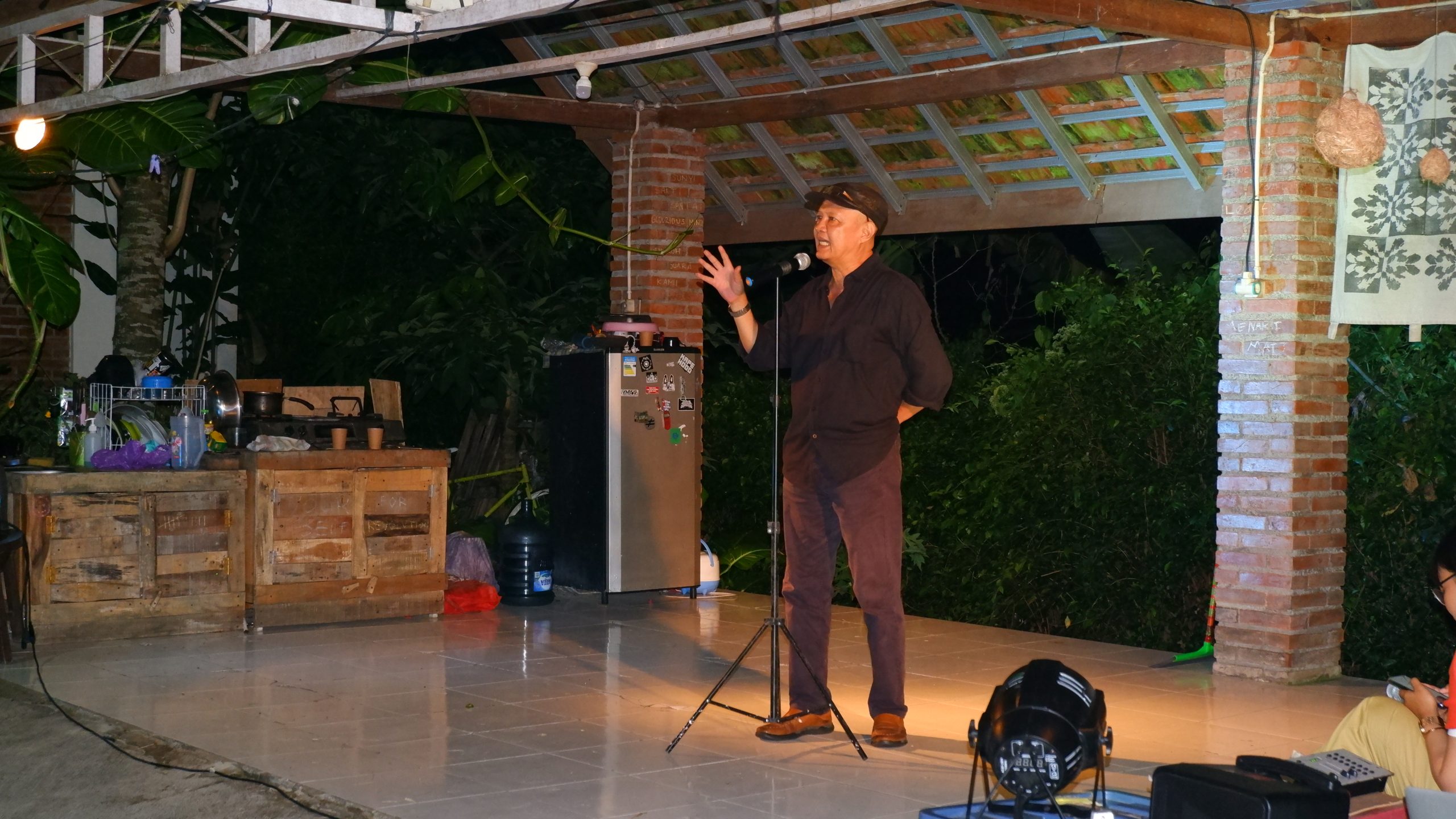
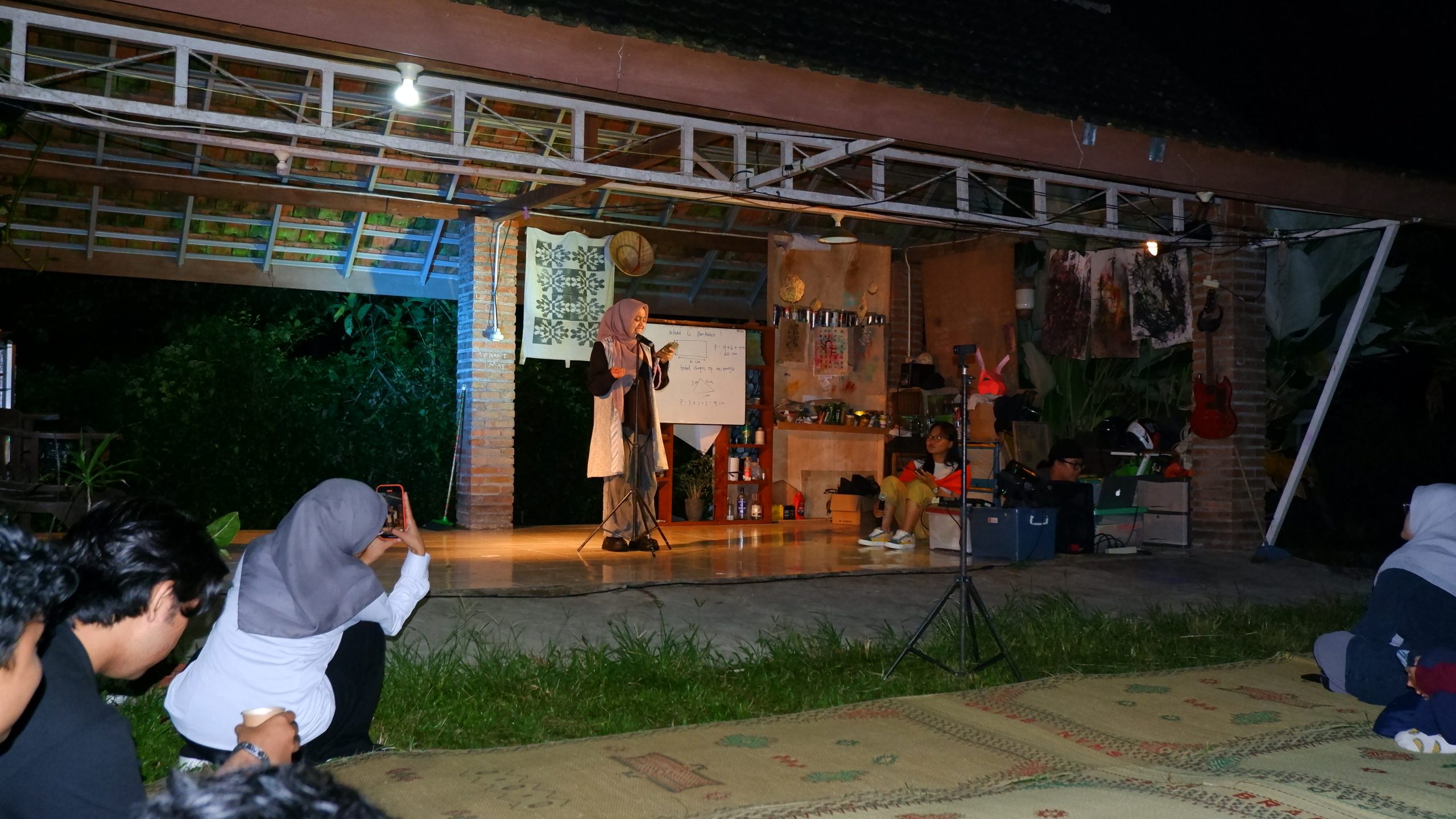
Yogyakarta, May 16, 2026 – At Pondok A. Salam Kalimasada in Pakem, Sleman, Yogyakarta, a new chapter of Matragama became more than merely an organizational agenda. It transformed into a gathering space for people who believe that literature still needs to be nurtured collectively. Since 6:00 PM WIB, people arrived one by one, bringing voices, stories, laughter, and memories. They sat on woven mats in the cold night air, while the dim light in the corner of the lodge made every conversation feel more intimate. The event was attended by the extended Matragama family from various generations, doctoral students of Humanities Studies, and invited guests from Middle Eastern Cultural Studies, American Studies, Linguistics, History, Anthropology, and various circles within the Faculty of Cultural Sciences at UGM.

Since its establishment in 2022 under the leadership of Billy, Matragama has continued moving forward through a relay of generations. Leadership was then continued by Awan in the second generation, and now enters a new phase with Brian steering the third generation. That evening marked a sign that the relay had not stopped. Amid the cold air of Pakem and the warmth of conversations beginning to grow, Matragama seemed to be rediscovering its flame.

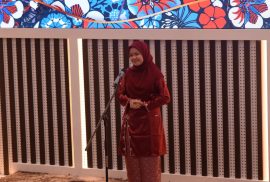
The head of Matragama, Giandra Febrian Haidar, opened the event in a calm yet confident tone. In his remarks, he expressed hope that literature would not remain confined to classrooms alone, but would also grow in gathering spaces, through long nights, and among people who still wish to listen to one another.

The Head of UGM’s Master’s Program in Literature, Aprinus Salam, was also present and delivered warm remarks. Before the students and invited guests, he emphasized the importance of organizing and building communities as part of intellectual and cultural processes. According to him, literature cannot live in isolation. It grows through encounters, conversations, and collective work. Aprinus also stated that Pondok A. Salam Kalimasada could serve as a venue for literary and artistic activities—an open house for anyone wishing to keep the pulse of culture alive.

After the opening session, warmly guided by Pute as the host, poem after poem began to be recited. Short stories were brought to life through voices. Under the theme Little Candles at the Foot of Merapi, moments of silence felt deeply meaningful, as though everyone was gathering something from within themselves. The readers appeared one after another: M. Iqbal Saputra, Romzul Falah, Awabeen Samsuding, Ella Manikam, Nuzul Ilmiawan, Islahudin Muhammad, Khatibul Umam, and several invited guests. They did not merely read poetry, but also shared anxieties and inner experiences with the audience.

At times, the sound of crickets slipped between the poetry readings. Some listeners bowed their heads in silence as the poems were recited. Then a light drizzle fell gently, as though helping preserve the calm and warmth of the night. As the rain grew heavier, some participants slowly moved to the terrace and inside the lodge while continuing to listen attentively. Words continued floating through the night air, mingling with the cold winds from the slopes of Mount Merapi and the aroma of coffee and boiled soybeans wafting from the lodge.

In between sessions, M. Iqbal Saputra, a committee member from the technical division, shared his reflections on the importance of literary appreciation nights such as this. According to him, events like the launch of Matragama are something that should exist amidst the turbulence of changing times. He said that poetry, storytelling, and even simple discussions are efforts to become whole human beings again—to see life from various perspectives and then determine one’s path, whether through writing, action, or perhaps simply through a smile.

One of the evening’s most captivating moments came through a dramatic reading by Luthfi, a doctoral student in Humanities at UGM. The dramatic performance transformed the text from mere writing into a moving body, a pulsating voice, and emotions vividly alive before the audience’s eyes. The invited guests were swept into the intimate yet energetic atmosphere.

In the middle of the appreciation night, Rini Febriani Hauri read her short story titled The Three Deaths of Dayang Temulun in a calm and rhythmic voice. The climax of the event came when Rini’s short story was discussed collectively. The discussion was moderated by Giandra, featuring Ricky Yudhistira Nasution, a doctoral student in Humanities at UGM, as the speaker. The short story, which won Second Place in the 2025 International HB Jassin Award, was explored through the lens of magical realism—a landscape where bodies, earth, trees, mist, and memories coexist without rigid boundaries between the real and the supernatural. The discussion unfolded warmly. It examined how literature operates within collective memory, myth, the body, and human history. Participants listened enthusiastically; some remained silent in contemplation, while others immersed themselves in endless interpretive possibilities.

The night grew later, yet no one truly wished to leave. After the entire series of events concluded, the atmosphere became more relaxed. Some people sang together, while others chatted freely, joked, and shared long laughter. Some sat in circles discussing books and literature, while others simply enjoyed the night while exchanging unfinished life stories beyond the formal forum. It was there that Matragama truly felt alive—not in banners, event schedules, or ceremonial formalities, but in encounters and conversations that continued glowing deep into the night.

Several invited guests from various departments and communities within UGM’s Faculty of Cultural Sciences also shared reflections and hopes for Matragama. Representatives from Middle Eastern Cultural Studies, American Studies, Linguistics, History, and Anthropology expressed hopes that inter-organizational bonds would continue warmly. They also wished for Matragama to have a long life and remain consistent as a shared space for nurturing literature, art, and culture.

At the foot of Merapi that night, literature appeared like little candles—not grand, but enough to keep the warmth of encounters and conversations alive. The drizzle still fell softly as people slowly began leaving Pondok Kalimasada one by one.

Author: Rini Febriani Hauri

National Seminar: Middle Eastern Cultural Studies Master’s Program Discusses the Impact and Attitudes of Arab States in the Iran vs. US-Israel Conflict

News Release Wednesday, 20 May 2026

Yogyakarta, May 13, 2026 – The Middle Eastern Cultural Studies Master’s Program and the Arabic Literature Study Program at Universitas Gadjah Mada (UGM) held a national seminar. The seminar was titled “The US-Israel vs. Iran Conflict in the Middle East: Impact and Attitudes of Arab States.” It took place in the Soegondo Building, rooms 407-409, and featured three distinguished speakers: Agus Hidayatullah, Lc., M.A., Moh. Nur Salim, Lc., M.Sc. from the Indonesian Embassy in Cairo, Egypt, and Nikmatur Rahman Chaniago, S.S., M.MECASt. from the Indonesian Embassy in Tehran, Iran. The event was conducted in a hybrid format. Nur Salim attended in person, while the other two speakers joined online. The seminar began with remarks from KBTT professor Prof. Dr. Sangidu, M.Hum., and from the head of the Department of Intercultural Studies, Prof. Dr. Aris Munandar, M.Hum.

The first session was delivered by Moh. Nur Salim, Lc., M.Sc., who emphasized that the US-Israel vs. Iran conflict is not simply a battle between two camps, but a global issue with extraordinary impact. He also stated that China has great potential to mediate peace between the US, Israel, and Iran. Following Nur Salim, Agus Hidayatullah, Lc., M.A., presented the next session. He discussed the impact of the war on Egypt’s economy and diplomacy, while its impact on Indonesia included soaring energy prices and the safety of thousands of Indonesian citizens in the Middle East. As a member of the Indonesian Embassy in Cairo, he explained that the Indonesian Embassy plays a role in repatriating Indonesian citizens from various affected countries to Indonesia. Concluding the speaker sessions, Nikmatur Rahman Chaniago, S.S., M.MECASt., stated that the people of Tehran face a sociopolitical reality far more complex than media narratives suggest, demonstrating resilience through long-standing political stoicism. The Indonesian Embassy in Tehran’s role amidst geopolitical isolation is to protect Indonesian citizens by handling cases involving detained ship crew members and facilitating humanitarian aid.

The event concluded with a closing statement from the moderator, a souvenir presentation by the Head of the Master’s Program in Middle Eastern Cultural Studies, Dr. Mahmudah, M.Hum., and a group photo. The main takeaway for Middle Eastern Cultural Studies students is to ground academic analysis in humanitarian perspectives, emphasizing real-life experiences over purely geopolitical narratives. This approach ensures our understanding goes deeper than surface-level conflict.

Penulis: Jesisca Amanda Florantika

ERC DEAGENCY Project Assistant Visits UGM Anthropology: Strengthening International Partnerships

News Release Monday, 18 May 2026

In an effort to expand its international academic network and enhance human resource capacity, the Department of Anthropology, Faculty of Cultural Sciences (FIB), Universitas Gadjah Mada (UGM) received a visit from the Project Assistant of ERC DEAGENCY. This visit, which also involved a scholarly exchange with affiliates of the University of Ljubljana (Slovenia), serves as a concrete step by the faculty in supporting the achievement of the Sustainable Development Goals (SDGs). The meeting was not merely an academic gathering but was also filled with discussion and sharing experience sessions involving the part-time staff of the Department of Anthropology.

The presence of these student staff members is crucial, considering they are the operational backbone who manage the department’s daily needs, ranging from social media, websites, graphic design, and information dissemination, to event organization, data management, and the library. Through this discussion space, they gained global exposure and practical learning outside the classroom. New insights regarding international standards in department management directly improved their professional competencies in digital communication, design, and managerial fields. This empowerment is a tangible manifestation of creating an inclusive and productive working environment on campus, while also serving as valuable preparation before they enter the professional workforce.

Furthermore, the exchange of information regarding data management and information dissemination encourages the creation of a more transparent, accountable, and effective department governance system. This cross-border dialogue between the UGM FIB Department of Anthropology, ERC DEAGENCY, and the University of Ljubljana is a manifestation of a global partnership that is essential for the sustainable transfer of academic knowledge. Through this synergy, the department hopes to continue optimizing the role of student staff not only as technical support but also as a driving force for service innovation to realize an educational institution that possesses integrity, is globally competitive, and delivers a positive impact on the academic community.

Author: Puspita Nindya Sari

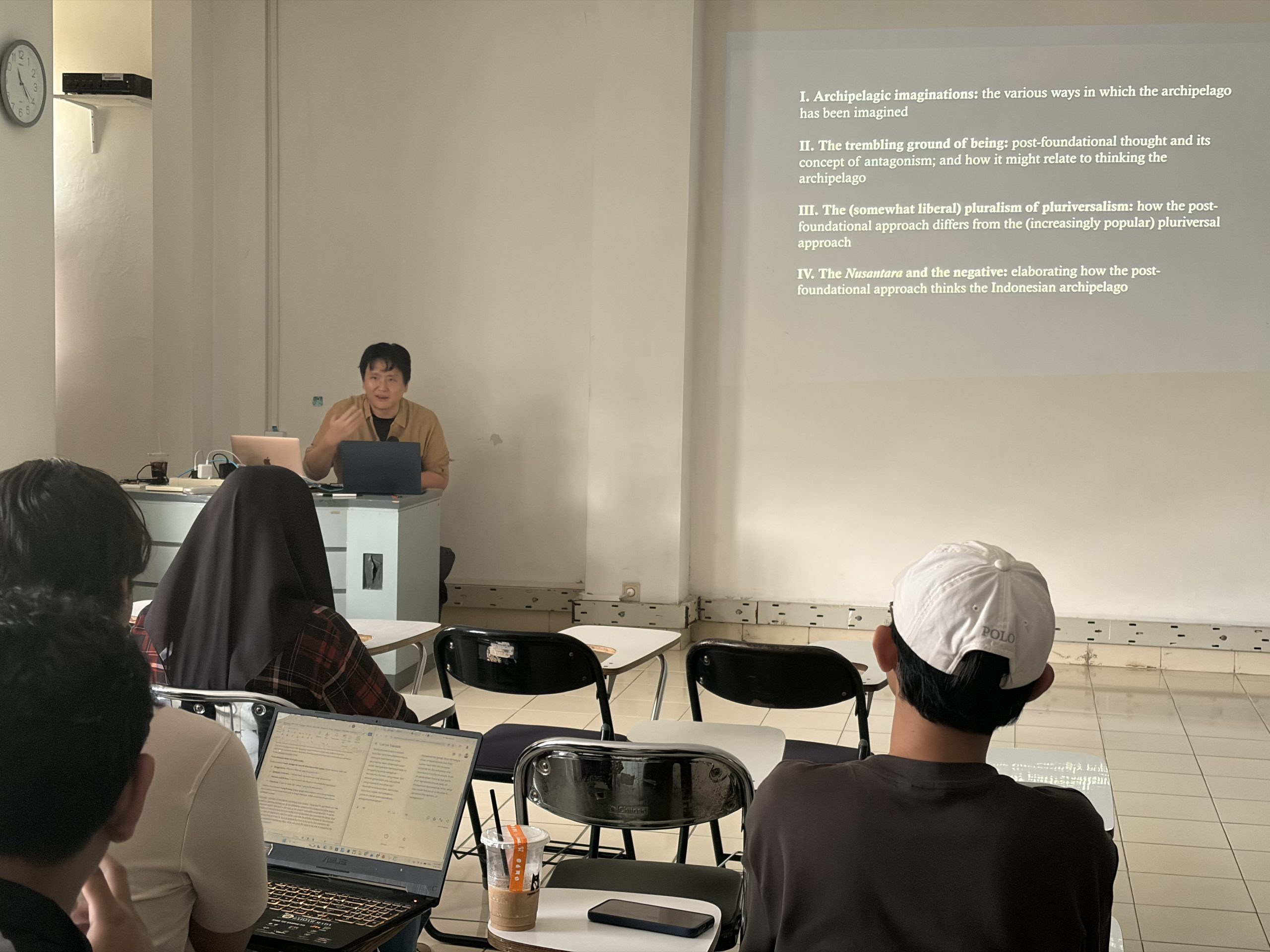
Inaugurated as UGM Professor, Aris Munandar Emphasizes Locally Rooted English Competence

News Release Thursday, 7 May 2026

Yogyakarta, May 7, 2026 – Professor Dr. Aris Munandar, M.Hum. was officially inaugurated as a Professor of English Pragmatics at the Faculty of Cultural Sciences, Universitas Gadjah Mada (UGM). The inauguration ceremony took place at the UGM Main Building on Thursday, May 7, 2026. In his inaugural speech, Prof. Aris emphasized the importance of developing English pragmatic competence oriented toward linguistic diversity in Indonesia.

Prof. Aris explained that English now serves as a crucial global communication tool for economic growth and education systems. Based on the concept of World Englishes, the diversity of the English language is divided into three circles. Indonesia falls into the expanding circle category. This position makes Indonesia a receiver of English norms from native-speaking countries, or the inner circle.

Indonesians learn English as a foreign language without a historical background of British colonialism. This condition creates unique challenges and characteristics. The characteristics of the English spoken by Indonesians are indirectly influenced by both the national language and regional languages. One of the most striking differences is seen in the application of politeness principles, which often differ from native speaker norms.

Today, intensive English communication occurs among speakers from developing nations. Prof. Aris gave an example of common interactions within the UGM campus environment between international students from Asia and Africa and the local academic community.

“As English has become an international lingua franca and the number of speakers in expanding circle countries continues to grow, there is a wide possibility of English communication occurring among fellow speakers from these expanding circle nations,” explained Prof. Aris during his speech.

Therefore, Prof. Aris believes that pragmatic competence with a multilingual orientation must be continuously developed. This approach aims to prevent society from adopting a monolingual view that could potentially generate negative perceptions of English variations in developing countries. He asserted that the diversity of English is an inevitable linguistic reality.

This condition has practical implications for language proficiency evaluations, such as the Test of English as a Foreign Language (TOEFL). Such standardized tests are still considered biased because they heavily prioritize native speaker norms. As a solution, Prof. Aris proposed adjustments to local evaluation instruments. The Academic English Proficiency Test (AcEPT) at UGM needs to be designed as a relevant benchmark for speakers in Indonesia. This test should incorporate materials that reflect the local realities of Indonesian speakers without violating generally agreed-upon linguistic standards.

An inclusive understanding of English language diversity aligns with efforts to create an equitable and adaptive education system. Through a multilingual approach, cross-border interactions involving diverse cultural backgrounds can run harmoniously. Ultimately, this step supports the creation of an equal and inclusive global order, where every individual receives equal respect without losing their local identity roots. This resonates with UGM’s vision to remain deeply rooted in local wisdom while achieving global respect.

[Public Relations of FIB UGM, Candra Solihin]

Universitas Gadjah Mada and Universitas Islam Darussalam Community Service Program (PkM)

News Release Wednesday, 6 May 2026

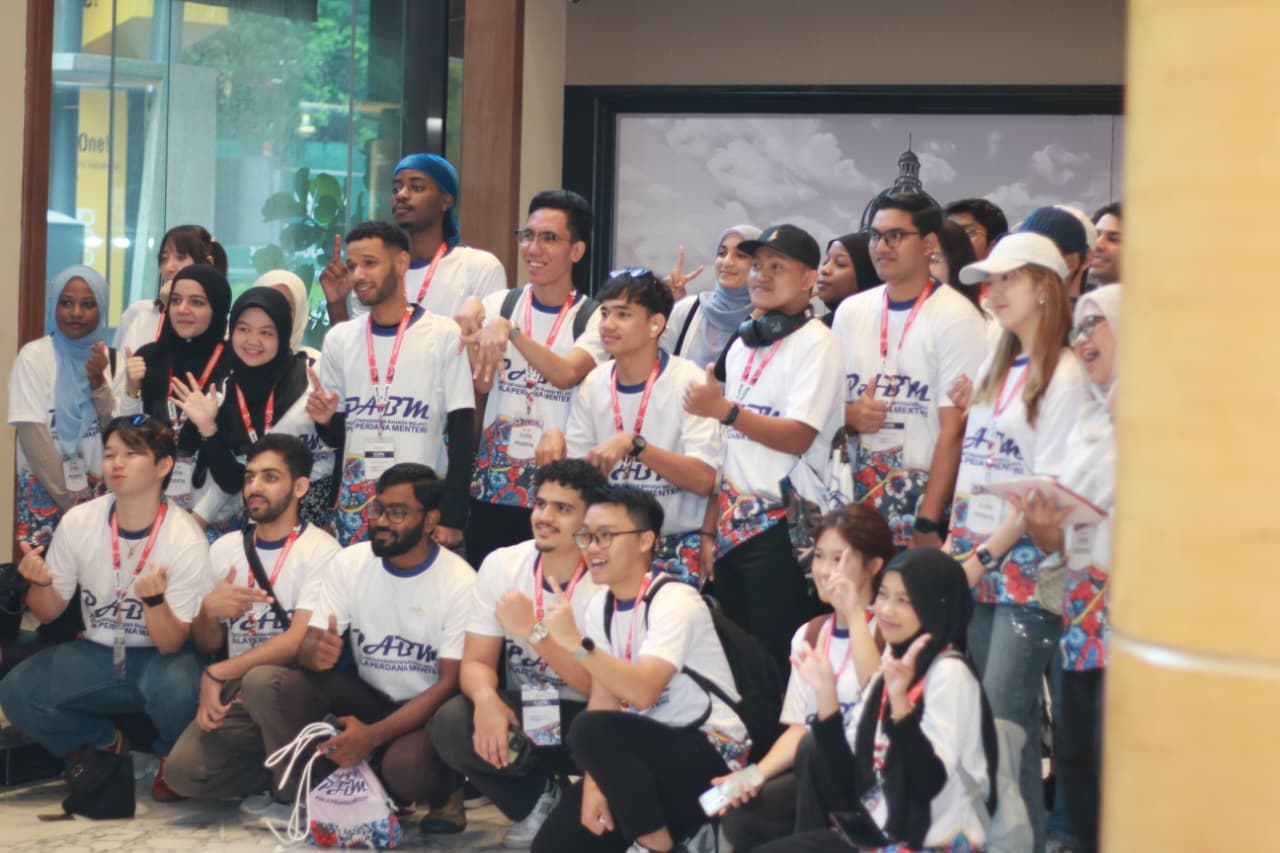
Ciamis, 25 April 2026 — The Department of Intercultural Studies, Faculty of Cultural Sciences, Universitas Gadjah Mada held a Community Service Program (PkM) and Expert Lecture at Universitas Islam Darussalam on 25–26 April 2026. The event brought lecturers, students, and the pesantren community together in a setting that combined academic discussion with everyday interaction.

The visit also continued an existing connection between the two institutions, especially through Prof. Dr. K.H. Fadlil Munawwar Manshur. In his remarks, he described the program as more than a formal academic agenda. For him, it was a form of silaturahim, where knowledge is shared in a more personal and open way.

The delegation was led by Prof. Dr. Aris Munandar, who spoke about the role of American Studies in reading global influence. He pointed out that influence does not always come in direct or visible forms. In many cases, it appears through everyday habits such as academic writing, publication systems, and standards that scholars gradually follow. 

Therefore, according to him, the American Studies program plays an important role in helping scholars critically recognize and navigate these subtle influences, which often emerge through habits in academic writing, publication systems, and scholarly standards.

Several speakers then presented their topics in parallel sessions. Dr. Mahmudah discussed feminism in Arabic literature and its place in Islamic education. Dr. Amin Basuki focused on how American academic patterns can be seen in SINTA-indexed journals, especially in the way articles are structured and evaluated. Dr. Muhammad Zakki Masykur talked about Arabic and the works of Javanese ulama which showed that local traditions remain active in knowledge production. Meanwhile, Dr. Stedi Wardoyo explained how morality in Japanese society often grows from family life and social habits, not only from religion.

Outside the formal sessions, the program also included shared activities such as joining the Shalawat Burdah gathering with the pesantren community. Moments like this made the visit feel less formal and more connected. It showed that community service is not only about delivering material, but also about building relationships.

As an institution that provides education from early levels to university, Universitas Islam Darussalam also offers space for future collaboration, especially in character education. This program, in a simple way, shows that academic cooperation can grow through meeting, talking, and spending time together.

123…7

Video UGM

[shtmlslider name='shslider_options']
Universitas Gadjah Mada

Faculty of Cultural Sciences
Universitas Gadjah Mada
Jl. Nusantara 1, Bulaksumur Yogyakarta 55281, Indonesia
   fib@ugm.ac.id
   +62 (274) 513096
   +62 (274) 550451

Work Units

  • Office of Journal & Publishing
  • INCULS
  • Information Technology and Database
  • Language Learning Center
  • Library Unit
  • Public Relations
  • Research

Facilities

  • Computer Laboratory
  • Gamelan
  • Guest House
  • Language Library
  • Library
  • Phonetics Library
  • Self Access Unit
  • Student Internet Centre

Importan Links

  • Journal of Humaniora
  • Subscriber Journal
  • Alumni Portal
  • Career
  • Departmens News
  • UGM Streaming

Contacts

  • Academic
  • Administration
  • Dean’s Office
  • Departments / Study Programs
  • Public Relations

© 2024 Faculty of Cultural Sciences Universitas Gadjah Mada

KEBIJAKAN PRIVASI/PRIVACY POLICY

[EN] We use cookies to help our viewer get the best experience on our website. -- [ID] Kami menggunakan cookie untuk membantu pengunjung kami mendapatkan pengalaman terbaik di situs web kami.I Agree / Saya Setuju