• About UGM
  • Academic Portal
  • IT Center
  • Library
  • Research
  • Webmail
  • Informasi Publik
  • English
    • Indonesia
Universitas Gadjah Mada Faculty of Cultural Sciences
Universitas Gadjah Mada
  • Home
  • Profile
    • History
    • Vision and Mission
    • Organizational structure
    • Administration
    • Staff
    • Faculty Members
  • Academic
    • Academic Calendar
    • Undergraduate Programs
      • Bachelor of Cultural Antrophology
      • Bachelor in Archaeolagy
      • Bachelor in History
      • Bachelor in Tourism
      • Bochetor in Korean Language and Culture
      • Bachelor in Indonesian Language and Culture
      • Bachelor in English
      • Bachelor in Arabic
      • Bachelor in Japanese Language and Culture
      • Bachelor in Javanese Language, Literature and Culture
      • Bachelor in French language and literature
    • Graduate Programs
      • Master in Antrophology
      • Master in ArchaeoIogy
      • Master in History
      • Master in Linguistics
      • Master in Literature
      • Master In American Studies
      • Master in Middle Eastern Cultural Studies
    • Post-Graduate Programs / S3
      • Doctor in Antropology
      • Doctor in American Studies
      • Doctor in Humanities
    • Student Service
  • KPPM
    • Research Information
    • Scientific / Academic Publications
    • Community Service
    • International Cooperation
    • Domestic Cooperation
  • Student Organizations
    • Student Executive Council
    • Semi-Autonomous Organizations
      • KAPALASASTRA
      • Christian Student Alliance
      • LINCAK
      • Saskine
      • Catholic Student Family
      • Dian Budaya
      • Sastra Kanuragan (sasgan)
      • Family of Muslim Cultural Sciences Students (KMIB)
      • Bejo Mulyo
    • Autonomous Organizations
      • Family of Anthropology Students (KEMANT)
      • English Department Student Association
      • Tourism Students Association (HIMAPA)
      • Family of Indonesian Literature Students (KMSI)
      • West Asian Literature Student Association (IMABA)
      • Association of Korean-Language Students (HIMAHARA)
      • Family of Regional Indonesian Literatures Students (KAMASUTRA)
      • The Family Body of History Students (BKMS)
      • The French Literature Students Association (HMSP)
      • Family of Anthropology Students
      • Japanese Student Association (HIMAJE)
  • Admission
    • Student Evaluation
  • Home
  • SDGs 14: Life below water
  • SDGs 14: Life below water
Arsip:

SDGs 14: Life below water

Min Seong Kim’s Public Lecture Explores More-than-Human Antagonism and Pluriversal Politics in the Indonesian Archipelago

News Release Tuesday, 9 June 2026

Yogyakarta, June, 4 2026 — A public lecture featuring Min Seong Kim was held on Thursday, June 4, from 11:00 a.m. to 1:00 p.m. in Room 205 of the Poerbatjaraka Building. On this occasion, Kim delivered a presentation entitled “Trembling Grounds of the Archipelago: Pluriversal Ontopolitics and More-than-Human Antagonism,” a study that reexamines the foundational assumptions of pluriversal politics through ecological and political experiences emerging across the Indonesian archipelago.

In his presentation, Kim addressed ongoing debates surrounding pluriversal politics that have recently gained prominence within environmental studies, decolonial thought, and posthumanist scholarship. As articulated by a number of contemporary thinkers, pluriversal politics seeks to challenge the modern worldview that separates humans from nature and treats the world as an object to be mastered and controlled. Instead, this perspective emphasizes that life is constituted through networks of interdependent relations among humans and a wide range of nonhuman entities, including animals, plants, landscapes, and the material forces of the earth.

According to Kim, pluriversal politics is generally grounded in the assumption that relationality constitutes the ontological basis of life. From this perspective, politics is understood as the effort to establish and sustain relationships that enable diverse forms of existence to coexist. However, Kim questioned whether relationality can truly serve as an adequate foundation for understanding political dynamics, particularly when confronted with conflict, tension, and division that cannot always be resolved through reconciliation and relational repair.
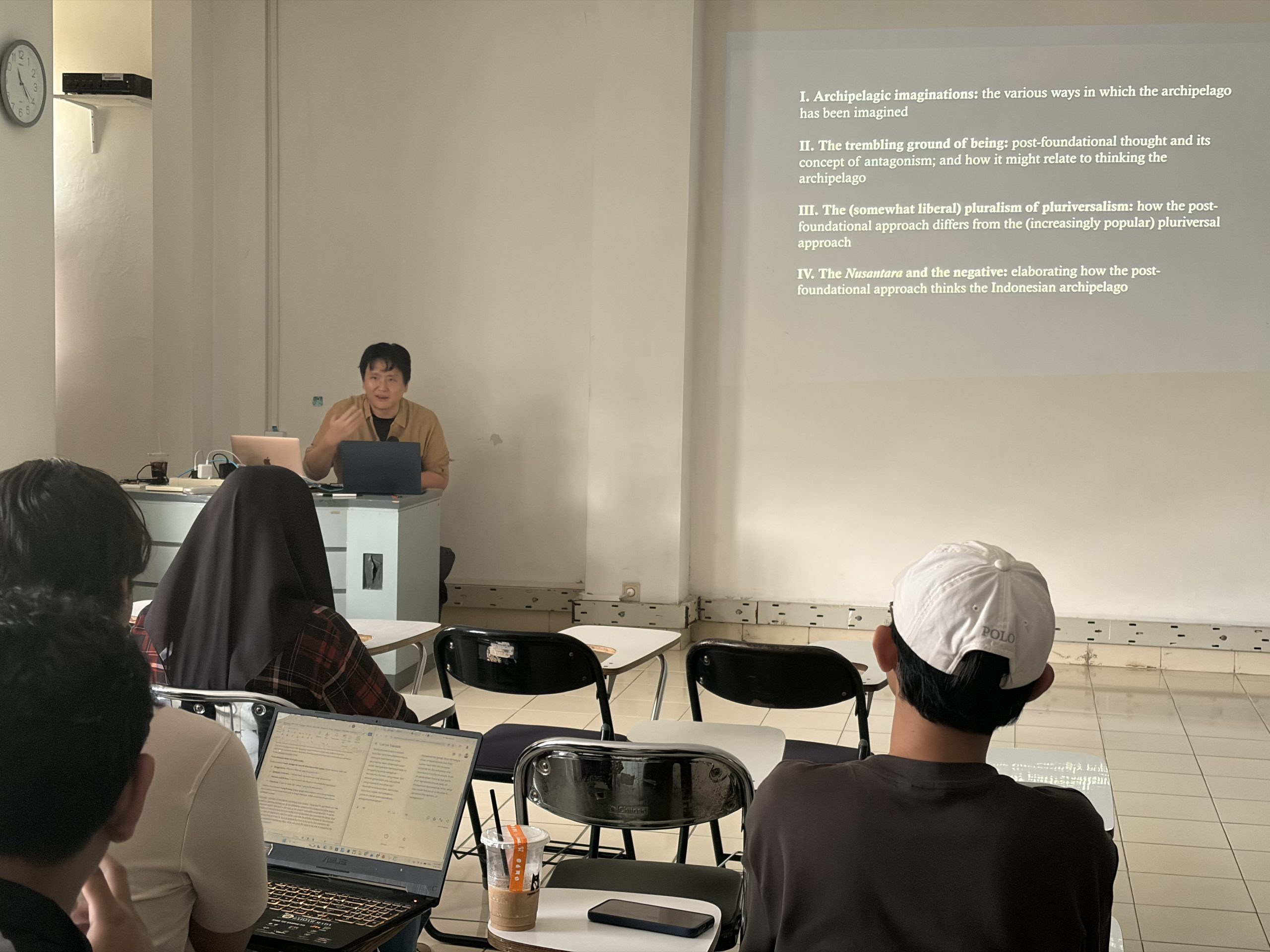
To develop this critique, Kim drew on the works of Adam Bobbette and Sophie Chao, whose research explores various forms of human–nonhuman relations in Indonesia. The cases they examine demonstrate that interconnectedness among beings does not necessarily produce harmony. Rather, such relations are often marked by frictions, competing interests, and forms of instability that reveal the political dimensions of the more-than-human world. The presence of nonhuman actors in politics, therefore, not only creates possibilities for collaboration and relationality but also gives rise to antagonisms that shape social and ecological fields.

Building on this reading, Kim connected the question of more-than-human politics to the tradition of post-foundational political thought, particularly the concept of antagonism developed by Ernesto Laclau. Within this framework, antagonism refers to the condition that no social order can ever be fully complete, final, or free from conflict. Every attempt to establish order inevitably encounters something that cannot be fully integrated into the existing system. Politics, therefore, is never simply a matter of creating relationships; it must also contend with the limits, tensions, and forms of negativity that accompany every mode of collective existence.

Through this analysis, Kim proposed that conflict and negativity should occupy a more central place in discussions of pluriversalism. Rather than treating relationality as a pre-given foundation, he argued that collective life—whether among humans or between humans and nonhumans—is always shaped through processes of negotiation, struggle, and antagonism that can never be entirely eliminated.

The public lecture offered a critical perspective on contemporary developments in political theory and ecological thought while opening a space for reflection on how societies understand their relationship with a world that extends beyond the human. At a time of growing concern over ecological crises and interspecies relations, Kim’s presentation provided a compelling framework for understanding conflict, tension, and uncertainty as inseparable dimensions of political life itself.

Author: Khotibul Umam
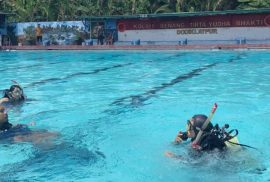
Strengthening Diving Skills Through HIMA UGM Scuba Diving Training

News Release Friday, 22 May 2026

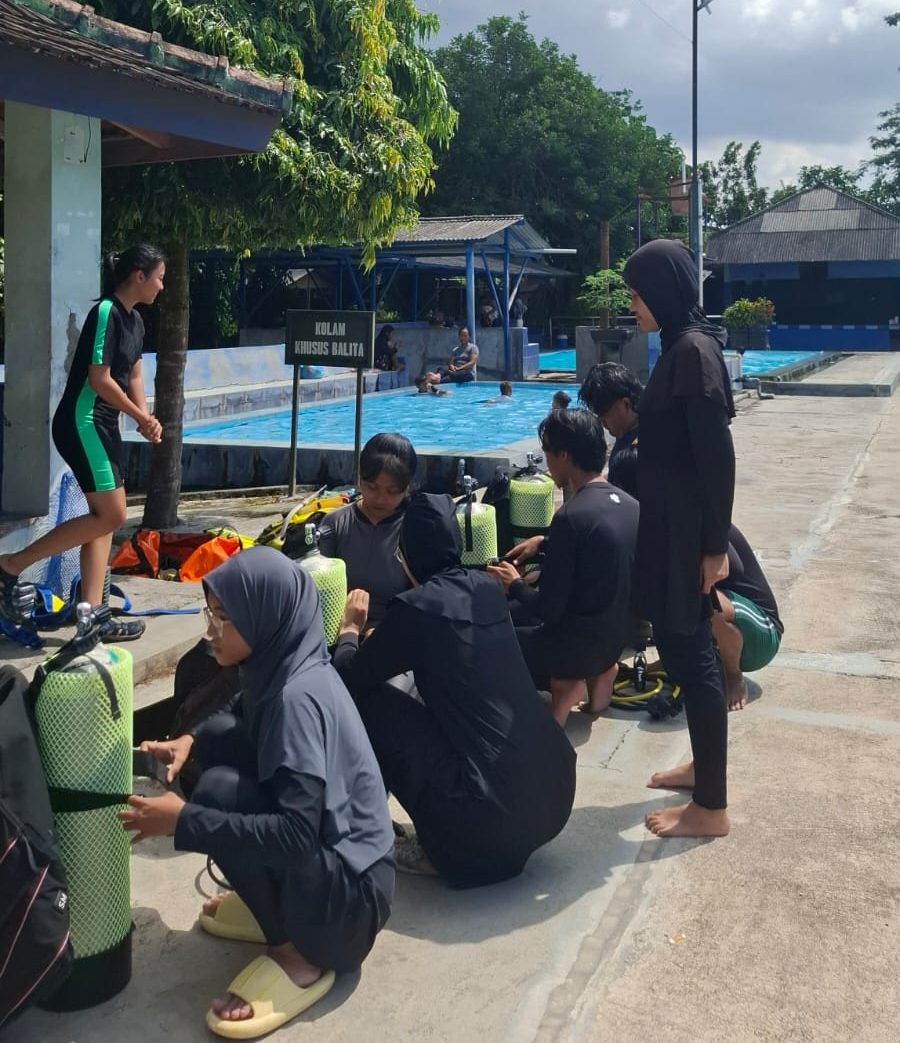
The Archaeology Student Association (HIMA) of the Faculty of Cultural Sciences, Universitas
Gadjah Mada, through its Underwater Archaeology Division, conducted a scuba diving training
activity as part of efforts to develop students’ skills in maritime and underwater archaeology. The
activity was held on May 17, 2026, and attended by members of the Underwater Archaeology
Division under the guidance of certified instructors from Sentra Selam Jogja. During the training,
students were introduced to various materials, including diving equipment, proper usage
techniques, and underwater communication signals.

This scuba diving training program was part of a series of activities conducted prior to the Open
Water Training, which is usually carried out in open sea environments. Therefore, the activity
served as a practical learning experience that supported students’ understanding of underwater
archaeological research, particularly in the observation and documentation of cultural remains in
aquatic environments. Through this activity, HIMA demonstrated its commitment to improving
students’ competencies and field experience relevant to underwater archaeology and maritime
studies.

Author: Jovinka Aldinova Kiranamurti
Photo: Divisi Arkeologi Bawah Air

Department of Anthropology Holds Visiting Lecture Framing Child Marriage: Film, Visual Ethnography, and the Ethics of Representation

News Release Wednesday, 3 December 2025

Yogyakarta, November 28, 2025 – The Department of Anthropology at UGM held a Visiting Lecture titled Framing Child Marriage: Film, Visual Ethnography, and the Ethics of Representation. The event featured guest speaker Nur Wucha Wulan Dari, commonly known as Wucha, a film director and graduate of the Master’s Program in Anthropology. The session was opened by Dr. Sita Hidayah, who emphasized that final academic projects have the potential to become visual or non-textual representations of anthropological research presented in a more engaging format.

During the film screening session, Wucha showcased two of her works: Laila and Pasukan Gagal Tobat. Both films explore the issue of child marriage. Laila tells the story of a 15-year-old girl in East Kalimantan who escapes an arranged marriage by fleeing on a boat, while Pasukan Gagal Tobat is an ethnographic film about a group of teenagers who view child marriage as a common and accepted practice in their village.

In the discussion session moderated by Muhammad Ade Putra, Wucha shared her research methods and creative process behind the films. While working in the field, she often faced dilemmas, especially during the production of Pasukan Gagal Tobat, when she encountered extreme weather conditions and witnessed firsthand the social changes occurring within the community. The sensitive issue of child marriage in both films often placed her in challenging ethical positions, leading her and her team to develop a risk matrix. She also frequently conducted regular Focus Group Discussions as part of her approach to building trust with the subjects.

Summarizing the discussion, the moderator emphasized that the camera can serve as a medium for recording field notes, a point of reference, and a space for negotiating positions between the researcher and their subjects.

Author: Novilatul Ananda Ramadhani

UGM Archaeology Talkshow with the Ministry of Marine Affairs and Fisheries Discusses Maritime Archaeology and Underwater Cultural Heritage (BMKT)

News Release Wednesday, 1 October 2025

Yogyakarta, September 26, 2025 – The Archaeology Study Program, Faculty of Cultural Sciences, Universitas Gadjah Mada (FIB UGM), in collaboration with the Ministry of Marine Affairs and Fisheries (KKP), held the “UGM Archaeology Talkshow X Ministry of Marine Affairs and Fisheries.” The event took place in a hybrid format—offline at Soegondo Building, 7th floor (Room 709), and online via Zoom Meeting—featuring the overarching theme of maritime archaeology and Underwater Cultural Heritage (BMKT).

The talkshow presented three speakers from different fields. The first was Widya Nayati, M.A., Ph.D., from the Department of Archaeology UGM, who delivered a presentation titled “Ports: Centers of Commodity Exchange or Centers of Cultural Exchange?” highlighting the role of ports throughout history and their significance in cultural interactions. Next, Frista Yorhanita, S.Si., M.Si., Director of Marine Resources at the Ministry of Marine Affairs and Fisheries, discussed “BMKT: Marine Resources in Policy Perspective”, emphasizing the importance of sustainable marine resource governance. Meanwhile, from the Faculty of Law UGM, Dr. Jur. Any Andjarwati, S.H., M. Jur., presented “Legal Studies on BMKT”, addressing regulatory aspects and legal protection in the utilization of BMKT.

Following the presentations, the event continued with an interactive discussion session that allowed participants to deepen their insights on maritime archaeology, policy perspectives, and legal regulations supporting the preservation of BMKT. The talkshow concluded with a group photo session.

This activity not only served as an academic platform that brought together perspectives from archaeology, marine sciences, and law, but also underscored the importance of cross-sectoral collaboration in preserving Indonesia’s maritime heritage.

In line with the Sustainable Development Goals (SDGs), the event supported SDG 14: Life Below Water and SDG 11: Sustainable Cities and Communities, by emphasizing the preservation of maritime heritage alongside the sustainable use of marine resources. In addition, the talkshow also contributed to SDG 16: Peace, Justice, and Strong Institutions through the strengthening of transparent legal regulations that prioritize public interests.

[Public Relation of FIB UGM, Alma Syahwalani]

Ajengkanthi Prabaningjati, FIB UGM Student, Community Service-Learning and Empowerment Program (KKN-PPM) in Biak Numfor, Papua: Focuses on Children’s Character Education.

News ReleaseSDGSSDGs 17: Partnerships for the GoalsSDGs 4: Quality Education Tuesday, 8 July 2025

Yogyakarta, July 7, 2025 — Ajengkanthi Prabaningjati, a 2022 student of the Japanese Language, Literature, and Culture Program at the Faculty of Cultural Sciences (FIB), Universitas Gadjah Mada (UGM), is currently participating in the Community Service-Learning and Empowerment Program (KKN-PPM) Period II of 2025 in Wardo Village, West Biak, Biak Numfor Regency, Papua Province.

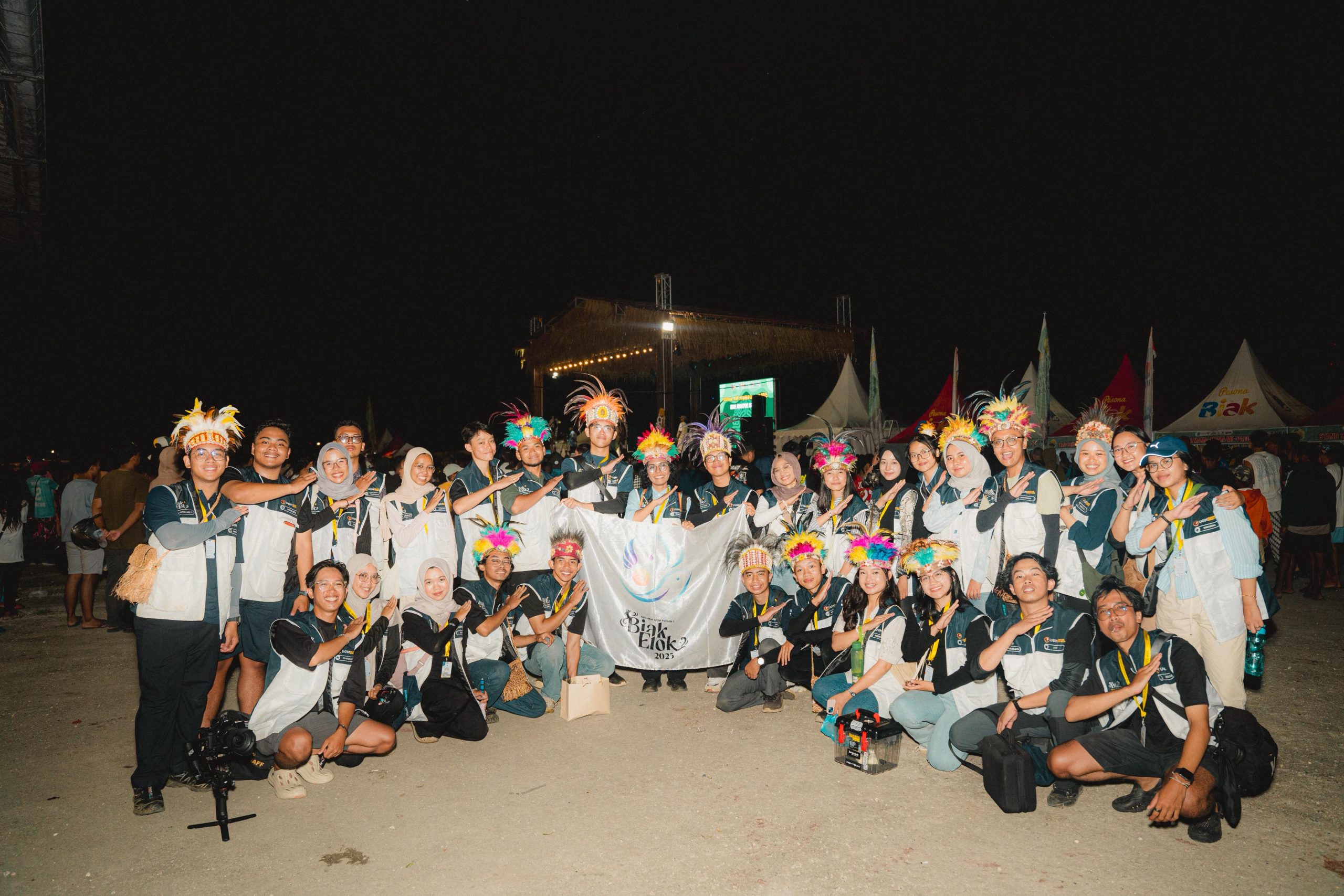
Ajeng is part of a KKN team called Biak Elok, whose main program theme is “Optimizing Sustainable Marine Resources to Realize a Blue Economy.” The program focuses on empowering local communities through the sustainable utilization of marine wealth. “Most people in Wardo Village work as fishermen, with fish as the main commodity,” explained Ajeng.

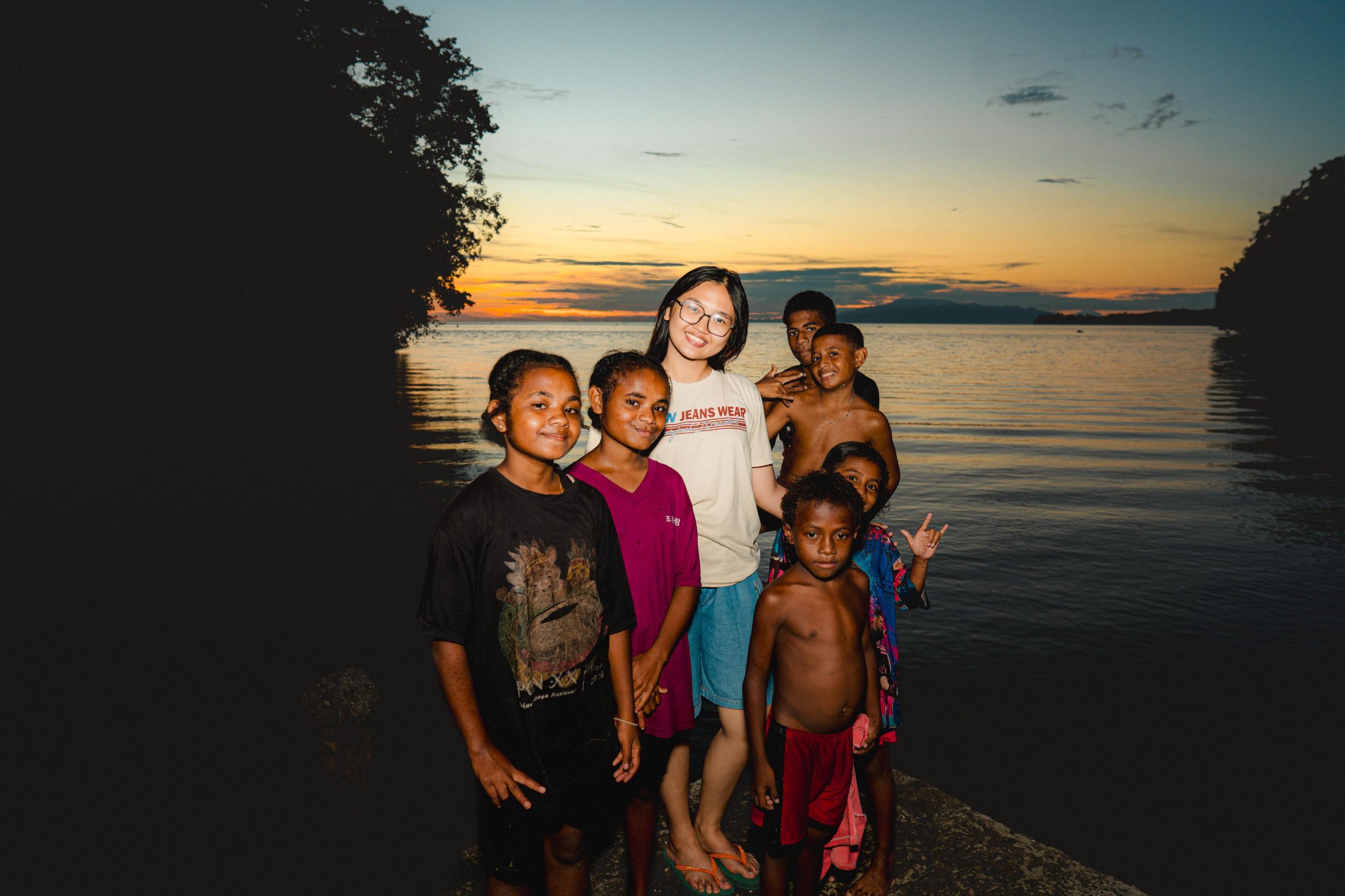
Within the team, Ajeng serves as the Coordinator of the Education Division. Together with her team, she focuses on teaching activities, especially for elementary school children, with an emphasis on character education. “The education division and I focus on teaching the elementary school children in Wardo, but we also open community classes for anyone who wants to learn in the Church environment, and we also assist as mentors for Sunday school. I hope we can make a lasting impact on the children here,” she expressed.

During the KKN program, Ajeng and her fellow team members stayed at the GKI Betel Wardo Church. They were warmly welcomed and cared for by a couple they affectionately call Mama Regina and Papa Ben. “Mama and Papa have been a great help to us, especially in terms of food. Not only that, but the Church community has also been very friendly and welcoming. The children often play with us too. Honestly, I feel very grateful to be accepted here,” added Ajeng.

Despite the remote location, the Biak Elok team managed to gain attention on social media. Thanks to their media team’s creativity, various moments from their community service from the natural beauty of Wardo Village to heartwarming interactions with the children—were captured in videos uploaded to Instagram and TikTok. Some of the posts even went viral and received positive responses from netizens.

One of the most touching experiences for Ajeng during the KKN program was witnessing the enthusiasm for learning among the children in Wardo Village. “Their eagerness to learn and their deep curiosity I think that’s already a strong foundation for them to achieve their dreams,” she said.

At the end of the interview, Ajeng shared a message for fellow students, especially those from FIB who will undertake KKN. “In my opinion, KKN is a once-in-a-lifetime experience that not everyone gets to have. So when your time comes, try to enjoy every part of it. From the small things that may seem trivial to the big moments that will teach you a lot. I hope FIB friends can discover new, meaningful, and memorable stories through their journey.”

[Public Relation, FIB UGM, Alma Syahwalani]

12

Video UGM

[shtmlslider name='shslider_options']
Universitas Gadjah Mada

Faculty of Cultural Sciences
Universitas Gadjah Mada
Jl. Nusantara 1, Bulaksumur Yogyakarta 55281, Indonesia
   fib@ugm.ac.id
   +62 (274) 513096
   +62 (274) 550451

Work Units

  • Office of Journal & Publishing
  • INCULS
  • Information Technology and Database
  • Language Learning Center
  • Library Unit
  • Public Relations
  • Research

Facilities

  • Computer Laboratory
  • Gamelan
  • Guest House
  • Language Library
  • Library
  • Phonetics Library
  • Self Access Unit
  • Student Internet Centre

Importan Links

  • Journal of Humaniora
  • Subscriber Journal
  • Alumni Portal
  • Career
  • Departmens News
  • UGM Streaming

Contacts

  • Academic
  • Administration
  • Dean’s Office
  • Departments / Study Programs
  • Public Relations

© 2024 Faculty of Cultural Sciences Universitas Gadjah Mada

KEBIJAKAN PRIVASI/PRIVACY POLICY

[EN] We use cookies to help our viewer get the best experience on our website. -- [ID] Kami menggunakan cookie untuk membantu pengunjung kami mendapatkan pengalaman terbaik di situs web kami.I Agree / Saya Setuju