• About UGM
  • Academic Portal
  • IT Center
  • Library
  • Research
  • Webmail
  • Informasi Publik
  • English
    • Indonesia
Universitas Gadjah Mada Faculty of Cultural Sciences
Universitas Gadjah Mada
  • Home
  • Profile
    • History
    • Vision and Mission
    • Organizational structure
    • Administration
    • Staff
    • Faculty Members
  • Academic
    • Academic Calendar
    • Undergraduate Programs
      • Bachelor of Cultural Antrophology
      • Bachelor in Archaeolagy
      • Bachelor in History
      • Bachelor in Tourism
      • Bochetor in Korean Language and Culture
      • Bachelor in Indonesian Language and Culture
      • Bachelor in English
      • Bachelor in Arabic
      • Bachelor in Japanese Language and Culture
      • Bachelor in Javanese Language, Literature and Culture
      • Bachelor in French language and literature
    • Graduate Programs
      • Master in Antrophology
      • Master in ArchaeoIogy
      • Master in History
      • Master in Linguistics
      • Master in Literature
      • Master In American Studies
      • Master in Middle Eastern Cultural Studies
    • Post-Graduate Programs / S3
      • Doctor in Antropology
      • Doctor in American Studies
      • Doctor in Humanities
    • Student Service
  • KPPM
    • Research Information
    • Scientific / Academic Publications
    • Community Service
    • International Cooperation
    • Domestic Cooperation
  • Student Organizations
    • Student Executive Council
    • Semi-Autonomous Organizations
      • KAPALASASTRA
      • Christian Student Alliance
      • LINCAK
      • Saskine
      • Catholic Student Family
      • Dian Budaya
      • Sastra Kanuragan (sasgan)
      • Family of Muslim Cultural Sciences Students (KMIB)
      • Bejo Mulyo
    • Autonomous Organizations
      • Family of Anthropology Students (KEMANT)
      • English Department Student Association
      • Tourism Students Association (HIMAPA)
      • Family of Indonesian Literature Students (KMSI)
      • West Asian Literature Student Association (IMABA)
      • Association of Korean-Language Students (HIMAHARA)
      • Family of Regional Indonesian Literatures Students (KAMASUTRA)
      • The Family Body of History Students (BKMS)
      • The French Literature Students Association (HMSP)
      • Family of Anthropology Students
      • Japanese Student Association (HIMAJE)
  • Admission
    • Student Evaluation
  • Home
  • Master of Linguistics
Arsip:

Master of Linguistics

UGM Master’s Program in Linguistics Holds Expert Lecture on Indonesian for Foreign Speakers

News Release Wednesday, 30 September 2026

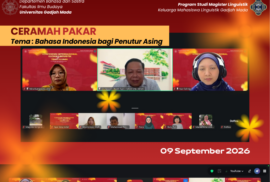
Yogyakarta, 9 September 2026 — The Master’s Program in Linguistics, Faculty of Cultural Sciences, Universitas Gadjah Mada (UGM), in collaboration with the Keluarga Mahasiswa Linguistik Gadjah Mada (Kalingga UGM), held an Expert Lecture entitled “Indonesian for Foreign Speakers” on Wednesday, 9 September 2026. Conducted online via Zoom, the event featured two speakers who explored various aspects of teaching and learning Indonesian as a foreign language.

The first speaker, Nguyen Thahn Tuan from Vietnam National University, Vietnam, delivered a presentation entitled “Teaching Indonesian in Vietnam: Challenges, Opportunities, and Future Prospects.” His presentation explored the dynamics of Indonesian language teaching in Vietnam, highlighting the challenges encountered, opportunities for development, and future prospects for Indonesian language learning.

The second speaker, Dr. Wira Kurniawati, S.S., M.A. from Universitas Gadjah Mada, presented “Learning Language, Learning to Use Language: The Acquisition of Pragmatic Competence among BIPA Learners.” Her presentation highlighted the importance of pragmatic competence in language acquisition, particularly among BIPA learners. The discussion emphasized that language learning involves not only mastering linguistic structures but also developing the ability to use language appropriately in different communicative contexts.

The event was moderated by Nur Fahmi, S.S., a student of the UGM Master’s Program in Linguistics.

The Expert Lecture provided participants with an opportunity to broaden their perspectives on the teaching and learning of Indonesian as a foreign language. The presentations offered complementary perspectives on BIPA development, ranging from Indonesian language teaching overseas to the acquisition of pragmatic competence among learners.

Through this event, the UGM Master’s Program in Linguistics continues to promote linguistics scholarship that responds to the growing role of Indonesian in a global context. The event also served as a platform for sharing academic knowledge and experiences to support the wider international development of the Indonesian language.

The UGM Master’s Program in Linguistics extends its appreciation to the speakers, moderator, organizing committee, and all participants for their valuable contributions to the success of the event.


Author: Master of Linguistics

2026 Alumni Gathering of the Master’s Program in Linguistics FIB UGM: Strengthening Connections and Alumni Networks

News Release Tuesday, 29 September 2026

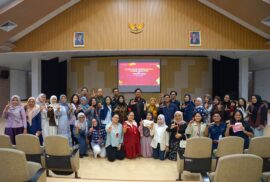
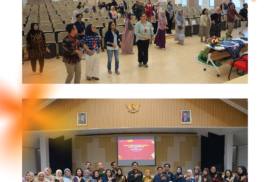
Yogyakarta, September 11, 2026 — The Master’s Program in Linguistics, Faculty of Cultural Sciences, Universitas Gadjah Mada (FIB UGM), held the 2026 Alumni Gathering of the Master’s Program in Linguistics FIB UGM on Friday, September 11, 2026. The gathering took place in a warm and convivial atmosphere, providing an opportunity for alumni to reconnect, strengthen relationships, and build a stronger alumni network.

The gathering served as a meaningful occasion for alumni to come together, share experiences, and exchange ideas on the development of the Master’s Program in Linguistics FIB UGM. Through informal conversations and discussions, alumni shared valuable feedback and suggestions that are expected to contribute to the continued development of the program.

One of the key highlights of the event was the establishment of the Alumni Association management board of the Master’s Program in Linguistics FIB UGM. The formation of this board marks an important step toward strengthening communication and coordination among alumni, creating opportunities for collaboration, and encouraging alumni to contribute more actively to their alma mater.

In addition to the gathering and discussions, the event featured various entertainment activities that added to the warmth and lively atmosphere of the occasion. The convivial setting reflected the spirit of togetherness and community that the program hopes to foster among its alumni.

Through this gathering, the Master’s Program in Linguistics FIB UGM hopes that the alumni network will continue to grow and serve as a platform for meaningful collaboration in academic, professional, and other areas that benefit alumni, the program, and the wider community.

The 2026 Alumni Gathering reaffirmed that the relationship between an alma mater and its alumni does not end upon graduation. Continued communication, friendship, and collaboration are essential to building a strong alumni community and supporting the ongoing development of the Master’s Program in Linguistics FIB UGM.

From our almamater, staying connected and growing together.


Author: Magister of Linguistics Program

Expert Lecture “Language Politics” Enriches Perspectives on Language Dynamics in Southeast Asia

News Release Thursday, 17 September 2026

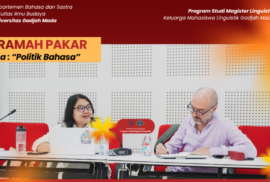
The Master’s Program in Linguistics, Faculty of Cultural Sciences, Universitas Gadjah Mada, held an Expert Lecture on the theme “Language Politics” on Monday, 7 September 2026. Held at the Soegondo Building, FIB UGM, the event provided an academic forum for exploring the relationship between language and social, political, and regional dynamics, particularly in Southeast Asia.

The Expert Lecture featured two speakers who offered complementary perspectives. Jerôme Samuel from the Institut National des Langues Orientales, France, delivered a presentation entitled “Language Politics in Southeast Asian Countries.” His presentation explored the dynamics of language policy and politics across Southeast Asian countries, as well as the strategic position of language in social life and regional relations.

The second speaker, Dr. Merry Andriani, S.S., M.L.C.S. from Universitas Gadjah Mada, presented “The Politics of Indonesian as a Working Language in ASEAN.” Her presentation provided insights into the position and role of Indonesian in the regional context, particularly in relation to the development of ASEAN and the potential of Indonesian as a language for communication and cooperation within the region.

The discussion was moderated by Dhisna Luklu’ul Fauzan, S.S., a student of the Master’s Program in Linguistics. The interaction between the speakers and participants was an important part of the event, providing opportunities to further explore language politics from diverse perspectives.

Through this Expert Lecture, the Master’s Program in Linguistics, FIB UGM, continues to provide an academic space that encourages students and participants to understand language not only as a means of communication, but also as an integral part of social, political, identity, and regional dynamics.

The Master’s Program in Linguistics, FIB UGM, extends its appreciation to the speakers, moderator, and all participants for their contributions to the event. It is hoped that the Expert Lecture on “Language Politics” will broaden perspectives and encourage further discussion and research on language politics in Indonesia and Southeast Asia.


Author: Magister of Linguistics Program

Master’s Linguistics Students Gain Hands-on Experience in Second Language Acquisition through Intermediate Conversation Class

News Release Monday, 7 September 2026

Learning in the Second Language Acquisition course of the Master’s Program in Linguistics, Faculty of Cultural Sciences, Universitas Gadjah Mada (UGM), provides students with an experience that goes beyond theoretical learning by giving them opportunities to directly observe and engage in the process of second language acquisition.

One of the highlights of the course is an intermediate conversation class involving international students who are learning Indonesian. In this activity, Master’s students enrolled in the Second Language Acquisition course take on the role of tutors, assisting international students in learning and practicing Indonesian.

The activity provides a learning space that connects academic perspectives on second language acquisition with actual language-learning practices. Through interactions between tutors and learners, students can observe how a second language is learned and used in authentic communicative situations. Concepts discussed in the course—including interaction, language environment, individual factors, language transfer, and the cognitive and social processes involved in second language acquisition—can be explored more concretely through this hands-on experience.

The Second Language Acquisition course covers major theories, approaches, and key findings in the field of second language acquisition. Students are encouraged to analyze the cognitive, social, and environmental processes that influence second language acquisition, while also examining the differences between first and second language acquisition. The course further explores individual factors such as age and motivation, as well as language transfer and its implications for language teaching.

The involvement of international students as Indonesian language learners provides an authentic context for Master’s students to understand that second language acquisition does not occur in a uniform manner. Learners may have different needs, strategies, responses, and patterns of linguistic development. These differences provide valuable material for students to connect theoretical concepts with actual phenomena observed in second language acquisition.

In addition to conversation practice, the course incorporates weekly active seminar discussions, critical reading and academic article reviews, case studies based on authentic acquisition data, the integration of second-language (L2) corpus data or recorded interlanguage data, and collaborative mini research projects. Indonesian is used as the language of instruction throughout the course.

Through this learning approach, students are expected not only to explain and evaluate major theories and their development in second language acquisition, but also to critically analyze acquisition data and connect second language acquisition theories with language teaching practices. The experience of serving as tutors in the intermediate conversation class provides an important form of contextual learning that deepens students’ understanding of the complexities of second language acquisition.

The activity also demonstrates that learning in the Master’s Program in Linguistics extends beyond mastering theoretical concepts. Students are encouraged to bring theory into real-world contexts, observe linguistic phenomena directly, and reflect on their observations as part of their academic development and research training in linguistics.


Author: Master of Linguistics Program

Community Service Program on Social Media Etiquette Among Teenagers Enters Its Second Phase at SMA Negeri 1 Depok

News Release Friday, 28 August 2026

The Community Service Program (PkM) entitled “Social Media Etiquette Among Teenagers”, organized by the Master’s Program in Linguistics, Faculty of Cultural Sciences, Universitas Gadjah Mada (FIB UGM), has continued into its second phase. The activity was held at SMA Negeri 1 Depok, Sleman, as part of an educational series aimed at raising students’ awareness of the importance of practicing politeness in digital communication.

Following the first phase, during which students received instruction on social media etiquette and participated in group activities, the second phase focused on group presentations showcasing the students’ creative projects. This stage provided an opportunity for participants to apply the knowledge they had gained by producing works related to the theme of respectful communication on social media.

During the presentations, each group presented the projects they had prepared in advance. These works took various forms, including flyers and video content conveying messages about the importance of using social media wisely, respectfully, and responsibly. Through their projects, the students illustrated situations commonly encountered by teenagers on social media and demonstrated how polite language and respectful behavior can be applied in digital interactions.

The presentations served not only as a platform for students to demonstrate their creativity but also as an opportunity to engage in discussion and reflect on their own communication habits on social media. The activity encouraged students to recognize that effective social media use extends beyond creating and sharing content; it also involves carefully considering language choices, attitudes, and the potential impact of communication on others.

In addition to the project presentations, students also completed a post-test as part of the overall evaluation of the Community Service Program. The post-test was administered after the completion of all instructional sessions and activities to assess students’ understanding of social media etiquette following both theoretical learning and hands-on experience throughout the program.

The “Social Media Etiquette Among Teenagers” Community Service Program is expected to provide meaningful and contextual learning experiences for students of SMA Negeri 1 Depok, particularly in fostering awareness of the importance of using polite language and demonstrating respectful behavior in digital spaces. By integrating lectures, collaborative activities, creative projects, and evaluation, the program aims not only to deepen students’ understanding of social media etiquette but also to encourage them to apply these principles in their daily lives.

The students’ enthusiasm and creativity in producing and presenting their projects became one of the key indicators of the program’s success. Furthermore, the collaboration between the Master’s Program in Linguistics, Faculty of Cultural Sciences, Universitas Gadjah Mada, and SMA Negeri 1 Depok is expected to continue contributing positively to the enhancement of language literacy and responsible social media awareness among teenagers.

With the completion of its second phase, the “Social Media Etiquette Among Teenagers” Community Service Program has become a shared learning space for both academics and students, highlighting that politeness is essential not only in face-to-face communication but also in every interaction within the digital environment.

123…5

Video UGM

[shtmlslider name='shslider_options']
Universitas Gadjah Mada

Faculty of Cultural Sciences
Universitas Gadjah Mada
Jl. Nusantara 1, Bulaksumur Yogyakarta 55281, Indonesia
   fib@ugm.ac.id
   +62 (274) 513096
   +62 (274) 550451

Work Units

  • Office of Journal & Publishing
  • INCULS
  • Information Technology and Database
  • Language Learning Center
  • Library Unit
  • Public Relations
  • Research

Facilities

  • Computer Laboratory
  • Gamelan
  • Guest House
  • Language Library
  • Library
  • Phonetics Library
  • Self Access Unit
  • Student Internet Centre

Importan Links

  • Journal of Humaniora
  • Subscriber Journal
  • Alumni Portal
  • Career
  • Departmens News
  • UGM Streaming

Contacts

  • Academic
  • Administration
  • Dean’s Office
  • Departments / Study Programs
  • Public Relations

© 2024 Faculty of Cultural Sciences Universitas Gadjah Mada

KEBIJAKAN PRIVASI/PRIVACY POLICY

[EN] We use cookies to help our viewer get the best experience on our website. -- [ID] Kami menggunakan cookie untuk membantu pengunjung kami mendapatkan pengalaman terbaik di situs web kami.I Agree / Saya Setuju