• About UGM
  • Academic Portal
  • IT Center
  • Library
  • Research
  • Webmail
  • Informasi Publik
  • English
    • Indonesia
Universitas Gadjah Mada Faculty of Cultural Sciences
Universitas Gadjah Mada
  • Home
  • Profile
    • History
    • Vision and Mission
    • Organizational structure
    • Administration
    • Staff
    • Faculty Members
  • Academic
    • Academic Calendar
    • Undergraduate Programs
      • Bachelor of Cultural Antrophology
      • Bachelor in Archaeolagy
      • Bachelor in History
      • Bachelor in Tourism
      • Bochetor in Korean Language and Culture
      • Bachelor in Indonesian Language and Culture
      • Bachelor in English
      • Bachelor in Arabic
      • Bachelor in Japanese Language and Culture
      • Bachelor in Javanese Language, Literature and Culture
      • Bachelor in French language and literature
    • Graduate Programs
      • Master in Antrophology
      • Master in ArchaeoIogy
      • Master in History
      • Master in Linguistics
      • Master in Literature
      • Master In American Studies
      • Master in Middle Eastern Cultural Studies
    • Post-Graduate Programs / S3
      • Doctor in Antropology
      • Doctor in American Studies
      • Doctor in Humanities
    • Student Service
  • KPPM
    • Research Information
    • Scientific / Academic Publications
    • Community Service
    • International Cooperation
    • Domestic Cooperation
  • Student Organizations
    • Student Executive Council
    • Semi-Autonomous Organizations
      • KAPALASASTRA
      • Christian Student Alliance
      • LINCAK
      • Saskine
      • Catholic Student Family
      • Dian Budaya
      • Sastra Kanuragan (sasgan)
      • Family of Muslim Cultural Sciences Students (KMIB)
      • Bejo Mulyo
    • Autonomous Organizations
      • Family of Anthropology Students (KEMANT)
      • English Department Student Association
      • Tourism Students Association (HIMAPA)
      • Family of Indonesian Literature Students (KMSI)
      • West Asian Literature Student Association (IMABA)
      • Association of Korean-Language Students (HIMAHARA)
      • Family of Regional Indonesian Literatures Students (KAMASUTRA)
      • The Family Body of History Students (BKMS)
      • The French Literature Students Association (HMSP)
      • Family of Anthropology Students
      • Japanese Student Association (HIMAJE)
  • Admission
    • Student Evaluation
  • Home
  • HEADLINES
  • Student’s Activity
Arsip:

Student’s Activity

“Pusaka Kata” Exhibition Showcases Interdisciplinary Collaboration to Revitalize the Manuscript Heritage of the Indonesian Archipelago

News ReleaseStudent's Activity Wednesday, 17 June 2026

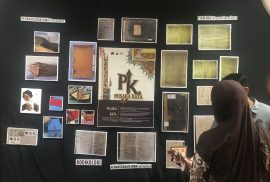
Yogyakarta, June 9, 2026 – Students from the Master’s Program in Literature and the Undergraduate Program in Javanese Language, Literature, and Culture organized a manuscript exhibition titled Pusaka Kata (“Heritage of Words”) at the first-floor lobby of Soegondo Building, Faculty of Cultural Sciences, Universitas Gadjah Mada (UGM), on Tuesday (June 9). Held from 8:30 a.m. to 3:00 p.m., the exhibition served as a platform for academic collaboration, bringing together the fields of philology, Javanese manuscript studies, and codicology in an effort to preserve and revitalize the manuscript heritage of the Indonesian archipelago.

The exhibition involved graduate students from the Philology and Javanese Manuscript Studies classes, as well as undergraduate students from the Codicology class of the Javanese Language, Literature, and Culture Program. The event was supervised by Prof. Dr. Sangidu, M.Hum., Dr. Arsanti Wulandari, S.S., M.Hum., and Zakariya Pamuji Aminullah, S.S., M.A.

Under the theme Pusaka Kata, the exhibition was inspired by the awareness that Nusantara manuscripts constitute invaluable intellectual and cultural heritage. These manuscripts preserve ancestral knowledge systems covering various aspects of life, including education, medicine, religious practices, and literature. However, beyond the threat of physical deterioration due to age, these manuscripts also face a growing challenge: the widening gap between younger generations and the knowledge contained within them.

The name Pusaka Kata was chosen to emphasize the significance of manuscripts as an intergenerational legacy. In Javanese tradition, pusaka refers not merely to an inherited object but to a trust passed down through generations, carrying values, identity, and responsibility. Meanwhile, kata (“words”) represents the medium through which knowledge has been preserved and transmitted from ancestors to future generations.

Interpreting Knowledge Preserved in Manuscripts

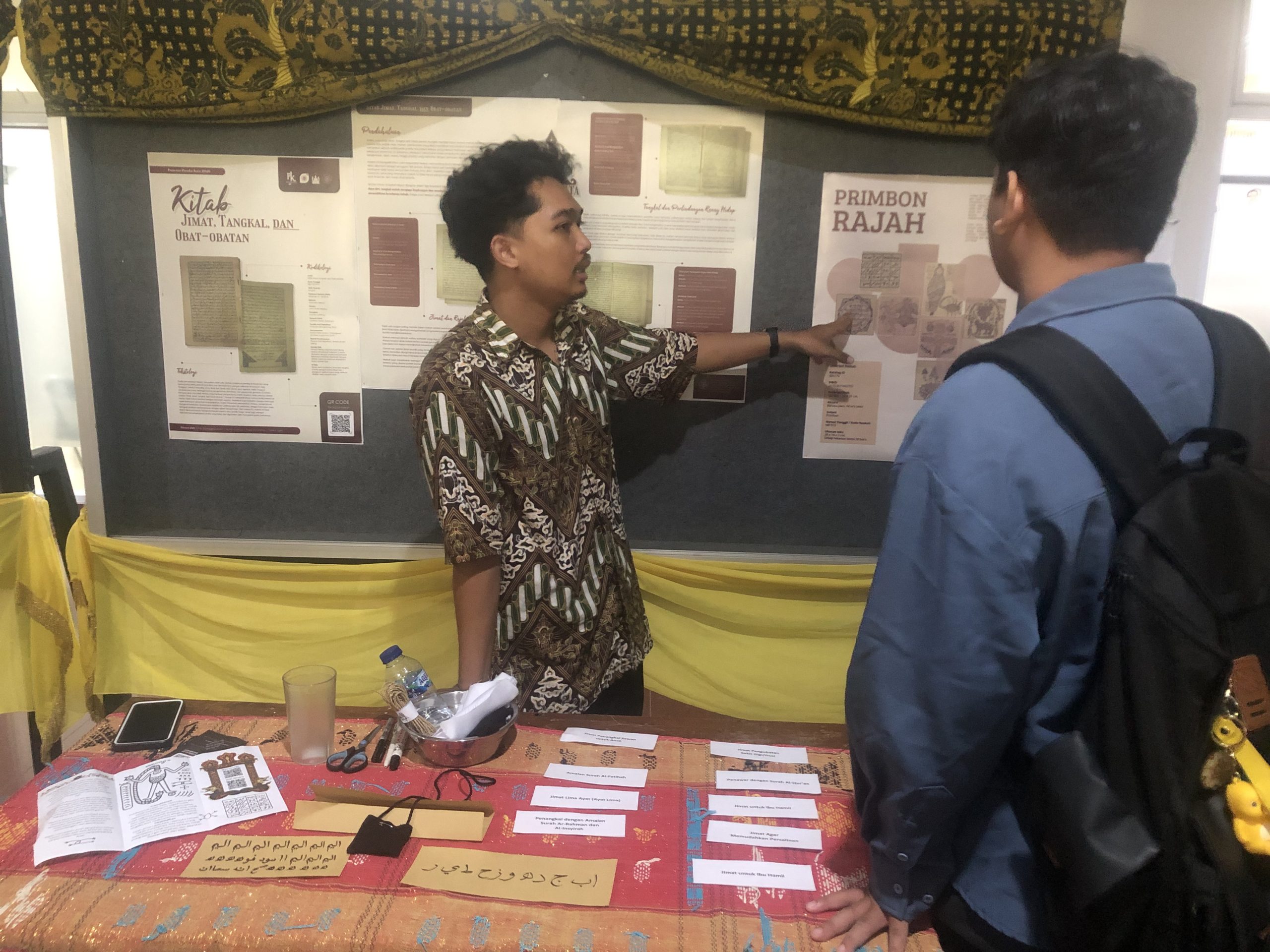
One of the highlights from the Philology class was a Malay-Islamic manuscript titled Kitab Jimat, Tangkal, dan Obat-obatan (Book of Talismans, Protective Charms, and Medicines). Digitized by the British Library through the Endangered Archives Programme (EAP), the manuscript contains knowledge related to self-protection, healing practices, and environmental safeguarding through prayers, Qur’anic verses, magical diagrams (rajah), and herbal remedies.

Fajar Nur Zaima explained that one of the most prominent sections of the manuscript discusses the virtues of Qur’anic verses, particularly the recitation of the basmalah. According to him, the manuscript presents the basmalah not merely as an opening formula but also as a source of blessings, protection, and safety in various aspects of life.

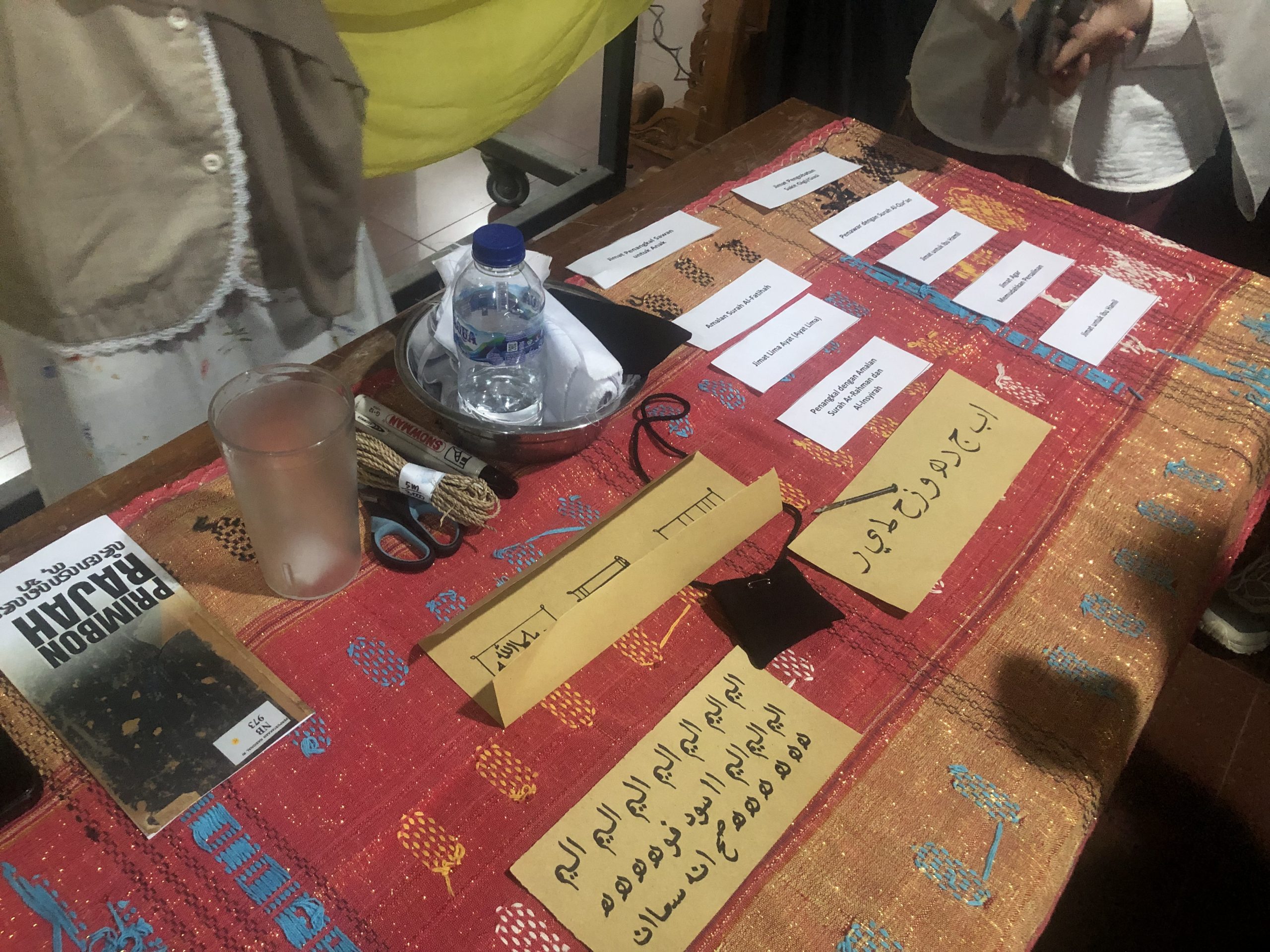
Another featured object was the section on talismans contained in Serat Primbon, a manuscript from the collection of the National Library of Indonesia, catalog number NB 973. This section includes at least twenty-nine types of talismans serving different purposes, ranging from attracting affection and maintaining health to ensuring safety and warding off misfortune.

Giandra Febriyan Haidar explained that talismanic texts can be understood as representations of how Javanese society perceived the relationship between humans, nature, and forces beyond everyday rationality. He cited a love talisman described in the manuscript as a means of gaining affection and social acceptance. In this context, he argued, talismans should not be viewed merely as magical objects but as symbols of human aspirations for harmonious social relationships.

Reading Manuscript Histories Through Physical Form and Aesthetics

The Javanese Manuscript Studies class presented research on the physical and aesthetic aspects of Javanese manuscripts. One exhibition item focused on a manuscript written in Javanese script, currently preserved in the Department of Nusantara Literature Library under the code 899.047.

Through this study, visitors were invited to understand manuscripts not only as textual repositories but also as cultural artifacts that document copying practices, literary traditions, and histories of ownership and transmission. Elements such as paper type, binding structure, script, and physical damage provide valuable information about a manuscript’s journey through time.

The class also showcased a study of manuscript illumination titled Wêdana Gapura Rênggan. The manuscript contains several texts, including Aji Pamasa, Mihradipun Jêng Nabi, Rajah Kalacakra, Jumbuhing Panembah, and Lêlampahanipun Raden Sahid.

Affan Akbar explained that manuscript illuminations serve not only as decorative elements but also as important sources of information regarding manuscript production processes. Observations of unfinished sketches and coloring revealed that the text had been written before the ornamental designs were added. Such findings provide insights into the stages undertaken by manuscript scribes in producing complete handwritten works.

Codicology and Creative Approaches to Manuscript Preservation

Meanwhile, the Codicology class introduced visitors to the study of manuscripts from a material perspective. Codicology examines manuscripts as physical objects, including their writing materials, binding techniques, ornaments, layouts, and patterns of damage that record traces of their historical use.

In addition to presenting research findings, students displayed practical projects such as manuscript covers, storage boxes, and hand-bound books accompanied by interpretive narratives.

One work that attracted particular attention was created by Arfia Kholifatul, who adopted the Javanese wayang character Semar as the central theme of her bookbinding and cover design. Through imagery inspired by shadow puppetry and botanical motifs, the work interpreted Javanese philosophical values such as urip iku urup—the belief that life should bring benefits to others. The upward-growing leaves and vines symbolized the continuous pursuit of truth and the sustainability of life.

Through the collaboration of these three academic fields, the Pusaka Kata Exhibition offered a comprehensive perspective on manuscripts as living cultural heritage. Rather than being regarded merely as historical artifacts preserved in archives, manuscripts were presented as enduring sources of knowledge that can continue to be read, understood, and reinterpreted by contemporary generations.

Author: Khotibul Umam

HIMAJE UGM and HIMAWARI UNDIP Strengthen Inter-University Relations through Study Visit Program

News ReleaseStudent's Activity Tuesday, 9 June 2026

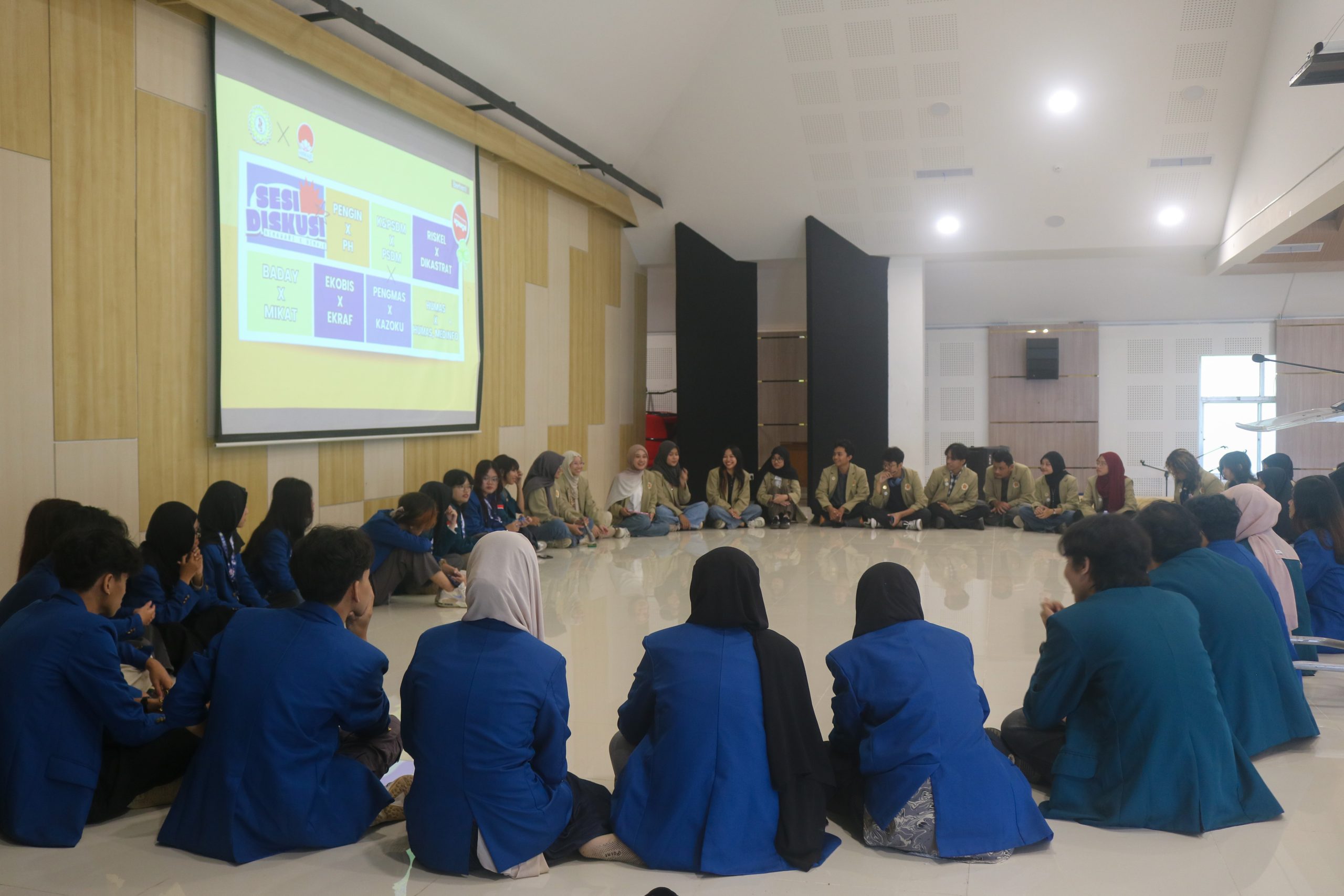
The Japanese Language and Culture Student Association of Universitas Gadjah Mada (HIMAJE UGM) held a Study Visit Program with the Japanese Language and Culture Student Association of Universitas Diponegoro (HIMAWARI UNDIP) on Saturday, 25 April 2026, at the Faculty of Cultural Sciences, Universitas Gadjah Mada. Organized by HIMAJE’s Public Relations Division, the program aimed to strengthen relationships among students while providing a platform for exchanging organizational experiences and insights.

The event began with presentations introducing the profiles and grand designs of both student associations, followed by a discussion session on organizational programs and student organization dynamics. In addition to the discussion, participants took part in student performances, interactive games, a plaque exchange ceremony, and a tour of the Faculty of Cultural Sciences UGM. Through this activity, HIMAJE UGM and HIMAWARI UNDIP are expected to further strengthen their relationship and foster future collaborations that will benefit both organizations.

Author: Barra Taura Nursaid

Building Collaboration, IKMASA UGM Welcomes IKABA UI Visit

News ReleaseStudent's Activity Wednesday, 3 June 2026

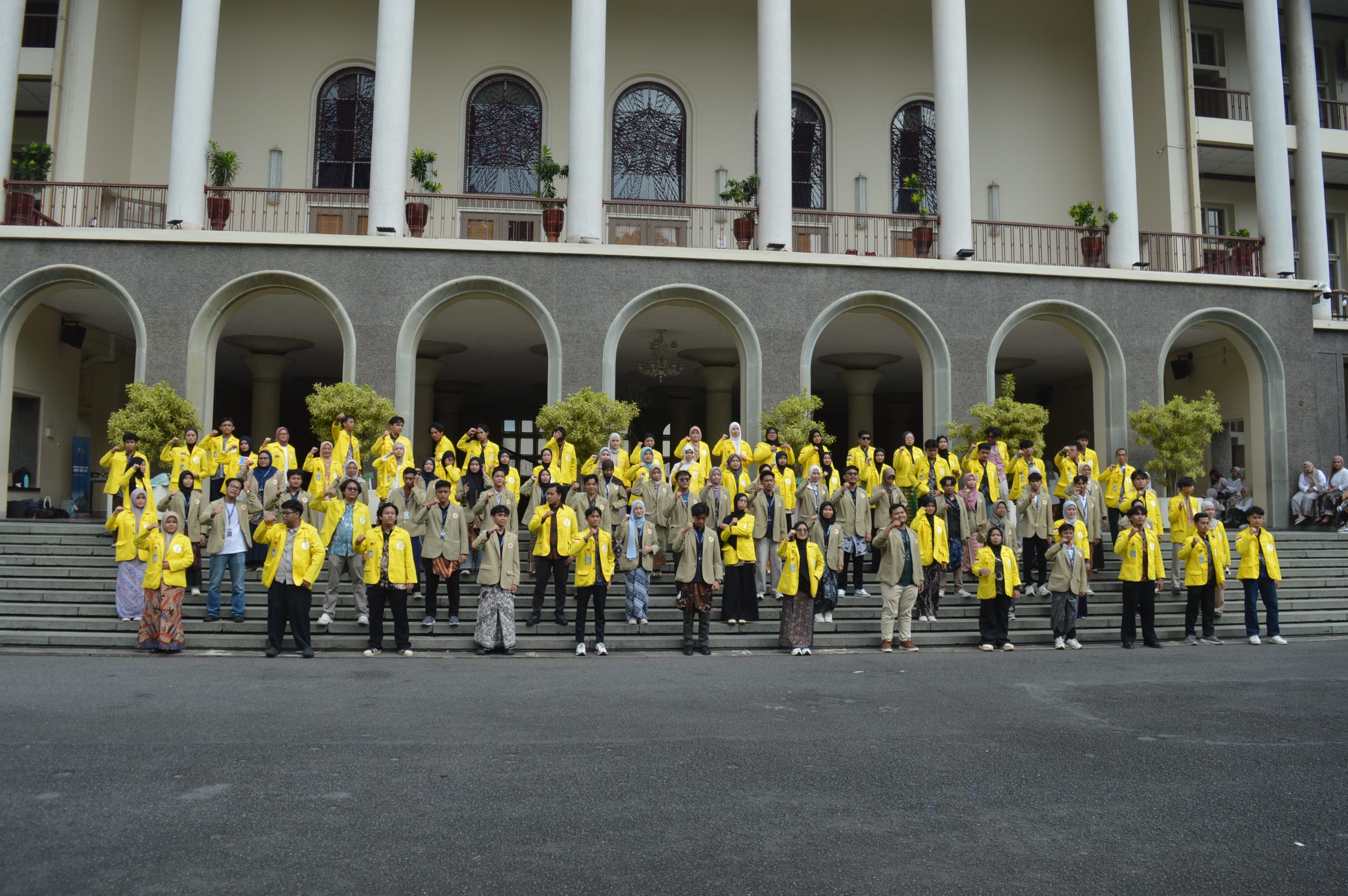
Yogyakarta, June 16, 2026 – The Arabic Literature Student Association of Universitas Gadjah Mada (IKMASA UGM) successfully organized SAMBUT: “IKMASA Menyambut” in collaboration with the West Asian Family Association of Universitas Indonesia (IKABA UI). Held at the Poerbatjaraka Auditorium, Faculty of Cultural Sciences, Universitas Gadjah Mada, the event served as a platform for fostering friendship and strengthening relationships among Arabic Literature students from both universities. The program commenced with welcoming remarks from the faculty advisors of IKMASA UGM and IKABA UI, who emphasized the importance of collaboration and maintaining strong inter-institutional relationships. They highlighted the value of building academic networks and encouraging future cooperation between student organizations.

The event continued with a cabinet-sharing session led by the presidents of IKMASA UGM and IKABA UI. During the session, both organizations exchanged insights on their work programs, organizational culture, and leadership strategies. This discussion provided participants with an opportunity to learn from one another’s experiences and organizational practices. Following the sharing session, participants took part in a campus tour around Universitas Gadjah Mada. The activity introduced IKABA UI members to the UGM campus environment while also fostering closer connections among participants. As part of the tour, a group photo session was held at the iconic Balairung UGM as a symbol of friendship and a memorable keepsake of the gathering between IKMASA UGM and IKABA UI. The program then proceeded with a series of Focus Group Discussions (FGDs) involving divisions and departments from both organizations. These discussions provided a space for participants to exchange experiences, share best practices, and discuss organizational management systems within their respective student associations. Overall, the event was conducted smoothly in a warm and enthusiastic atmosphere. Through SAMBUT 2026, both organizations strengthened their ties and reaffirmed their commitment to fostering collaboration, mutual learning, and long-term partnerships among Arabic Literature students across universities.


Author : Ismail


Meet Kinarya, an Intern at PT Taman Wisata Candi (TWC) Borobudur, Prambanan & Ratu Boko

News ReleaseStudent's Activity Wednesday, 29 April 2026

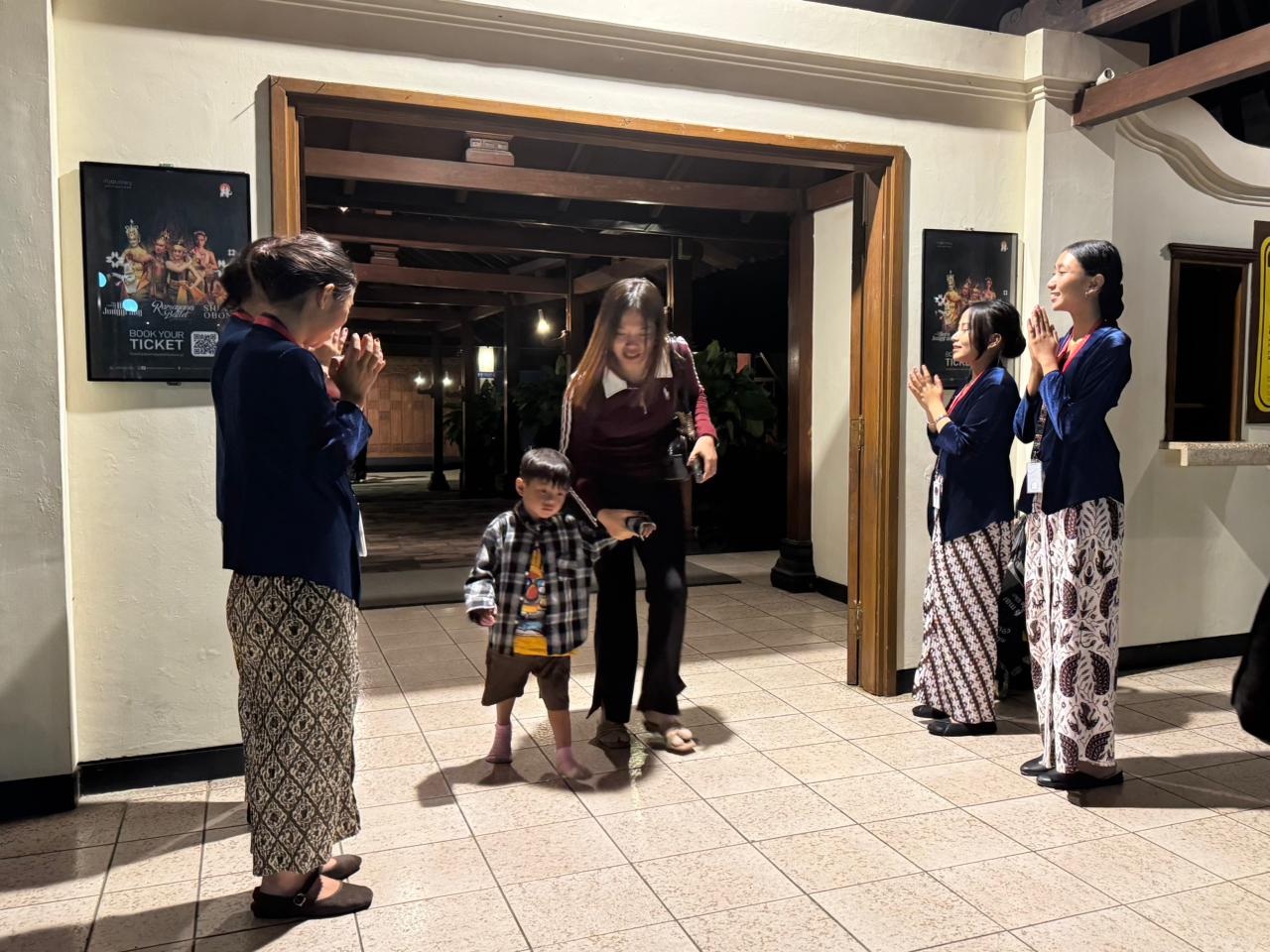
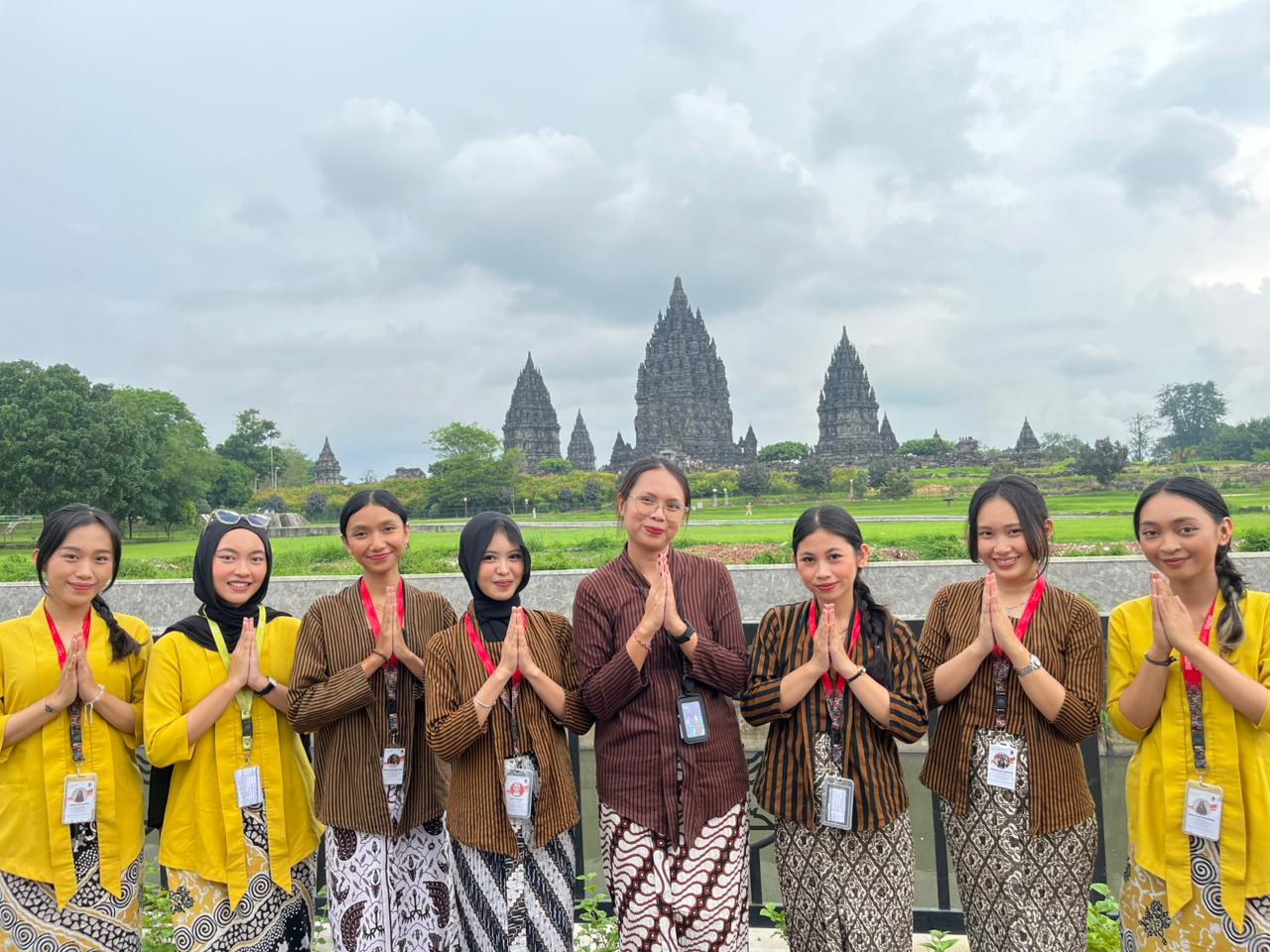
Kinarya Setyaning Tyas, an English Department student, shows that her major isn’t a limitation for learning and exploring her myriad of passions. As she entered her sixth semester, she was driven to seek an internship opportunity aligned with her interests. Her choice then fell on PT Taman Wisata Candi (TWC) Borobudur, Prambanan & Ratu Boko, which she believes can accommodate both her abilities as an English Department student and her particular interest in culture and arts. From there, she took initiative and applied for an intern position, where she began her delightful journey at Satuan Kerja Teater & Pentas Ramayana Ballet Prambanan.

In Ramayana Ballet Prambanan, Kinarya is part of the Sales and Attraction division, where she takes charge of uploading documentation and handling guests for the Ramayana Ballet. She explains her role thoroughly, from creating advertisements, handling social media—especially TikTok—and reporting social media performance. Kinarya noted that one of her accomplishments was when her TikTok content reached more than 340k views, attracting more people to attend the show. Outside of marketing, she is also responsible for reservations and being an usher, or among tamu, for the guests. 

So much to be done, so much to learn too. Kinarya confessed that when first applying, her motivation was to improve speaking and listening skills, which can only be polished by practice. Answering many questions and listening to the foreign tourist, she senses an improvement in her communication skills. “Especially when I handle British tourists, my listening skills are being tested because of the accent. So I’ve improved a lot,” she admits. 

Although she deals with a lot of tasks, she had so much fun during her internship experience. In fact, she even plans to extend her internship that was supposed to end in late April. Kinarya recounts the social environment in TWC, especially in the Ramayana Ballet Prambanan unit, which she describes as very friendly and supportive—from the staff, supervisor, and other interns. Having met her fellow interns from different majors and universities, she gets to share a lot of meaningful experiences together. 

Nonetheless, it doesn’t mean that Kinarya didn’t face any difficulties. During the first month, she doubted whether she could do this job alone. There is a lot of information that she needs to memorize: the flow of the show, the show’s schedule, the seating system, and even how to input the reservation data. “I also need to adapt quickly because I was only given three months here,” she utters. The struggle continued until the second month, during the peak season. “Because there is Eid Al-Fitr, we can even hold a show for eight days in a row, ” she explains.

After almost three months, Kinarya has gained many benefits from the internship as she gets to learn various skills outside of her major. She learns to analyze and report the social media performance of Ramayana Prambanan. “There are reports for Instagram and TikTok performance every month, their analysis, and also about marketing. It was quite apart from English Literature, but I learned a lot here,” she reflects. Kinarya also delves into content creation deeper, from planning to editing. She confesses that she never really did editing in a professional context, so she has improved a lot, “I learned so much in editing—the tools—and also about tech content like where to shoot, etc.” 

Kinarya also adds that, relating to her study, she gains a practical experience of interpreting and translating Indonesian—especially Javanese—culture and tradition. “So how do we translate the [cultural] terms to English? Then there’s the tolak bala procession, arak-arakan, we have to explain it to foreigners with an accurate interpretation,” she explains further. While she admits that it’s a bit challenging, it also fosters her cross-cultural understanding. “It makes me appreciate our culture more, especially Javanese culture,” she adds.

Her internship experience in PT. Taman Wisata Candi (TWC) is part of her effort to preserve our culture and heritage. “It’s like being a bridge, a mediator, an agent in cultural preservation,” she says. Furthermore, Kinarya notes how she also considered her future career when starting this internship. “I feel like I want to seek a career where it’s beyond handling a job desk; I want something more purposeful, meaningful, valuable,” she declares. 

Thus, Kinarya also shared her principle, “As an English literature student, don’t be afraid to explore more about other subjects. Don’t rely too much on one skill.” She chose her place of internship not by a matter of convenience, but she deliberately sought a gap where her interests met her skills and competence, which she found at PT. Taman Wisata Candi (TWC). Kinarya is aware that to explore and master other fields, learning by doing is the way to do it. “If I had never tried, I would have never known. If I didn’t make mistakes, I would never learn,” she concluded. 

Penulis: Gulma Zahra Auradatu

Fun-Minton: IKMASA’s Initiative to Foster a Healthy and Collaborative Space for Students

News ReleaseStudent's Activity Wednesday, 29 April 2026

Yogyakarta, April 18, 2026 – Amid the demands of academic life, IKMASA, through its Department of Interests and Talents under the Dur Mufassal Cabinet, organized Fun-Minton as a refreshing activity for students. Held at the Sendowo Sports Hall from 3:30 to 6:00 PM, the event created a warm atmosphere filled with enthusiasm and a strong sense of togetherness.

Fun-Minton was open to all Arabic Literature students, regardless of their badminton skills, including those who simply wished to participate in a casual and enjoyable manner. Participants were welcome to attend directly at the venue in sports attire. Beyond promoting physical activity, this event also served as a platform to strengthen relationships among members and to foster a supportive environment within the Arabic Literature community. The interactions that took place throughout the event contributed to a positive and enjoyable atmosphere.

Through Fun-Minton, students are encouraged to maintain a healthy balance between academic and non-academic activities while also reinforcing a sense of solidarity. This initiative reflects IKMASA’s commitment to providing a productive, healthy, and collaborative space for all its members.

Author: Indana Zulfa Maulida

123…18

Video UGM

[shtmlslider name='shslider_options']
Universitas Gadjah Mada

Faculty of Cultural Sciences
Universitas Gadjah Mada
Jl. Nusantara 1, Bulaksumur Yogyakarta 55281, Indonesia
   fib@ugm.ac.id
   +62 (274) 513096
   +62 (274) 550451

Work Units

  • Office of Journal & Publishing
  • INCULS
  • Information Technology and Database
  • Language Learning Center
  • Library Unit
  • Public Relations
  • Research

Facilities

  • Computer Laboratory
  • Gamelan
  • Guest House
  • Language Library
  • Library
  • Phonetics Library
  • Self Access Unit
  • Student Internet Centre

Importan Links

  • Journal of Humaniora
  • Subscriber Journal
  • Alumni Portal
  • Career
  • Departmens News
  • UGM Streaming

Contacts

  • Academic
  • Administration
  • Dean’s Office
  • Departments / Study Programs
  • Public Relations

© 2024 Faculty of Cultural Sciences Universitas Gadjah Mada

KEBIJAKAN PRIVASI/PRIVACY POLICY

[EN] We use cookies to help our viewer get the best experience on our website. -- [ID] Kami menggunakan cookie untuk membantu pengunjung kami mendapatkan pengalaman terbaik di situs web kami.I Agree / Saya Setuju