• About UGM
  • Academic Portal
  • IT Center
  • Library
  • Research
  • Webmail
  • Informasi Publik
  • English
    • Indonesia
Universitas Gadjah Mada Faculty of Cultural Sciences
Universitas Gadjah Mada
  • Home
  • Profile
    • History
    • Vision and Mission
    • Organizational structure
    • Administration
    • Staff
    • Faculty Members
  • Academic
    • Academic Calendar
    • Undergraduate Programs
      • Bachelor of Cultural Antrophology
      • Bachelor in Archaeolagy
      • Bachelor in History
      • Bachelor in Tourism
      • Bochetor in Korean Language and Culture
      • Bachelor in Indonesian Language and Culture
      • Bachelor in English
      • Bachelor in Arabic
      • Bachelor in Japanese Language and Culture
      • Bachelor in Javanese Language, Literature and Culture
      • Bachelor in French language and literature
    • Graduate Programs
      • Master in Antrophology
      • Master in ArchaeoIogy
      • Master in History
      • Master in Linguistics
      • Master in Literature
      • Master In American Studies
      • Master in Middle Eastern Cultural Studies
    • Post-Graduate Programs / S3
      • Doctor in Antropology
      • Doctor in American Studies
      • Doctor in Humanities
    • Student Service
  • KPPM
    • Research Information
    • Scientific / Academic Publications
    • Community Service
    • International Cooperation
    • Domestic Cooperation
  • Student Organizations
    • Student Executive Council
    • Semi-Autonomous Organizations
      • KAPALASASTRA
      • Christian Student Alliance
      • LINCAK
      • Saskine
      • Catholic Student Family
      • Dian Budaya
      • Sastra Kanuragan (sasgan)
      • Family of Muslim Cultural Sciences Students (KMIB)
      • Bejo Mulyo
    • Autonomous Organizations
      • Family of Anthropology Students (KEMANT)
      • English Department Student Association
      • Tourism Students Association (HIMAPA)
      • Family of Indonesian Literature Students (KMSI)
      • West Asian Literature Student Association (IMABA)
      • Association of Korean-Language Students (HIMAHARA)
      • Family of Regional Indonesian Literatures Students (KAMASUTRA)
      • The Family Body of History Students (BKMS)
      • The French Literature Students Association (HMSP)
      • Family of Anthropology Students
      • Japanese Student Association (HIMAJE)
  • Admission
    • Student Evaluation
  • Home
  • Post by
  • page. 19
Post by :

Humas FIB

Head of History Study Program FIB UGM Officially Opens History Week 2025: Highlighting the Theme “Industry in the Flow of History”

HEADLINESNews Release Monday, 27 October 2025

Yogyakarta, October 22, 2025 — The Head of the History Study Program, Faculty of Cultural Sciences, Universitas Gadjah Mada (FIB UGM), Dr. Mutiah Amini, M.Hum, officially opened the History Week 2025, which carries the theme “Industry in the Flow of History.” The opening ceremony took place at the Auditorium of Soegondo Building, 7th Floor, on Wednesday (22/10), attended by students from the Faculty of Cultural Sciences as well as representatives from various student organizations within and beyond FIB UGM.

History Week is an annual event organized by the Undergraduate History Study Program of FIB UGM as part of its efforts to enhance historical learning through both academic and non-academic approaches. The program serves as a platform for students to broaden their insights, channel their creativity, and foster awareness of historical and social issues relevant to today’s society.

The implementation of History Week 2025 is the result of collaboration and initiative by the Badan Keluarga Mahasiswa Sejarah (BKMS), the student association that oversees various activities of History students within FIB UGM. As one of BKMS’s largest programs, this event is not only intended for students of the History Study Program but is also open to the public, including academics from various universities across Indonesia. Through this event, students are encouraged to actively participate in developing historical studies oriented toward contemporary issues.

One of the main series of activities in History Week 2025 is the National Student History Seminar (SSMN), which adopts the overarching theme “Industry in the Flow of Indonesian History.” The seminar is designed to provide opportunities for students from diverse disciplines who have an interest in history to develop their academic writing and discussion skills. Several selected students will present their papers directly before the seminar participants in two panel sessions. Prior to these presentations, the event will begin with an introductory lecture delivered by a keynote speaker who is an expert in industrial history.

The discussions in this seminar cover a wide range of important topics related to the development of industry in Indonesia, including the historical evolution of industry, the dynamics of local industries, the impacts of industrialization on the environment and society, the history of social movements within industry, as well as the roles of local economic figures and women in the industrialization process. Through a historical perspective, this event seeks to foster a deeper understanding of how industry has become an integral part of Indonesia’s social, economic, and cultural development.

Overall, History Week 2025 aims to encourage students to understand industrial issues from a historical perspective while raising awareness of the importance of studying national industrial history as a key to comprehending today’s industrial dynamics. Moreover, the event aligns with the Sustainable Development Goals (SDGs), particularly Goal 4 (Quality Education) through the strengthening of historical literacy and academic research, Goal 8 (Decent Work and Economic Growth) by exploring the historical development of the industrial sector, and Goal 9 (Industry, Innovation, and Infrastructure) which emphasizes the importance of history as the foundation for future innovation and development. Thus, History Week 2025 stands not only as an academic platform but also as a tangible contribution from UGM History students to the global agenda of sustainable development.

[Public Relations of FIB UGM, Candra Solihin]

Expert Lecture Discusses the Transformation of the Indonesian Language in the Digital Era

HEADLINESNews Release Thursday, 23 October 2025

Yogyakarta, October 20, 2025 — The Department of Language and Literature, Faculty of Cultural Sciences, Universitas Gadjah Mada, held an event titled Expert Lecture: The Transformation of the Indonesian Language in Digital Media on Monday, October 20, 2025, at 9:00 a.m. in Room S709, Soegondo Building, 7th Floor. The event brought together three distinguished linguists from various Indonesian universities: Prof. Dr. Munira Hasjim, M.Hum. (Professor at Hasanuddin University), Dr. Bernadette Kushartanti, M.Hum. (Lecturer at Universitas Indonesia), and Dr. Sailal Arimi, M.Hum. (Lecturer at Universitas Gadjah Mada), moderated by Deni Ferdiansa, S.S., M.A. The discussion served as an important platform to explore the dynamics and challenges of the Indonesian language amid the rapid pace of digitalization.

In her presentation, Prof. Munira Hasjim emphasized the importance of maintaining consistency in the use of the Indonesian language to prevent degradation in the digital era. She highlighted four major linguistic phenomena that characterize language transformation in online spaces: the widespread use of acronyms and abbreviations such as bucin, mager, and gercep; creative manipulation of graphemes and orthography, such as using all lowercase letters or excessive capitalization; frequent code-switching with English in everyday expressions; and the rising use of harsh or offensive language in social media interactions. According to her, these shifts are driven by three main pillars — digital identity, community solidarity, and communication technology — which have turned language into not only a communication tool but also a medium for self-expression and a marker of social belonging in virtual spaces.

Meanwhile, Dr. Bernadette Kushartanti discussed the role of digital media as an inseparable part of modern life, especially for Generations Z and Alpha. She explained that their linguistic behavior reflects their social identity in the online world, with code-switching and the use of slang serving as expressions of cultural belonging, social status, and individuality in a multicultural environment. Bernadette also cautioned that excessive exposure to digital media can affect behavior, leading to issues such as anxiety, impatience, and reduced self-reflection. Therefore, she stressed the importance of digital literacy and linguistic awareness to ensure that creativity in online language use remains aligned with good language values and norms.

In his presentation, Dr. Sailal Arimi examined how language phenomena on social media reflect the collective identity of today’s youth. Terms such as “Negara Konoha” and “Warga +62” have emerged as satirical symbols representing both social critique and a sense of belonging among the digital generation. He noted that virtual communication serves two main purposes — efficiency and self-expression. Digital language enables users to exchange information quickly through abbreviations like FYP while also asserting social identity and perspective through expressions such as ACAB or SJW. This illustrates that in the digital era, language is not only changing in form but also in its social function as a tool for community building in virtual spaces.

These phenomena enrich the Indonesian lexicon, expand linguistic variation, and demonstrate the vitality of the language. However, they also present challenges, including declining awareness of formal linguistic norms and potential miscommunication across contexts. The event concluded in an engaging atmosphere, with many students enthusiastically asking questions and engaging in direct dialogue with the speakers, making the forum not only informative but also interactive and full of academic energy.

[Public Relations of FIB UGM, Candra Solihin]

184 Postgraduate Students of the Faculty of Cultural Sciences UGM Graduated, 102 Earn Cum Laude Distinction

HEADLINESNews Release Thursday, 23 October 2025

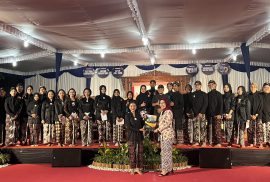
Yogyakarta, October 21, 2025 — The Faculty of Cultural Sciences (FIB), Universitas Gadjah Mada, held its graduation ceremony for 184 postgraduate students, consisting of 173 master’s and 11 doctoral graduates in the first period of the 2025/2026 academic year. The ceremony took place at the Poerbatjaraka Auditorium, marking a moment of celebration and recognition for the graduates’ dedication and perseverance throughout their academic journey.

A total of 102 graduates earned the Cum Laude distinction, reflecting not only their academic excellence but also their resilience and commitment to the humanities.

The Master’s Program in Linguistics produced the largest number of graduates with 66 students, followed by the Master’s in Literature with 46 graduates, and both the Master’s in Middle Eastern Cultural Studies and the Master’s in Anthropology, each with 16 graduates. At the doctoral level, the Doctoral Program in Humanities recorded the highest number with nine graduates. Other programs contributing to this period’s graduation include Master’s in History (10), Master’s in American Studies (10), Master’s in Archaeology (9), Doctoral Program in American Studies (1), and Doctoral Program in Anthropology (1).

The highest GPA and shortest study period among master’s graduates was achieved by Kyra Andhayu Noer from the Master’s Program in Archaeology, who completed her studies with a GPA of 3.96 in 1 year, 1 month, and 10 days. At the doctoral level, Ria Yuliati from the Doctoral Program in Humanities achieved a GPA of 3.81 with a study duration of 3 years, 11 months, and 8 days.

On average, the GPA of master’s graduates reached 3.78, while the doctoral graduates’ average GPA was 3.80. The Master’s in Middle Eastern Cultural Studies achieved the highest average GPA of 3.84, reflecting strong academic performance and dedication to interdisciplinary cultural studies.

In a deeply moving moment, the Faculty also paid tribute to one of its postgraduate students, Nanang Syaifudin, S.Hum., M.A., from the Master’s Program in Linguistics, who passed away before the graduation ceremony. Known for his diligence, humility, and passion for learning, his diploma was received symbolically by his parents during the ceremony. Their presence was met with heartfelt respect and emotion from the entire audience. The Faculty expressed its highest appreciation for Nanang’s commitment and prayed that his good deeds and knowledge continue to benefit many, while his family finds strength and solace.

This graduation was not only a celebration of academic achievement but also a moment of reflection on the deeper meaning of education — one that nurtures empathy, integrity, and humanity. Through this occasion, the Faculty of Cultural Sciences reaffirms its contribution to the Sustainable Development Goals (SDGs), particularly SDG 4: Quality Education and SDG 16: Peace, Justice, and Strong Institutions.

Graduates of FIB UGM are expected to become agents of positive change, carrying forward the values of culture, ethics, and humanity into their communities. With their knowledge and character, they are ready to take part in shaping a more inclusive, civilized, and sustainable world.

Marching Band UGM Wins 3rd Place at the 2025 Hamengku Buwono X Cup Championship

News Release Wednesday, 22 October 2025

Yogyakarta, October 12, 2025 – The Marching Band Student Activity Unit (UKM) of Universitas Gadjah Mada (UGM) proudly secured 3rd place at the prestigious 2025 Hamengku Buwono X Cup Championship. This remarkable achievement highlights the dedication and passion of UGM students in developing their talents in both the arts and sports, particularly through their commitment to marching band excellence.

Held in Yogyakarta, the competition featured performances in the Display Field Show general division, with participation from renowned marching bands across Indonesia, including Ekalavya Suara Brawijaya, Tiyadhita Marching Brass Tangerang, and Udayana Marching Band Bali. Based on the judges’ assessment, Ekalavya Suara Brawijaya claimed first place, followed by Tiyadhita Marching Brass Tangerang in second place, while UGM Marching Band proudly earned third place.

Several students from the Faculty of Cultural Sciences also took part in the competition, contributing as both musicians and visual performers. The team received direct support from UGM Rector Prof. Ova Emilia, Ph.D., and Prof. Anggito Abimanyu, former Deputy Minister of Finance and a proud alumnus of UGM Marching Band. Their presence served as both appreciation and motivation for the team to continue striving for excellence at national and international levels.

This achievement aligns with UGM’s commitment to the Sustainable Development Goals (SDGs), particularly SDG 4: Quality Education, by empowering student activities that foster talent development and leadership beyond the classroom. Moreover, the spirit of collaboration and sportsmanship embodied in this event reflects the values of SDG 17: Partnerships for the Goals, promoting positive networks among universities across Indonesia.

Through this success, UGM Marching Band is expected to further strengthen its role as a platform for developing students’ character, creativity, and sense of unity within Universitas Gadjah Mada.

[Public Relations of the Faculty of Cultural Sciences – Alma Syahwalani]

The Javanese Language, Literature, and Culture Study Program Participates in the 2025 Nusantara Manuscript Community (Manassa) Event

News Release Wednesday, 22 October 2025

Yogyakarta, October, 22, 2025 – The Javanese Language, Literature, and Culture Program demonstrated its role in the preservation and development of the archipelago’s manuscript heritage through its participation in a series of activities organized by the Nusantara Manuscript Society (Manassa) 2025. This prestigious event included the 20th Nusantara Manuscript International Symposium, the 2025 National Collective Memory Manuscript Award (IKON), and the 8th National Conference of the Nusantara Manuscript Society, which will take place on October 15-17, 2025, at the Auditorium of the National Library of the Republic of Indonesia and the National Research and Innovation Agency (BRIN) Building in Jakarta. This event, attended by researchers, academics, and manuscript enthusiasts from various regions in Indonesia, is an important forum for strengthening collaboration in the preservation, research, and utilization of ancient Nusantara manuscripts as the nation’s cultural heritage.

On this occasion, Dr. Arsanti Wulandari, M.Hum., a lecturer in the Javanese Language, Literature, and Culture Study Program, together with Nanda Nursa Alya, S.S., an alumnus from the same study program, actively participated not only as participants but also as speakers at the XX International Symposium on Nusantara Manuscripts.

The symposium, held on Thursday, October 16, 2025, at the BRIN Widya Graha Building, began with participant registration at 8:15 a.m. Western Indonesian Time, followed by the opening and panel sessions divided into 11 major themes. In each panel, researchers presented their research results and discussed various aspects of manuscript writing in a scientific manner.

During the session, Dr. Arsanti Wulandari, M.Hum., together with Nanda Nursa Alya, S.S., presented a paper entitled Hybridity of Snacks in Manuscript NB 499: A Linguistic and Cultural Review. The research addressed the theme of “Traditional Knowledge and Technology” by examining a manuscript from the National Library of Indonesia collection labeled R. Aj. Kramahudjana and stamped with the Internationale Crediet en Handelsvereeniging Rotterdam (1931) book stamp.

This study highlights the phenomenon of cultural hybridity—a blend of Javanese and European (Dutch and French) elements—as reflected in the culinary diversity described in the manuscript. One interesting example is the Purpercĕs Pohung snack, which etymologically is a vernacularization of the Dutch word poffertjes (a type of small cake) and the Javanese word pohung (cassava). The phoneme poffertjes was adapted to purpercĕs, demonstrating the dynamics of language and cultural interaction at that time. 

The appearance of the Prastila (top right), Bludĕr Pohung (top left), Purpercĕs Pohung (bottom) 

Documentation by Dr. Arsanti Wulandari, M.Hum.


The participation of the Javanese Language, Literature, and Culture Study Program in the Manassa 2025 event is a tangible manifestation of academics’ commitment to preserving Nusantara manuscripts as a relevant source of knowledge for modern life. Through such studies, knowledge from the past is revived to benefit the wider community, in line with the Sustainable Development Goals (SDGs), particularly those related to quality education, sustainable cities and communities, and partnerships to achieve goals.

[Javanese Language, Literature and Culture, Haryo Untoro]

1…1718192021…216

Video UGM

[shtmlslider name='shslider_options']
Universitas Gadjah Mada

Faculty of Cultural Sciences
Universitas Gadjah Mada
Jl. Nusantara 1, Bulaksumur Yogyakarta 55281, Indonesia
   fib@ugm.ac.id
   +62 (274) 513096
   +62 (274) 550451

Work Units

  • Office of Journal & Publishing
  • INCULS
  • Information Technology and Database
  • Language Learning Center
  • Library Unit
  • Public Relations
  • Research

Facilities

  • Computer Laboratory
  • Gamelan
  • Guest House
  • Language Library
  • Library
  • Phonetics Library
  • Self Access Unit
  • Student Internet Centre

Importan Links

  • Journal of Humaniora
  • Subscriber Journal
  • Alumni Portal
  • Career
  • Departmens News
  • UGM Streaming

Contacts

  • Academic
  • Administration
  • Dean’s Office
  • Departments / Study Programs
  • Public Relations

© 2024 Faculty of Cultural Sciences Universitas Gadjah Mada

KEBIJAKAN PRIVASI/PRIVACY POLICY

[EN] We use cookies to help our viewer get the best experience on our website. -- [ID] Kami menggunakan cookie untuk membantu pengunjung kami mendapatkan pengalaman terbaik di situs web kami.I Agree / Saya Setuju