• About UGM
  • Academic Portal
  • IT Center
  • Library
  • Research
  • Webmail
  • Informasi Publik
  • English
    • Indonesia
Universitas Gadjah Mada Faculty of Cultural Sciences
Universitas Gadjah Mada
  • Home
  • Profile
    • History
    • Vision and Mission
    • Organizational structure
    • Administration
    • Staff
    • Faculty Members
  • Academic
    • Academic Calendar
    • Undergraduate Programs
      • Bachelor of Cultural Antrophology
      • Bachelor in Archaeolagy
      • Bachelor in History
      • Bachelor in Tourism
      • Bochetor in Korean Language and Culture
      • Bachelor in Indonesian Language and Culture
      • Bachelor in English
      • Bachelor in Arabic
      • Bachelor in Japanese Language and Culture
      • Bachelor in Javanese Language, Literature and Culture
      • Bachelor in French language and literature
    • Graduate Programs
      • Master in Antrophology
      • Master in ArchaeoIogy
      • Master in History
      • Master in Linguistics
      • Master in Literature
      • Master In American Studies
      • Master in Middle Eastern Cultural Studies
    • Post-Graduate Programs / S3
      • Doctor in Antropology
      • Doctor in American Studies
      • Doctor in Humanities
    • Student Service
  • KPPM
    • Research Information
    • Scientific / Academic Publications
    • Community Service
    • International Cooperation
    • Domestic Cooperation
  • Student Organizations
    • Student Executive Council
    • Semi-Autonomous Organizations
      • KAPALASASTRA
      • Christian Student Alliance
      • LINCAK
      • Saskine
      • Catholic Student Family
      • Dian Budaya
      • Sastra Kanuragan (sasgan)
      • Family of Muslim Cultural Sciences Students (KMIB)
      • Bejo Mulyo
    • Autonomous Organizations
      • Family of Anthropology Students (KEMANT)
      • English Department Student Association
      • Tourism Students Association (HIMAPA)
      • Family of Indonesian Literature Students (KMSI)
      • West Asian Literature Student Association (IMABA)
      • Association of Korean-Language Students (HIMAHARA)
      • Family of Regional Indonesian Literatures Students (KAMASUTRA)
      • The Family Body of History Students (BKMS)
      • The French Literature Students Association (HMSP)
      • Family of Anthropology Students
      • Japanese Student Association (HIMAJE)
  • Admission
    • Student Evaluation
  • Home
  • SDGs 10: Berkurangnya kesenjangan
  • SDGs 10: Berkurangnya kesenjangan
Arsip:

SDGs 10: Berkurangnya kesenjangan

Master Program in Literature UGM Holds a Creative Writing Public Lecture on “Tracing Self-Identity Through Fiction”

News Release Tuesday, 25 November 2025

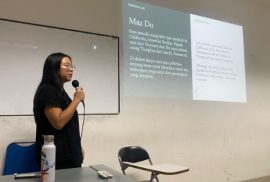
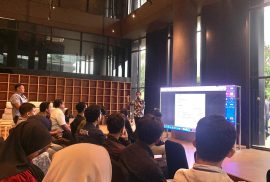
Yogyakarta, 18 November 2025 — As part of its ongoing effort to expand creative dialogue within the academic community, the Master’s Program in Literature, Faculty of Cultural Sciences, Universitas Gadjah Mada, held a public lecture titled “Tracing Self-Identity Through Fiction” on Tuesday, 18 November 2025, in Room 204 of the Soegondo Building, FIB UGM. The event featured California-based writer of Vietnamese–Indonesian descent, Mazdo, as the keynote speaker, with Naria Nur Iftitah serving as moderator. Her presence drew enthusiastic attention from students, alumni, and literary researchers eager to explore how fiction can serve as a medium for reflecting identity, personal experience, and socio-cultural dynamics.

In her presentation, Mazdo explained that writing, for her, is a deep dialogue between personal experience, imagination, and the internal questions that continually shape her creative process. She introduced three of her short stories as examples of how she navigates identity through fiction. The first piece she discussed, When the Moths Came (2023), stems from her personal experience. “This story began from my experience living in an apartment where moths were flying everywhere— in the kitchen, around the living room, everywhere. I felt disturbed, but I thought it would be interesting to turn it into a short story,” she explained. From this simple experience, Mazdo crafted a narrative about a married couple dealing with the constant presence of moths, which disrupt their daily life and create emotional distance between them.

Her second story, The Collector (2024), is rooted in her time studying at the Southeast Asia Program building at Cornell University, which was filled with cultural artifacts. She invited the audience to examine how such objects hold long historical traces, including power relations between the United States and Southeast Asian nations. Through the perspective of two curious and innocent children, she demonstrates how Orientalism and colonial traces can be reimagined in fictional space.

Meanwhile, her story Cut Blooms (2025) highlights the relationship between two sisters—shaped by affection, misunderstanding, and an unbreakable emotional bond. Mazdo shared that the inspiration for this work came from her closeness to her own sisters. “When I write, inspiration can come from anywhere, even from my own life experiences. For example, Cut Blooms comes from my personal experience, but I do not write it literally as it happened. Since I write fiction, only small details that truly happened in my life are adapted into the story,” she explained. This statement helped the audience understand that fiction does not require literal adherence to real events, but instead transforms lived experience into a broader emotional structure.

The public lecture also aligned with values of social and cultural sustainability. Through her stories, Mazdo demonstrated that literature can serve as a tool for cultivating empathy, honoring diverse identities, and encouraging reflection on one’s place within larger historical contexts.

The question-and-answer session unfolded warmly and thoughtfully. The first question came from Marisa Santi (Kagama UGM), who asked about the narrative approach Mazdo most frequently uses, whether she prefers the author as an omniscient narrator or allows the characters full autonomy. Responding to this, Mazdo said, “I tend to use the first approach, where the writer serves as the narrator.” She added that this position allows her to guide the fictional world while still giving her characters space to move freely.

The next question was posed by Marsya Kamila, a student of UGM’s Master’s Program in Literature, who asked whether Mazdo plans to write fiction that explicitly addresses migration or identity exploration in the United States, given that her parents migrated there. Mazdo responded enthusiastically: “Yes, because both of my parents come from Vietnam and Indonesia, I think it would be interesting to write fiction that gives voice to our origins and experiences.” Her answer indicates that family history and migration remain enduring sources of inspiration in her creative journey.

The event concluded with great appreciation from participants, who felt they gained new insights into how fiction operates as a tool for self-exploration, historical reading, and reinterpreting lived experience. The Master’s Program in Literature hopes that similar public lectures will continue to provide creative spaces that strengthen literary literacy while fostering cultural awareness and sustainability in society.

[Master’s Program in Literature, Marsya Kamila]

UNDIP Master’s Program in Literary Studies Visits UGM’s Master’s Program in Literature to Exchange Insights and Deepen Academic Collaboration

News Release Tuesday, 25 November 2025

Yogyakarta, 13 November 2025 — The Master’s Program in Literature, Faculty of Cultural Sciences, Universitas Gadjah Mada, welcomed an academic visit from the Master’s Program in Literary Studies, Faculty of Cultural Sciences, Universitas Diponegoro at Room 709, Soegondo Building, FIB UGM. The event was part of the ongoing implementation of the cooperation agreement between the two faculties in education, research, and community engagement.

The visit began with a warm welcome from the UGM Master’s in Literature team, who greeted the UNDIP delegation of lecturers and students. From the outset, the atmosphere was relaxed and friendly, reflecting the longstanding relationship between the two institutions.

The first remarks were delivered by the Head of UGM’s Master’s Program in Literature, Prof. Dr. Aprinus Salam, M.Hum. In his address, he expressed his delight in receiving the academic visit. He emphasized the personal and academic closeness he shares with UNDIP, stating that the meeting felt like a family gathering. “I feel very close to UNDIP. I once taught there, and several of the lecturers are my close friends. So today truly feels like meeting family,” he said, receiving warm responses from attendees.

This was followed by remarks from the Head of the Master’s Program in Literary Studies at Universitas Diponegoro, Dr. Sukarjo Waluyo, M.Hum. He conveyed his enthusiasm for the opportunity to visit UGM in person and observe firsthand the learning atmosphere and academic dynamics of UGM’s Master’s Program in Literature. He noted that the visit was valuable for gaining insights into program management and for strengthening inter-faculty collaboration.

The event continued with presentations of study program profiles from both institutions. Representatives from UGM’s Master’s in Literature and UNDIP’s Master’s in Literary Studies shared information on curriculum structures, research focuses, teaching models, and recent developments within their programs. The session was interactive, with each institution exchanging insights and experiences. UNDIP presented several interesting points regarding learning strategies and curriculum innovation, while UGM elaborated on its academic management approach, including how the program operates with six specialization tracks.

The discussion grew livelier during the Q&A session. One UNDIP lecturer inquired about how UGM manages to open six specializations at the master’s level—namely Indonesian Literature, Javanese Literature, English Literature, French Literature, Japanese Literature, and Arabic Literature. In response, Prof. Aprinus explained that launching a specialization requires at least ten interested students and available faculty members. If no students register for a specialization in a particular semester, the track will not be opened for that term. He emphasized that this system has been implemented for a long time.

Students from both universities were equally active in the discussion. A UNDIP student asked about the forms of assignments and examinations used in the UGM Master’s program. UGM students from various specializations then shared their experiences. Nada from Arabic Literature explained, “In the first semester, we study many theoretical foundations as preparation for writing the thesis later on, such as sociology of literature, feminism, post-structuralism, and postcolonialism. In the second semester we continue with specialization courses, and in the third and fourth semesters we focus on the thesis.”

Nai from English Literature added, “For final assessments or examinations, they are usually in the form of academic papers, and in some English Literature specialization courses, we also have weekly essay assignments.”. Meanwhile, Marsya from French Literature shared her experience as the only student in her specialization that year. “In my cohort, I happened to be the only one taking the French Literature specialization. However, the classes were still conducted, and the lecturers continued to provide materials. As for the final assignment, it is similar to other specializations—either a draft article or a submitted article to a SINTA-indexed or Scopus-indexed journal,” she explained.

The Q&A session created an intimate academic atmosphere as lecturers and students from both institutions exchanged questions, perspectives, and reflections. The interaction demonstrated a strong enthusiasm for learning from one another and building a broader academic network.

The academic visit concluded with hopes that the collaboration between UGM’s Master’s in Literature and UNDIP’s Master’s in Literary Studies will continue to grow through similar activities in the future. The meeting not only strengthened institutional ties but also opened meaningful avenues for knowledge exchange, enriching the academic experience for all participants.

[Master’s Program in Literature, Marsya Kamila]

Students of Listening and Speaking III Join a Q&A Session on Debate with a National Champion

News Release Monday, 17 November 2025

Yogyakarta, October, 15, 2025 – Students of Class A in the Listening and Speaking III course participated in an activity titled “Debate Competition: Q&A with the Champion” as part of efforts to broaden their learning experience. The session provided students with an opportunity to gain deeper insights into Korean-language debating and the dynamics of competition preparation from an experienced speaker.

The course instructor, Alfiana Amrin Rosyadi, S.S., M.A, invited Sindy Novi Nurjanah, the First-Place Winner of the 2021 Korean Debate Competition and an alumna of the 2018 cohort, who is currently pursuing a master’s degree in Teaching Korean as a Foreign Language at Kyunghee University. The online session enabled students to directly interact with Sindy despite geographical distance, opening space for discussion on Korean debating techniques and strategies for preparing for such competitions.

Sindy shared her impressions of engaging with the students of the Korean Department at UGM. She expressed that although the session was conducted online, the students’ enthusiasm was evident through their active questions and attentive participation. She hoped that the experiences and perspectives she shared would support the students in their learning process and as they encounter new opportunities in the future.

She also encouraged students not to hesitate in taking on challenges, including participating in competitions or exploring new opportunities that can expand their horizons. According to her, having the courage to dream and maintaining confidence in one’s abilities are essential first steps. “As long as we believe in ourselves and keep trying, there will always be a way to achieve our goals,” she said.

Through this activity, students are expected not only to understand debating techniques but also to feel more motivated to develop their skills, broaden their perspectives, and cultivate sustainable learning habits. Activities like this serve as a reminder that opportunities for growth often emerge from simple encounters that provide new inspiration and motivation.

[Antrophology, Eunike Serafia N.S]

Contemporary American Issue: American Studies Conference and Freedom of Speech in the Contemporary American Era

HEADLINESNews ReleaseSDGs 10: Reduced InequalitiesSDGs 16: Peace justice and strong institutionsSDGs 4: Quality Education Thursday, 22 May 2025

Yogyakarta, May 22, 2025 — On May 9, 2025, the American Studies Program successfully held a seminar titled Contemporary American Issues at the Soegondo Building 70X.

In addition to providing the audience with an opportunity to hear insights from Prof. Gade, the seminar also featured Achmad Munjid, Ph.D. as the second speaker, who delivered a talk on “Contestation on Freedom of Speech in the US Today.”

In the second session of the seminar, the discussion focused on how the concept of freedom of speech in the United States has significantly shifted—so much so that it appears citizens are only free to express their opinions as long as those opinions align with the voice of the government. This trend can be observed in various aspects of American society today.

The presentation also explored how the decline of democracy amidst the rise of globalization is driven by the emergence of anti-globalization sentiments in different parts of the world, resulting in fragmentation among individuals, including within the United States.

Beyond addressing current issues, the discussion also delved into broader events unfolding in the U.S. today and the underlying causes behind them. Examining this issue more deeply reveals that many of the changes occurring in America today are closely tied to the historical foundations of the nation.

Despite the many contradictions present in contemporary America, this discussion encouraged participants to think more critically about social equality, freedom of speech, and government transparency—both nationally and globally—as Indonesian citizens engaging with global discourse.

[Master of American Studies, Reni Renatawati]

Exploring Postgraduate Studies through an Academic Visit by the Tadris Bahasa Indonesia Program of IAIN Madura to the Master in Literature Program of Universitas Gadjah Mada

HEADLINESNews ReleaseSDGs 10: Reduced InequalitiesSDGs 17: Partnerships for the GoalsSDGs 4: Quality Education Thursday, 22 May 2025

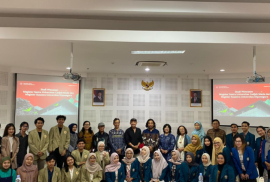
Yogyakarta, May 14, 2025 — As part of an effort to broaden academic perspectives, the Tadris Bahasa Indonesia Study Program at IAIN Madura conducted an academic visit (Studi Wawasan) to the Master in Literature Program, Faculty of Cultural Sciences, Universitas Gadjah Mada. Held on Wednesday, May 14, 2025, at the L1 Seminar Room of the UGM Library and Archives Building, the event was attended by over 70 undergraduate students from IAIN Madura along with their faculty supervisors.

The main agenda of the event included an introduction to UGM, an overview of the Master of Literature curriculum and student activities, insights into academic life on campus, and a Q&A session discussing admissions and scholarships available for postgraduate study.

In his opening remarks and presentation, Prof. Dr. Aprinus Salam, M.Hum., Head of the Master in Literature Program of Universitas Gadjah Mada, emphasized that the program not only offers academic learning in the classroom but also a variety of enrichment activities to support student development.

Meanwhile, Agus Purnomo Ahmad Putikadyanto, M.Pd., Head of the Tadris Bahasa Indonesia Program of IAIN Madura, expressed his hope that the visit would broaden students’ horizons and encourage them to pursue deeper academic engagement.
“We hope our students can learn and gain new insights into further education, so they are motivated to expand their knowledge even more,” he stated.

The Q&A session became one of the most engaging parts of the event. Nada Nadillah, a current student of the Master in Literature Program and recipient of the LPDP scholarship, shared her experience in obtaining the scholarship. She explained the application process, selection stages, and required documents in detail.
“There are various types of LPDP scholarships, such as regular and affirmative. The selection process includes administrative screening, a scholastic test, and a substantive interview. Requirements include a TOEFL score, academic transcript, and a study plan,” Nada explained in response to one of the participants’ questions.

Marisa Santi Dewi, an alumna of the Master in Literature Program at UGM, addressed a question about the difficulty level of gaining admission to a master’s program. She emphasized that the selection process is manageable if students prepare well in advance.
“Getting into the Master’s program is quite easy, actually. You just need a TOEFL score, a TPA test result, and your transcript. You can start preparing now—especially since you’re still in your fourth semester,” Marisa encouraged.

This academic visit served as a valuable platform for the exchange of knowledge and experiences between the two institutions. It aimed not only to provide insight into postgraduate education but also to inspire students from IAIN Madura to continue developing themselves academically. In addition to presenting information on curriculum structure, admissions pathways, and available scholarships, the event featured warm and interactive discussions with current students and alumni of the Master of Literature Program, enriching participants’ perspectives. As such, the visit was not only informative but also motivational, fostering greater readiness among students to pursue higher education in the future.

[Public Relation Master of Literature, Marsya Kamila]

123

Video UGM

[shtmlslider name='shslider_options']
Universitas Gadjah Mada

Faculty of Cultural Sciences
Universitas Gadjah Mada
Jl. Nusantara 1, Bulaksumur Yogyakarta 55281, Indonesia
   fib@ugm.ac.id
   +62 (274) 513096
   +62 (274) 550451

Work Units

  • Office of Journal & Publishing
  • INCULS
  • Information Technology and Database
  • Language Learning Center
  • Library Unit
  • Public Relations
  • Research

Facilities

  • Computer Laboratory
  • Gamelan
  • Guest House
  • Language Library
  • Library
  • Phonetics Library
  • Self Access Unit
  • Student Internet Centre

Importan Links

  • Journal of Humaniora
  • Subscriber Journal
  • Alumni Portal
  • Career
  • Departmens News
  • UGM Streaming

Contacts

  • Academic
  • Administration
  • Dean’s Office
  • Departments / Study Programs
  • Public Relations

© 2024 Faculty of Cultural Sciences Universitas Gadjah Mada

KEBIJAKAN PRIVASI/PRIVACY POLICY

[EN] We use cookies to help our viewer get the best experience on our website. -- [ID] Kami menggunakan cookie untuk membantu pengunjung kami mendapatkan pengalaman terbaik di situs web kami.I Agree / Saya Setuju