• About UGM
  • Academic Portal
  • IT Center
  • Library
  • Research
  • Webmail
  • Informasi Publik
  • English
    • Indonesia
Universitas Gadjah Mada Faculty of Cultural Sciences
Universitas Gadjah Mada
  • Home
  • Profile
    • History
    • Vision and Mission
    • Organizational structure
    • Administration
    • Staff
    • Faculty Members
  • Academic
    • Academic Calendar
    • Undergraduate Programs
      • Bachelor of Cultural Antrophology
      • Bachelor in Archaeolagy
      • Bachelor in History
      • Bachelor in Tourism
      • Bochetor in Korean Language and Culture
      • Bachelor in Indonesian Language and Culture
      • Bachelor in English
      • Bachelor in Arabic
      • Bachelor in Japanese Language and Culture
      • Bachelor in Javanese Language, Literature and Culture
      • Bachelor in French language and literature
    • Graduate Programs
      • Master in Antrophology
      • Master in ArchaeoIogy
      • Master in History
      • Master in Linguistics
      • Master in Literature
      • Master In American Studies
      • Master in Middle Eastern Cultural Studies
    • Post-Graduate Programs / S3
      • Doctor in Antropology
      • Doctor in American Studies
      • Doctor in Humanities
    • Student Service
  • KPPM
    • Research Information
    • Scientific / Academic Publications
    • Community Service
    • International Cooperation
    • Domestic Cooperation
  • Student Organizations
    • Student Executive Council
    • Semi-Autonomous Organizations
      • KAPALASASTRA
      • Christian Student Alliance
      • LINCAK
      • Saskine
      • Catholic Student Family
      • Dian Budaya
      • Sastra Kanuragan (sasgan)
      • Family of Muslim Cultural Sciences Students (KMIB)
      • Bejo Mulyo
    • Autonomous Organizations
      • Family of Anthropology Students (KEMANT)
      • English Department Student Association
      • Tourism Students Association (HIMAPA)
      • Family of Indonesian Literature Students (KMSI)
      • West Asian Literature Student Association (IMABA)
      • Association of Korean-Language Students (HIMAHARA)
      • Family of Regional Indonesian Literatures Students (KAMASUTRA)
      • The Family Body of History Students (BKMS)
      • The French Literature Students Association (HMSP)
      • Family of Anthropology Students
      • Japanese Student Association (HIMAJE)
  • Admission
    • Student Evaluation
  • Home
  • SDG 14: Life Below Water
Arsip:

SDG 14: Life Below Water

Learning from the Coast: Cultural Anthropology Department Conducts Fieldwork in Wonokerto, Pekalongan

News Release Wednesday, 28 October 2026

On Saturday, October 17, 2026, the Department of Cultural Anthropology
organized a fieldwork trip to Wonokerto, Pekalongan, as part of an effort to apply in
practice the theories discussed in class. Participants in this fieldwork included
undergraduate students in Cultural Anthropology taking the course “Maritime
Anthropology,” taught by Dr. Des Christy, and graduate students in Cultural
Anthropology taking the course “Rhetoric of Development,” taught by Prof. Pujo Semedi
Hargo Yuwono, along with a guest lecturer from UIN Pekalongan, Mochammad Najmul
Afad. The fieldwork activity was organized by selecting destinations for the participants
to visit that aligned with the learning objectives set in class.

That morning, while having breakfast, participants were not only provided with
logistical support but also attended a general lecture as part of their exposure to local
knowledge, featuring a local village official who explained the context of Wonokerto
Kulon. Mr. Jodi, a village official, explained several fundamental aspects of the area,
such as its social, cultural, economic, and ecological contexts from the perspective of
coastal life. One of the points Mr. Jodi emphasized most was the tidal flooding that
continues to affect Wonokerto, which in turn impacts the social and economic contexts
of the surrounding community.

The class continued with a visit to the Wonokerto Fish Auction Site. There, the
students directly observed the process by which fishermen auctioned their catch. Dr.
Des Christy, a professor of Maritime Anthropology, gave the students the freedom to
gather data during the assignment, with the goal of producing a descriptive account of
community life. The students employed various approaches, such as participant
observation, interviews, and ethno-photography. For two hours, the students and faculty closely observed the fish auction activities before finally taking their leave to head to the next destination.

The next destination in the series of fieldwork activities was a visit to the
shipyard—an area where ships are “parked” while they are out of service or serving as
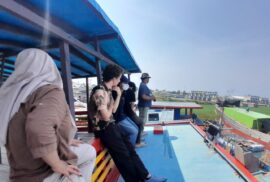
a waiting area for vessels preparing to set sail. At the shipyard, students from both the
Maritime Anthropology and Development Rhetoric courses had the primary objective of
exploring the personal lives of the fishermen. The students were allowed to explore the
boats lined up in the parking area, which included various types ranging from
small-scale fishing vessels to large-scale ones. In between exploring the vessels and
interacting with the fishermen, students and faculty were treated to smoked stingray and vegetables, specially prepared by local residents.

The final leg of the fieldwork took place during a brief stop at the Setono Batik Market
area. The students were invited to explore the market area while viewing Pekalongan’s
signature batik fabrics, which embody a strong sense of local identity. Not only were
they invited to explore, but some students also purchased goods from batik artisans as
a form of support for Pekalongan’s batik UMKM community. Purchasing batik also
serves as a means of passing on cultural heritage to younger generations. With a
deeper understanding of batik, this traditional Pekalongan fabric holds its own
significance within the broader cultural landscape. Shopping and browsing for unique
Pekalongan souvenirs brought the entire series of trips and fieldwork conducted by the
students and faculty members to a close, leaving them with many experiences and
joyful memories from every encounter, as well as the coastal ambiance that will shape
their future academic journeys.

Author: Danumurti
Editor: Leonard Dimas
Critical Island Studies Summer School 2025

Agenda Monday, 26 May 2025

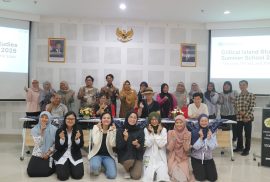
Yogyakarta, 19-21 Mei 2025 —Indonesia is widely recognized as an archipelagic country. According to the Geospatial Information Agency, by 2024, the number of islands in Indonesia had reached 17,360, varying in size, location, socio-cultural systems, and natural as well as human resource potential. As territorial units, these islands are both separated and united by the sea—whose area is even larger than the landmass itself. This fact illustrates that the tendency toward fragmentation may be stronger than that of unity. As a unitary state, Indonesia exists within a constant tension between sameness and diversity, unity and potential disintegration. Therefore, the state must pay serious attention to its islands. It is for this reason that the national motto, Bhinneka Tunggal Ika (Unity in Diversity), continues to be emphasized by the government through various educational institutions and civic doctrinal efforts.

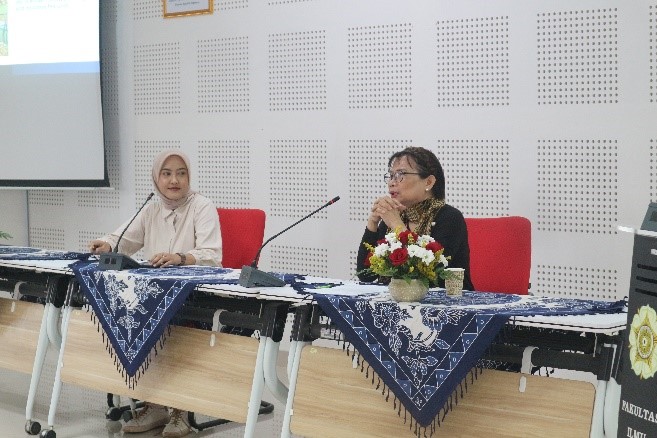
In response to the urgent need to address Indonesia’s existence as an archipelagic state with complex island-related issues, the Doctoral Program in Humanities at the Faculty of Cultural Sciences, Universitas Gadjah Mada, opened the year 2025 with an international lecture series. The program invited three internationally recognized scholars in island studies to teach and deliver lectures as part of a comprehensive event entitled Critical Island Studies Summer School, themed “The Land, The Sea, and The State.” The invited scholars included Maria Luisa Torres Reyes, a full professor and Scholar-in-Residence at the University of Santo Tomas, Manila; Alex Taek-Gwang Lee, professor of philosophy and cultural studies and founding director of the Centre for Technology in Humanities at Kyung Hee University, South Korea; and Faruk, professor at the Faculty of Cultural Sciences, UGM, specializing in literary sociology with a focus on cultural and island studies. The event took place from May 19 to 21, 2025, in Room 709, Soegondo Building, Faculty of Cultural Sciences, UGM.

On the first day, the program commenced with an introductory presentation on Critical Island Studies (CIS) by Prof. Maria Luisa Torres Reyes and Prof. Alex Taek-Gwang Lee. Prof. Reyes—affectionately called “Bu Lulu” during her stay in Indonesia—explained that Critical Island Studies was established in 2019 at the University of Santo Tomas, Philippines. Its core focus is to observe and critique island-related studies, particularly in the Asian region.

On the second and third days, the program continued with lecture sessions from four keynote speakers. On Day 2, Prof. Reyes presented a lecture titled “The Sama Bajau: The Nomadic Space/Place Between ‘Laut’ and ‘Pulo’,” followed by Prof. Faruk’s presentation entitled “The Sea, Nomad, and Capitalist.” On the final day, Prof. Toshiya presented an abstract titled “What is the Speculative and Archipelagic Turn in the Recent Tonality of Human Sciences?” which was then followed by the final lecture delivered by Prof. Alex titled “Artificial Intelligence and the Ecological Catastrophe.”

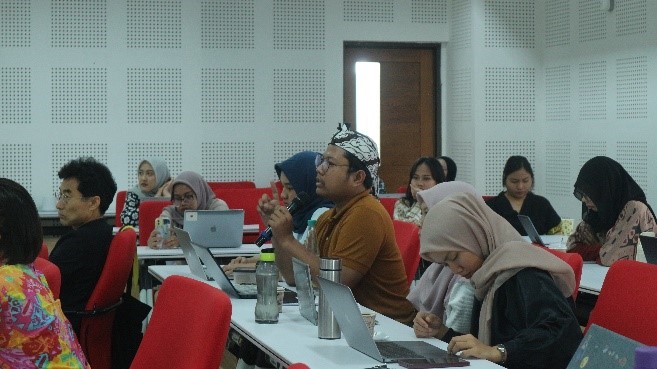
Guided by a moderator, the event did not merely consist of lectures but also featured engaging discussions with the participants. The entire Critical Island Studies (CIS) Summer School concluded with closing remarks by Prof. Dr. Wening Udasmoro, S.S., M.Hum., DEA, Vice Rector for Education and Teaching at Universitas Gadjah Mada.

[Doctoral Program in Humanities]

Five Championships Earned by UGM Javanese Language, Literature, and Culture Students in the XXIX Imbasadi Nusantara Cultural Gathering Activity

News ReleaseStudent's Activity Friday, 1 March 2024

SDGs 4: Quality Education | SDGs 14: Life Below Water | SDGs 15: Life on Land | SDGs 17: Partnerships for the Goals

The XXIX National Cultural Gathering was successfully organized by I Gusti Bagus Sugriwa State Hindu University (UHN) which took place on Sunday-Friday, from November 5th until 10th, 2023. The theme of the 2023 National Cultural Gathering was “Sabda Budaya: Mukhti Luwir Nihan Segara”, which means “Cultural Echoes: Thundering like the Ocean”. The theme intends to highlight the richness of Indonesian culture that is still thundering amid the current era of globalization. The activity lasted for five days with various agendas including the National Deliberation, Wimbakara (Competition), and National Seminar. It ended with the Awarding Night as well as the closing of the XXIX National Cultural Gathering activities.

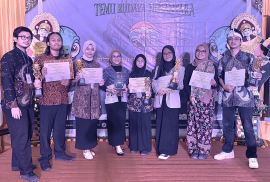
In this XXIX National Cultural Gathering, the Javanese Language, Literature and Culture Study Program, Faculty of Cultural Sciences (FIB), Universitas Gadjah Mada (UGM), sent eight delegates to participate in the entire series of events. The UGM delegation consists of Nurma Aisyah (class of 2021) as the head of the delegation, Vighna Rivattyannur Hernawan (class of 2020), Bima Muslih Wicaksono (class of 2022), Haryo Untoro (class of 2022), Kintan Dewinta Putri (class of 2022), Muhammad Siswoyo (class of 2022), Alma Syahwalani (class of 2023), and Meifira Arini Pitaloka (class of 2023).

There were six contested activities, including the Cultural Parade, National Scientific Writing Competition (LKTIN), Poetry Musicalization Competition, Comic Strip Competition, Cultural Tiktok Competition, and Cultural Reportage Competition. Of the six competitions, the delegation of Universitas Gadjah Mada won five competitions, including:

  • 1st place in the Cultural Reportage competition (Alma Syahwalani)

The Cultural Reportage competition raised the theme of Taman Sari Yogyakarta, a historic water garden site, as a reflection of the splendor and majesty of Indonesian culture that is passed down to this day.

  • 2nd place in the National Scientific Writing Competition (Haryo Untoro and Muhammad Siswoyo)

The National Scientific Writing Competition entitled Reflection of the Entity of the Agrarian Tradition in the Track Record of Cowongan Song Verses, raised the Cowongan ritual song verses as material objects that contain elements of agricultural in the form of various plants and animals. The elements are then associated with their classification in Javanese culture and reveal the inheritance related to the name of the agrarian elements and the agrarian mythology behind them.

  • 2nd place in Comic Strip competition (Meifira Arini Pitaloka)

The Comic Strip competition with the theme “environmental conservation based on local wisdom” tells the story of young people who want to reforest by paying attention to the philosophy of these plants.

  • 3rd place in the Poetry Musicalization competition (Nurma Aisyah and Bima Muslih Wicaksono)

The Poetry Musicalization Competition raised the theme “Sabda Budaya: Mukhti Luwir Nihan Segara” brought poetry created by Muhammad Siswoyo about the beauty and majesty of the nation’s culture. The poem was performed with a recitation combined with singing and musical accompaniment, thus mesmerizing the other participants.

  • 3rd place in Tiktok Nusantara competition (Kintan Dewinta Putri)

Cultural Tiktok competition featuring traditional games, including Dakon or Congklak, Clogs, and games accompanied by dolanan cublek-cublek suweng songs.


The achievement of the UGM Javanese Language, Literature, and Culture Study Program in winning various competitions is a concrete manifestation of UGM Javanese Language, Literature, and Culture Students in promoting, appreciating, and preserving the diverse cultures and traditions in Indonesia.

With the existence of the XXIXth National Cultural Gathering activities, it is hoped that they will motivate students to be interested in promoting this cultural heritage and tradition. Furthermore, this National Cultural Gathering activity can strengthen relationships between students of regional literature study programs throughout Indonesia and implement sustainable development goals, especially in improving the quality of education, extracting local wisdom that is in tune with the ecosystem, and working together to preserve and explore the nation’s cultural potential.

We would like to thank all those who have participated in the success of this event. Hopefully, Imbasadi can continue to accommodate students majoring in regional literature throughout Indonesia in developing and preserving the nation’s culture.

Indonesia is diverse, and Imbasadi unites.

Video UGM

[shtmlslider name='shslider_options']
Universitas Gadjah Mada

Faculty of Cultural Sciences
Universitas Gadjah Mada
Jl. Nusantara 1, Bulaksumur Yogyakarta 55281, Indonesia
   fib@ugm.ac.id
   +62 (274) 513096
   +62 (274) 550451

Work Units

  • Office of Journal & Publishing
  • INCULS
  • Information Technology and Database
  • Language Learning Center
  • Library Unit
  • Public Relations
  • Research

Facilities

  • Computer Laboratory
  • Gamelan
  • Guest House
  • Language Library
  • Library
  • Phonetics Library
  • Self Access Unit
  • Student Internet Centre

Importan Links

  • Journal of Humaniora
  • Subscriber Journal
  • Alumni Portal
  • Career
  • Departmens News
  • UGM Streaming

Contacts

  • Academic
  • Administration
  • Dean’s Office
  • Departments / Study Programs
  • Public Relations

© 2024 Faculty of Cultural Sciences Universitas Gadjah Mada

KEBIJAKAN PRIVASI/PRIVACY POLICY

[EN] We use cookies to help our viewer get the best experience on our website. -- [ID] Kami menggunakan cookie untuk membantu pengunjung kami mendapatkan pengalaman terbaik di situs web kami.I Agree / Saya Setuju