• About UGM
  • Academic Portal
  • IT Center
  • Library
  • Research
  • Webmail
  • Informasi Publik
  • English
    • Indonesia
Universitas Gadjah Mada Faculty of Cultural Sciences
Universitas Gadjah Mada
  • Home
  • Profile
    • History
    • Vision and Mission
    • Organizational structure
    • Administration
    • Staff
    • Faculty Members
  • Academic
    • Academic Calendar
    • Undergraduate Programs
      • Bachelor of Cultural Antrophology
      • Bachelor in Archaeolagy
      • Bachelor in History
      • Bachelor in Tourism
      • Bochetor in Korean Language and Culture
      • Bachelor in Indonesian Language and Culture
      • Bachelor in English
      • Bachelor in Arabic
      • Bachelor in Japanese Language and Culture
      • Bachelor in Javanese Language, Literature and Culture
      • Bachelor in French language and literature
    • Graduate Programs
      • Master in Antrophology
      • Master in ArchaeoIogy
      • Master in History
      • Master in Linguistics
      • Master in Literature
      • Master In American Studies
      • Master in Middle Eastern Cultural Studies
    • Post-Graduate Programs / S3
      • Doctor in Antropology
      • Doctor in American Studies
      • Doctor in Humanities
    • Student Service
  • KPPM
    • Research Information
    • Scientific / Academic Publications
    • Community Service
    • International Cooperation
    • Domestic Cooperation
  • Student Organizations
    • Student Executive Council
    • Semi-Autonomous Organizations
      • KAPALASASTRA
      • Christian Student Alliance
      • LINCAK
      • Saskine
      • Catholic Student Family
      • Dian Budaya
      • Sastra Kanuragan (sasgan)
      • Family of Muslim Cultural Sciences Students (KMIB)
      • Bejo Mulyo
    • Autonomous Organizations
      • Family of Anthropology Students (KEMANT)
      • English Department Student Association
      • Tourism Students Association (HIMAPA)
      • Family of Indonesian Literature Students (KMSI)
      • West Asian Literature Student Association (IMABA)
      • Association of Korean-Language Students (HIMAHARA)
      • Family of Regional Indonesian Literatures Students (KAMASUTRA)
      • The Family Body of History Students (BKMS)
      • The French Literature Students Association (HMSP)
      • Family of Anthropology Students
      • Japanese Student Association (HIMAJE)
  • Admission
    • Student Evaluation
  • Home
  • Headline
  • Headline
  • page. 4
Arsip:

Headline

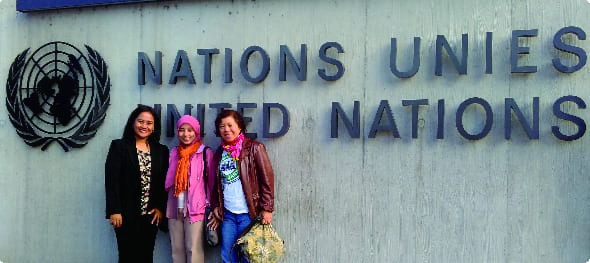
Report: Thesis Research Grant in Geneva

Rilis Berita Thursday, 31 December 2015

I arrived in Switzerland on Friday, 11 2015 at 14:20 Geneva time, then continued to Versoix, where I would live for approximately three months. It was difficult to find a place to live in the country, which is known for its high cost of living. Versoix is located not far from the center of Geneva; the trip only took about twelve minutes by train. I was fortunate because my apartment was only 700 meters from the train station, and thus it only took a minute to walk there. Everything I found there was new and amazing. On the first day I walked around the small town of Versoix, which is located at the edge of Lake Léman. I can even enjoy a stunning view of the lake from my apartment balcony. The sight of the lake, which reaches from Geneva to Montreux and the European mountains, welcomed me every day as I took the train to campus.

I was able to become part of the Graduate Institute Geneva, or in French the Institut de hautes études internationals et du développement (IHEID), because of a grant from the Faculty of Cultural Sciences, Universitas Gadjah Mada, for my thesis studies. As a late-semester student writing my thesis, I was extremely fortunate to receive this opportunity to conduct research in Geneva. Because of the good relations between these two institutions, I was able to become an exchange student during the autumn semester; I did not only conduct research, but also attended classes with the other students of the Graduate Institute. I was proud to be the first and only student from Indonesia to partake in this program.

Orientation for new exchange students was held on Monday, 14 September 2015. During this activity, we were given access to facilities that would ease the learning process while we were at IHEID, including a multi-functional student card, thumb drive, password, and user name to access the IT and email networks that students required to receive information and to ease communication with the lecturers. Afterwards, Concepta Canal, who was in charge of the exchange program at IHEID, and Dr. Laurent Neury, who was in charge of academic affairs, instructed us in the learning processes at the institute. Afterwards, orientation continued with a presentation regarding the institute, which included a lecture by the Director of IHEID and other academic staff. At the end of the orientation session, students were asked to participate in activities which introduced the different departments and programs of the IHEID, in accordance with their own specialties. I selected the Anthropology and Sociology program, because there I could attend classes which would give me information (both theoretical and analytical) useful for my thesis. Furthermore, specialists in gender studies (the central topic of my research) were also employed by this program, and as such I could receive advice from these lecturers and discuss my thesis with them. Through these programs, I met Françoise Grange and Christine Verschuur.

The first week was one of adaptation for me. Adapting to the weather, the transport, my fellow students from all corners of the globe, and the campus environment. I took two classes during this program: Social and Cultural Theory I and “Inégalités de genre, développement et théories féministes postcoloniales”. The first class was in English, whereas the second was conducted in French. This was a considerable challenge, as I was asked to understand and communicate in both languages at the same time. The first week of classes was filled with introductions, explanations of course rules, division of material for presentations, and reading assignments.
As a foreign student in Geneva, it was not enough for me to have a visa. I also needed a residence permit from the Office cantonal de la population et des migrations, a sort of civil registration office. In between classes and studying, I went to this office, equipped with a letter from the Graduate Institute, to apply for a student residence permit. I had to pay 237 CHF to apply for this residence permit. All students, be they from the exchange program or another program, were required to have such a permit. We were greatly aided in administrative issues by the Graduate Institute.

I spent almost all of my free time at the library because the atmosphere on campus was very conducive for studying. Once in a while, though, I would take the time to enjoy the view before returning to my apartment, as Geneva is not a large city. Aside from attending academic activities and working on my research, as a student of the institute I participated in various activities organized by the student body. One of them was Asian Night, which was held by the association of Asian students. Though it was a welcome party for Asian students, it was also attended by numerous Europeans and Americans. For this event, Hani, an Indonesian student of the IHEID’s Master of Development Studies program, borrowed some traditional Indonesian clothes from the Indonesian Embassy in Switzerland. Many foreign students were interested in the clothing and tried it on.

I did not participate in many research activities in the first weeks of the program because I was still adapting to this new place. Almost every day I received new information through my student email account, and I had to filter it and determine what was important for me and what could be safely ignored. Being part of the campus meant that I had to be more active in seeking knowledge, study more, not be afraid of asking questions, and use the available facilities so that I would not fall behind the other students. Furthermore, I had to make the best use of this opportunity, as I knew it would not come again.

I never imagined that I would receive a research grant from the Faculty of Cultural Sciences and become an exchange student at one of the most prestigious campuses in Geneva. Especially since, during my first week, I was visited by my thesis advisor, Bu Wening Udasmoro. She happened to be in Geneva for a presentation and to have recommended that I come here for my research. I am very grateful that she shared so much information about life in Geneva with me, because she had previously completed her masters’ studies in this city. It was a source of pride for me to follow my advisor’s steps and studying here, in the world’s safest and most peace-loving nation.

As I entered the second week of classes, I was kept busy with reading assignments. It was not a new experience for me to receive such assignments, but it felt different since I had to read English and French sources. This meant that I had to set aside more time for these assignments than I had when I was in Indonesia. I also tried to find additional information in Indonesian so that I could better understand the material. Like the Faculty of Cultural Sciences, the Graduate Institute often held seminars to discuss contemporary issues in various fields of discipline. I was able to attend the Gender Seminar Series, held monthly by the Gender Studies program, with the theme “Beyond the Normative: Can Women’s Inclusion Really Make for Better Peace Processes?” which was presented by Thania Paffenholz of the Graduate Institute’s Centre on Conflict, Development and Peacebuilding (CCDP). I was not able to follow much of the discussion, but I did understand that the research conducted by Thania and her team in several Middle Eastern nations indicated that women had a significant, flexible, and fluid role in the power process. Organized women’s groups could have highly positive effects on negotiations. This discussion was very interesting, and piqued my passion for further study.

The week was closed with a group photo of the exchange program students, who were all the first representatives of universities which had partnered with the IHEID. Here I learned that I was not alone: Nourhan and Amal, students of the American University in Cairo, Mariasole of Bocconi University, Milan, and me, Novi, from Universitas Gadjah Mada.
Call for Paper 14 th Urban Research Plaza Academic Forum: A New Community Management Through Arts and Cultures

Rilis Berita Sunday, 1 November 2015

Call for Paper

A New Community Management Through Arts and Cultures

– This theme is expected to discuss the effectiveness of community management in revitalizing or re-actualization of traditional art
– The study is expected to evaluate the existing community managements

Luaran wajib
Satu artikel/makalah dalam bahasa Inggris yang akan dipresentasikan dalam Seminar internasional 14th URP Academic Forum Kerjasama Fakultas Ilmu Budaya Universitas Gadjah Mada dengan Osaka City University, dan Institut Seni Indonesia pada bulan Februari 2016, serta akan diterbitkan dalam prosiding dan website URP

Ketentuan
Proposal berbahasa Indonesia
Merupakan hasil penelitian berbasis Indonesia
Untuk kepentingan peer-review yang bersifat anonim, nama dan aneka identitas pengusul proposal hanya dituliskan pada halaman muka proposal.
Pada halaman pertama proposal, judul penelitian dituliskan lagi tanpa nama atau identitas apapun pengusul proposal.
Proposal dilampiri CV
Proposal dikirimkan dalam wujud softcopy dengan format pdf
Hibah dana untuk 2 artikel terpilih @Rp 7.500.000,-

Batas waktu penerimaan proposal
20 November 2015 pukul 23:59 via email: urp.fib@ugm.ac.id
Pengumuman hasil artikel terpilih (melalui blind review) 30 November 2015

[gview file=”https://fib.ugm.ac.id/wp-content/uploads/sites/10/2015/11/urp-16.pdf”]

La Conférence sur l’OULIPO

News Release Thursday, 28 May 2015

L’Oulipo a été créé en 1960 par François Le Lionnais, scientifique amoureux de littérature, et Raymond Queneau, écrivain et mathématicien. L’idée de départ était d’interroger la mathématique, la science et les formes oubliées, pour proposer de nouvelles structures pour les textes littéraires.
La notion de « contrainte » est centrale dans le travail oulipien. Contrairement aux apparences, elle est un facteur essentiel de liberté dans la création. Elle est également un outil décisif dans l’interrogation du « sens » : le texte dit ce qu’il dit et ce que la contrainte dit aussi.
Parmi les membres célèbres de l’Oulipo on compte Raymond Queneau, l’auteur des « cent mille milliards de poèmes » que personne ne lira jamais en entier, Georges Perec dont le roman « La Disparition » est tout entier écrit sans la lettre « e », Italo Calvino dont le roman « Si une nuit d’hiver un voyageur » n’est constitué que de débuts de romans, Jacques Roubaud, maître de l’alexandrin dont « l’Ode à la ligne 23 » explore tous les moyens de le trahir !
Le groupe est international et compte 40 membres dont la moitié sont excusés pour cause de décès.
Paul Fournel, écrivain, en est actuellement le Président. Il fera une présentation de l’histoire du groupe, de son fonctionnement et lira des textes caractéristiques du travail oulipien.

4 juin, 13.00-15.00
Auditorium FIB – UGM
By: Paul Fournel (paulfournel.net, http://oulipo.net/)

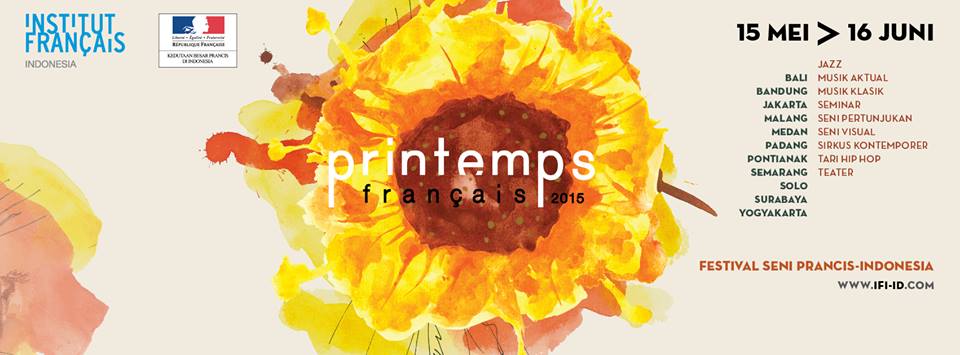
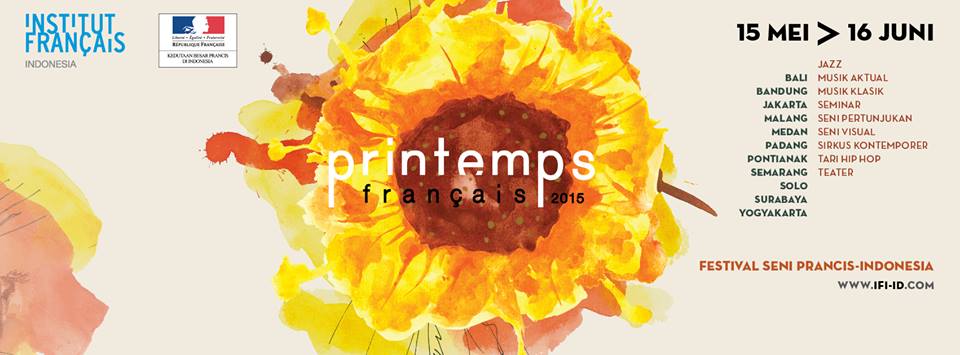
printemps français

Urban Cultural Innovation: Making A Social Channel with Excluded People

Rilis BeritaSTICKY NEWS Thursday, 22 January 2015

13th Urban Research Forum
Time : March 5, 2015
Venue : Multimedia Room 3rd floor, Rectorat Building UGM
Time : 08.00 – 16.00 WIB
Speakers : 8 persons

1. Prof. Dr. Hiroyuki Hashimoto (Otemon Gakuin University)
2. Mr. Kiener Johannes (Osaka City University)
3. Dr. Abdul Wahid, M.Hum., M.Phil. (History Dept., Universitas Gadjah Mada)
4. Dr. Suzie Handajani, M.A. (Anthropology Dept., Universitas Gadjah Mada)
5. Indro Baskoro M. P., S.Sn. (Institut Seni Indonesia Yogyakarta)
6. Irwandi, S.Sn., M.Sn. (School of Recorded Media Arts, Institut Seni Indonesia Yogyakarta)
7. Diananta Pramitasari, Ph.D. (Architecture and Planning Engineering Department, Universitas Gadjah Mada)
8. UGM Faculty of Social and Political Sciences (in confirmation)

Chairperson: 1. Dr. Laksmi Adriani Savitri, M.Si. (Anthropology Dept., UGM)
2. Dr. Fortunata Tyasrinestu, M.Si. (Faculty of Art Performance ISI Yogyakarta)
(in confirmation)
Terms of References
(1) Each speaker will give a 20 minutes presentation in English.
(2) The abstract and short CV need to be submitted to the committee
on February 12, 2015 to urp.fib@ugm.ac.id
(3) The full paper presentation and the power point need to be submitted to
the committee on March 1, 2015 at the latest.

Condition
The committee covers acommodation during the seminar.

The Theme of Urban Research Plaza Forum 2015:

“Urban Cultural Innovation: Making A Social Channel with Excluded People”

Urban area can be defined as a meeting place where individuals from different places with diverse cultural backgrounds interact. But still, we never realized that the exclusion still occurs in urban area across the world, for example, towards the disabled people, less fortunate people, LGBT, people with certain health illness, elderly people, etc. As the impacts, they are not holding the same opportunities to access public or urban spaces, although everybody is entitled to have the same opportunities and rights to access public spaces, albeit their gender, race, religion, or social condition. This is the main theme of the 13th Urban Research Plaza, how to make an urban cultural innovation and making a social channel with excluded people using the perspective of social, science, culture, and humanities.

By delivering this theme, the attention will be drawn into how excluded people in urban areas can merge into wider social interaction and become a short of new innovatif culture. It is important to learn how this so called urban cultural innovation has shaped the live of the excluded people and it has become a vehicle for the agents of culture to explore its potential in the present and future to articulate their ‘voices’ and existency in the communities.

It is necessary to reconsider the relationship between art and culture as it can be used as a tool to create greater social access and engagement within marginalized community. It also can be used to develop networking and to expand a community’s role from audience to active participants. It always offers a new model for art in the urban context. Art and cultural integration is absolutely needed when used as a tool to provide wide access for community in solving increasingly complex social issues, particularly in urban community.

Introduction
URP (Urban Research Plaza) of Osaka City University

The Urban Research Plaza was opened in April 2006. It is a brand new research center created by Osaka City University. The University has put its energy into urban studies, and produced results befitting a metropolitan university.

As its name indicates, the strongest feature of Urban Research Plaza is its framework, based on the image of a ‘public square.’ Unlike ordinary graduate schools and research institutions, Urban Research Plaza does not house permanent facilities or staff members who do research within the facilities and contribute to society with their research results. Instead, the Urban Research Plaza features small, re-locatable satellites (‘field plazas’ and overseas centers) to be opened in Osaka and foreign cities, in addition to the small number of staff and core facilities (Takahara Hall) located at the university campus. Its staff members constantly go out into the field and go abroad for research and activities for community development. With this in mind, the Urban Research Plaza serves as the center of networks for research and urban revitalization, or an open forum where people gather and meet around the theme of ‘cities.’

Cities are supposed to be an arena where new knowledge and culture is created through encounters and discourse amidst a gathering of a large number of people unknown to each other. The Urban Research Plaza is aimed at creating a research organization in urban settings of the 21st century that will implement a wide variety of endeavors with its unique structure and approach.

Osaka is currently a ‘city of suffering’ which faces the greatest problems in Japan in more ways than one. The philosophy of the Urban Research Plaza is to be a research institution in accord with Osaka City’s communities, and to share pain, pleasure and rage with the citizens.

Overseas Center of URP
Urban Research Plaza Yogyakarta Office

The Urban Research Plaza (URP) Yogyakarta Office was established by Osaka City University in cooperation with the Indonesia Institute of the Arts (ISI) and Universitas Gadjah Mada (UGM) as one of overseas satellite centers of URP in Osaka, Japan. It is located in Faculty of Cultural Sciences UGM and was first known as Urban Culture Research Center (UCRC). Though the cooperation had been started long ago since year 2003 but the sub-center had just been effectively running only after year 2006 following name-shifting from UCRC into URP.

Very small number of officials does not hamper the office to actively inviting local scholars, practitioners and governmental elements the sub center annually holds an international forum to discuss urban issues aiming to spread the spirit of urban studies and to find the best possible solutions for urban problems.

1234

Video UGM

[shtmlslider name='shslider_options']
Universitas Gadjah Mada

Faculty of Cultural Sciences
Universitas Gadjah Mada
Jl. Nusantara 1, Bulaksumur Yogyakarta 55281, Indonesia
   fib@ugm.ac.id
   +62 (274) 513096
   +62 (274) 550451

Work Units

  • Office of Journal & Publishing
  • INCULS
  • Information Technology and Database
  • Language Learning Center
  • Library Unit
  • Public Relations
  • Research

Facilities

  • Computer Laboratory
  • Gamelan
  • Guest House
  • Language Library
  • Library
  • Phonetics Library
  • Self Access Unit
  • Student Internet Centre

Importan Links

  • Journal of Humaniora
  • Subscriber Journal
  • Alumni Portal
  • Career
  • Departmens News
  • UGM Streaming

Contacts

  • Academic
  • Administration
  • Dean’s Office
  • Departments / Study Programs
  • Public Relations

© 2024 Faculty of Cultural Sciences Universitas Gadjah Mada

KEBIJAKAN PRIVASI/PRIVACY POLICY

[EN] We use cookies to help our viewer get the best experience on our website. -- [ID] Kami menggunakan cookie untuk membantu pengunjung kami mendapatkan pengalaman terbaik di situs web kami.I Agree / Saya Setuju