• About UGM
  • Academic Portal
  • IT Center
  • Library
  • Research
  • Webmail
  • Informasi Publik
  • English
    • Indonesia
Universitas Gadjah Mada Faculty of Cultural Sciences
Universitas Gadjah Mada
  • Home
  • Profile
    • History
    • Vision and Mission
    • Organizational structure
    • Administration
    • Staff
    • Faculty Members
  • Academic
    • Academic Calendar
    • Undergraduate Programs
      • Bachelor of Cultural Antrophology
      • Bachelor in Archaeolagy
      • Bachelor in History
      • Bachelor in Tourism
      • Bochetor in Korean Language and Culture
      • Bachelor in Indonesian Language and Culture
      • Bachelor in English
      • Bachelor in Arabic
      • Bachelor in Japanese Language and Culture
      • Bachelor in Javanese Language, Literature and Culture
      • Bachelor in French language and literature
    • Graduate Programs
      • Master in Antrophology
      • Master in ArchaeoIogy
      • Master in History
      • Master in Linguistics
      • Master in Literature
      • Master In American Studies
      • Master in Middle Eastern Cultural Studies
    • Post-Graduate Programs / S3
      • Doctor in Antropology
      • Doctor in American Studies
      • Doctor in Humanities
    • Student Service
  • KPPM
    • Research Information
    • Scientific / Academic Publications
    • Community Service
    • International Cooperation
    • Domestic Cooperation
  • Student Organizations
    • Student Executive Council
    • Semi-Autonomous Organizations
      • KAPALASASTRA
      • Christian Student Alliance
      • LINCAK
      • Saskine
      • Catholic Student Family
      • Dian Budaya
      • Sastra Kanuragan (sasgan)
      • Family of Muslim Cultural Sciences Students (KMIB)
      • Bejo Mulyo
    • Autonomous Organizations
      • Family of Anthropology Students (KEMANT)
      • English Department Student Association
      • Tourism Students Association (HIMAPA)
      • Family of Indonesian Literature Students (KMSI)
      • West Asian Literature Student Association (IMABA)
      • Association of Korean-Language Students (HIMAHARA)
      • Family of Regional Indonesian Literatures Students (KAMASUTRA)
      • The Family Body of History Students (BKMS)
      • The French Literature Students Association (HMSP)
      • Family of Anthropology Students
      • Japanese Student Association (HIMAJE)
  • Admission
    • Student Evaluation
  • Home
  • Fakultas Ilmu Budaya UGM
  • Fakultas Ilmu Budaya UGM
  • page. 13
Arsip:

Fakultas Ilmu Budaya UGM

Universitas Gadjah Mada’s Japanese Webinar Collaboration with University of Tsukuba

News ReleaseSDGs 10: Reduced InequalitiesSDGs 17: Partnerships for the GoalsSDGs 4: Quality Education Sunday, 9 June 2024

On Wednesday, March 6, 2024, the UGM Japanese Language and Culture Study Program (BKJ) held a webinar entitled ‘Japanese Language and Literature Webinar’. The webinar was attended by more than seventy participants combined between BKJ Study Program students and students outside the study program who have an interest in Japanese Language and Literature.

The webinar took place in two sessions, with the first session by Dr. Mulyadi, M.A. as a lecturer in Linguistics of the UGM Japanese Language and Culture Study Program and the second session by Prof. Mika Baba who is a lecturer in the Literature sub-program of the Bachelor of Cultural Sciences and Literary Sciences Program from the University of Tsukuba.

The first session was an explanation of ‘The Use of Japanese in Naming Business Entities in Lamongan Regency’. This session began with the presentation of data on the naming of business entities using Japanese taken from Google Maps. There were twenty business names from various fields that used Japanese. The data shows that the Japanese language and culture are considered to have a high appeal in attracting customers, especially among young people.

The session continued with a discussion on ‘Personal Pronouns as a Method in Modern Japanese Literature’ by Professor Mika Baba. His research focused on literary works in the second half of the 19th century (1850-1900). In Japanese literature, first person pronouns are used such as 「私」watashi,「余」yo,「己」onore,「我」ware,「僕」boku,「俺」ore, and「自分」jibun. All seven first person pronouns have the same meaning of I or me. The difference lies in the time of use such as 「余」yo which is no longer used, and「己」onore and「我」ware which can still be seen today in literary works set in the past. Another difference lies in the gender of the user. The pronouns 「僕」boku and「俺」ore are mostly used by men, while 「私」watashi is mostly used by women. Lastly, the pronoun 「自分」jibun is generally used when expressing personal opinions in a public forum.

By holding Japanese literature and language webinar activities from the two speakers, it is hoped that students can gain new knowledge related to the use of Japanese both in practice and theory. The knowledge gained later can also be utilized by academics to explore this field.

Valuable Experience: UGM Arabic Literature Students Successfully Complete Cairo Credit Transfer Program

News ReleaseSDGs 10: Reduced InequalitiesSDGs 11: Sustainable cities and communitiesSDGs 16: Peace justice and strong institutionsSDGs 17: Partnerships for the GoalsSDGs 1: No povertySDGs 4: Quality EducationSDGs 8: Decent work and economic growth Sunday, 9 June 2024

Cairo, Tuesday, February 20, 2024 – Muhammad Raushan Afkar, a student of Arabic Literature UGM, successfully completed the 3-month Cairo Credit Transfer Program. Along with 11 colleagues from Universitas Sebelas Maret, Universitas Padjajaran, and Universitas Al-Azhar Indonesia, Afkar joined the study program at the International Center for Arab Studies and Training and Faculty of Letters, Benha University, Egypt. The experience of studying in the land of camels gave him valuable knowledge about the Arabic language and culture which became an important foundation in the development of his studies.

During the program, they were not only taught practical proficiency in Arabic, but were also exposed to the rich culture and history of Arab countries. Students are given in-depth knowledge of the history of Arab civilization and Muslims, as well as the role and contribution of Islamic leaders in creating history.

In every meeting, lecturers actively involve students in listening, analyzing texts, question and answer discussions, and communicating exclusively in Arabic. Students are even encouraged to communicate only in Arabic and will be penalized with a monetary fine if they violate the rules. The money collected is then donated to help the poor people of Egypt. This shows the spirit of solidarity and social responsibility in an academic environment.

In addition, lecturers also enrich the learning experience by bringing typical Egyptian items into the classroom, such as food and cultural artifacts. Thus, students not only gain a comprehensive knowledge of Arabic language and culture, but also acquire a unique and memorable learning experience amidst the richness of Egyptian culture.

At the end of the program, students are given the opportunity to express the knowledge and skills they gained during their journey from Indonesia to Egypt and while living in Egypt through the creation of an Arabic drama with the theme “Journey from Indonesia to Egypt”. Through this drama, students not only show their official Arabic language skills, but also slip some local languages owned by Egypt when interacting and socializing with native Egyptians.

After this program, students are expected to apply what they have learned in Egypt to student life at UGM. They are encouraged to integrate their experiences into their daily activities, both in the use of Arabic language and in the promotion of Arabic culture in the campus environment. Thus, their learning experience does not only stop in Egypt, but also becomes a strong foundation to develop themselves in the future.

Lecturer of Javanese Language, Literature, and Culture Study Program Introduces Philology in Public Lecture: Philology in Javanese Manuscript Studies

News ReleaseSDGs 11: Sustainable cities and communitiesSDGs 17: Partnerships for the GoalsSDGs 4: Quality Education Sunday, 9 June 2024

On Monday, March 4, 2024, at 09.30 WITA, Dr. Arsanti Wulandari, S.S., M.Hum, a lecturer from the Javanese Language, Literature and Culture Study Program, became a speaker in a public lecture entitled ‘Philology in Javanese Manuscript Studies’. This activity was organized through the Zoom platform by the Old Javanese Literature Study Program, Faculty of Cultural Sciences, Udayana University (FIB UNUD).

In the public lecture, Dr. Arsanti Wulandari presented an introduction to philology, reviewed the concept of philology, the object of study, the tasks of philologists, and the final product produced. The presentation was equipped with examples of Javanese manuscripts and their identification, so that the audience could understand about philology more easily. The discussion session that followed provided space for participants to ask various questions, showing their high enthusiasm for the topics discussed.

This public lecture on philology was held in response to the diminishing interest of students in the field of philological studies. However, the government is currently seriously encouraging the excavation of knowledge and values contained in ancient manuscripts. Hopefully, through this kind of activity, interest and understanding of philology can grow again among students.

The importance of understanding and maintaining the sustainability of knowledge and cultural values contained in ancient manuscripts is the focus of this public lecture. By providing knowledge, enthusiasm, and establishing good cooperation, it is hoped that the knowledge and cultural values in ancient manuscripts can be preserved and can then be developed according to the needs of the times.

Get To Kow The Master of Archaeology UGM

News ReleaseSDGs 11: Sustainable cities and communitiesSDGs 4: Quality Education Sunday, 9 June 2024

The Master of Archaeology Study Program is one of the study programs managed by the Department of Archaeology, Faculty of Cultural Sciences, Universitas Gadjah Mada. This study program is accredited A (very good) by the National Accreditation Board for Higher Education (BAN-PT) for the period 2021-2026. The Master of Archaeology Study Program currently opens three types of programs offered for undergraduate graduates from various fields of science. These programs include Program by Course (Regular), Program by Research, and Double Degree Program.

Participants of Program by Course (Regular) and Program by Research can choose one of three main interests, namely Archaeology, Museology or Cultural Heritage Management, while the Double Degree Program is specifically offered for Heritage Studies enthusiasts. The courses offered, both compulsory and elective, are taught by lecturers who are experts in their fields, and can be taken by participants of all three programs. The scholarships that can be taken by Master of Archaeology students of FIB UGM include LPDP Scholarships (General, Affirmation, Targeted, Double Degree), Higher Education Lecturer Scholarships, Cultural Performer Scholarships, and Private Scholarships (YAD or others).

More information about the Master of Archaeology program and how to apply, can be obtained at the following link: Master of Archaeology Major Leaflet

From the Reformation to the Bersiap Period Discussed in the March 2024 Edition of the Master Colloquium

News ReleaseSDGs 10: Reduced InequalitiesSDGs 11: Sustainable cities and communitiesSDGs 4: Quality Education Sunday, 9 June 2024

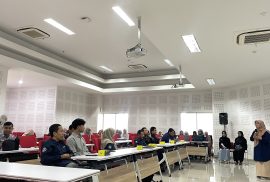
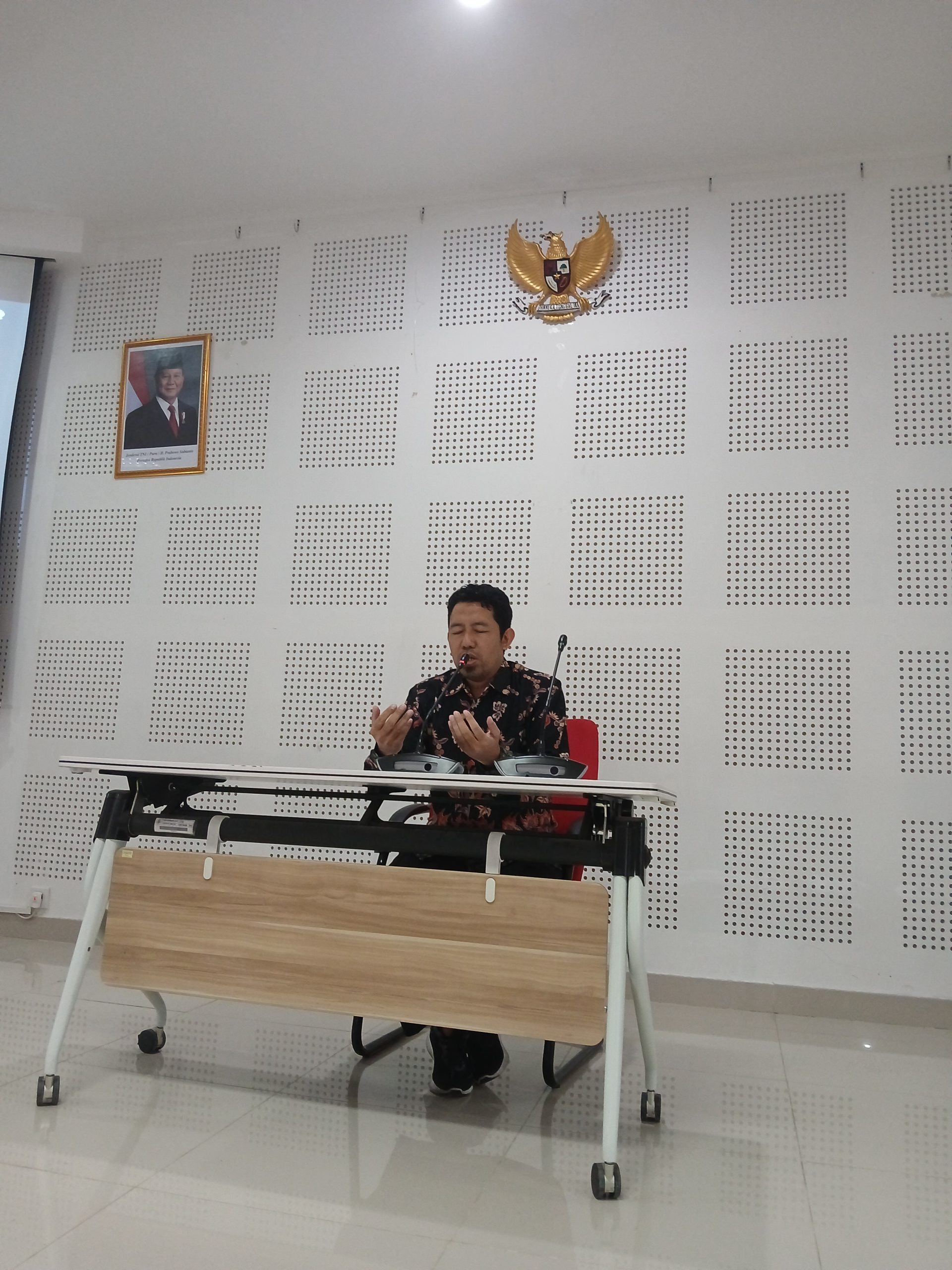
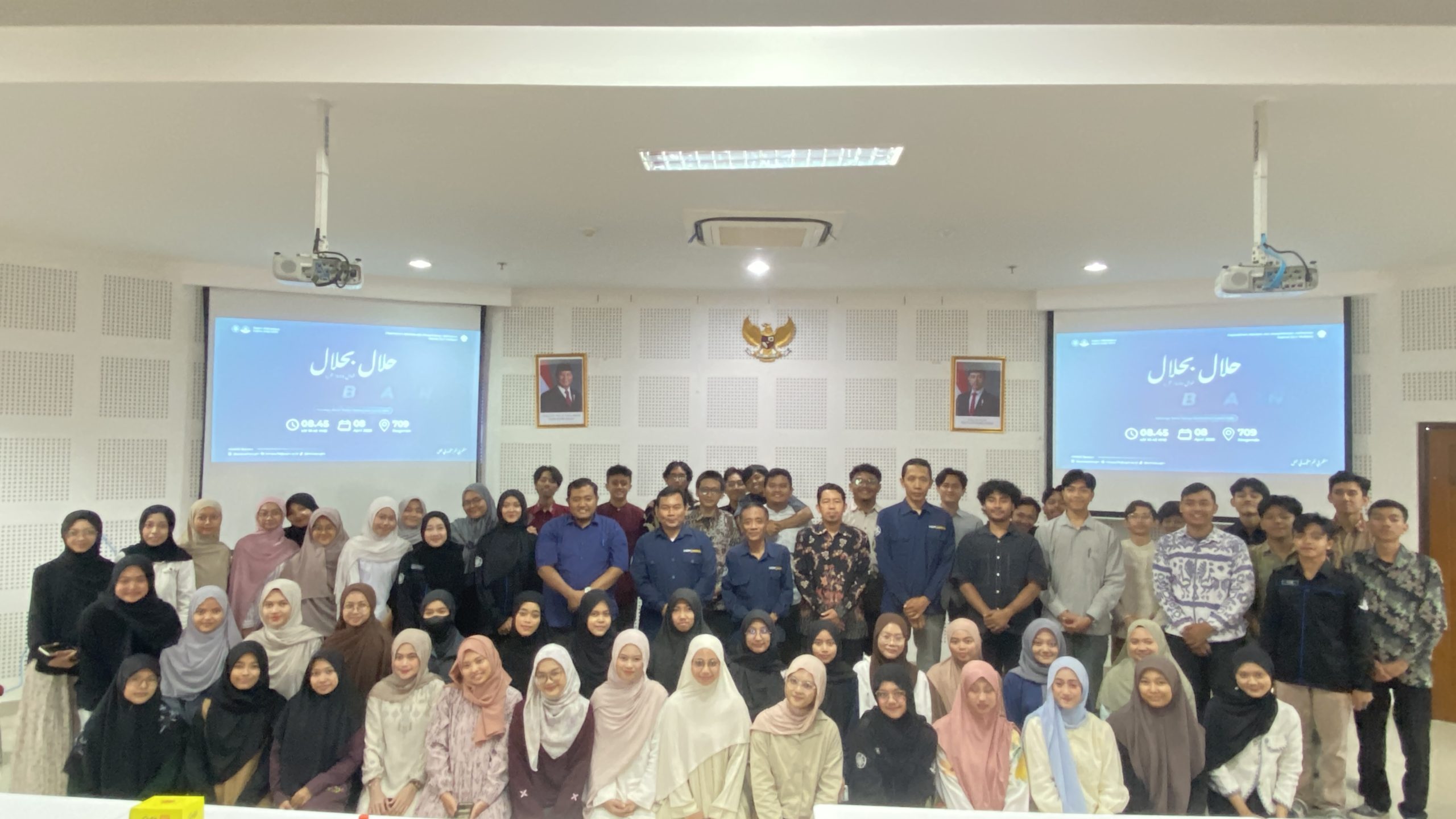
On Friday, March 1, 2024, the Department of History, Faculty of Cultural Sciences UGM held another colloquium for history masters. There were two presenters and two discussants in the colloquium, namely Fajar Santosa and Adi Wildan Alamsyah as presenters, and Dr. Ahmad Athoillah and Dr. Ravando Lie as discussants. The event took place in a hybrid manner (online and offline) from 09.00 to 12.00 WIB in Room 709 Soegondo Building, Faculty of Arts UGM.

Fajar Santosa was the first presenter in the colloquium. He presented his thesis plan entitled “When the People Rebelled: Mass Movements in the 1998 Reformation in Surabaya” which discussed mass movements in the second metropolitan city, Surabaya, during the outbreak of reform events centered in Jakarta. He explained that the demand for reform was caused by the economic crisis that occurred at that time. The crisis caused the price of goods to rise, layoffs occurred in various places, and riots occurred everywhere. The small and middle class people panicked. They formed a social movement demanding reform and the resignation of President Soeharto from office.

Fajar Santosa said that the narrative that has developed so far only describes the reform movement in 1998 as a student movement as a representation of the middle class. Meanwhile, the narrative that explains that reform was driven by all classes, including the small, middle and elite, has not been widely discussed, including in the context of Surabaya. In his thesis plan, Fajar Santosa uses Eric Hoffer’s Mass Movement theory as a conceptual basis.

Next, the thesis plan entitled “The Chinese Community in Jember 1947-1971: Displacement and the Process of Social Integration with Local Communities” was presented by Adi Wildan Alamsyah as the second presenter. He explained that during the Bersiap period (1945-1947), the Chinese community became one of the excluded groups. Around 4000 Chinese refugees from West Java chose Jember as their destination to seek refuge. In the new region, they continued their lives and integrated with the Jemberan community. The soccer game and the existence of the square became a medium of integration between the Chinese refugees and the Jemberan community.

Adi Wildan Alamsyah said that one of the reasons why Jember was chosen as a destination for Chinese refugees was probably because Jember was a member of the Chinese chamber of commerce. Other members of the Chinese chamber of commerce include Cirebon, Bandung, and Batavia as its center. He also said that Jember as a city can be said to be a diaspora city. This is because many people from various tribes and ethnicities have come and settled in Jember, such as Javanese-Madurese, Osing, Mandarese, and Chinese.

1…1112131415…18

Video UGM

[shtmlslider name='shslider_options']
Universitas Gadjah Mada

Faculty of Cultural Sciences
Universitas Gadjah Mada
Jl. Nusantara 1, Bulaksumur Yogyakarta 55281, Indonesia
   fib@ugm.ac.id
   +62 (274) 513096
   +62 (274) 550451

Work Units

  • Office of Journal & Publishing
  • INCULS
  • Information Technology and Database
  • Language Learning Center
  • Library Unit
  • Public Relations
  • Research

Facilities

  • Computer Laboratory
  • Gamelan
  • Guest House
  • Language Library
  • Library
  • Phonetics Library
  • Self Access Unit
  • Student Internet Centre

Importan Links

  • Journal of Humaniora
  • Subscriber Journal
  • Alumni Portal
  • Career
  • Departmens News
  • UGM Streaming

Contacts

  • Academic
  • Administration
  • Dean’s Office
  • Departments / Study Programs
  • Public Relations

© 2024 Faculty of Cultural Sciences Universitas Gadjah Mada

KEBIJAKAN PRIVASI/PRIVACY POLICY

[EN] We use cookies to help our viewer get the best experience on our website. -- [ID] Kami menggunakan cookie untuk membantu pengunjung kami mendapatkan pengalaman terbaik di situs web kami.I Agree / Saya Setuju