• About UGM
  • Academic Portal
  • IT Center
  • Library
  • Research
  • Webmail
  • Informasi Publik
  • English
    • Indonesia
Universitas Gadjah Mada Faculty of Cultural Sciences
Universitas Gadjah Mada
  • Home
  • Profile
    • History
    • Vision and Mission
    • Organizational structure
    • Administration
    • Staff
    • Faculty Members
  • Academic
    • Academic Calendar
    • Undergraduate Programs
      • Bachelor of Cultural Antrophology
      • Bachelor in Archaeolagy
      • Bachelor in History
      • Bachelor in Tourism
      • Bochetor in Korean Language and Culture
      • Bachelor in Indonesian Language and Culture
      • Bachelor in English
      • Bachelor in Arabic
      • Bachelor in Japanese Language and Culture
      • Bachelor in Javanese Language, Literature and Culture
      • Bachelor in French language and literature
    • Graduate Programs
      • Master in Antrophology
      • Master in ArchaeoIogy
      • Master in History
      • Master in Linguistics
      • Master in Literature
      • Master In American Studies
      • Master in Middle Eastern Cultural Studies
    • Post-Graduate Programs / S3
      • Doctor in Antropology
      • Doctor in American Studies
      • Doctor in Humanities
    • Student Service
  • KPPM
    • Research Information
    • Scientific / Academic Publications
    • Community Service
    • International Cooperation
    • Domestic Cooperation
  • Student Organizations
    • Student Executive Council
    • Semi-Autonomous Organizations
      • KAPALASASTRA
      • Christian Student Alliance
      • LINCAK
      • Saskine
      • Catholic Student Family
      • Dian Budaya
      • Sastra Kanuragan (sasgan)
      • Family of Muslim Cultural Sciences Students (KMIB)
      • Bejo Mulyo
    • Autonomous Organizations
      • Family of Anthropology Students (KEMANT)
      • English Department Student Association
      • Tourism Students Association (HIMAPA)
      • Family of Indonesian Literature Students (KMSI)
      • West Asian Literature Student Association (IMABA)
      • Association of Korean-Language Students (HIMAHARA)
      • Family of Regional Indonesian Literatures Students (KAMASUTRA)
      • The Family Body of History Students (BKMS)
      • The French Literature Students Association (HMSP)
      • Family of Anthropology Students
      • Japanese Student Association (HIMAJE)
  • Admission
    • Student Evaluation
  • Home
  • Post by
Post by :

erma.estiana

UGM-CHSS Hosts Writing and Capacity-Building Workshop for Young Researchers, Scholars, and Activists from ASEAN and Indonesia’s Post-Conflict Regions

News Release Monday, 26 October 2026

Yogyakarta, Indonesia – Tuesday, 20 October 2026

Young researchers from various countries across Southeast Asia and the Pacific region participated in the UGM-CHSS Writing Workshop held at the Faculty of Cultural Sciences, Universitas Gadjah Mada, Yogyakarta. The participants came from Thailand, Myanmar, the Philippines, and Papua New Guinea. This activity is part of a capacity building effort for young academics researching issues of conflict and peace.

The UGM-CHSS Writing Workshop is an initiative under the umbrella of the CHSS (Cultivating the Humanities and Social Sciences and Supporting Under-Represented Scholars of Asia) Project, funded by SIDA (Swedish International Development Cooperation Agency) and mandated by the AAS (Association for Asian Studies) to Universitas Gadjah Mada, Yogyakarta, Indonesia.

The Hub Lead from Universitas Gadjah Mada is Professor Wening Udasmoro, Professor of Gender and Literature at UGM, who will lead this SIDA-AAS project. The project will run for three years, from 2026 to 2028, with the hope of fostering a more inclusive and representative generation of researchers.

The main issue that becomes the focus of this UGM-CHSS Academic Writing Workshop is peace. Participants selected from abroad come from Southeast Asian countries and Papua New Guinea. They are young researchers and junior lecturers who study conflict and peace issues or who come from post-conflict regions.

The central theme of this first workshop batch in 2026 is “Self Narration: Centralizing the Periphery”. This theme was deliberately chosen as a shared awareness of giving voice to those who are often marginalized in both local and global narrative discourses. Through this theme, participants are encouraged to bring peripheral voices to the center of academic conversations.

The workshop also aligns with the Sustainable Development Goals (SDGs), particularly in the aspects of education and education for sustainability. By providing academic writing training to young researchers, this program contributes to creating quality, sustainable education for academics across Southeast Asia and the Pacific.

Furthermore, the workshop promotes equal access to academic development opportunities. Researchers from developing countries or under-represented regions often face barriers in accessing training, international publication, and global academic networks. This initiative seeks to bridge that gap, ensuring that talented scholars regardless of their geographic or institutional background can thrive.

Empowerment of young researchers lies at the heart of this program. Participants are equipped not only with academic writing skills but also with the confidence to voice their research on the international stage. Junior lecturers from post-conflict regions, in particular, are given space to fully develop their academic potential.

The outputs of the UGM-CHSS Writing Workshop are articles that will be published in both international and national journals according to the participants’ needs. These publications are expected to enrich the body of knowledge in humanities and social sciences on peace issues from the perspectives of researchers in the Asian region.

More than just a writing arena, this forum is expected to create networking spaces between countries. The cross-border collaborations established through this workshop are hoped to grow into long-term research partnerships, strengthen regional academic solidarity, and ensure that the voices of young researchers from Southeast Asia and the Pacific are increasingly heard in global conversations on peace and humanity.

Contributors: Nada & Jusma, 2026

UGM–CHSS Holds Academic Capacity Building and Scientific Article Writing Workshop for Post-Conflict Issues

News Release Monday, 26 October 2026

Yogyakarta, Indonesia — Monday, 19 October 2026

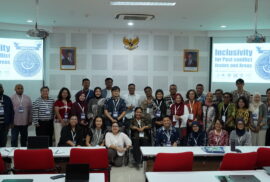
Universitas Gadjah Mada (UGM), in collaboration with CHSS (Cultivating the Humanities and Social Sciences and Supporting Under-Represented Scholars of Asia), is holding the UGM–CHSS Writing and Academic Capacity Building Workshop: Inclusivity for Post-Conflict Issues & Areas from 19 to 23 October 2026. The scientific writing workshop is part of an initiative by the Association for Asian Studies (AAS), funded by the Swedish International Development Cooperation Agency (SIDA). The event reflects a shared commitment to equality in education and the principle of equal access to academic opportunities for scholars from post-conflict regions.

UGM has received a three-year grant from AAS-SIDA (2026–2028) to run this workshop series and to serve as a HUB representing Indonesia, together with its partner, the Asian Research Institute of Universitas Indonesia. Other HUBs come from several universities across Southeast and South Asia, including Chiang Mai University (Thailand), Lahore University of Management Sciences (LUMS) in Lahore, Pakistan, Savitribai Phule Pune University in India, and Universidade Nacional Timor Lorosa’e from Timor-Leste. This network embodies the spirit of equal opportunities, ensuring that scholars from diverse and often underrepresented backgrounds can participate in and benefit from international academic collaboration.

In addition, the workshop is supported by SHAPE-SEA (Strengthening Human Rights and Peace Research and Education in ASEAN), which is also a SIDA grantee, through empowerment activities in peacebuilding, including travel grants and research support. The activities at Universitas Gadjah Mada aim to strengthen academic capacity and scientific writing skills, particularly in examining post-conflict issues through an inclusive lens. This inclusive approach is essential to guaranteeing equal access to knowledge production for communities and researchers who have historically been marginalized by conflict.

The workshop was opened on Monday (19/10) in Room S.709, Faculty of Cultural Sciences (FIB) UGM, by the Vice Dean for Research and Cooperation of FIB UGM, Mimi Savitri, Ph.D. The event continued with remarks from the CHSS resource person for UGM, Prof. Dr. Wening Udasmoro, S.S., M.Hum., DEA., who presented the Theory of Change, explaining the importance of the workshop in delivering concrete benefits for participants. She emphasized that the Theory of Change is crucial given the diversity of participants from various countries and post-conflict regions—a diversity that underlines the importance of equality in every stage of the program.

Participants came from Thailand, the Philippines, Papua New Guinea, and Myanmar, while those from Indonesia came from Papua, Poso, Ambon, Sampit, Aceh, and various other regions. The presence of scholars from these areas reflects a deliberate effort to promote equal opportunities for academics working on peace and reconciliation in contexts that are often underrepresented in international scholarship, thereby advancing education that is truly inclusive.

In the first plenary session, the speaker was Dr.phil. Geger Riyanto, an expert in peacebuilding who has written extensively in international journals on the subject. He discussed peacebuilding issues with Dr. Wulan Tri Astuti, S.S., M.A., as moderator. The session became a space for discussion on approaches and perspectives in understanding peacebuilding processes, especially in the context of post-conflict societies such as Ambon, Poso, Aceh, and Sampit after Indonesia’s 1998 Reform era. The dialogue highlighted how empowerment of local voices is central to sustainable peace.

The next presentation was delivered by Prof. Dr. Agus Suwignyo, M.A., who reviewed article writing for reputable journals. This session provided insights into developing academic writing that meets scientific publication standards, reinforcing the importance of education and mentorship in building scholarly confidence among early-career researchers from post-conflict areas.

In the third plenary session, Theresia Dyah Wirastri, S.H., M.A., Ph.D., and Dr. Mohamad Yusuf, M.A., discussed the article submission process from the perspective of international editors through the topic “Article Submission: International Editors’ Point of View.” The session, moderated by Mubarika Dyah Fitri Nugraheni, S.Ant., M.A., explored editorial perspectives in the submission process for international publication, helping to level the playing field and ensure equal access to global academic platforms.

The first day’s series of activities concluded with a mentoring breakdown session led by Prof. Dr. Wening Udasmoro, S.S., M.Hum., DEA., and a pre-workshop survey completed by participants as part of preparations for the mentoring program. These mentoring structures are designed to provide sustained empowerment, enabling participants to transform their research into publications that can influence policy and peacebuilding practice in their home regions.

The UGM workshop will also be followed by other programs to be implemented next year, including grants for selected participants to attend the Association for Asian Studies conference in Malaysia on 1–3 July 2027. Such initiatives reaffirm the commitment to equality and equal opportunities in global academic exchange, ensuring that scholars from post-conflict areas can share their knowledge on international stages and contribute to a more inclusive understanding of peace and development.

Contributors: Nada & Jusma, 2026

UGM’s Indonesian HUB CHSS Team Brings the Issue of Endangered Indonesian–Pakistani Languages to the International Academic Stage

News Release Monday, 26 October 2026

Lahore, Pakistan, September 9, 2026 — Universitas Gadjah Mada (UGM), through the Indonesian HUB CHSS team, has successfully brought the issue of endangered languages in Indonesia and Pakistan to the international academic stage. The issue was raised at Project AAS: CHSS (Cultivating the Humanities and Social Sciences and Supporting Under-Represented Scholars of Asia Project) 2026, held on 23–27 September 2026 at Lahore University of Management Sciences (LUMS), Pakistan. UGM’s participation in this forum affirms the university’s commitment to advancing inclusive and sustainable humanities and social sciences.

CHSS 2026 is an international academic forum that brings together scholars and HUB representatives from various countries across Asia. The forum serves as a strategic space to strengthen cross-border collaboration and to promote the development of humanities and social sciences research capable of addressing contemporary challenges, including issues of cultural diversity and education for sustainability.

Universitas Gadjah Mada participated through three representatives from the Faculty of Cultural Sciences (FIB): Prof. Dr. Wening Udasmoro, Dr. Aprillia Firmonasari, and Dr. Merry Andriani. The presence of these three scholars demonstrates FIB UGM’s active role in international academic networks across the Asian region.

As part of the series of activities, the UGM Indonesian HUB CHSS team organized a panel session entitled “Endangered Languages in Indonesia and Pakistan: Ideas to Mitigate” on Sunday, 27 September 2026. The panel became one of the highlighted sessions that attracted considerable attention from conference participants.

The panel discussed the vulnerability of endangered languages in Indonesia and Pakistan through three case studies: the Enggano, Minangkabau, and Wakhi languages. These three languages were selected because each faces serious pressure on the continuity of its native speakers, whether due to social change, migration, or the dominance of majority languages.

The discussion also highlighted the importance of language preservation through community engagement and policy support. The speakers emphasized that the loss of a language is not merely the loss of a means of communication, but also the loss of the cultural knowledge embedded within it—ranging from local wisdom and oral traditions to the ways communities perceive nature and life.

From a sustainable development perspective, this issue is closely linked to the agenda of empowerment for minority language-speaking communities. Language preservation requires empowering local communities so that they have the capacity and equal opportunity to safeguard their own linguistic and cultural heritage.

The panel session was the result of a collaboration between two FIB UGM lecturers, Prof. Dr. Wening Udasmoro and Dr. Merry Andriani, together with Dr. Aftab Nasir from Lahore University of Management Sciences (LUMS). This cross-country collaboration is a concrete example of how education for sustainability can be realized through equal and mutually beneficial academic partnerships.

The session was attended by advocates and researchers of endangered languages from various countries across Southeast Asia, South Asia, Europe, and Australia. The presence of participants from multiple regions demonstrated that language endangerment is a global issue demanding collective responses and equal access to resources, research, and language preservation policies.

Not only faculty members—several UGM alumni also participated in various panel sessions at CHSS 2026. The alumni’s participation expanded the engagement and networks of UGM scholars in international academic forums, while strengthening UGM’s position as one of the leading centers for humanities and cultural studies in the region.

Efforts to preserve endangered languages, as discussed in the panel, also represent a tangible form of respect for cultural diversity. Every language that survives means that a treasure of human identity, knowledge, and history remains preserved for future generations.

Moving forward, the UGM Indonesian HUB CHSS team hopes that the collaboration with LUMS and other international partners will continue into joint research, scholarly publications, and more concrete language preservation initiatives. These steps are expected to have a real impact on minority language-speaking communities, both in Indonesia and Pakistan.

Contributors: Nada & Jusma, 2026

The Indonesia Chss Hub Team, Represented by UGM Leadership, Contributes to the Southeast Asian Cinema Dialogue at the AAS 2026 Forum

News Release Monday, 26 October 2026

Lahore, Pakistan — Friday, 9 October 2026 The participation of Universitas Gadjah Mada (UGM) as the leader of the Indonesia Hub in the project Cultivating the Humanities and Social Sciences and Supporting Under-Represented Scholars of Asia (CHSS) 2026 continued through the engagement of UGM academics in the international forum of the Association for Asian Studies (AAS) held on 25–27 September 2026. This involvement underscores UGM’s ongoing commitment to advancing equality in global academic exchange by ensuring that scholars from Southeast Asia have a meaningful voice in international scholarly conversations.

The AAS is an academic organisation that supports the development of Asian studies and brings together academics, researchers, and educators from various disciplines. The event was also attended by the President of the Association for Asian Studies, Elora Shehabuddin, along with AAS leaders including Krisna Uk, Hilary Finchum-Sung, and Brandon Johnson. Their presence reflected the significance of the forum as a platform for fostering cross-regional dialogue and strengthening the foundation for education for sustainability across Asia.

During the forum, Prof. Wening Udasmoro participated as a discussant in the book launch session of Archipelagic Cinemas: Screening Southeast Asian Modernity, authored by Dag S. Yngvesson, Assistant Professor at the Faculty of Arts, University of Nottingham Malaysia. Yngvesson is an academic and filmmaker whose research focuses on Southeast Asian cinema, media, and issues of history and cultural representation. His work exemplifies how scholarly inquiry can serve as a vehicle for empowerment, giving communities the tools to narrate their own histories and cultural identities.

The session, entitled “Archipelagic Cinemas: Screening Southeast Asian Modernity,” was held in a Roundtable & Book Launch format from 15:00 to 16:30 at the Auditorium A-13/MCB. It involved Dr. Furrukh Khan and Tajwar Awan from the Lahore University of Management Sciences (LUMS), as well as an academic from Cambodia. The diversity of participants demonstrated a shared commitment to equality in knowledge production, ensuring that perspectives from across Southeast and South Asia are represented in global academic discourse.

The discussion focused on the development of cinema in Indonesia, the Philippines, Thailand, and Malaysia, and its relationship to modernity and the socio-cultural dynamics of Southeast Asia. These conversations highlighted how film serves as a vital medium for preserving and transmitting cultural heritage, allowing societies to document their histories, traditions, and evolving identities through visual storytelling.

Prof. Wening Udasmoro’s involvement in the forum expanded UGM’s contributions to cross-national scholarly dialogue, particularly in the development of humanities and social sciences studies. Her participation reflects a broader effort to promote education for sustainability by integrating cultural and historical perspectives into academic curricula and research agendas that address the long-term challenges facing the region.

This participation aligns with the objectives of the CHSS 2026 project to strengthen international academic networks and broaden the engagement of Asian scholars in global knowledge exchange. By facilitating such collaborations, the project actively advances empowerment among underrepresented scholars, providing them with platforms to share their research and contribute to international debates on culture, media, and society.

Through these collaborations, UGM also encourages the exchange of perspectives on Southeast Asian cinema, history, and culture while reinforcing the contribution of Indonesian academics to international scholarly conversations. This reflects a dedication to cultural heritage preservation, as cinematic and academic explorations of the region’s past help ensure that future generations can access and appreciate the rich traditions of Southeast Asia.

The engagement of UGM scholars in forums such as the AAS also reinforces the importance of equality in academic representation, particularly for scholars from under-represented regions. By creating spaces where diverse voices can be heard, the CHSS 2026 project and UGM’s leadership contribute to a more inclusive and equitable global academic landscape.

Moving forward, UGM’s continued leadership of the CHSS Indonesia Hub is expected to foster deeper collaborations among scholars across Asia, promoting education for sustainability, empowerment, and the preservation of cultural heritage through interdisciplinary research and international dialogue. The success of this participation in the AAS 2026 forum serves as a testament to the transformative potential of academic exchange in building a more connected and culturally aware global community.

Contributors: Nada & Jusma, 2026
Universitas Gadjah Mada Takes the Lead as Indonesia Hub for the AAS: CHSS Project 2026, Fostering Academic Collaboration and Supporting Under-Represented Scholars in Asia

News Release Monday, 26 October 2026

Universitas Gadjah Mada Becomes the Leader of Indonesia’s HUB in the AAS Project: CHSS (Cultivating the Humanities and Social Sciences and Supporting Under-Represented Scholars of Asia Project) 2026 through International Collaboration

Sleman, October 6, 2026 — Universitas Gadjah Mada (UGM) has been officially entrusted to lead Indonesia’s HUB in the AAS Project: CHSS (Cultivating the Humanities and Social Sciences and Supporting Under-Represented Scholars of Asia Project) 2026 through international collaboration. The announcement was made at Universitas Gadjah Mada on Tuesday, October 6, 2026, at 5:00 p.m. Western Indonesia Time (WIB). This appointment affirms UGM’s position as one of the key hubs for the development of humanities and social sciences in Asia.

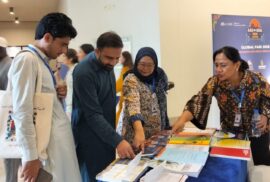
CHSS 2026 is an international academic forum held on 23–27 September 2026 at the Lahore University of Management Sciences (LUMS), Lahore, Pakistan. The forum brought together academics, researchers, and institutional leaders from various Asian countries to shape a more inclusive and future-oriented direction for humanities and social science scholarship.

In this event, Universitas Gadjah Mada (UGM) participated through representatives of the Faculty of Cultural Sciences (FIB) UGM, namely Prof. Dr. Wening Udasmoro, Dr. Aprillia Firmonasari, and Dr. Merry Andriani. Their presence reflects FIB UGM’s strong commitment to capacity building for scholars, particularly those who have long been under-represented in global academic conversations.

The event was attended by the President of the Association for Asian Studies (AAS), Elora Shehabuddin, along with AAS leaders including Krisna Uk, Hilary Finchum-Sung, and Brandon Johnson. The presence of these prominent academic leaders underscored the growing global attention to equal access and equal opportunities within the international academic community.

Also in attendance was Eren Zink, Senior Research Advisor at SIDA (Swedish International Development Cooperation Agency). SIDA’s involvement highlighted the importance of development policies that promote education for sustainability in the Global South, ensuring that scientific progress is shared equitably across nations.

Other participants included representatives of the HUB from Indonesia, led by Universitas Gadjah Mada, as well as HUBs from Vietnam, Pakistan, India, Thailand, and Timor-Leste. The participation of these countries made CHSS 2026 a vital platform for cross-national discussions on the future of humanities and social sciences in Asia.

The meeting focused on the Theory of Change, an approach used to maximize outcomes that directly benefit society in CHSS programs. Through this approach, every academic activity is designed not merely to remain at the discursive level, but to deliver tangible empowerment for both scholarly communities and society at large.

The event also served as a space for knowledge exchange, network development, and academic collaboration on various Asian and Global South issues, such as migration, education, gender, governance, climate change, public health, and cultural heritage. These issues are closely linked to the sustainable development agenda, including guaranteed equal access to education and equal opportunities for all.

In particular, gender issues were a central concern of the forum, in line with the spirit of women’s empowerment in the academic ecosystem. Women scholars from Asia and the Global South are seen as needing greater space to lead research, publish their work, and contribute to international scholarly networks.

UGM’s participation in the forum further strengthened international cooperation and opened up opportunities for cross-country research collaboration. The networks established are expected to broaden access for young researchers and under-represented scholars to academic resources, research funding, and global publication outlets.

As a follow-up, UGM will host an international workshop in Yogyakarta on 19–23 October 2026. This workshop continues UGM’s commitment to leading Indonesia’s HUB and strengthening Indonesia’s role in the landscape of humanities and social science research across Asia.

In addition, the CHSS event coincided with a pre-workshop consisting of two panels. The first panel discussed the issue of migration, while the second addressed gender issues in relation to the theory of disjointness. Both panels served as important forums for understanding the complex social dynamics of Asia and the Global South.

With this achievement, UGM hopes to continue promoting a more open and equitable academic governance, ensuring that the humanities and social sciences make real contributions to sustainable education, equal access, and community empowerment at both the local and global levels.

Contributors: Nada & Jusma, 2026

Video UGM

[shtmlslider name='shslider_options']
Universitas Gadjah Mada

Faculty of Cultural Sciences
Universitas Gadjah Mada
Jl. Nusantara 1, Bulaksumur Yogyakarta 55281, Indonesia
   fib@ugm.ac.id
   +62 (274) 513096
   +62 (274) 550451

Work Units

  • Office of Journal & Publishing
  • INCULS
  • Information Technology and Database
  • Language Learning Center
  • Library Unit
  • Public Relations
  • Research

Facilities

  • Computer Laboratory
  • Gamelan
  • Guest House
  • Language Library
  • Library
  • Phonetics Library
  • Self Access Unit
  • Student Internet Centre

Importan Links

  • Journal of Humaniora
  • Subscriber Journal
  • Alumni Portal
  • Career
  • Departmens News
  • UGM Streaming

Contacts

  • Academic
  • Administration
  • Dean’s Office
  • Departments / Study Programs
  • Public Relations

© 2024 Faculty of Cultural Sciences Universitas Gadjah Mada

KEBIJAKAN PRIVASI/PRIVACY POLICY

[EN] We use cookies to help our viewer get the best experience on our website. -- [ID] Kami menggunakan cookie untuk membantu pengunjung kami mendapatkan pengalaman terbaik di situs web kami.I Agree / Saya Setuju