• About UGM
  • Academic Portal
  • IT Center
  • Library
  • Research
  • Webmail
  • Informasi Publik
  • English
    • Indonesia
Universitas Gadjah Mada Faculty of Cultural Sciences
Universitas Gadjah Mada
  • Home
  • Profile
    • History
    • Vision and Mission
    • Organizational structure
    • Administration
    • Staff
    • Faculty Members
  • Academic
    • Academic Calendar
    • Undergraduate Programs
      • Bachelor of Cultural Antrophology
      • Bachelor in Archaeolagy
      • Bachelor in History
      • Bachelor in Tourism
      • Bochetor in Korean Language and Culture
      • Bachelor in Indonesian Language and Culture
      • Bachelor in English
      • Bachelor in Arabic
      • Bachelor in Japanese Language and Culture
      • Bachelor in Javanese Language, Literature and Culture
      • Bachelor in French language and literature
    • Graduate Programs
      • Master in Antrophology
      • Master in ArchaeoIogy
      • Master in History
      • Master in Linguistics
      • Master in Literature
      • Master In American Studies
      • Master in Middle Eastern Cultural Studies
    • Post-Graduate Programs / S3
      • Doctor in Antropology
      • Doctor in American Studies
      • Doctor in Humanities
    • Student Service
  • KPPM
    • Research Information
    • Scientific / Academic Publications
    • Community Service
    • International Cooperation
    • Domestic Cooperation
  • Student Organizations
    • Student Executive Council
    • Semi-Autonomous Organizations
      • KAPALASASTRA
      • Christian Student Alliance
      • LINCAK
      • Saskine
      • Catholic Student Family
      • Dian Budaya
      • Sastra Kanuragan (sasgan)
      • Family of Muslim Cultural Sciences Students (KMIB)
      • Bejo Mulyo
    • Autonomous Organizations
      • Family of Anthropology Students (KEMANT)
      • English Department Student Association
      • Tourism Students Association (HIMAPA)
      • Family of Indonesian Literature Students (KMSI)
      • West Asian Literature Student Association (IMABA)
      • Association of Korean-Language Students (HIMAHARA)
      • Family of Regional Indonesian Literatures Students (KAMASUTRA)
      • The Family Body of History Students (BKMS)
      • The French Literature Students Association (HMSP)
      • Family of Anthropology Students
      • Japanese Student Association (HIMAJE)
  • Admission
    • Student Evaluation
  • Home
  • SDG4QualityEducation
  • SDG4QualityEducation
Arsip:

SDG4QualityEducation

Challenges and Stages of Creating Musical Accompaniment for Dance Drama in the Transformation of Ancient Manuscripts

SDGSSDGs 11: Sustainable cities and communitiesSDGs 4: Quality Education Thursday, 18 September 2025

Yogyakarta, September 15, 2025 – The Department of Javanese Language, Literature, and Culture, Faculty of Cultural Sciences, Universitas Gadjah Mada (FIB UGM), invited performing arts practitioner Anon Suneko, S.Sn., M.Sn. to deliver a guest lecture themed “Transforming Ancient Manuscripts into Performing Arts.” In his presentation, Anon provided an in-depth discussion on the creative process and challenges in composing musical accompaniment for dance drama.

According to him, composing musical accompaniment involves a structured sequence of stages, beginning with the formulation of concepts and themes, followed by research and musical exploration, intensive discussions with the director, and the drafting of initial sketches. The process then develops into a complete composition through the selection of appropriate instrumentation, the arrangement of transitions between sections, and the creation of variations to maintain dynamics and avoid monotony.

However, the process is not without challenges. Among them are balancing the dominance between music and performance, translating abstract concepts into concrete sounds, coping with time and resource limitations, bridging differences in vision among creators, and adapting to changes in choreography.

The lecture highlighted that performing arts are not merely a medium of expression but also a space for dialogue between tradition and innovation. Such creative efforts form part of safeguarding intangible cultural heritage, aligning with the Sustainable Development Goals (SDGs), particularly Goal 4: Quality Education, which emphasizes culture-based knowledge development, and Goal 11: Sustainable Cities and Communities, which underscores the preservation of cultural heritage within modern society.

Through this program, FIB UGM reaffirms its role as an academic hub that not only studies ancient texts but also revitalizes them through performing arts, ensuring that traditions remain alive and can be passed on across generations.

[Public Relation of FIB UGM, Alma Syahwalani]

From Yogyakarta to Buru: Pocket Dictionary & Arabic Learning, UGM’s KKN Innovation in Maluku

News ReleaseSDGs 4: Quality Education Monday, 8 September 2025

Buru Island, July 16, 2025 – Universitas Gadjah Mada (UGM) continues to carry out its Kuliah Kerja Nyata (KKN) program across 35 provinces in Indonesia. One of its inspiring initiatives came from Shang Narendra, affectionately known as Adam, a student of the Arabic Study Program, Faculty of Cultural Sciences, UGM. During his KKN service in Lamahang Village, Waplau District, Buru Regency, Maluku Province, Adam introduced two unique programs: the creation of a pocket Arabic dictionary and simple Arabic language lessons for students.

The pocket dictionary was carefully prepared in Yogyakarta and later distributed during the school orientation period (Matsama – Masa Ta’aruf Madrasah) at MTs Al-Khairaat in Lamahang. The classes targeted first-year students who had never been exposed to Arabic before, aiming to introduce them to basic vocabulary, everyday conversation, and inspire early motivation to learn a foreign language.

The pocket dictionary contains practical, thematic vocabulary across categories such as household, school, environment, body parts, and pronouns, making it easier for students to recall and use words in daily situations. Beyond serving as a learning resource, the dictionary was also given as a keepsake to MTs Al-Khairaat. Interestingly, its usefulness sparked interest from KKN students in other regions, who later helped distribute the dictionary more widely—turning it into one of UGM’s KKN innovations with a broader impact on Arabic language education.

In practice, Adam began lessons by introducing simple greetings and personal pronouns (isim dhamir) through interactive learning media such as colorful slides and posters. The students of MTs Al-Khairaat welcomed the sessions with great enthusiasm, showing remarkable eagerness to learn. Not only did they enjoy the introductory Arabic lessons, but they were also able to immediately practice the new words with their peers.

The program was considered highly successful in sparking student interest to explore Arabic further. The school even expressed hopes for more future visits from UGM’s KKN participants. As a touching farewell, the KKN team received parting gifts from the MTs students before their departure—a heartfelt gesture that reflected the strong bonds formed between the students, teachers, and the local community.

[Public Relation of FIB UGM, Shang Narendra]

Learning Communication Strategies and Institutional Reputation Management from Fisipol UGM

Agenda Wednesday, 16 April 2025

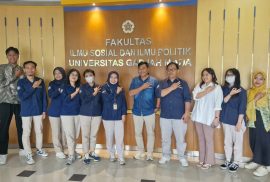
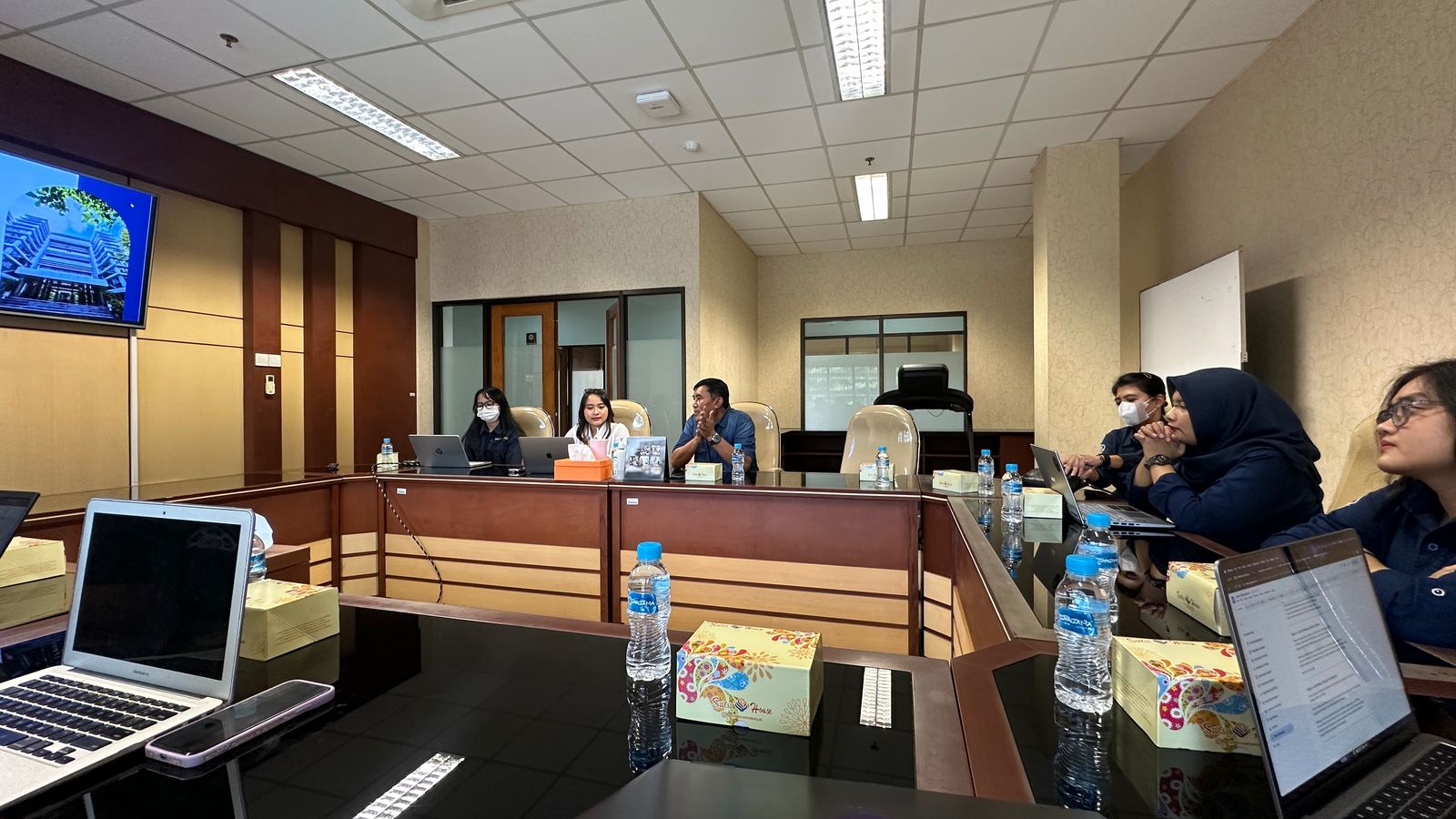
Yogyakarta, 16/4/25 — In an effort to enhance institutional communication management capacity, the Public Relations and Cooperation Unit of the Faculty of Cultural Sciences (FIB), Universitas Gadjah Mada (UGM), conducted a benchmarking visit to the Faculty of Social and Political Sciences (Fisipol) UGM on Wednesday, April 16, 2025. The primary aim of this visit was to study and analyze best practices implemented by Fisipol, particularly in the domains of social media management, digital communication strategies, and institutional reputation management, all of which are handled by the Faculty Secretary unit of Fisipol UGM.

During the visit, the FIB UGM team was received by Velina Aulia, the Social Media Manager and Alumni Relations Officer at the Fisipol Faculty Secretary. The session began with a comprehensive presentation outlining the organizational structure and workflow of the Faculty Secretary unit. The Faculty Secretary reports directly to the Dean and works in parallel with the Vice Deans responsible for academic affairs, research, finance, and human resources. This structural arrangement highlights the strategic significance of communication in supporting the faculty’s vision and mission, while also maintaining effective engagement with both internal and external stakeholders.

In the presentation, the Faculty Secretary team elaborated on the various digital platforms they manage. Instagram serves as the primary channel for dynamic and interactive content dissemination, while LinkedIn is utilized to engage alumni and professional partners. WhatsApp Business is designated for public-facing communications, whereas WhatsApp groups are used to distribute internal information among staff, faculty members, and students. Additionally, Fisipol UGM manages a knowledge-focused YouTube channel, operated by a dedicated division.

When elaborating on their content strategy, the Faculty Secretary introduced several communication pillars that form the foundation of their publication approach. The first pillar, “Good News Fisipol,” focuses on academic and student achievements, which tend to generate high levels of engagement. The second, “Info Fisipol,” delivers academic and service-related announcements using formal and standardized language. The third, “Sudut Fisipol” (Fisipol Corner), features lighter, narrative-driven, and personalized content, such as compelling stories from student activities or daily life within the Fisipol academic community.

Furthermore, the Faculty Secretary emphasized the importance of responsiveness in public communication, with a standard response time of no more than 24 hours. Nonetheless, in addressing negative feedback, a selective policy is applied—responses are only issued if the issue in question is collective in nature and has broader implications for the institution.

One notable aspect of Fisipol’s communication practices is their ability to craft meaningful narratives from seemingly ordinary events. Moments such as orchid planting, the presence of campus cats, or other routine campus occurrences are thoughtfully incorporated into communication content to foster emotional resonance and strengthen the connection between the institution and its audience.

This benchmarking visit provided valuable insights for the FIB UGM Public Relations and Cooperation team, particularly in understanding how strategic communication and institutional reputation management can be carried out in a structured, data-driven manner that aligns with the evolving dynamics of the digital era. It is hoped that the lessons learned from this visit will contribute to the advancement of communication and cooperation practices within FIB UGM in the near future.

[Public Relation of Faculty of Cultural Sciences, Muhammad Ebid El Hakim]

Video UGM

[shtmlslider name='shslider_options']
Universitas Gadjah Mada

Faculty of Cultural Sciences
Universitas Gadjah Mada
Jl. Nusantara 1, Bulaksumur Yogyakarta 55281, Indonesia
   fib@ugm.ac.id
   +62 (274) 513096
   +62 (274) 550451

Work Units

  • Office of Journal & Publishing
  • INCULS
  • Information Technology and Database
  • Language Learning Center
  • Library Unit
  • Public Relations
  • Research

Facilities

  • Computer Laboratory
  • Gamelan
  • Guest House
  • Language Library
  • Library
  • Phonetics Library
  • Self Access Unit
  • Student Internet Centre

Importan Links

  • Journal of Humaniora
  • Subscriber Journal
  • Alumni Portal
  • Career
  • Departmens News
  • UGM Streaming

Contacts

  • Academic
  • Administration
  • Dean’s Office
  • Departments / Study Programs
  • Public Relations

© 2024 Faculty of Cultural Sciences Universitas Gadjah Mada

KEBIJAKAN PRIVASI/PRIVACY POLICY

[EN] We use cookies to help our viewer get the best experience on our website. -- [ID] Kami menggunakan cookie untuk membantu pengunjung kami mendapatkan pengalaman terbaik di situs web kami.I Agree / Saya Setuju